

P0740 on 2004-2010 Toyota Sienna: Torque Converter Clutch Circuit Causes and Fixes
P0740 on a 2004-2010 Sienna most often points to a failed torque converter clutch (TCC) solenoid or old, dirty transmission fluid. A fluid change is the first and easiest step. If that fails, the next likely culprit is the TCC solenoid itself, which is located inside the transmission oil pan. The part costs around $50-$150.
- P0740 on a 2004-2010 Sienna means there's an electrical problem with the torque converter clutch circuit.
- Always start diagnosis by checking the transmission fluid level and condition; old fluid is a common culprit.
- The most likely failed part is the TCC (lock-up) solenoid, which is inside the transmission oil pan.
- Replacing the solenoid is a moderately difficult job that requires draining the fluid and removing the pan.
- Unlike newer Siennas, this issue is almost never caused by a software problem in this year range.
What's Unique About the 2004-2010 Toyota Sienna
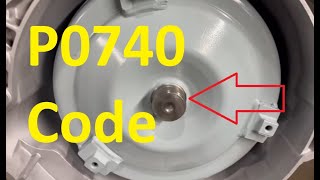
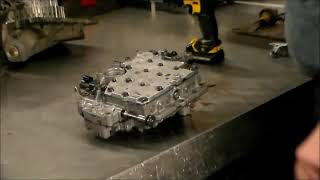
For the second-generation Toyota Sienna (2004-2010) with the U151E 5-speed automatic transmission, 🎬 Watch: Common problems and failure points of the U151 transmission the P0740 code is a straightforward indicator of a transmission issue. Unlike newer models, software-related fixes are not the cause. Toyota issued Technical Service Bulletin T-SB-0122-20 for P0740 on 2017-2018 Siennas, which involves an ECM software update, but this does not apply to the 2004-2010 generation. The causes for this specific generation are almost always mechanical or electrical, relating to the fluid, the TCC solenoid (often referred to as the SL, SL1, or Lock-Up DSL solenoid), the wiring, or the torque converter itself.
Symptoms You May Notice
- Check Engine Light is on
- Reduced fuel economy
- Vehicle shudders or vibrates when cruising at a steady speed
- Engine RPMs are higher than usual at highway speeds
- Harsh or delayed gear shifts
- Stalling when coming to a stop
- Transmission feels like it's slipping
- Replacing the entire transmission when only the TCC solenoid or fluid was needed.
- Replacing the torque converter before properly testing the TCC solenoid and its wiring circuit.
- Using the wrong type of transmission fluid (e.g., using T-IV in a 2007+ model or WS in a 2004-2006 model), which can cause shifting problems and damage.
Most Likely Causes
- Low or Dirty Transmission Fluid 🔴 High Probability → Shop Transmission Assembly The U151E/F transmission is sensitive to fluid condition. Over many miles, the fluid degrades, loses its lubricating properties, and collects clutch material and other debris. This can clog the fine passages in the valve body or cause solenoids to stick. Many owners may neglect the 60,000-100,000 mile service interval.
How to confirm: Check the transmission fluid dipstick (if equipped). The fluid should be bright red and clear. If it is dark brown, black, or smells burnt, it is degraded and needs to be changed.
Typical fix: Perform a series of drain-and-fills (not a high-pressure flush) to replace most of the old fluid. 🎬 See a step-by-step guide on flushing your Sienna's transmission fluid Use only the specified fluid: Toyota Type T-IV for 2004-2006 models and Toyota ATF WS (World Standard) for 2007-2010 models.
Est. part cost: $60-$150 for 6-12 quarts of fluid - Faulty Torque Converter Clutch (TCC) Solenoid 🔴 High Probability → Shop Automatic Transmission Torque Converter The TCC solenoid (also called the lock-up solenoid or SL/DSL) is an electromagnetic coil that actuates a valve. After many years and heat cycles, the coil windings can burn out, creating an open circuit (the specific fault for P0740), or the valve can become stuck mechanically.
How to confirm: After dropping the transmission pan, the solenoid can be tested with a multimeter for proper resistance. The specified resistance for the TCC solenoid on a U151E is typically 5.0-5.6 Ohms at 68°F. An infinite resistance reading indicates an open circuit and a failed solenoid. 🎬 Watch: How to diagnose and fix the TCC solenoid circuit It can also be tested by applying 12V power to see if it clicks.
Typical fix: Replace the TCC solenoid, which is located on the valve body inside the transmission. This requires draining the fluid and removing the oil pan.
Est. part cost: $50-$150 - Damaged Wiring or Connectors 🟡 Medium Probability The wiring harness leading to the transmission is exposed to road debris, heat, and moisture. Over time, wires can chafe, break, or connectors can corrode, causing an open or short in the TCC circuit.
How to confirm: Visually inspect the external wiring harness from the ECM to the transmission case for any signs of damage. Unplug the main connector at the transmission and check for corrosion or bent pins. Use a multimeter and a wiring diagram to test for continuity from the ECM connector to the transmission connector.
Typical fix: Repair the broken wire or replace the damaged section of the harness. Clean corroded connectors with electrical contact cleaner.
Est. part cost: $10-$200 - Failing Torque Converter ⚪ Low Probability → Shop Automatic Transmission Torque Converter While less common than a solenoid failure for a P0740 *circuit* code, it's possible for the internal lock-up clutch within the torque converter to fail mechanically. This failure can generate excessive debris that clogs the solenoid and valve body, leading to the code.
How to confirm: This is often a diagnosis of last resort. If the fluid, solenoid, and wiring are all confirmed to be good, the torque converter is the likely culprit. A large amount of metallic shavings or clutch material in the transmission pan is a strong indicator of internal failure.
Typical fix: Replace the entire torque converter. This is a major repair that requires removing the transmission from the vehicle.
Est. part cost: $200-$500
Rare But Worth Checking
- Faulty Engine Control Module (ECM/PCM): → Shop Engine Control Module (ECM) A failure in the ECM's driver circuit for the TCC solenoid can mimic a solenoid or wiring problem. This is very rare and should only be considered after all other possibilities have been thoroughly ruled out.
Diagnosis Steps
- Verify the code with an OBD-II scanner.
- Check the transmission fluid level and condition. Note the model year to determine the correct fluid type (2004-2006: T-IV; 2007-2010: WS). If fluid is low, dark, or burnt, perform several drain-and-fills.
- Inspect the transmission wiring harness for any visible damage, corrosion, or loose connections, paying close attention to the main connector on the transmission case.
- Using a wiring diagram, identify the pins for the TCC (SL/DSL) solenoid at the transmission connector. Test the solenoid's resistance through the connector. The reading should be between 5.0 and 5.6 ohms. An OL (Over Limit) or infinite reading indicates a failed solenoid or a break in the internal wiring harness.
- If the resistance test fails, drain the transmission fluid, drop the pan, and replace the TCC/Lock-Up solenoid. It is advisable to also replace the transmission filter at this time.
- If the solenoid resistance tests good from the external connector, check for voltage and ground signals from the ECM at the harness connector to ensure the computer is commanding the solenoid to activate. Pay special attention to ground circuit integrity at the ECM itself.
- If the solenoid, wiring, and signals are all correct, the issue may be a clogged valve body, a mechanical failure within the torque converter, or, in very rare cases, a faulty ECM.
Parts You'll Likely Need
- Torque Converter Clutch (Lock-Up) Solenoid
(OEM #35240-33030)— This solenoid is the most common part to fail electrically, causing the P0740 circuit code. It is also referred to as the 'SL' or 'DSL' solenoid for the U151E transmission.
Trusted brands: Toyota (OEM), Aisin, Rostra, Standard Motor Products
OEM price range: $100-$200
Aftermarket price range: $50-$150 - Automatic Transmission Fluid (Toyota Type T-IV or WS)
(OEM #00279-000T4 (T-IV), 00289-ATFWS (WS))— Old, degraded fluid is a primary cause of solenoid and valve body issues. A fluid change is a critical first step. It is crucial to use the correct type for the model year.
Trusted brands: Toyota OE, Aisin, Idemitsu
OEM price range: $10-$18 per quart
Aftermarket price range: $8-$12 per quart - Torque Converter — If the solenoid and wiring are confirmed good, the torque converter's internal lock-up clutch has likely failed mechanically, often contaminating the system with debris.
Trusted brands: Aisin, Luk
OEM price range: $400-$600
Aftermarket price range: $200-$400
Related Codes That Often Appear With This One
- P0741 — P0741 indicates 'TCC System Stuck Off,' which is a performance code. It often appears alongside P0740 because the electrical circuit fault (P0740) prevents the clutch from engaging, which the computer then flags as a performance problem (P0741).
- P2770 — P2770 is 'Torque Converter Clutch Circuit High'. Like P0740 (Circuit Open), this is an electrical fault code pointing to the same circuit, but indicating a short to power instead of an open. They point to the same components (solenoid, wiring).
Technical Service Bulletins (TSBs) & Recalls
- T-SB-0122-20: This TSB addresses a MIL ON with DTC P07407E on 2017–2018 Sienna models. The fix is an ECM software update. This bulletin is NOT applicable to the 2004-2010 generation but is often found during searches, causing confusion.
Platform-Specific Known Issues
- title: Fluid Type Confusion
Mechanic-Grade Diagnostic Values
- TCC (SL/DSL) Solenoid Resistance — expected: 5.0 - 5.6 Ohms at 68°F (20°C). Failure: An infinite reading (OL) indicates an open coil. A significantly lower reading indicates a short.
- ECM Ground Circuit Voltage Drop — expected: Less than 0.1 Volts. Failure: A reading of 0.1V or higher indicates a poor ground connection, which can cause intermittent circuit faults.
Scan Tool Commands That Help
- Toyota Techstream: Active Test: 'Control the Lock-Up' — This bidirectional test allows a technician to manually command the TCC solenoid ON and OFF. It's used to verify if the solenoid clicks and if the command from the ECM is reaching the solenoid, helping to isolate the fault between the ECM, wiring, and the solenoid itself.
- Toyota Techstream: Utility: 'Reset Memory' — This function should be performed after replacing any transmission components (like solenoids or the entire assembly) to clear the ECM's learned shift adaptations and ensure proper operation with the new parts.
Wiring & Ground Locations
- ECM (Engine Control Module) — Under the right side of the dashboard, behind the glove compartment.. The ECM controls the ground for the TCC solenoid circuit. A poor ground connection at the ECM itself can cause a P0740 code even if the solenoid and harness are good.
- Ground Points EB, EC — Located in the engine compartment, these are primary ground points for the transmission wiring harness.. Corrosion or looseness at these main ground points can cause a variety of transmission electrical faults, including P0740.
- ECM Connector E5, Pin 35 — On the ECM behind the glove box. Pin 35 is a ground circuit wire.. This specific pin has been identified as a common point of high resistance, leading to difficult-to-diagnose ground circuit problems for the transmission.
- TCC/DSL Solenoid — Inside the transmission oil pan, bolted to the valve body. It is identified as 'DSL' in Toyota service literature.. This is the component being controlled by the circuit. Its location requires removing the transmission pan for testing or replacement.
"I Checked Everything" — The Actual Cause
- In cases where all electrical tests on the TCC solenoid and wiring pass, the root cause can be mechanical or hydraulic, not electrical. A common finding is that the torque converter itself has failed internally, generating debris that clogs the valve body or the solenoid. Another possibility is a clogged hydraulic passage within the valve body, which prevents fluid pressure from actuating the lock-up clutch even when the solenoid is functioning correctly.
When the Usual Fixes Don't Work
- While P0740 is defined as a circuit code, some experienced technicians report that in many real-world cases on this platform, the ultimate cause was a mechanical failure of the torque converter itself. The mechanical failure generates debris that then causes the electrical or hydraulic fault, but simply replacing the solenoid without addressing the failing converter will result in the code returning.
Model Year Variations Within This Range
- 2004-2006 vs 2007-2010: The primary difference is the engine and required transmission fluid. 2004-2006 models use the 3.3L 3MZ-FE engine with Toyota Type T-IV fluid. 2007-2010 models use the 3.5L 2GR-FE engine with Toyota ATF WS (World Standard) fluid. Using the wrong fluid can cause damage.
- Early vs. Late Generation: Later models in this generation (approx. 2007+) moved to a 'sealed' transmission design that eliminated the dipstick for checking fluid level. This makes fluid level checks more complex, requiring a specific overflow plug procedure.
Diagnostic Flowchart
Other Known Issues on This Vehicle
Issues unrelated to this code that are worth knowing about as an owner of this generation:
- Power Sliding Door Failure 🔴 High — Very common; the control cable is known to fray and break over time from repeated use. (Ref: No recall, but a very widely documented problem. Repair involves replacing the cable assembly, which is labor-intensive.)
- Cracked/Sticky Dashboard 🟠 Medium — Extremely common in warm climates due to sun/heat exposure. The dashboard material degrades, becoming sticky and developing large cracks. (Ref: Toyota issued Warranty Enhancement Program ZE6, which extended the warranty to cover replacement. This program has since expired for most vehicles.)
- VVT-i Oil Line Rupture (2GR-FE Engine) 🔴 High — A significant issue on 2007-2010 models with the 3.5L V6. The original rubber section of the VVT-i oil supply line can burst without warning, causing rapid and catastrophic oil loss, leading to engine seizure if not stopped immediately. (Ref: Toyota addressed this with an updated all-metal line (Part No. 15772-31030). This is considered a critical preventative maintenance item.)
- EVAP Canister Failure 🟡 Low — Fairly common, leading to EVAP-related check engine light codes. Often misdiagnosed as a bad gas cap.
- Ignition Coil Failure 🟠 Medium — Common as the vehicle ages, causing engine misfires. The rear bank of coils is significantly more difficult to access, requiring removal of the intake manifold.
Used vs. New Parts: Buying Guide for This Vehicle
When a used part is the smart pick: For this repair, sourcing a used TCC solenoid or a complete valve body from a reputable auto recycler is a reasonable, cost-saving measure. These components are generally reliable.
Donor-vehicle mileage cap: roughly under 120000 miles for the part to have meaningful remaining life.
What to inspect on the donor part:
- Ask for the mileage of the donor vehicle; lower is always better.
- If possible, inspect the transmission fluid from the donor vehicle. It should be reddish, not black, brown, or smell burnt.
- Visually inspect the part for any physical damage, especially to the electrical connectors and pins.
OEM-only on this vehicle (don't cheap out):
- While not strictly 'OEM-only', it is strongly advised to use either genuine Toyota parts or parts from the Original Equipment Manufacturer (Aisin) for critical electronic components like solenoids. Cheap, unbranded solenoids from online marketplaces have a high failure rate.
Aftermarket brands forum-validated for this vehicle:
- Aisin (OEM supplier)
- Rostra
- Standard Motor Products (SMP)
Brands owners have reported issues with on this vehicle:
- Avoid generic, no-name solenoids from third-party online sellers that lack a warranty or brand reputation.
Real Owner Stories
Aggregated from forums and TSBs cited above. Mileages and costs reflect what owners reported in those sources.
2004 Toyota Sienna
Symptoms: The transmission was slipping and the fluid was the color of coffee.
What fixed it: Owners on SiennaChat frequently recommend replacing the fluid and/or the lock-up solenoid to resolve these symptoms.
Source hint: r/Sienna - 'P0740 code : is it toast?' URL: https://www.reddit.com/r/Sienna/comments/ws5k4e/p0740_code_is_it_toast/
2006 Toyota Sienna
Symptoms: The vehicle was experiencing transmission issues and the T-IV fluid was found to be burnt and dark.
What fixed it: Discussion focused on the critical importance of fluid condition and performing fluid services.
Source hint: bobistheoilguy.com - 'Help 2006 Toyota Sienna burnt T-IV fluid' URL: https://bobistheoilguy.com/forums/threads/help-2006-toyota-sienna-burnt-t-iv-fluid.107009/
Documented NHTSA Reports
Toyota Transmission Performance Issues
Symptoms: An owner reported the vehicle felt unsafe when pulling into traffic or intersections due to delayed acceleration. Diagnostic trouble codes retrieved included P0740 (Torque Converter Clutch Actuator Stuck On), P0745, and P2713.
Context: NHTSA ODI #11712764 describes these symptoms in a related Toyota model, highlighting how P0740 can manifest as a dangerous drivability concern.
Multi-Code Electrical Faults
Symptoms: A vehicle was found to have a cluster of transmission codes, specifically P0740 - Torque Converter Clutch Circuit/Open, alongside P2817, P08BB, and P2116.
Context: According to NHTSA ODI #11709274, the P0740 code can often appear with other pressure control solenoid and sensor faults, indicating a broader electrical or circuit-related failure.
Related OBD-II Codes
Frequently Asked Questions
Does TSB T-SB-0122-20 apply to my 2004-2010 Toyota Sienna?
What type of transmission fluid should I use for my 2005 Sienna to fix P0740?
My 2009 Sienna has a P0740 code; is the fluid requirement different than the earlier models?
Can I just flush the transmission to clear the P0740 code?
What is the correct resistance for the TCC solenoid on the Sienna's U151E transmission?
Is the sticky dashboard on my 2004-2010 Sienna covered by Toyota?
Helpful Videos


We Have This Part in Stock

The information in this article is provided for general reference and educational purposes only. Vehicle specifications, procedures, and part compatibility can vary by production date, trim level, and region. Always consult your vehicle's factory service manual and verify part numbers before purchasing or performing repairs. Safety-critical components such as airbags, seat belts, and braking systems should be installed by a qualified professional.
- Toyota Sienna:
- 🧭 Diagnostic Flowchart
- 🎬 Helpful Videos
- 🛍️ Shop This Part
- What's Unique About the 2004-2010 Toyota Sienna
- Symptoms You May Notice
- Most Likely Causes
- Rare But Worth Checking
- Diagnosis Steps
- Parts You'll Likely Need
- Related Codes That Often Appear With This One
- Technical Service Bulletins (TSBs) & Recalls
- Platform-Specific Known Issues
- Mechanic-Grade Diagnostic Values
- Scan Tool Commands That Help
- Wiring & Ground Locations
- "I Checked Everything" — The Actual Cause
- When the Usual Fixes Don't Work
- Model Year Variations Within This Range
- Other Known Issues on This Vehicle
- Used vs. New Parts: Buying Guide for This Vehicle
- Real Owner Stories
- 2004 Toyota Sienna
- 2006 Toyota Sienna
- Documented NHTSA Reports
- Toyota Transmission Performance Issues
- Multi-Code Electrical Faults
- Related OBD-II Codes
- Frequently Asked Questions
- 🎟️ Get 5% Off