

P0741 on 2004-2012 Chevrolet Colorado: TCC Solenoid and Torque Converter Guide
On a 2004-2012 Colorado, P0741 is most often caused by a faulty TCC solenoid, a worn valve body, or a bad torque converter. For 2012 models specifically, a known faulty internal wiring harness is a primary cause covered by a GM Special Coverage bulletin. A solenoid replacement costs ~$150-$350, while a torque converter replacement can be $1,000-$2,500.
- For a 2012 Chevrolet Colorado, your first step should be to investigate GM Special Coverage #14404, as a faulty internal wiring harness is a very likely cause.
- For all other years (2004-2011), the most common fixes are replacing the TCC solenoid or repairing/replacing the valve body.
- Check the transmission fluid. If it's full of dark, metallic debris, the torque converter has likely failed and will need to be replaced to achieve a permanent fix.
- Do not ignore this code. Driving with P0741 can cause the transmission to overheat and lead to a much more expensive, complete transmission failure.
What's Unique About the 2004-2012 Chevrolet Colorado
The first-generation Colorado (2004-2012) primarily uses the 4L60-E automatic transmission. Unlike newer models with different transmission issues, P0741 on this platform is very commonly traced to a few specific weak points within the 4L60-E: the TCC solenoid, the TCC regulator valve bore in the valve body, and, for the 2012 model year, a well-documented internal wiring harness failure that prompted GM Special Coverage #14404. Manufacturer TSB Bulletin #15111 confirms that this specific condition may cause the transmission to exhibit a harsh shift from first gear to second gear alongside the illuminated MIL.
Symptoms You May Notice
- Check Engine Light is on
- Engine RPMs are higher than normal at highway speeds
- Noticeable decrease in fuel economy
- Harsh shift from first to second gear (especially common on 2012 models per GM Special Coverage #14404)
- Sensation of transmission slipping or RPMs flaring with light throttle changes at speed
- Vehicle may shudder or vibrate at steady cruising speeds
- In some cases, the engine may stall when coming to a stop after extended driving
- Replacing the torque converter when the actual problem is a worn TCC regulator valve bore in the valve body.
- Replacing only the TCC solenoid when the torque converter has failed and contaminated the system with debris. The new solenoid will likely fail again quickly.
- On a 2012 model, overlooking the specific internal wiring harness issue (Special Coverage #14404) and proceeding to more expensive repairs first.
Most Likely Causes
- Faulty Internal Transmission Wiring Harness (2012 Models) 🔴 High Probability → Shop Transmission Assembly GM issued Special Coverage #14404 for 2012 Colorados/Canyons with the 4L60-E due to a high failure rate of the internal harness. The wiring can become brittle or develop poor connections, causing an open/short in the TCC solenoid circuit.
How to confirm: This is the primary suspect if the vehicle is a 2012 model year exhibiting P0741, often accompanied by a harsh 1-2 shift. A dealer can confirm vehicle eligibility via VIN. The coverage was for 10 years or 120,000 miles from the in-service date.
Typical fix: Replace the internal transmission wiring harness. The GM part number is 24237980. It is also recommended to replace the TCC solenoid at the same time.
Est. part cost: $50-$100 - Faulty Torque Converter Clutch (TCC) Solenoid 🔴 High Probability → Shop Automatic Transmission Torque Converter The TCC solenoid in the 4L60-E is a common failure point. It can fail electrically (testing with an ohmmeter will show it's out of spec) or get clogged or stuck with debris from normal wear or other failing components. Manufacturer TSB Bulletin #PIP5009G notes that technicians may need to replace both the TCC solenoid and the wire harness to resolve the fault.
How to confirm: A technician can command the solenoid on and off with a scan tool while monitoring TCC slip speed. If the solenoid is commanded on but slip remains high and the wiring is good, the solenoid is likely faulty. It can also be bench-tested for resistance.
Typical fix: Replace the TCC solenoid, which is located inside the transmission oil pan. This is often done along with a transmission fluid and filter change. The ACDelco part is often sold as a kit with the harness. 🎬 Watch: Step-by-step 4L60E TCC solenoid replacement guide
Est. part cost: $30-$80 - Worn TCC Regulator Valve in Valve Body 🟡 Medium Probability → Shop Transmission Valve Body The bore for the TCC regulator valve inside the aluminum valve body can wear over time from the constant oscillation of the valve. This wear creates a hydraulic leak, preventing sufficient pressure from reaching the torque converter clutch to apply it firmly.
How to confirm: This is often diagnosed after a new TCC solenoid fails to fix the problem. A transmission shop can perform a vacuum test on the valve body to confirm the leak. Visual inspection may show scoring on the valve or in the bore.
Typical fix: The valve body must be repaired by reaming the bore and installing an oversized valve kit. The most common kit is the Sonnax 77754-04K, which requires a special reamer. Alternatively, a remanufactured valve body can be installed. 🎬 See: How to install a TCC repair valve without removing the valve body
Est. part cost: $50-$100 for a valve kit (plus specialty tools), $200-$400 for a remanufactured valve body. - Failed Torque Converter 🟡 Medium Probability → Shop Automatic Transmission Torque Converter At higher mileage, the clutch lining inside the torque converter can delaminate and fail. This not only prevents lock-up but also releases a large amount of abrasive debris ('glitter') into the transmission fluid, which damages seals, sticks valves, and clogs solenoids.
How to confirm: Dropping the transmission pan and finding a significant amount of dark, metallic, or clutch-like material in the fluid and on the magnet is a strong indicator of converter failure. A Reddit user described their experience with a failed converter after a transmission rebuild, highlighting how persistent the code can be if the root cause isn't found.
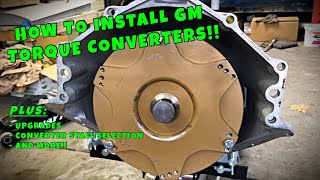
Typical fix: The torque converter must be replaced. This requires removing the entire transmission. The transmission cooler and lines must also be flushed thoroughly 🎬 Watch: How to properly install a GM torque converter to remove all debris before installing the new converter.
Est. part cost: $200-$500 for the part; total job often exceeds $1,500 due to labor. - Low or Contaminated Transmission Fluid ⚪ Low Probability → Shop Transmission Assembly While low fluid can cause pressure issues leading to this code, it's usually a symptom of a larger problem (like a leak or a failing torque converter) rather than the root cause itself.
How to confirm: Check the transmission fluid level and condition. If the level is low, there is a leak that must be found. If the fluid is dark, burnt, or full of debris, it indicates an internal mechanical failure.
Typical fix: Top off the fluid and find the source of the leak. If the fluid is contaminated, a simple fluid change is not enough; the source of the contamination (e.g., the torque converter) must be addressed.
Est. part cost: $50-$150 for fluid and filter.
Rare But Worth Checking
- Real-World Repair Story: Solenoid & Harness Replacement:
Diagnosis Steps
- Check and verify the code with a quality OBD-II scanner.
- Check the transmission fluid level and condition. Low fluid indicates a leak. Dark, burnt, or 'glittery' fluid indicates a serious internal mechanical failure, likely the torque converter.
- If the vehicle is a 2012 model, investigate GM Special Coverage #14404 as the primary lead. The internal wiring harness is the most likely culprit.
- Use a scan tool to monitor TCC slip speed during a test drive. Command the TCC solenoid 'on' at cruising speed. If slip RPM does not drop to near zero, a problem exists in the TCC hydraulic circuit or its components.
- Drop the transmission oil pan to inspect for debris and to access the internal components. A large amount of metallic debris points to torque converter failure.
- Test the TCC solenoid for proper resistance with a multimeter (should be 20-30 ohms for a typical 4L60-E solenoid; a reading of 0 or infinity indicates failure) and function. If suspect, replace it.
- If the solenoid is good or a replacement does not fix the issue, inspect the TCC regulator valve and its bore in the valve body for wear and free movement. Consider a vacuum test if tools are available.
- If significant debris was found in the pan, the torque converter is the likely source and requires replacement, along with a full system flush.
Parts You'll Likely Need
- Torque Converter Clutch (TCC) Solenoid
(OEM #24227792 (ACDelco))— This solenoid is a frequent failure point in the 4L60-E transmission and is often the direct cause of the P0741 code.
Trusted brands: ACDelco, Bosch, Rostra
OEM price range: $50-$90
Aftermarket price range: $30-$60 - Internal Transmission Wiring Harness
(OEM #24237980)— This is a known failure point specifically for 2012 models, as documented in GM Special Coverage #14404 and TSB Bulletin #15111. - TCC Regulator Valve Kit
(OEM #77754-04K (Sonnax))— Used to repair a worn valve body, which is a common cause of hydraulic pressure loss that triggers P0741 after a solenoid replacement fails to fix it.
Trusted brands: Sonnax
OEM price range: N/A
Aftermarket price range: $50-$75 - Torque Converter
Related Codes That Often Appear With This One
- P0700 — P0700 is a generic code indicating the Transmission Control Module (TCM) has stored a fault. It essentially tells the main engine computer to turn on the Check Engine Light and that a specific transmission code, like P0741, is the underlying problem.
Technical Service Bulletins (TSBs) & Recalls
- GM Special Coverage #14404: Covers replacement of the internal transmission wiring harness for P0741 on specific 2012 models for 10 years/120,000 miles.
- TSB Bulletin #15111: Notes that for certain vehicles, the MIL may be illuminated and the transmission may exhibit a harsh shift from first gear to second gear, setting DTC P0741.
- TSB Bulletin #PIP5009G: Advises technicians that if P0741 is set and a harsh 1-2 shift is present, the torque converter clutch solenoid and wire harness may need replacement.
Platform-Specific Known Issues
- GM Special Coverage #14404 was issued for the 2012 Chevrolet Colorado (with 4L60-E transmission) to address P0741 caused by a faulty internal transmission wiring harness. This coverage extended the warranty for this specific repair to 10 years or 120,000 miles.
Mechanic-Grade Diagnostic Values
- TCC Solenoid (On/Off type) Resistance — expected: 20-40 Ohms. Some sources state 20-30 Ohms.. Failure: A reading of 0 Ohms (short circuit) or infinite/OL (open circuit) indicates a failed solenoid. A reading significantly outside the expected range also indicates a problem.
- TCC PWM Solenoid Resistance — expected: 10-15 Ohms at ~68°F (20°C).. Failure: A reading of 0 Ohms or infinite/OL indicates failure. Note that early (pre-'95) 4L60-Es did not use a PWM solenoid.
- TCC Slip Speed (Scan Tool Live Data) — expected: Near 0 RPM when TCC is commanded ON and locked.. Failure: A slip of more than ~200 RPM when the TCC is commanded to lock indicates the clutch is not applying.
Scan Tool Commands That Help
- Tech2 / GDS2 or equivalent professional scanner: TCC Solenoid Control (On/Off) — During a test drive at cruising speed (above 45 mph), a technician can use this bidirectional command to manually engage the TCC solenoid. While monitoring TCC Slip RPM, if the command is sent but the slip RPM does not drop to near zero, it confirms a hydraulic or mechanical issue in the TCC apply circuit (solenoid, valve, or converter itself) rather than a PCM command issue.
Wiring & Ground Locations
- Transmission Case Connector (Pin T) — On the main round connector on the passenger side of the 4L60-E transmission case.. Pin T is the control wire (ground side) for the TCC On/Off solenoid. The PCM provides a ground path on this pin to energize the solenoid. Testing for continuity and voltage at this pin can isolate a wiring problem between the PCM and the transmission.
- Transmission Case Connector (Pin E) — On the main round connector on the passenger side of the 4L60-E transmission case.. Pin E is the 12V+ power supply from the ignition for multiple solenoids inside the transmission, including the TCC solenoid. A loss of voltage on this pin would cause multiple codes, but a poor connection could cause intermittent TCC issues.
- G103 / G105 (Ground Splice Packs) — Under the hood. G103 is often on the cowl above the brake booster. G105 is often near the battery or underhood fuse block behind the cooling fan relays. These splice packs are notorious for corrosion.. These ground packs provide the ground path for many critical components, including the Engine Control Module (ECM) and Transmission Control Module (TCM). A poor ground at these locations can cause erratic behavior, incorrect sensor readings, and faulty command signals from the modules, potentially contributing to or mimicking a P0741 fault.
OEM Part Supersession History
24212690→24227792— Standard part evolution, likely for improved durability or manufacturing process.
Heads up: The new part number (24227792) is the correct service replacement for the original. No known incompatibility issues exist when replacing the old part number with the new one.
Model Year Variations Within This Range
- Pre-1995: Early 4L60-E transmissions (pre-1995) used a simple on/off TCC solenoid and did not have a Pulse Width Modulated (PWM) TCC solenoid. The 2004-2012 Colorado uses a PWM system.
- 2009+: Around 2009, the 4L60-E began to phase out the manifold pressure switch and incorporated an internal mode switch (IMS) along with an input speed sensor (ISS). While the TCC solenoid function remains similar, the internal wiring harness and some valve body components are different from earlier models. The 2012 model's specific harness issue is a prime example of these later-year variations.
Diagnostic Flowchart
Other Known Issues on This Vehicle
Issues unrelated to this code that are worth knowing about as an owner of this generation:
- Passlock Anti-Theft System Failure 🔴 High — Very common across all model years. Can cause a crank-no-start condition intermittently or completely immobilize the vehicle.
- Blower Motor Resistor and Connector Failure 🟠 Medium — Extremely common failure. Leads to HVAC fan only working on high speed or not at all. The connector often melts. (Ref: GM TSB PIT3688A)
- Inaccurate Fuel Level Sensor 🟠 Medium — Widespread issue where the fuel gauge reads inaccurately (e.g., shows 1/4 tank when empty), leading to unexpected stalling.
- Cylinder Head Valve Seat Failure (5-Cylinder Engine) 🔴 High — A known issue on the 3.5L and 3.7L inline-5 engines where premature valve seat wear can cause rough running, misfires, and require cylinder head replacement.
- EVAP Vent Valve Failure 🟡 Low — Commonly causes a Check Engine Light for EVAP codes. The valve, located near the spare tire, gets stuck due to dust/debris.
Used vs. New Parts: Buying Guide for This Vehicle
When a used part is the smart pick: A complete, low-mileage used transmission from a reputable salvage yard can be a cost-effective alternative to rebuilding, especially if a major hard part like the torque converter has failed and sent debris throughout the unit. A used valve body can also be an option if yours is confirmed to be worn and you lack the tools to repair it, but it carries the risk of having the same wear issues.
Donor-vehicle mileage cap: roughly under 80000 miles for the part to have meaningful remaining life.
What to inspect on the donor part:
- Check the color and smell of the fluid from the donor transmission; it should be reddish and not smell burnt.
- Ask for a vehicle history report if possible to verify mileage and check for reported accidents.
- Look for a warranty from the salvage yard (typically 30-90 days) that covers the part itself.
- Inspect the transmission case for any cracks or damage from removal.
OEM-only on this vehicle (don't cheap out):
- Internal Transmission Wiring Harness (especially for the 2012 model year fix)
Aftermarket brands forum-validated for this vehicle:
- Sonnax (for valve body repair kits and other internal upgrades)
- TransGo (for shift kits and valve body components)
- ACDelco (for OEM solenoids and electronics)
Brands owners have reported issues with on this vehicle:
- Unbranded, no-name complete solenoid kits from online marketplaces. While some may work, many users report premature failures. It's often better to buy a known brand like ACDelco for the specific failed solenoid rather than a cheap, complete kit.
Real Owner Stories
Aggregated from forums and TSBs cited above. Mileages and costs reflect what owners reported in those sources.
2012 Chevrolet Colorado
Symptoms: Harsh shift from first to second gear and Check Engine Light with P0741.
What fixed it: Replacement of the internal transmission wiring harness under GM Special Coverage #14404.
Source hint: GM Special Coverage #14404
Chevrolet Colorado
Symptoms: Persistent P0741 code even after a transmission rebuild; torque converter failure was suspected.
What fixed it: Replacement of the torque converter and a thorough flush of the transmission cooler and lines to remove debris.
Source hint: Reddit r/chevycolorado thread titled 'Mechanical Question'
Related OBD-II Codes
Frequently Asked Questions
I have a 2012 Chevrolet Colorado with a harsh 1-2 shift and code P0741. Is there a special warranty for this?
What is the specific part number for the internal wiring harness on my 2012 Colorado?
My Colorado is shuddering at cruising speeds and the RPMs are higher than usual. Could this be the TCC solenoid?
If replacing the TCC solenoid doesn't fix P0741, what is the next likely mechanical failure?
Can a bad torque converter cause 'glitter' in my transmission fluid?
Helpful Videos

We Have This Part in Stock

The information in this article is provided for general reference and educational purposes only. Vehicle specifications, procedures, and part compatibility can vary by production date, trim level, and region. Always consult your vehicle's factory service manual and verify part numbers before purchasing or performing repairs. Safety-critical components such as airbags, seat belts, and braking systems should be installed by a qualified professional.
- Chevrolet Colorado:
- 🧭 Diagnostic Flowchart
- 🎬 Helpful Videos
- 🛍️ Shop This Part
- What's Unique About the 2004-2012 Chevrolet Colorado
- Symptoms You May Notice
- Most Likely Causes
- Rare But Worth Checking
- Diagnosis Steps
- Parts You'll Likely Need
- Related Codes That Often Appear With This One
- Technical Service Bulletins (TSBs) & Recalls
- Platform-Specific Known Issues
- Mechanic-Grade Diagnostic Values
- Scan Tool Commands That Help
- Wiring & Ground Locations
- OEM Part Supersession History
- Model Year Variations Within This Range
- Other Known Issues on This Vehicle
- Used vs. New Parts: Buying Guide for This Vehicle
- Real Owner Stories
- 2012 Chevrolet Colorado
- Chevrolet Colorado
- Related OBD-II Codes
- Frequently Asked Questions
- 🎟️ Get 5% Off