

P0741 on 2014-2020 Chevrolet Tahoe: Torque Converter Clutch Stuck Off Causes and Fixes
On a 2014-2020 Tahoe, P0741 almost always indicates a failing torque converter, a very common issue with the 6-speed (6L80) and 8-speed (8L90) transmissions. The clutch material inside the converter breaks down, contaminating the transmission fluid with debris. This is a serious repair often requiring torque converter replacement and sometimes a full transmission rebuild or replacement, costing between $2,500 and $6,000+.
- P0741 on a 2014-2020 Tahoe is a serious code that most often points to a failed torque converter, not just a simple sensor.
- Symptoms often start with a shuddering vibration at highway speeds before the Check Engine Light appears.
- Do not ignore this code. Driving with a failing torque converter will spread debris throughout the transmission, drastically increasing repair costs.
- A proper fix involves, at minimum, replacing the torque converter, transmission filter, and fluid, and thoroughly flushing the transmission cooler. A full rebuild or replacement is often necessary.
- Ask your mechanic specifically about GM Technical Service Bulletins 19-NA-153 and 18-NA-355, as they directly address this common failure.
What's Unique About the 2014-2020 Chevrolet Tahoe
The 2014-2020 Tahoe, equipped with 6L80 (common in 2014-2016) or 8L90 (common in 2015-2020) automatic transmissions, has a well-documented history of torque converter failures that directly cause the P0741 code. Unlike many other vehicles where this code might point to a simple solenoid, on this GM truck platform, the issue is very frequently the torque converter clutch material itself delaminating. This abrasive material then circulates like shrapnel through the hydraulic system, contaminating the fluid, clogging the filter, scoring the valve body, damaging the pump, and causing solenoids to stick. This turns a single component failure into a full transmission catastrophe. GM has issued multiple Technical Service Bulletins (TSBs) acknowledging this widespread problem, including 19-NA-153 and PI1393B.
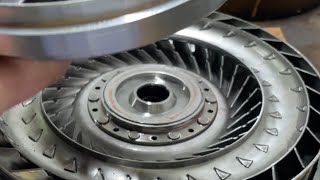
🎬 Watch: 6L80 torque converter issues explained in detailSymptoms You May Notice
- Check Engine Light is on.
- A noticeable shudder or vibration, often described as driving over rumble strips, especially during light acceleration at speeds between 40-70 MPH.
- Transmission overheating, possibly with a "TRANSMISSION HOT IDLE ENGINE" message on the driver information center.
- Engine RPMs are higher than usual at highway cruising speeds, as if it's not shifting into the final gear.
- A feeling of sluggishness or poor acceleration.
- Harsh or delayed shifting, sometimes feeling like the transmission is banging into gear.
- Engine stalling or nearly stalling when coming to a stop because the converter is trying to stay partially engaged.
- Replacing only the TCC solenoid without inspecting for torque converter debris. The new solenoid will likely fail quickly due to ongoing contamination.
- Performing only a fluid change when the fluid is already full of clutch material. This does not fix the root cause (the failing converter) and is only a very temporary measure at best.
- Mistaking the 'rumble strip' shudder as a road surface issue or tire problem, delaying diagnosis until the P0741 code appears and more damage is done.
Most Likely Causes
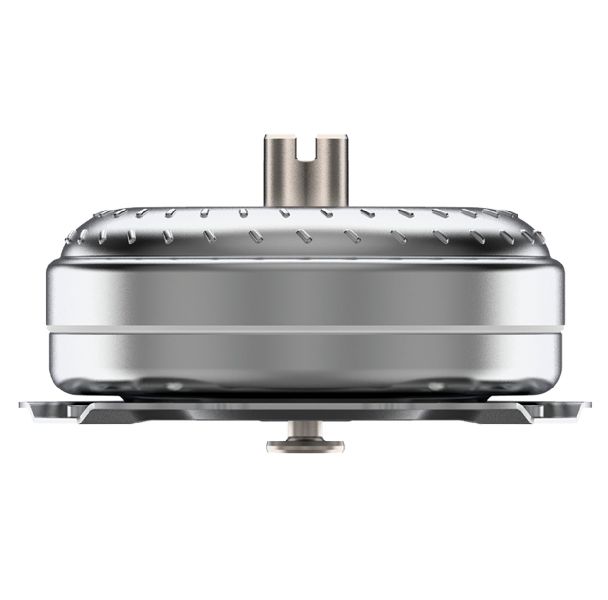
- Failing Torque Converter 🔴 High Probability → Shop Automatic Transmission Torque Converter This is the most common cause for P0741 on this platform. The friction material on the internal Torque Converter Clutch (TCC) is known to delaminate and fail. GM TSB 19-NA-153 directly identifies this as the cause on vehicles with over 30,000 miles. Manufacturer service bulletins such as Bulletin #PI1393 and #PI1393A provide diagnostic tips for technicians encountering P0741, specifically describing the condition as "Torque Converter Clutch Stuck Off."
How to confirm: A professional will use a scan tool to monitor TCC slip RPM; a high slip value when lockup is commanded indicates failure. The definitive confirmation is dropping the transmission pan and finding excessive black clutch material and metallic debris on the magnet and in the fluid.
Typical fix: Replace the torque converter. Because of contamination, the fix must also include a complete transmission fluid flush, flushing the transmission cooler lines, and may require replacing the valve body/TEHCM assembly or the entire transmission if damage is widespread.
Est. part cost: $400-$800 for an OEM or upgraded aftermarket torque converter. - Low, Burnt, or Incorrect Transmission Fluid 🟡 Medium Probability → Shop Transmission Assembly The 8-speed (8L90) transmissions were prone to TCC shudder due to the original factory fluid absorbing moisture. This was addressed by TSB 18-NA-355, involving a fluid exchange to a newer Mobil 1 formula. Running with degraded or low fluid accelerates wear and can cause the P0741 code.
How to confirm: Check the transmission fluid level and condition. The fluid should be red and clear, not dark, burnt-smelling, or full of metallic particles. Note: These transmissions do not have a dipstick, requiring a technician to check the level via a fill plug on the side of the transmission case.
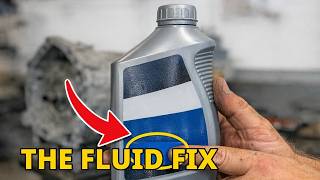
Typical fix: Perform a complete fluid exchange with the correct specification fluid (DEXRON VI for the 6L80, or the updated Mobil 1 Synthetic LV ATF HP for 8L90 shudder issues). 🎬 Watch: How a fluid exchange fixes GM truck shudder If the fluid is already full of debris, this is not a fix, but a symptom of converter failure.
Est. part cost: $100-$250 for fluid. - Faulty TCC Solenoid or Valve Body Issue ⚪ Low Probability → Shop Transmission Valve Body This is rarely the root cause, but often a secondary failure. Debris from a failing converter circulates and damages the TCC control solenoid or scores the TCC regulator valve bore in the valve body, causing it to stick or leak pressure.
How to confirm: A technician can command the TCC solenoid on and off with a high-level scan tool to check its electronic function. The valve body must be removed and inspected for scoring or stuck valves. Often, if the pan is full of debris, the valve body is condemned automatically.
Typical fix: Replace the TCC solenoid and/or the entire valve body assembly. On the 6L80, the solenoids are part of the TEHCM (Transmission Electro-Hydraulic Control Module), which is bolted to the valve body. Aftermarket companies like Sonnax offer remanufactured valve bodies that correct OEM flaws.
Est. part cost: $300-$700 for a TEHCM/solenoid assembly.
Rare But Worth Checking
- Worn Turbine Shaft Bushing: GM TSB 19-NA-153 and 20-NA-078 note that on some models, particularly those with very low mileage, a worn turbine shaft bushing can cause a pressure leak that leads to P0741. This requires significant internal transmission repair.
Diagnosis Steps
- Check and confirm the P0741 code with an OBD-II scanner. Note any other transmission-related codes, like P0796.
- Check the transmission fluid level and condition. If it is dark, smells burnt, or contains visible metallic/clutch material ('glitter'), a major internal failure (likely the torque converter) is confirmed.
- Using a professional scan tool, perform a road test and monitor the 'TCC Slip Speed' data PID. When the TCM commands lock-up (typically at steady cruising speed), the slip speed should drop to near zero. If it remains high (e.g., >200 RPM) or fluctuates wildly, the TCC is slipping.
- If the TCC does not attempt to engage at all, test the TCC solenoid circuit for electrical integrity (power, ground, and signal from the TCM).
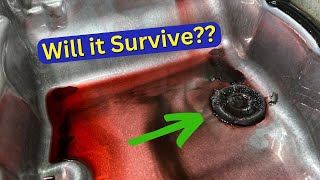
- Drop the transmission oil pan and inspect the magnet. A small amount of fine, gray metallic paste is normal. Large metal shavings or a thick coating of black, gritty clutch material confirms a catastrophic torque converter failure. 🎬 See what a failed Tahoe transmission pan looks like
- Based on the amount of debris, determine the course of action. If debris is significant, a simple torque converter replacement is insufficient; a full transmission rebuild or replacement and a thorough cooler flush is necessary to prevent repeat failure.
Parts You'll Likely Need
- Torque Converter
(OEM #ACDelco 24298636 (for 6L80, common), GM Genuine 19435562 (Reman))— This is the most frequent root cause of P0741 on this platform due to internal clutch delamination.
Trusted brands: ACDelco (OEM), LuK (OEM supplier, often sold as new, not reman), Sonnax (upgraded), Circle D (upgraded)
OEM price range: $400-$800
Aftermarket price range: $350-$1200 - Automatic Transmission Fluid
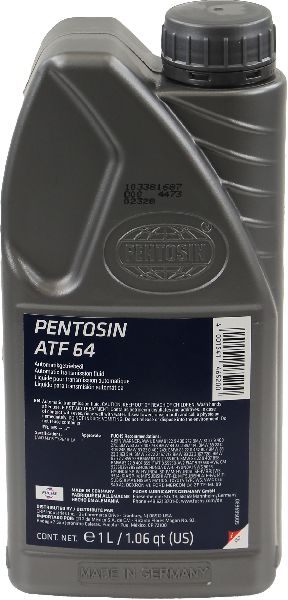
(OEM #ACDelco 19418470 (DEXRON VI for 6L80), Mobil 1 19353429 (Synthetic LV ATF HP for 8L90 shudder fix))— Required for any repair. TSB 18-NA-355 specifically calls for the Mobil 1 fluid to address shudder issues that precede P0741 in the 8-speed.
Trusted brands: ACDelco, Mobil 1
OEM price range: $10-$20 per quart
Aftermarket price range: $8-$15 per quart - Valve Body / TEHCM Assembly — Often replaced due to contamination from torque converter debris, which scores valve bores and damages integrated solenoids. A contaminated valve body will cause a new torque converter to fail prematurely.
Trusted brands: ACDelco (OEM Remanufactured), Sonnax (Remanufactured with upgrades)
OEM price range: $500-$800
Aftermarket price range: $450-$900
Related Codes That Often Appear With This One
- P0796 — Stands for 'Pressure Control Solenoid 3 Performance/Stuck Off'. Debris from the failing torque converter can travel through the valve body and cause other solenoids to malfunction, with P0796 being a common companion code.
Technical Service Bulletins (TSBs) & Recalls
- 19-NA-153
- 18-NA-355
- 20-NA-078
- PI1393B
- PI1393A
- PI1393
- 17336
Platform-Specific Known Issues
- Widespread torque converter clutch failure is the primary issue linked to P0741 on the 6L80 and 8L90 transmissions used in these Tahoes.
- A common symptom preceding the code is a pronounced shudder, which GM addressed with TSB 18-NA-355, recommending a fluid flush with a specific type of Mobil 1 fluid as a first step.
- Bulletin #PI1393B provides diagnostic tips for correcting customer concerns regarding an illuminated MIL and DTC P0741.
Mechanic-Grade Diagnostic Values
- TCC Pressure Control (PC) Solenoid Resistance — expected: 3.0-5.5 ohms at 70°F (21°C). Some sources state 5-6 ohms.. Failure: A reading outside this range indicates a failed solenoid coil, requiring TEHCM replacement.
- Shift Solenoid (On/Off type) Resistance — expected: 20-40 ohms.. Failure: A reading outside this range indicates a failed solenoid coil. While not the TCC solenoid, this test helps validate overall TEHCM health.
- Solenoid Operational Voltage from TCM — expected: 8.3–9.3 volts.. Failure: Voltage outside this range could indicate a problem with the TCM portion of the TEHCM or the vehicle's power supply to the transmission.
- TCC Slip Speed (Live Data) — expected: Near 0 RPM when TCC is commanded ON.. Failure: A value greater than ~200 RPM when lock-up is commanded indicates the clutch is slipping and has likely failed.
Scan Tool Commands That Help
- GDS2 / Professional Scan Tool: TCC Pressure Control Solenoid - Commanded State (On/Off) — During a road test, a technician can manually command the TCC to engage to verify if the slip speed drops. If the command is sent but the slip remains high, it confirms a mechanical or hydraulic failure rather than a control-side issue.
- GDS2 / Professional Scan Tool: Solenoid Cleaning Process — If a solenoid performance DTC is present and debris is suspected to be causing a solenoid to stick, some scan tools offer an automated cleaning cycle. This rapidly pulses the solenoid to try and dislodge debris. This is a last-ditch effort before replacement and is unlikely to fix a P0741 caused by widespread contamination.
Wiring & Ground Locations
- G103 / G104 — Typically located on the rear or front of the cylinder heads on the engine block. For example, on some V8s, G103 is on the front of the passenger side cylinder head, and G104 is on the left rear corner of the engine.. These are primary engine grounds. A poor ground connection at these points can cause erratic voltage signals and unpredictable behavior from various modules, including the ECM and TCM, potentially leading to incorrect diagnostic codes or solenoid operation.
- G101 — Located at the front of the engine, lower block. It is a ground point for the Engine Control Module & Transmission Control Module.. This is a critical ground directly for the TCM. Corrosion or looseness here can directly impact TCM function and its ability to control the TCC solenoid, causing symptoms that could mimic a failed part.
- Transmission Case Connector (16-pin) — The main round electrical connector on the passenger side of the transmission case.. This is the sole electrical link between the vehicle's main harness and the internal TEHCM. Corrosion on these pins or a damaged wire in the pigtail can cause a loss of power, ground, or communication to the TEHCM, leading to a P0741 or other transmission codes.
OEM Part Supersession History
24268442, 24279756→19435460 (GM Genuine Remanufactured Part)— GM often consolidates part numbers and moves to remanufactured units as vehicles age. The original parts may have been prone to the delamination issue that the remanufactured units aim to correct.
Heads up: While many 6L80 converters are physically similar, ensure the part is specified for the 2014+ models with the correct 3-pad mounting.
Model Year Variations Within This Range
- 2014-2016 (Primarily): These years most commonly used the 6L80 (RPO MYC) transmission. TSB PI1393B specifically calls out 2015 models with the 6L80/6L90 for P0741 caused by TCC friction material damage.
- 2015-2020 (Primarily): These years saw the introduction and widespread use of the 8L90 (RPO M5U) transmission. While it also suffers from P0741 due to converter failure, it is uniquely characterized by a precursor shudder issue addressed by TSB 18-NA-355, which involves a triple fluid flush with a specific Mobil 1 fluid. The failure pattern often starts with the shudder, which, if ignored, progresses to a full P0741 failure.
Diagnostic Flowchart
Other Known Issues on This Vehicle
Issues unrelated to this code that are worth knowing about as an owner of this generation:
- AFM/DFM Lifter Failure (5.3L L83 & 6.2L L86) 🔴 High — Common, can occur as early as 50,000 miles but more frequent over 100,000. Failure of the special collapsing lifters for cylinder deactivation leads to ticking noises, misfires, and potential camshaft damage. (Ref: Multiple TSBs exist, but no universal recall. The permanent fix often involves a full AFM/DFM delete, replacing lifters, camshaft, and tuning the ECU, which can cost $3,500-$6,000+.)
- A/C Condenser Leak 🟠 Medium — Very common on 2015-2017 models. The condenser (combi-cooler) develops cracks, allowing refrigerant to leak out and causing the A/C to blow warm air. (Ref: Special Coverage Adjustment 17336 extended the warranty for this part to 5 years/60,000 miles for Tahoes, but many fail outside this window.)
- Brake Assist Vacuum Pump Failure 🔴 High — Widespread on 2015-2018 models. The engine-driven vacuum pump output degrades over time, leading to a hard brake pedal and increased stopping distances. (Ref: NHTSA Recall 19V645000 (GM #N192268490). The fix is a dealer-installed reprogram of the Electronic Brake Control Module to better use the hydraulic boost when vacuum is low.)
- 8-Speed (8L90) Transmission Shudder 🟠 Medium → Shop Transmission Assembly — Extremely common on 2015-2019 models with the 8L90. Feels like driving over rumble strips at light throttle. Caused by moisture-contaminated original transmission fluid. (Ref: TSB 18-NA-355 instructs dealers to perform a fluid flush with an updated Mobil 1 Synthetic LV ATF HP fluid. If not addressed, it can lead to torque converter damage and code P0741.)
- Cracked Dashboard 🟡 Low — Common cosmetic issue, particularly around the passenger airbag area and instrument cluster hood on earlier models of this generation (2015-2016).
Used vs. New Parts: Buying Guide for This Vehicle
When a used part is the smart pick: A complete, used transmission assembly from a verified low-mileage donor (e.g., a rear-end collision) can be a cost-effective alternative to a rebuild, but it is high-risk. It only makes sense if the donor vehicle's history is known and the price is significantly lower than a remanufactured unit with a warranty. NEVER buy a used torque converter by itself.
Donor-vehicle mileage cap: roughly under 60000 miles for the part to have meaningful remaining life.
What to inspect on the donor part:
- Check the date code on the transmission case to ensure it's a recent build.
- Inspect the bellhousing and case for any cracks or signs of being dropped.
- If possible, pull the pan. The fluid should be bright red and the magnet should have only a fine metallic paste, not glitter or chunks.
- Verify the RPO code (MYC for 6L80, M5U for 8L90) matches your vehicle exactly.
- For a 6L80, be aware of a significant internal change GM made to the output shaft ring gear in 2012; ensure the donor is from a compatible year range.
Aftermarket brands forum-validated for this vehicle:
- Torque Converters: Circle D Specialties, Sonnax, Yank, FTI. These are often recommended on forums for being superior to OEM, especially for towing, with features like billet front covers and improved lock-up clutches.
- Valve Bodies/Repair Kits: Sonnax is a highly-regarded brand for remanufactured_valve bodies and oversized valve kits that fix known OEM wear points.
Brands owners have reported issues with on this vehicle:
- Unnamed, white-box torque converters from online marketplaces. The quality control is unknown, and a failed converter will destroy the transmission, making the risk too high.
Real Owner Stories
Aggregated from forums and TSBs cited above. Mileages and costs reflect what owners reported in those sources.
2016 Chevrolet Tahoe LTZ — 130000 miles
Symptoms: Owner described classic symptoms leading to a P0741 code, including issues consistent with torque converter failure.
What fixed it: A transmission rebuild was confirmed as the necessary repair by a transmission expert due to the nature of the converter failure.
Source hint: tahoeyukonforum.com: '2016 Tahoe LTZ Transmission issue (P0741 Code)'
2015 Chevrolet Tahoe LTZ
Symptoms: Experienced both P0741 and P0796 codes while on a road trip; the root cause was torque converter clutch degradation sending debris downstream.
What fixed it: Diagnosis confirmed the debris from the failing converter caused the solenoid code (P0796), requiring the converter and potentially the valve body to be addressed.
Source hint: chevroletforum.com: '2015 Tahoe LTZ Error Codes PO796 and PO741'
2016 Chevrolet Tahoe — 225000 miles
Symptoms: Vehicle threw a P0741 code at high mileage; owner questioned if only a converter and seal would be enough to fix it.
What fixed it: The context discusses this as a common scenario where significant debris usually necessitates more than just a converter swap, often requiring a full rebuild or replacement.
Source hint: reddit.com/r/ChevyTahoe: 'I don't need a transmission… right ?'
NHTSA ODI #11546983
Symptoms: An owner reported being rear-ended because they could not gain speed quickly. A diagnostic check the following day revealed codes P0741 and P0872, despite no prior check engine light or warnings.
Related OBD-II Codes
Frequently Asked Questions
My 2016 Tahoe shudders like I'm driving over rumble strips at 50 MPH; does GM have a fix for this?
Is there a specific TSB for torque converter failure on Tahoes with over 30,000 miles?
Can I just replace the torque converter on my 2015 Tahoe to fix the P0741 code?
I have a P0741 and a P0796 code at the same time; are they related?
Does the 6L80 transmission in the Tahoe suffer from the same converter issues as the 8-speed?
Helpful Videos

We Have This Part in Stock




The information in this article is provided for general reference and educational purposes only. Vehicle specifications, procedures, and part compatibility can vary by production date, trim level, and region. Always consult your vehicle's factory service manual and verify part numbers before purchasing or performing repairs. Safety-critical components such as airbags, seat belts, and braking systems should be installed by a qualified professional.
- Chevrolet Tahoe:
- 🧭 Diagnostic Flowchart
- 🎬 Helpful Videos
- 🛍️ Shop This Part
- What's Unique About the 2014-2020 Chevrolet Tahoe
- Symptoms You May Notice
- Most Likely Causes
- Rare But Worth Checking
- Diagnosis Steps
- Parts You'll Likely Need
- Related Codes That Often Appear With This One
- Technical Service Bulletins (TSBs) & Recalls
- Platform-Specific Known Issues
- Mechanic-Grade Diagnostic Values
- Scan Tool Commands That Help
- Wiring & Ground Locations
- OEM Part Supersession History
- Model Year Variations Within This Range
- Other Known Issues on This Vehicle
- Used vs. New Parts: Buying Guide for This Vehicle
- Real Owner Stories
- 2016 Chevrolet Tahoe LTZ — 130000 miles
- 2015 Chevrolet Tahoe LTZ
- 2016 Chevrolet Tahoe — 225000 miles
- NHTSA ODI #11546983
- Related OBD-II Codes
- Frequently Asked Questions
- 🎟️ Get 5% Off