

P0741 on 2006-2014 Dodge Charger: Torque Converter Clutch Stuck Off Causes & Fixes
On a 2006-2014 Dodge Charger, P0741 most often points to a problem with the 5-speed NAG1 transmission. After checking for correct fluid level and condition, the most likely causes are a faulty torque converter clutch (TCC) solenoid, a worn valve body, or a failing torque converter. A full torque converter replacement can cost over $1,500 at a shop.
- P0741 on a 2006-2014 Charger means the torque converter clutch is failing to lock up as commanded.
- Always start by checking the transmission fluid level and condition. Use only the specified fluid type.
- On the 5-speed NAG1 transmission common in these cars, a failed torque converter is a very likely cause, sometimes more so than the TCC solenoid.
- This is not a DIY-friendly repair. Accurate diagnosis requires advanced scan tools, and the fix involves invasive transmission work.
- Ignoring this code will lead to poor fuel economy, increased transmission temperatures, and eventual failure of other transmission components.
What's Unique About the 2006-2014 Dodge Charger
This generation of Dodge Charger primarily uses the Mercedes-designed NAG1 (also called 722.6 or W5A580) 5-speed automatic transmission, especially with V6 and 5.7L/6.1L V8 engines. While P0741 can be caused by a bad solenoid on many cars, the NAG1 has a known failure pattern where the torque converter itself fails internally. A documented case on a 2012 Charger pointed to a hairline crack in the converter's lock-up piston, which prevented it from holding pressure. Therefore, while checking the solenoid is part of the diagnosis, it is very common for the ultimate fix to be a new torque converter, which is a much larger job. A forum user with a 2013 Charger confirmed this exact scenario: after replacing the TCC solenoid didn't fix the code, a trip to the dealer under warranty resulted in a new torque converter being installed to resolve the issue.
Generation note: This range covers the end of the LX generation (2006-2010) and the start of the LD generation (2011-2014). Both generations used the 5-speed NAG1 automatic transmission, particularly with V6 and V8 engines, so the causes and fixes for P0741 are largely consistent for vehicles equipped with this transmission. Later LD models began to phase in an 8-speed transmission which has different components.
Symptoms You May Notice
- Check Engine Light is on
- Engine RPMs are higher than usual at highway speeds
- Noticeable decrease in fuel economy
- A feeling of shuddering or vibration at cruising speeds
- Transmission may feel like it's slipping or shifting harshly
- Potential for the transmission to overheat, especially under load
- Vehicle may stall when coming to a stop after high-speed driving
- Replacing the TCC solenoid when the torque converter itself has failed internally. A forum user with a 2013 Charger reported this exact scenario, where a new solenoid did not fix the code, and the dealer ultimately replaced the converter under warranty.
- Replacing the torque converter when the problem is simply low/dirty fluid or a faulty solenoid.
- Assuming any transmission issue requires a full rebuild. For P0741, the issue is often isolated to the TCC circuit, and a full rebuild is not always necessary.
Most Likely Causes
- Low or Dirty Transmission Fluid 🔴 High Probability → Shop Transmission Assembly The NAG1 transmission is extremely sensitive to fluid level and condition. The wrong fluid type (Shell 134/ATF 7176 are specs, often substituted with ATF+4) or fluid that is old, contaminated with clutch material, or even contains tiny amounts of water can cause hydraulic pressure issues, solenoid sticking, and shudder.
How to confirm: Check the transmission fluid level using the special service tool/dipstick (not equipped from the factory) and inspect the fluid's color and smell. It should be bright red and not smell burnt. The correct fluid type is critical. Low fluid is a primary cause of this code.
Typical fix: Perform a transmission fluid and filter change using the correct specification fluid (e.g., Mopar ATF+4, Shell 134, or equivalent for Chrysler NAG1 transmissions). This is often the first and most cost-effective step.
Est. part cost: $75-$150 - Failed Torque Converter 🟡 Medium Probability → Shop Automatic Transmission Torque Converter There are documented cases of the internal lock-up clutch piston developing hairline cracks or the clutch material wearing out, which prevents it from holding hydraulic pressure and engaging properly. NHTSA ODI #11232819 describes a case where an independent mechanic diagnosed that the torque converter was "stuck off" (code P0741), eventually leading to a recommendation for transmission replacement.
How to confirm: This is typically diagnosed after ruling out fluid and solenoid issues. A definitive test involves using a scan tool to monitor TCC slip RPM; if slip remains high when lockup is commanded and the solenoid is known to be good, the converter is faulty. A technician can also air-check the converter's clutch pack on the bench to confirm leaks.
Typical fix: Replace the torque converter. This requires removing the entire transmission. It is often recommended to replace the TCC solenoid at the same time.
Est. part cost: $300-$800 - Faulty Torque Converter Clutch (TCC) Solenoid 🟡 Medium Probability → Shop Automatic Transmission Torque Converter The TCC solenoid is an electro-hydraulic part that can fail electrically (open/short circuit) or mechanically (sticking) due to age or contamination in the fluid. It is a common failure point that prevents lock-up.
How to confirm: Use a high-end scan tool to command the TCC solenoid on and off while monitoring TCC slip RPM. You can also remove the valve body to test the solenoid's resistance with a multimeter (checking for 2.5-5.0 ohms is a common spec) and check for mechanical binding.
Typical fix: Replace the TCC solenoid. This is located on the valve body and requires removing the transmission pan. The Mopar part number is often cited as 52108314AB.
Est. part cost: $80-$200 - Worn or Sticking Valve Body ⚪ Low Probability → Shop Transmission Valve Body Debris in the transmission fluid can cause the lockup control valve or TCC damper valve within the valve body to stick or wear its bore, preventing proper hydraulic flow to the converter clutch. While less common than a bad solenoid or converter, it is a known issue.
How to confirm: Inspect the valve body for scoring and ensure all valves move freely after removing it from the transmission. This is typically done by a transmission specialist.
Typical fix: Clean the valve body and free up any sticking valves. If wear is significant, the valve body may need to be replaced or rebuilt by a specialist (e.g., Sonnax offers rebuild kits like 68942-23K for the TCC damper valve).
Est. part cost: $300-$1000
Rare But Worth Checking
- Damaged Internal Seals or Wiring: Leaks in the hydraulic circuit between the valve body and the converter, such as a missing or damaged input shaft seal ring, can cause a pressure loss that triggers P0741. 🎬 Watch: Diagnosing a persistent P0741 code after a transmission rebuild Damage to the internal transmission wiring harness (conductor plate) or the main 13-pin electrical connector plug (a common leak point on the 722.6/NAG1) is also possible.
- Faulty Transmission Control Module (TCM): → Shop Transmission Assembly In very rare cases, the TCM itself can fail, either by not sending the correct signal to the solenoid or by misinterpreting sensor data. This should only be considered after all other mechanical and electrical possibilities have been exhausted. Software updates have been issued for some transmission issues, so checking for available updates is a valid step.
Diagnosis Steps
- Check Transmission Fluid: Verify the fluid level is correct using the appropriate dipstick tool (sold separately) and that the fluid is clean, red, and does not smell burnt. If the level is low or the fluid is in poor condition, perform a fluid and filter service first.
- Scan Tool Analysis: Connect a scan tool capable of reading live transmission data. Monitor parameters like 'TCC Desired Slip' and 'TCC Actual Slip' during a test drive. When lock-up is commanded (TCC status reads 'SLIP'), the actual slip should not exceed the desired slip by more than 60 RPM. If it does, a mechanical or hydraulic problem is likely.
- Command the TCC Solenoid: Use the scan tool to manually command the TCC solenoid on and off at cruising speed. If the RPMs do not drop when commanded ON, it confirms the lock-up is not occurring.
- Inspect External Wiring: Check the main 13-pin transmission electrical connector for fluid wicking/leaks (a common NAG1 issue) and inspect for corrosion, damage, or pushed-out pins.
- Test the TCC Solenoid Circuit: With the ignition off, disconnect the TCM and transmission connectors. Check for an open or short in the TCC solenoid control circuit by measuring resistance between the pins at the TCM connector and the transmission connector. A resistance above 5.0 ohms indicates an open.
- Inspect the Valve Body: With the pan off, remove and inspect the valve body. Check the TCC control valve for free movement within its bore. Look for scoring or debris. Consider replacing the TCC solenoid at this stage as a likely culprit.
- Diagnose the Torque Converter: If all other components check out, the torque converter is the most likely culprit. This requires transmission removal for replacement and is the final diagnostic step.
Parts You'll Likely Need
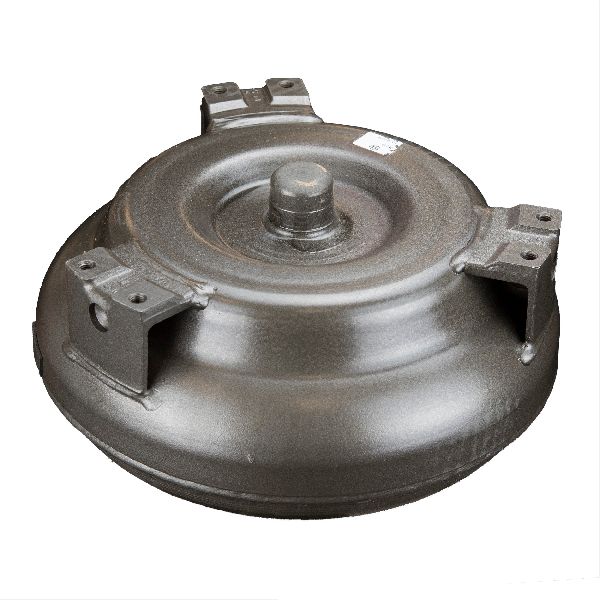
- Torque Converter — A cracked internal lock-up piston or worn clutch material is a known failure mode on the NAG1 transmission that directly causes code P0741. Aftermarket options are widely available.
Trusted brands: Mopar, ATP, Transtar, Florida Torque Converter
OEM price range: $500-$900
Aftermarket price range: $250-$500 - Torque Converter Clutch (TCC) Solenoid
(OEM #52108314AB)— This solenoid controls the hydraulic pressure for lock-up and can fail electrically or mechanically, preventing engagement. It is a common point of failure and often replaced during diagnosis.
Technical Service Bulletins (TSBs) & Recalls
- Alternator Failure: Recall for 2011-2014 models addressing premature alternator failure due to thermal fatigue of internal diodes. This can cause a sudden loss of electrical power, engine stalling, and potential fire risk. While not directly related to P0741, it's a critical electrical system issue for this platform.
- Alternator Failure (Police): A similar recall specifically for Police package vehicles with the 220-amp alternator, which could also fail rapidly due to diode thermal fatigue.
Mechanic-Grade Diagnostic Values
- TCC Solenoid Resistance — expected: 2.5 - 5.0 Ohms. Failure: A reading outside this range indicates an electrical failure of the solenoid.
- TCC Slip RPM Differential — expected: TCC Actual Slip should not exceed TCC Desired Slip by more than 60 RPM.. Failure: If the actual slip is more than 60 RPM higher than the desired slip while the TCC status is in 'SLIP' mode, the system will flag a fault. If this occurs three times in one key cycle, code P0741 will be set.
- TCM System Voltage — expected: Above 9.0 volts. Failure: If voltage drops below 8.5 volts, the transmission may enter a temporary limp-in mode and set a voltage-related DTC, which could inhibit TCC lockup.
Scan Tool Commands That Help
- Professional Scan Tool (e.g., Autel, WiTech): Transmission Quicklearn / Reset Adaptive Memory — After replacing major transmission components like the valve body, solenoids, or torque converter, or after a fluid change. This command erases old, learned shift patterns and forces the TCM to relearn, which can resolve harsh or incorrect shifting that might otherwise persist after a repair.
- Professional Scan Tool (e.g., Autel, WiTech): TCC Solenoid Actuation Test — During diagnosis to manually command the TCC solenoid on and off while monitoring engine RPM and TCC slip. This helps determine if the solenoid is responding to electrical commands from the TCM, isolating the problem to the solenoid/hydraulic circuit or the control side.
Wiring & Ground Locations
- Transmission Control Module (TCM) — Located under the driver's side of the instrument panel/dashboard, near the steering column.. The TCM is the brain that commands the TCC solenoid. Any issue with the TCM itself, its power, its ground, or its connections can prevent proper TCC operation and cause a P0741.
- 13-Pin Transmission Connector — On the front-right corner of the transmission oil pan, connecting the vehicle harness to the internal conductor plate.. This connector is a notorious leak point on the NAG1/722.6. Transmission fluid can wick up the wiring harness, causing corrosion and poor connections at the TCM, leading to various transmission codes, including P0741.
- G202 / G300 — For a 2006 SRT-8, ground G202 is located below the left 'B' pillar, and G300 is behind the left side of the dash. Locations can vary slightly by year and trim.. A poor ground connection for the TCM can cause erratic behavior, including incorrect solenoid commands or misinterpretation of sensor data, potentially leading to a P0741 code.
- Transmission Relay — In the main engine fuse box (Front Power Distribution Center). For later models (2014+), it may involve multiple hits (e.g., F29, F37) and relays in both the engine bay and trunk fuse boxes.. This relay supplies power to the transmission control system. A faulty relay can cause a loss of power to the TCM, preventing it from operating the transmission correctly.
Real Owner Repair Stories
- YouTube video by Gary Ferraro (2017 Jeep Wrangler Unlimited Sport 3.6L (uses NAG1/722.6 transmission, same P0741 principle applies)) — A pending P0741 code immediately after a transmission overhaul.
❌ Tried (didn't work) The initial transmission overhaul was complete., A first replacement torque converter was installed, but the problem persisted.
✅ What actually fixed it The technician discovered that two separate, brand-new-in-box torque converters were faulty and could not hold pressure during a bench air check. The third torque converter passed the air check, was installed, and fixed the problem.
Model Year Variations Within This Range
- Later models in the 2006-2014 range: Later model 722.6 valve bodies incorporated a TCC damper valve in a previously vacant bore. This valve acts as an accumulator for the TCC circuit. If this valve or its bore wears, it can cause P0741 or harsh lock-up, a failure point that does not exist on earlier valve bodies without this valve.
Diagnostic Flowchart
Other Known Issues on This Vehicle
Issues unrelated to this code that are worth knowing about as an owner of this generation:
- Shifter Stuck in Park ('Pink Thingy' Failure) 🔴 High — Extremely common on 2006-2007 models. A small plastic lever in the shifter assembly breaks, preventing the car from being shifted out of Park. (Ref: No recall, but robust aftermarket metal replacements are widely available (e.g., Dorman 924-706).)
- HEMI Tick (Lifter/Camshaft Failure or Exhaust Leak) 🔴 High — Common on 5.7L and 6.4L HEMI engines, typically appearing after 80,000 miles. Can be a simple exhaust manifold bolt leak or a catastrophic lifter roller failure that destroys the camshaft.
- Alternator Failure 🔴 High — Very common on 2011-2014 models, leading to multiple recalls. The alternator can fail suddenly with little warning, causing the vehicle to stall. (Ref: NHTSA 14V-634 (P60) and others.)
- Front Suspension Clunking/Popping 🟠 Medium — Common across the generation. Often caused by worn tension struts, control arm bushings, or sway bar links, leading to noises over bumps and poor handling.
- Engine Stalls After Refueling 🟠 Medium — Reported by a number of owners. The engine may stall or refuse to start immediately after filling the fuel tank.
Used vs. New Parts: Buying Guide for This Vehicle
When a used part is the smart pick: A complete used NAG1 transmission from a low-mileage donor can be a cost-effective solution if a major internal failure is diagnosed and the cost of a rebuild is prohibitive. A used valve body can also be considered, but it carries the risk of having the same wear issues as the original.
Donor-vehicle mileage cap: roughly under 80000 miles for the part to have meaningful remaining life.
What to inspect on the donor part:
- Verify the donor vehicle's VIN to ensure compatibility, as there are variations for RWD/AWD and engine type.
- Check the 13-pin connector on the donor transmission for any signs of fluid leaks.
- If possible, get a history of the donor vehicle to see if it was maintained.
- Ask the seller for a warranty, even if it's just 30-90 days, to protect against immediate failure.
OEM-only on this vehicle (don't cheap out):
- Transmission Control Module (TCM) - While aftermarket TCMs exist, a new or remanufactured OEM unit programmed to your vehicle's VIN is the most reliable choice to avoid software and communication issues.
Aftermarket brands forum-validated for this vehicle:
- Torque Converter: SunCoast, FTI Performance, Transtar are reputable brands offering upgraded and performance-oriented converters for the NAG1.
- Valve Body Repair: Sonnax is the go-to brand for valve body rebuild kits, specifically for addressing common wear points like the TCC damper valve bore.
Brands owners have reported issues with on this vehicle:
- Unbranded/white-box torque converters. As shown in real-world stories, even new converters can be faulty out of the box; sticking with a reputable brand with good quality control is critical for this part.
Documented NHTSA Reports
NHTSA ODI #10515526
Symptoms: An owner reported the vehicle was taken to a dealer where tests found code P0741 and U0002. The technician checked for contaminated fluid, relearned the transmission, serviced the transmission, and reset the computer.
NHTSA ODI #11525511
Symptoms: An owner reported receiving code P0741 that does not change, occurring alongside issues where the AC blows warm air and the feet setting recirculation fails.
Real Owner Stories
Aggregated from forums and TSBs cited above. Mileages and costs reflect what owners reported in those sources.
2013 Dodge Charger
Symptoms: Check engine light on for P0741. Owner initially replaced the TCC solenoid and inspected the wiring, but the light returned.
What fixed it: The dealership replaced the torque converter under the powertrain warranty.
Source hint: Dodge-Forum.com thread titled '2013 p0741-torque converter clutch circuit performance - DodgeForum.com'
2006 Dodge Charger R/T
Symptoms: Vehicle got stuck in park due to a broken plastic component in the shifter mechanism.
What fixed it: Replaced the failed 'pink thingy' with an aftermarket metal replacement part.
Cost: $25-$40
Source hint: Reddit r/Dodge thread titled 'So my 06 Charger R/T's pink thingy broke : r/Dodge'
Frequently Asked Questions
I have a 2013 Dodge Charger with P0741; is there a known fix for this year?
What specific transmission fluid should I use for my Charger's NAG1 transmission to avoid P0741?
Is there a specific part number for the TCC solenoid on the 2006-2014 Charger?
My 2011 Charger has an alternator recall; could this be related to my transmission code?
Are there any specific valve body kits recommended for repairing the TCC issue on this platform?
Can a 2006 Charger's 'pink thingy' failure cause a P0741 code?
Helpful Videos


We Have This Part in Stock

The information in this article is provided for general reference and educational purposes only. Vehicle specifications, procedures, and part compatibility can vary by production date, trim level, and region. Always consult your vehicle's factory service manual and verify part numbers before purchasing or performing repairs. Safety-critical components such as airbags, seat belts, and braking systems should be installed by a qualified professional.
- Dodge Charger:
- 🧭 Diagnostic Flowchart
- 🎬 Helpful Videos
- 🛍️ Shop This Part
- What's Unique About the 2006-2014 Dodge Charger
- Symptoms You May Notice
- Most Likely Causes
- Rare But Worth Checking
- Diagnosis Steps
- Parts You'll Likely Need
- Technical Service Bulletins (TSBs) & Recalls
- Mechanic-Grade Diagnostic Values
- Scan Tool Commands That Help
- Wiring & Ground Locations
- Real Owner Repair Stories
- Model Year Variations Within This Range
- Other Known Issues on This Vehicle
- Used vs. New Parts: Buying Guide for This Vehicle
- Documented NHTSA Reports
- NHTSA ODI #10515526
- NHTSA ODI #11525511
- Real Owner Stories
- 2013 Dodge Charger
- 2006 Dodge Charger R/T
- Frequently Asked Questions
- 🎟️ Get 5% Off