

P0741 on 2015-2018 Ford Edge: Torque Converter Failure Causes and Fixes
On a 2015-2018 Ford Edge, code P0741 almost always indicates a failed torque converter, a known issue often requiring a complete replacement. This is a major, professional-level repair with costs frequently cited between $7,000 and $8,000. The root cause is often a worn stator support bushing inside the transmission, which leads to a loss of hydraulic pressure and subsequent torque converter clutch failure.
- P0741 on a 2015-2018 Ford Edge is a serious code that almost always points to a failed torque converter.
- Check if your vehicle is covered under Ford's recall (17S16 / 18V390000) before paying for repairs.
- Do not waste money on a transmission fluid flush or replacing only the solenoid; these are not the correct fixes for this vehicle.
- This is a very expensive repair, often costing over $7,000, and requires a professional technician.
- The issue is often seen with code P1744, which further confirms a major mechanical problem.
What's Unique About the 2015-2018 Ford Edge
While P0741 can be caused by a simple solenoid or fluid issue on some vehicles, that is rarely the case for the 2015-2018 Ford Edge. This platform, particularly models using the 6F35 and 6F55 automatic transmissions, has a well-documented history of internal torque converter failures. Ford issued a recall (17S16 / 18V390000) for certain 2017-2018 models for inadequately welded torque converter studs. More broadly, multiple Technical Service Bulletins (TSBs) and widespread owner complaints point to a design flaw where the stator support bushing wears prematurely, causing a hydraulic leak that prevents the TCC from engaging, leading to the P0741 code. Therefore, P0741 on this vehicle should be treated as a strong indicator of a significant mechanical failure, not just a sensor or fluid problem.
Symptoms You May Notice
- Check Engine Light or Wrench Light is illuminated.
- Engine RPM is higher than usual at highway speeds.
- A feeling of shuddering or vibration during acceleration or at steady speeds.
- Noticeable decrease in fuel economy.
- Transmission may feel like it's slipping or shifts may be delayed or harsh.
- "Transmission Fault, Service Now" message may appear on the dash.
- Performing a transmission fluid flush. A fluid change or flush will not fix a mechanical failure within the torque converter or a hydraulic leak from a worn bushing. It is a waste of money for this specific problem on this vehicle.
- Replacing only the TCC solenoid without addressing the underlying hydraulic or mechanical failure. The new solenoid will be unable to command a mechanically failed clutch.
Most Likely Causes
- Internal Torque Converter Failure 🔴 High Probability → Shop Automatic Transmission Torque Converter This is the most common cause, confirmed by Ford Recall 17S16 (NHTSA 18V390000) for 2017-2018 2.0L models due to faulty weld studs. More commonly, the failure is a secondary result of hydraulic pressure loss from a worn stator bushing, which starves the lock-up clutch of the pressure it needs to engage, causing it to slip and burn out.
How to confirm: A professional technician will use a scan tool to monitor 'TCC Slip RPM'. If the slip is high (>200 RPM) when lock-up is commanded, the converter is failing. Visual inspection of transmission fluid for excessive metallic debris is another indicator.
Typical fix: The transmission must be removed to replace the torque converter. This is almost always done in conjunction with replacing the stator support bushing.
Est. part cost: $300-$800 - Worn Stator Support Bushing 🔴 High Probability The 6F35/6F55 transmissions are known to have premature wear on the stator support bushing. This bushing is what seals the converter charge oil circuit. Wear causes a hydraulic leak, reducing the pressure needed to apply the torque converter clutch, which is the primary root cause for P0741 on this platform.
How to confirm: This can only be confirmed by disassembling the transmission and inspecting the bushing and stator support surface for wear. A transmission specialist may use a 'cellophane tape' method on the input shaft to check for excessive clearance as a sign of wear.
Typical fix: Replace the stator support bushing and potentially the stator support itself. This is done during the torque converter replacement. Aftermarket bushings with better material composition are available.
Est. part cost: $50-$150 - Worn Valve Body 🟡 Medium Probability → Shop Transmission Valve Body The bore for the TCC regulator valve within the valve body can wear over time, causing a loss of hydraulic pressure to the clutch. This wear prevents the valve from sealing properly, contributing to the slip condition.
How to confirm: The valve body must be removed and the valve bores must be vacuum tested to check for leaks. This is a specialized transmission shop procedure.
Typical fix: The valve body can be repaired by reaming the bore and installing an oversized valve kit, such as the Sonnax 144740-19K or 144740-36K. Alternatively, the entire valve body may be replaced.
Est. part cost: $400-$1000 for a new valve body, or ~$100 for a repair kit. - Failed Torque Converter Clutch (TCC) Solenoid ⚪ Low Probability → Shop Automatic Transmission Torque Converter While the code name implicates the solenoid, it is rarely the actual point of failure on this platform. The issue is almost always mechanical or hydraulic, preventing the solenoid's action from being effective. However, it is often replaced as a 'while you're in there' part during a major transmission repair.
How to confirm: A technician can command the solenoid with a scan tool and check for a response. Resistance can also be checked with a multimeter. A visual inspection of the solenoid's screen for debris is also common.
Typical fix: Replace the TCC solenoid, which is located inside the transmission on the valve body.
Est. part cost: $50-$150
Diagnosis Steps
- Check for any active recalls, specifically Ford recall 17S16 (NHTSA campaign 18V390000), for your vehicle's VIN.
- Use an advanced OBD-II scanner to confirm P0741 and check for other codes like P1744.
- Monitor live data, specifically Engine RPM, Transmission Input Speed, and TCC Slip RPM. Drive the vehicle to cruising speed (typically above 40-45 mph).
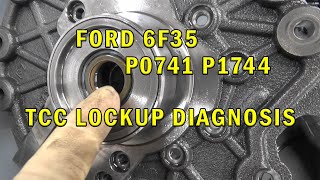
- Confirm that when the TCC is commanded 'On' by the PCM, the TCC Slip RPM remains high (well above zero, often >200 RPM). This confirms the failu 🎬 Watch: A professional walkthrough of TCC lockup diagnosis and testing.re.
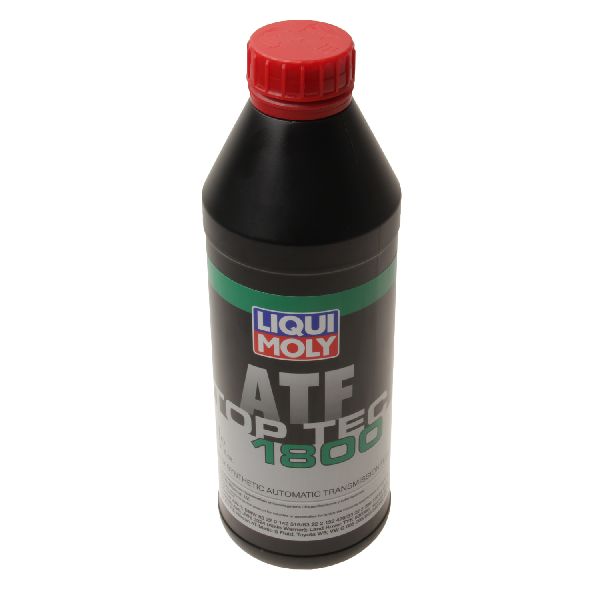
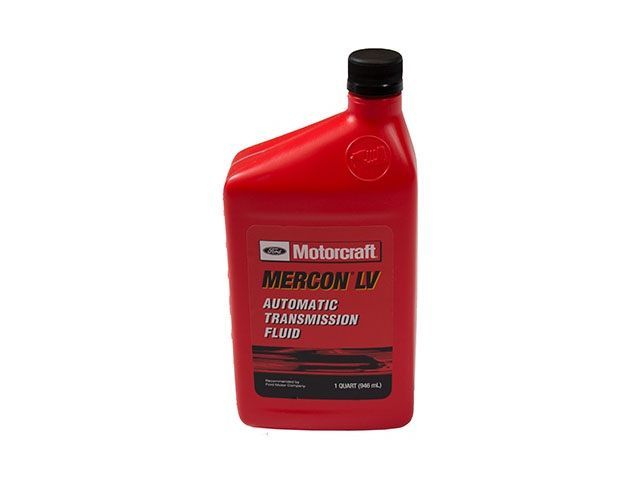
- Inspect the transmission fluid level and condition. The correct fluid is Motorcraft MERCON LV. Dark, burnt fluid with metallic particles is a strong indicator of internal component failure.
- If the failure is confirmed, professional service is required for transmission removal and inspection of the torque converter, stator support bushing, and valve body bores.
Parts You'll Likely Need
- Torque Converter
(OEM #DG9Z-7902-G (For 2.0L 6F35))— This is the primary point of failure for code P0741 on this vehicle, as confirmed by owner experiences and a manufacturer recall. Often fails due to underlying hydraulic issues.
Trusted brands: Motorcraft, LuK, Florida Torque Converter
OEM price range: $500-$800
Aftermarket price range: $250-$500 - Stator Support Bushing — A known weak point and the root cause of the hydraulic leak that leads to TCC failure. Must be replaced during the repair.
Trusted brands: Sonnax, Transtar
OEM price range: $20-$50
Aftermarket price range: $20-$50 - Valve Body TCC Regulator Repair Kit
(OEM #Sonnax 144740-19K (Oversized) or 144740-36K (Drop-in))— If the valve body TCC regulator bore is worn, this kit allows for repair instead of replacing the entire valve body.
Trusted brands: Sonnax
OEM price range: N/A
Aftermarket price range: $70-$120 - Automatic Transmission Fluid
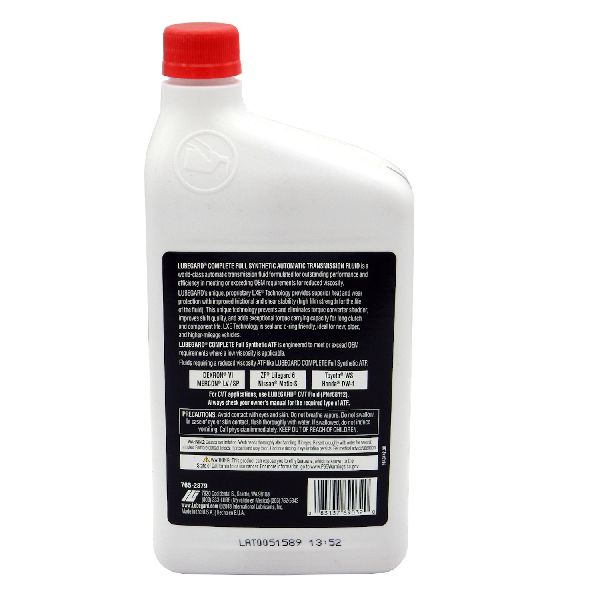
(OEM #Motorcraft XT-10-QLVC (MERCON LV))— The transmission fluid must be replaced anytime the transmission is serviced or removed. Approximately 9-11 quarts are needed for a drain and fill after repair.
Trusted brands: Motorcraft
OEM price range: $80-$150
Aftermarket price range: $60-$120
Related Codes That Often Appear With This One
- P1744 — P1744 ('Torque Converter Clutch System Performance') is a very similar code that measures the amount of slippage. When P0741 and P1744 appear together, it strongly reinforces the diagnosis of a severe mechanical or hydraulic issue 🎬 See a specialist explain how these specific TCC codes interact. with the torque converter system.
Technical Service Bulletins (TSBs) & Recalls
- Recall 17S16 / NHTSA 18V390000: Torque converter weld studs may have been inadequately welded.
- TSB Bulletin #SSM 49345: Notes that vehicles may exhibit an illuminated wrench indicator with DTCs P0741 and/or P1744 due to a torque converter and pump stator bushing leak.
- TSB 19-2100 / SSM 49345 (for Escape, but relevant): Expl
Platform-Specific Known Issues
- Recall 17S16 (NHTSA 18V390000): Affects some 2017-2018 Ford Edge vehicles with the 2.0L engine and 6-speed automatic transmission. The recall addresses inadequately welded torque converter studs that can fail, leading to a loss of movement.
- Widespread 6F35 Transmission Issues: The 6F35 transmission used in the Edge, Escape, and Fusion is widely known for torque converter and stator bushing failures that lead to codes P0741 and P1744.
- Customer Satisfaction Program 22N12: Addresses cracked flexplates on some 2015-2018 Edge models with the 2.0L engine, which can cause a rattling noise from the bellhousing area.
Mechanic-Grade Diagnostic Values
- TCC Solenoid Resistance — expected: 4.00 - 5.89 Ohms at 68-86°F (20-30°C). The resistance changes with temperature.. Failure: A reading outside the specified range for a given temperature indicates a faulty solenoid coil.
- TCC Solenoid Circuit Resistance at PCM Connector — expected: Within the specified range (e.g., 4.00 - 5.89 Ohms at room temperature).. Failure: Infinite resistance (open circuit) or zero resistance (short circuit) indicates a wiring problem between the PCM and the transmission.
Scan Tool Commands That Help
- Ford IDS (Integrated Diagnostic System) or equivalent (e.g., FORScan): Output State Control / TCC Solenoid Commanded ON/OFF — While driving at a steady speed (e.g., 30-45 mph), a technician can command the TCC solenoid ON and OFF to verify if the solenoid is responding and if the PCM command causes any change in TCC slip RPM. If the slip remains high when commanded ON, it confirms a mechanical or hydraulic failure rather than an electrical one.
- Ford IDS or high-level Snap-on/Autel scanners: Transmission Characterization and Solenoid Identification — This function reads the solenoid body ID and characterization data directly from the TCM. While less critical for P0741 (which is rarely a solenoid electrical issue), it is essential after replacing a solenoid body or valve body to ensure the correct calibration data is loaded into the PCM/TCM.
Wiring & Ground Locations
- PCM Connector C1757B Pin 47 (TCC Control) — At the Powertrain Control Module (PCM), which is typically located in the engine bay near the firewall or battery.. This is the specific pin on the PCM that sends the control signal to the TCC solenoid. Technicians can test for voltage/PWM signal here to confirm the PCM is commanding the solenoid, or test resistance to the transmission from this pin to check the wiring harness.
- Transmission Vehicle Harness Connector C1472 — The main external connector on the transmission case where the body harness connects to the internal transmission harness.. This is the primary point to disconnect for testing the TCC solenoid and internal wiring from outside the transmission. For the TCC, a technician would measure resistance between Pin 1 (Solenoid Power) and Pin 2 (TCC Control).
- Main Chassis Ground Stud — On the firewall on the driver's side, to the right of the battery.. While not a direct cause, a poor main ground can cause a variety of electrical issues in the powertrain system, including erratic sensor readings and module communication problems. Verifying this ground is clean and tight is a basic diagnostic step.
Real Owner Repair Stories
- Ford Edge Forum user (2018 Ford Edge) — Check engine light and yellow wrench icon, DTCs P0741 and P1744.
❌ Tried (didn't work) The user did not report trying any fixes themselves.
✅ What actually fixed it The user received quotes for the repair, which is the expected outcome for this issue. A Ford dealer quoted approximately $7,000, and an AAMCO shop quoted $7,500 for either a remanufactured transmission or a repair of the existing one. This confirms the severity and high cost of the typical repair. - NHTSA ODI #11588443 — An owner reported that while driving, a wrench light appeared on the dash. A mechanic found code P0741-00, and a subsequent diagnostic at a Ford dealership confirmed the vehicle needed a new transmission.
- NHTSA ODI #11706161 — A vehicle was brought in with a check engine light and codes P0741 and P1744; the diagnosis determined the torque converter and the entire transmission required replacement.
- NHTSA ODI #11591057 — An owner of a 2.0L Ecoboost model reported a service engine light with DTC P0741, indicating the torque converter was stuck.
OEM Part Supersession History
DG9Z-7902-F, DG9Z-7902-G, DG9Z-7902-H→DG9Z-7902-HTC— Standard part evolution and updates to address manufacturing or material issues. The multiple revisions suggest Ford made changes over time, likely related to the known failure patterns.
Heads up: These part numbers are specific to the 2.0L Turbo engine with the 6F35 transmission. They are not interchangeable with converters for the 2.7L or 3.5L engines (6F55).
Model Year Variations Within This Range
- 2017-2018: Certain 2017-2018 models with the 2.0L engine were subject to Recall 17S16 for inadequately welded torque converter studs, a specific manufacturing defect that could lead to catastrophic failure and loss of motive power. While the broader P0741 issue affects the entire 2015-2018 range, this specific defect is year-limited.
Diagnostic Flowchart
Other Known Issues on This Vehicle
Issues unrelated to this code that are worth knowing about as an owner of this generation:
- 2.0L EcoBoost Coolant Intrusion 🔴 High — Affects a significant percentage (15-20%) of 2015-2018 models, often leading to engine failure. Symptoms include coolant loss, white exhaust smoke, and engine misfires. (Ref: TSB 19-2346, 22-2229. The fix is a complete long block engine replacement.)
- AWD Power Transfer Unit (PTU) Failure 🔴 High — Common on AWD models. The gear oil overheats due to proximity to the exhaust, breaks down, and causes the unit to fail. Symptoms include a burning/propane smell, whining/grinding noises. Preventative fluid changes every 30,000 miles are recommended.
- Adaptive Steering Fault 🟠 Medium — Affects models with this option. A fault message appears, and the steering wheel can become misaligned or unresponsive. Often requires replacement of the steering wheel or Steering Effort Control Module (SECM). (Ref: A recall and customer satisfaction programs were issued for some model years to replace the steering wheel.)
- Cracked Flexplate 🟠 Medium — Affects 2.0L EcoBoost models. The flexplate can develop cracks, causing a rattling or knocking sound from the transmission bellhousing area. (Ref: Ford Customer Satisfaction Program 22N12.)
- Door Ajar Sensor Failure 🟡 Low — A very common nuisance issue where the car believes a door is open when it is not, preventing doors from locking and causing the interior dome light to stay on, draining the battery.
Used vs. New Parts: Buying Guide for This Vehicle
When a used part is the smart pick: For this specific repair, a used transmission or torque converter from a junkyard is a very high-risk option and is generally not recommended. The failure rate of the original components is extremely high due to design flaws (stator bushing, valve body bore wear). A used part is likely to have the same wear and could fail shortly after installation.
Donor-vehicle mileage cap: roughly under 30000 miles for the part to have meaningful remaining life.
What to inspect on the donor part:
- If considering a used transmission, it should be from a verified low-mileage vehicle (under 30k miles) that was wrecked for non-drivetrain reasons.
- Ask for maintenance records if possible, though this is rare for salvage parts.
- Inspect the fluid from the donor transmission. If it is dark, burnt, or contains metallic particles, reject it immediately.
OEM-only on this vehicle (don't cheap out):
- While a new OEM Motorcraft torque converter is an option, a high-quality remanufactured unit from a reputable rebuilder is often a better choice. Remanufacturers often address the original design flaws.
- Transmission Fluid: Use only the specified Motorcraft MERCON LV or a fully licensed equivalent. Using a generic multi-vehicle fluid is not recommended.
Aftermarket brands forum-validated for this vehicle:
- Jasper Engines & Transmissions (Remanufactured Transmission): Known for addressing OEM flaws, such as machining the case and installing a steel shim to prevent case wear and installing updated Schaeffler converters.
- Sonnax (Internal Components): The go-to brand for fixing the root causes. Their oversized TCC regulator valve kits (144740-19K) and drop-in kits (144740-36K) are essential for valve body repair.
- LuK (Torque Converters): A reputable OEM and aftermarket supplier of drivetrain components, including torque converters.
Brands owners have reported issues with on this vehicle:
- Avoid no-name, white-box torque converters or valve body solenoids from online marketplaces. The quality control is often poor, and they can fail quickly, forcing you to repeat a very expensive repair.
Real Owner Stories
Aggregated from forums and TSBs cited above. Mileages and costs reflect what owners reported in those sources.
2018 Ford Edge — 66000 miles
Symptoms: Transmission throwing P0741 and P1744 codes.
What fixed it: A full transmission rebuild or replacement with a remanufactured unit was required.
Cost: $7000-$8000
Source hint: Ford Edge Forum - 'Transmission throwing P0741 and P1744' (Jan 2024) and CarComplaints.com 2018 Ford Edge P0741 Reports
Related OBD-II Codes
Frequently Asked Questions
Is there a recall for the P0741 code on my 2017 Ford Edge 2.0L?
My 2015 Edge has a rattling noise and a P0741 code; could they be related?
Can I fix the P0741 code by just replacing the TCC solenoid?
What specific transmission fluid should be used in my 2015-2018 Ford Edge?
Are there specific parts to repair the valve body instead of replacing the whole unit?
Helpful Videos
We Have This Part in Stock



The information in this article is provided for general reference and educational purposes only. Vehicle specifications, procedures, and part compatibility can vary by production date, trim level, and region. Always consult your vehicle's factory service manual and verify part numbers before purchasing or performing repairs. Safety-critical components such as airbags, seat belts, and braking systems should be installed by a qualified professional.
- Ford Edge:
- 🧭 Diagnostic Flowchart
- 🎬 Helpful Videos
- 🛍️ Shop This Part
- What's Unique About the 2015-2018 Ford Edge
- Symptoms You May Notice
- Most Likely Causes
- Diagnosis Steps
- Parts You'll Likely Need
- Related Codes That Often Appear With This One
- Technical Service Bulletins (TSBs) & Recalls
- Platform-Specific Known Issues
- Mechanic-Grade Diagnostic Values
- Scan Tool Commands That Help
- Wiring & Ground Locations
- Real Owner Repair Stories
- OEM Part Supersession History
- Model Year Variations Within This Range
- Other Known Issues on This Vehicle
- Used vs. New Parts: Buying Guide for This Vehicle
- Real Owner Stories
- 2018 Ford Edge — 66000 miles
- Related OBD-II Codes
- Frequently Asked Questions
- 🎟️ Get 5% Off