

P0741 on 2001-2007 Ford Escape 3.0L: Torque Converter Clutch Causes and Fixes
On a 2001-2007 Ford Escape with the 3.0L V6, P0741 usually points to a problem inside the CD4E automatic transmission, most commonly a failing torque converter clutch (TCC) solenoid, a worn valve body, or the torque converter itself. Expect a professional repair, as even replacing the most common failure part, the solenoid, requires accessing the transmission's internals. A fluid change alone is rarely the fix.
- P0741 on a 2001-2007 Escape 3.0L indicates the torque converter clutch is failing to lock up as commanded by the vehicle's computer.
- The most likely causes are a bad TCC solenoid, a worn-out torque converter, or low/dirty transmission fluid.
- This is not a DIY-friendly fix for most people. Repair involves accessing internal transmission components and is best handled by a professional transmission shop.
- Do not ignore this code. Driving with a failing TCC generates excess heat and can lead to complete transmission failure.
What's Unique About the 2001-2007 Ford Escape
The 2001-2007 Ford Escape with the 3.0L V6 uses the CD4E automatic transmission, also known by its Mazda designation LA4A-EL. While P0741 is a generic code, on this specific platform, it's often a sign of internal transmission issues that go beyond a simple fluid change. The CD4E was known for having challenges with solenoids and planetary gear wear 🎬 Watch: CD4E internal damage and torque converter code analysis over its service life. Owners report that this code can appear after a transmission rebuild if incorrect parts are used, as different engine sizes used different torque converters and turbine shafts. A user on 2CarPros.com detailed a frustrating experience with P0741 and P1744 appearing on a 2001 Escape immediately after a rebuild, which was traced back to issues with the replacement valve body and servo components.
Symptoms You May Notice
- Check Engine Light is on
- Flashing Overdrive (O/D) light on the gear shifter
- Vehicle may feel like it's shuddering or vibrating at highway speeds
- Noticeable decrease in fuel economy
- Engine RPM is higher than usual at cruising speeds (feels like it won't shift into the final gear)
- Transmission may seem to shift harshly or delay shifts
- In some cases, the vehicle may stall when coming to a stop if the clutch is stuck on (though P0741 is for 'stuck off')
- Delayed engagement when shifting into Drive or Reverse
- An audible whining noise from the engine area accompanying the fault codes (NHTSA ODI #11376846)
- Replacing the torque converter when the issue is only a less expensive solenoid or a worn valve body bore.
- Assuming a simple fluid change will fix a mechanical or electrical failure. While low or dirty fluid can be a cause, if the fluid is full and the code persists, the problem is almost certainly a hard part failure.
Most Likely Causes
- Faulty Torque Converter Clutch (TCC) Solenoid 🔴 High Probability → Shop Automatic Transmission Torque Converter Solenoids in automatic transmissions are a common failure point due to heat and constant use. The TCC solenoid is part of the main solenoid block 🎬 Watch: How to diagnose and fix a P0741 solenoid code in the CD4E and controls the hydraulic fluid that engages the lock-up clutch. These solenoid packs are a known weak point. NHTSA ODI #11282790 specifically identifies the Torque Converter Clutch Solenoid Circuit Performance/Stuck Off as a current DTC in this platform.
How to confirm: A mechanic can use a scan tool to monitor the TCC command and slip RPM. They can also perform an electrical test on the solenoid's circuit and resistance, which requires dropping the transmission pan to access the solenoid pack on the valve body.
Typical fix: Replace the TCC solenoid, which is part of the main solenoid block assembly. This involves draining the transmission fluid, removing the pan and the valve body to access and replace the solenoid pack.
Est. part cost: $50-$150 - Worn or Failed Torque Converter 🟡 Medium Probability → Shop Automatic Transmission Torque Converter The lock-up clutch inside the torque converter can wear out over time, especially with high mileage. When the friction material is gone, it can no longer create a solid lock, causing slippage that the PCM detects. Manufacturer TSB #TSB 19-2100 notes that P0741 may be due to internal damage to the torque converter.
How to confirm: This is usually diagnosed after ruling out the solenoid and fluid issues. If the solenoid is commanded on and fluid pressure is good, but significant slip still occurs (over 200 RPM), the converter itself is likely bad.
Typical fix: Replace the torque converter. This is a major repair that requires removing the entire transmission from the vehicle.
Est. part cost: $200-$500 - Low or Degraded Transmission Fluid 🟡 Medium Probability → Shop Transmission Assembly The CD4E transmission can be sensitive to fluid level and condition. Low fluid can cause pressure issues, while old, burnt fluid (should be Mercon V) loses its hydraulic properties and can lead to solenoid and clutch problems. Restricted hydraulic passages from dirty fluid are a known cause.
How to confirm: Check the transmission fluid dipstick for level and condition. The fluid should be at the correct level, red in color, and not smell burnt. If it's dark, brown, or has metallic particles ('glitter'), there is an internal issue.
Typical fix: Perform a transmission fluid and filter change. If the fluid is severely degraded, this may not solve the problem and could indicate a larger failure is imminent.
Est. part cost: $100-$250 for a professional service - Faulty Valve Body ⚪ Low Probability → Shop Transmission Valve Body The valve body contains a maze of passages and valves that direct fluid flow. The bore for the TCC control valve can wear over time, causing a hydraulic leak that prevents proper pressure from reaching the TCC. Manufacturer TSB #SSM 49345 indicates that these codes can be caused by a pump stator bushing leak in addition to torque converter issues.
How to confirm: A transmission specialist would need to perform hydraulic pressure tests at various ports to identify a pressure loss within the valve body circuit. Sometimes the valve body is replaced along with the solenoid pack as a unit.
Typical fix: Replace or rebuild the valve body. This is an internal transmission repair that requires removing the transmission pan.
Est. part cost: $300-$700
Rare But Worth Checking
- Wiring Issues: The wiring harness leading to the transmission or the internal wiring to the TCC solenoid can become damaged, corroded, or shorted, preventing the solenoid from operating correctly. This should be checked with a multimeter during diagnosis.
- Faulty Powertrain Control Module (PCM): In very rare cases, the PCM itself can fail, either by not sending the signal to the TCC solenoid or by misinterpreting the data from the sensors. This should be the last item to consider after all other possibilities are exhausted.
Technical Service Bulletins (TSBs) & Recalls
- Bulletin #TSB 19-2100: This bulletin notes that vehicles may exhibit an illuminated MIL and/or a transmission malfunction warning with DTCs P0741 and/or P1744 stored in the PCM, which may be due to internal damage to the torque converter.
- Bulletin #SSM 49345: This record indicates that the presence of P0741 and/or P1744 may be due to the torque converter and a pump stator bushing leak.
- NHTSA ODI #11534668: An owner report references a service bulletin regarding an illuminated MIL and transmission malfunction warning specifically involving only DTCs P0741 and/or P1744.
Diagnosis Steps
- Check the transmission fluid level and condition. Ensure it is filled with the correct fluid (Mercon V). Top off or change if necessary.
- Use an advanced OBD-II scanner to check for P0741 and any other related transmission codes like P1744.
- Monitor live data with the scanner while driving. Observe the TCC command status (TCC_CMD), engine RPM, and transmission input speed sensor (TSS) RPM to confirm the slip when lock-up is commanded. The slip RPM should drop to near zero when the TCC engages.
- Inspect the external transmission wiring harness and connectors for any visible damage, corrosion, or loose connections.
- If electrical circuits are suspected, test the resistance of the TCC solenoid and check for power and ground at the transmission connector. This helps differentiate between an external electrical problem and an internal one.
- If external circuits are good, the next step is to drop the transmission pan to visually inspect the fluid for excessive metal debris and gain access to the internal components.
- With the pan off, inspect and test the TCC solenoid pack on the valve body.
- If the solenoid tests good, inspect the TCC valve bore in the valve body for wear. Specialized tools may be needed for this.
- If the solenoid and valve body are deemed functional, the issue is most likely the torque converter itself, which requires transmission removal to replace. 🎬 See this walkthrough: Replacing a Ford Escape torque converter
Parts You'll Likely Need
- Transmission Solenoid Block Assembly
(OEM #F6RZ-7G391A)— This assembly contains the TCC solenoid, which is the most common electrical failure point in the TCC circuit. It is significantly less expensive to replace than the torque converter itself.
Trusted brands: Motorcraft, Rostra, ATP
OEM price range: $120-$200
Aftermarket price range: $60-$120 - Torque Converter — If the internal lock-up clutch has failed, the entire torque converter must be replaced. This is a major job requiring transmission removal.
Trusted brands: Motorcraft, LuK, Valeo
OEM price range: $300-$500
Aftermarket price range: $150-$300 - Transmission Filter and Gasket Kit — This is required for any service that involves dropping the transmission pan, such as replacing a solenoid
Related Codes That Often Appear With This One
- P1744 — This Ford-specific code for 'Torque Converter Clutch System Performance' is very similar to P0741 and often appears alongside it, pointing strongly to a TCC circuit or component failure. A forum user on 2CarPros reported both codes appearing simultaneously on their 2001 Escape.
Platform-Specific Known Issues
- The CD4E transmission in this generation of Escape is known for transmission failures in general, making P0741 a code to be taken very seriously.
- A user on 2CarPros.com reported a case where a rebuilt CD4E immediately threw P0741/P1744. The issue was traced to a faulty rebuilt valve body and then a missed corrosion spot behind the servo piston C-clip, highlighting the sensitivity of this transmission to rebuild quality.
Mechanic-Grade Diagnostic Values
- TCC Solenoid Resistance (at solenoid pack connector) — expected: 12.5 - 19.0 Ohms for the high-impedance solenoid with a Natural/Beige connector used in this vehicle generation. Note: An older, incompatible low-impedance solenoid (1.0 - 2.0 Ohms, black connector) also exists for the CD4E.. Failure: A reading outside the specified range (open circuit or short) indicates a failed solenoid coil.
- TCC Slip RPM (Live Scan Tool Data) — expected: Near 0 RPM when TCC is commanded to lock at cruising speed.. Failure: A sustained slip of over 200 RPM when lockup is commanded will trigger the P0741 code. Some diagnostic procedures consider a variance of more than 60 RPM between desired and actual slip as a failure indicator.
- Transmission Line Pressure (at test ports) — expected: In Park, Neutral, or Reverse: 64-76 PSI. In OD, Drive, or 1st: 45-63 PSI.. Failure: Pressures significantly higher or lower than specification can indicate a valve body issue, a leak, or a blockage. One owner reported excessively high pressures (e.g., 106 PSI in 2nd) when the code was present.
Scan Tool Commands That Help
- Ford IDS, Snap-on Modis, or equivalent professional scanner: Live Data Monitoring of TCC PIDs — During a test drive, monitor PIDs such as 'TCC_CMD' (TCC Command), 'TCC_SLIP' (TCC Slip RPM), 'TSS_SRC' (Turbine Speed), and Engine RPM. This allows the technician to see if the PCM is commanding lockup and to verify if the clutch is actually slipping in real-time, which is the core of diagnosing P0741.
- Ford IDS or equivalent: Solenoid On/Off State Test (Bidirectional Control) — With the vehicle on a lift (or key-on, engine-off), a technician can use the scan tool to command the TCC solenoid on and off to verify its electrical circuit and listen for an audible click from the solenoid, helping to isolate a wiring issue from an internal solenoid failure.
Wiring & Ground Locations
- G129 — Located on the top center of the transmission housing.. This is a primary ground point for various engine and transmission components. A poor connection here can cause erratic sensor readings and incorrect operation of electronically controlled components like the TCC solenoid.
- Transmission Main Connector (to solenoid body) — On the front of the transmission case, where the internal solenoid harness passes through.. This is the main electrical interface for all transmission solenoids. The pins for the TCC solenoid can be tested here for resistance and voltage without dropping the pan, making it a crucial first step in electrical diagnosis.
- C167 — The connector for the Transmission Range (TR) Sensor.. While not directly controlling the TCC, a faulty TR sensor can send incorrect gear information to the PCM, which could inhibit TCC lockup as part of its control strategy. Checking this connector for corrosion or damage is part of a thorough diagnosis.
- Ground wire near thermostat — A ground wire secured by a 10mm bolt is located near the thermostat housing and shifter cable bracket.. This is another engine bay ground point that, if corroded or loose, could affect the PCM or transmission control circuits.
Real Owner Repair Stories
- Ford Truck Enthusiasts forum user (2006 Mazda Tribute 2.3L (same CD4E platform) with 85k miles) — Flashing O/D light, code P0741. Would lose all gears when the transmission got hot, but would work again for a short time after cooling down.
❌ Tried (didn't work) A shop diagnosed it as worn clutches based on symptoms.
✅ What actually fixed it The owner opted to perform a full rebuild and discovered the root cause was a shredded input sprag bearing and a damaged forward planetary gear set. The fix was a complete transmission rebuild, replacing the failed hard parts. - 2CarPros forum user 'BRALDEN' (2001 Ford Escape 3.0L V6 4WD) — Immediately after installing a rebuilt CD4E, codes P0741 and P1744 appeared. Flashing O/D light. Delayed engagement into Drive and Reverse.
❌ Tried (didn't work) The initial rebuilt transmission had a bad valve body/solenoid which was replaced by the supplier., After that, the servo piston blew out due to corrosion in the bore missed during the rebuild., A full electrical pinpoint test of the TCC circuit from the PCM to the transmission connector passed with no faults.
✅ What actually fixed it The story highlights multiple failures stemming from poor rebuild quality. While the user confirmed with a scan tool that the TCC was not locking up as commanded (slip RPM was not dropping to zero), the final post does not confirm the ultimate fix. The evidence strongly points to an internal hydraulic or mechanical issue within the rebuilt transmission (like a cross-leak or incorrect part) that electrical tests could not find. - NHTSA ODI #11376846 — An owner reported the check engine light came on and the engine began making a whining noise. After finding codes P0741 and P1744, the vehicle began shifting poorly and entered limp mode after exiting the expressway.
"I Checked Everything" — The Actual Cause
- The diagnostic equivalent for this code is when all electrical tests pass, but the code persists. In a detailed forum post, a user performed a full pinpoint test for P1744/P0741, confirming the wiring, PCM, and solenoid resistance were all good. The problem remained, and scan tool data confirmed the TCC was not locking. This points to a hidden internal mechanical or hydraulic issue, such as a worn valve body bore, a cross-leak from a bad seal, or an incorrect part installed during a rebuild, which cannot be found with electrical checks.
OEM Part Supersession History
F6RZ-7G391-A→9L2Z-7G391-A (Potential)— Standard part evolution and updates.
Heads up: The original part F6RZ-7G391-A is listed for the 2001-2008 Escape. Ford may list it as discontinued. The potential supersession, 9L2Z-7G391-A, has descriptions tied to later model years (post-2003 and 2008), suggesting it may be for the second-generation Escape and not backward compatible. Extreme caution is advised; verify the part by VIN and visual match (especially the connector color) before purchasing a replacement solenoid pack.
Model Year Variations Within This Range
- 2001-2007: While not a model-year change, a critical variation exists based on the engine installed with the CD4E transmission. Transmissions for the 4-cylinder engines (like the 2.0L) used a different, shorter torque converter and a corresponding turbine shaft compared to the 3.0L V6 models. Using the wrong combination during a repair will cause a hydraulic leak and trigger code P0741.
Diagnostic Flowchart
Other Known Issues on This Vehicle
Issues unrelated to this code that are worth knowing about as an owner of this generation:
- Front Subframe Rust/Corrosion 🔴 High — Very common in 'salt belt' regions, leading to a major recall. (Ref: Ford Recall 14S02)
- Premature Alternator Failure 🟠 Medium — Commonly reported around 100,000-150,000 miles. The alternator's location near the exhaust manifold is believed to contribute to failure from excessive heat. Replacement is labor-intensive.
- Leaking Intake Manifold Gaskets 🟠 Medium — A very common issue on the 3.0L Duratec V6, causing vacuum leaks (lean codes P0171/P0174) and sometimes coolant leaks.
- General CD4E Transmission Failure 🔴 High → Shop Transmission Assembly — Beyond just P0741, the CD4E transmission is widely reported to fail, sometimes at relatively low mileage, requiring complete rebuilds or replacements.
- Ignition Coil Failure 🟡 Low — Failure of one or more coil-on-plug units is a common cause of engine misfires.
Used vs. New Parts: Buying Guide for This Vehicle
When a used part is the smart pick: For a complete transmission replacement, a low-mileage unit from a reputable salvage yard can be a cost-effective alternative to a rebuild, but it carries risk. A used solenoid pack is a gamble; a remanufactured or new aftermarket unit is often a safer bet for a similar price.
Donor-vehicle mileage cap: roughly under 100000 miles for the part to have meaningful remaining life.
What to inspect on the donor part:
- Check the transmission fluid from the donor vehicle. If it is dark brown/black, smells burnt, or contains metallic glitter, do not buy it.
- Ask for at least a 90-day warranty from the salvage yard.
- Verify the donor vehicle's engine size (3.0L V6) to ensure the torque converter and internal hard parts are compatible.
OEM-only on this vehicle (don't cheap out):
- No specific parts are strictly OEM-only, but due to the high risk of incorrect or poorly manufactured parts causing repeat failures, using OEM or well-regarded remanufactured internal components (valve body, torque converter) is strongly advised over cheap, unbranded options.
Aftermarket brands forum-validated for this vehicle:
- Rostra (Solenoids)
- Borg-Warner (Solenoids)
- LuK (Torque Converters)
Brands owners have reported issues with on this vehicle:
- Unbranded or suspiciously cheap remanufactured valve bodies and torque converters from online marketplaces have been implicated in immediate post-repair failures.
Real Owner Stories
Aggregated from forums and TSBs cited above. Mileages and costs reflect what owners reported in those sources.
2005 Ford Escape 3.0L V6 — 228000 miles
Symptoms: The o/d off light keeps flashing and the engine light is now on. Diagnostic showed codes P1744 & P0741.
What fixed it: The owner was presented with options to fix the problem within the transmission or replace the unit, as the CD4E is known for general failure.
Source hint: Ford-Forums.com report in owner_reports
2001 Ford Escape 3.0L V6 — ~125000 miles
Symptoms: A freshly rebuilt CD4E immediately threw P0741 and P1744 codes.
What fixed it: The issue was traced to a faulty rebuilt valve body and a missed corrosion spot behind the servo piston C-clip.
Source hint: 2CarPros - 'Ford Escape Freshly Rebuilt CD4E with P1744 and P0741'
NHTSA Reported Incident — ODI #11282790
Symptoms: An owner reported an illuminated warning lamp with current DTCs P0741-00 (Torque Converter Clutch Solenoid Circuit Performance/Stuck Off) and P1744-00.
What fixed it: The owner filed the report seeking advice on resolving the persistent solenoid circuit performance issue.
Source hint: NHTSA ODI #11282790
Related OBD-II Codes
Frequently Asked Questions
Is there a recall for the transmission issues causing the P0741 code on my 2001-2007 Ford Escape?
My O/D light is flashing and I have P0741; could this be related to the common intake manifold gasket leaks on the 3.0L V6?
Can I just change the transmission fluid to fix the P0741 code on my Escape?
Is the TCC solenoid easy to replace on the 3.0L V6 Escape?
Does the Mazda Tribute suffer from the same P0741 issues as the Ford Escape?
Why does my engine RPM seem higher than usual at highway speeds when this code is present?
Helpful Videos
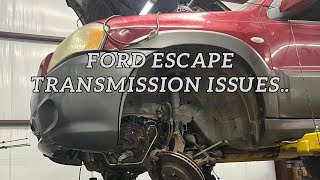
We Have This Part in Stock


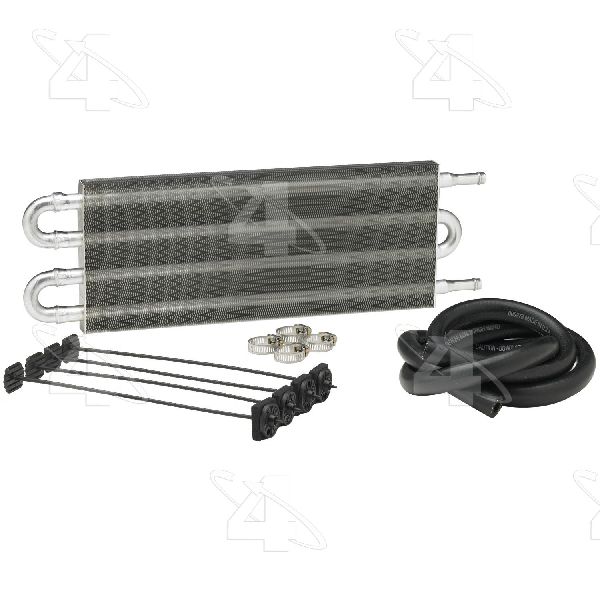

The information in this article is provided for general reference and educational purposes only. Vehicle specifications, procedures, and part compatibility can vary by production date, trim level, and region. Always consult your vehicle's factory service manual and verify part numbers before purchasing or performing repairs. Safety-critical components such as airbags, seat belts, and braking systems should be installed by a qualified professional.
- Ford Escape:
- 🧭 Diagnostic Flowchart
- 🎬 Helpful Videos
- 🛍️ Shop This Part
- What's Unique About the 2001-2007 Ford Escape
- Symptoms You May Notice
- Most Likely Causes
- Rare But Worth Checking
- Technical Service Bulletins (TSBs) & Recalls
- Diagnosis Steps
- Parts You'll Likely Need
- Related Codes That Often Appear With This One
- Platform-Specific Known Issues
- Mechanic-Grade Diagnostic Values
- Scan Tool Commands That Help
- Wiring & Ground Locations
- Real Owner Repair Stories
- "I Checked Everything" — The Actual Cause
- OEM Part Supersession History
- Model Year Variations Within This Range
- Other Known Issues on This Vehicle
- Used vs. New Parts: Buying Guide for This Vehicle
- Real Owner Stories
- 2005 Ford Escape 3.0L V6 — 228000 miles
- 2001 Ford Escape 3.0L V6 — ~125000 miles
- NHTSA Reported Incident — ODI #11282790
- Related OBD-II Codes
- Frequently Asked Questions
- 🎟️ Get 5% Off