

P0741 on 2011-2019 Ford Explorer 3.5L: Torque Converter Clutch Causes and Fixes
On a 2011-2019 Ford Explorer, P0741 most often indicates a mechanical failure of the torque converter or a faulty TCC solenoid/valve body. This is a serious code requiring professional diagnosis; expect repair costs from $600 for a solenoid body replacement to over $1,800 for a new torque converter. A fluid change alone is very unlikely to fix the issue.
- P0741 on your Explorer is a serious code indicating a failure in the torque converter lock-up system.
- The most likely causes are a failed torque converter or a faulty valve body/solenoid assembly, not a simple sensor or wiring issue.
- Do not continue to drive for extended periods, as the excess heat generated can lead to complete transmission failure.
- Repair is not a DIY job. It requires specialized tools for diagnosis and either dropping the transmission pan or removing the entire transmission.
- Ensure your mechanic performs a full diagnosis to differentiate between a valve body and a torque converter failure to avoid paying for the wrong repair.
What's Unique About the 2011-2019 Ford Explorer
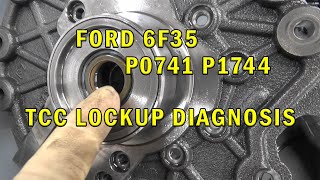
The 2011-2019 Explorer uses the Ford 6F50 or 6F55 automatic transmission. For this platform, P0741 is often a mechanical or hydraulic problem, not just a simple electrical fault. The issue frequently points to either a worn-out torque converter or a malfunctioning valve body assembly. Ford often pairs this code with P1744 ('TCC System Performance'), which specifically indicates a non-electrical, mechanical performance issue. 🎬 Watch: A technician explains P0741 and P1744 on the Explorer. This means that even though the computer is sending the right signals, a hydraulic leak or a sticking valve is preventing the torque converter clutch from engaging. TSB 18-2160, although for the newer 10R80 transmission, reinforces this diagnostic pattern, stating that when P0741 and P1744 are present together, the cause is a sticking TCC valve in the main control valve body. Manufacturer Bulletin #TSB 20-2117 further supports this across other Ford platforms, noting that these dual codes often stem from a sticking torque converter clutch (TCC) valve.
Symptoms You May Notice
- Shuddering or vibration felt through the vehicle, especially at highway speeds (40-60 mph)
- Engine RPMs are higher than usual or fluctuate while cruising
- Noticeable decrease in fuel economy; NHTSA ODI #11195793 notes that gas mileage can decrease critically when P0741 and P1744 are present.
- Check Engine Light is illuminated
- Transmission may feel like it's slipping or shifting harshly
- In some cases, the transmission may overheat, triggering a warning light
- Sensation of driving over rumble strips, especially during light acceleration. 🎬 See how to identify and fix common Ford transmission shudders.
- Replacing the torque converter when the actual fault is with the TCC solenoid or valve body. Proper diagnosis to differentiate between a hydraulic control issue and a mechanical converter failure is crucial to avoid unnecessary expense.
- Performing a transmission fluid flush with the expectation it will fix the code. While correct fluid level and condition are vital, a flush cannot repair a worn-out clutch or a stuck solenoid valve.
Most Likely Causes
- Faulty Torque Converter Clutch (TCC) Solenoid / Valve Body Assembly 🔴 High Probability → Shop Transmission Valve Body The valve body, which houses the solenoids, can develop wear in its hydraulic passages, leading to pressure loss. The TCC solenoid itself can also stick or fail mechanically, preventing it from directing fluid pressure to engage the lock-up clutch.
How to confirm: A technician will use a scan tool to monitor the commanded TCC duty cycle versus the actual TCC slip RPM. If the PCM is commanding lock-up but slip remains high, and electrical tests pass, the solenoid or valve body is suspect. The presence of code P1744 strongly points to this being a mechanical/hydraulic issue within the valve body rather than an electrical fault. NHTSA ODI #11721087 describes a scenario where P0741 and P1744 were triggered during downshifts and uphill driving, potentially linked to the lead frame.
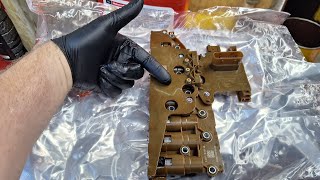
Typical fix: Replace the entire solenoid body assembly inside the transmission oil pan. The new solenoid body's identification number must be programmed into the PCM using a compatible scan tool. 🎬 Watch: A detailed look at the 6F50 solenoid body assembly.
Est. part cost: $200-$400 - Internal Torque Converter Failure 🔴 High Probability → Shop Automatic Transmission Torque Converter The lock-up clutch material inside the torque converter can wear out or delaminate, preventing it from grabbing and creating a solid connection when commanded. This is a known issue on the 6F35 transmission used in platform mates, and the 6F50/55 shares a similar design.
How to confirm: This is typically diagnosed after ruling out the fluid, wiring, and solenoid/valve body. If all other components are functioning, but TCC slip is still high, the torque converter itself has failed internally. Debris in the transmission pan is a strong indicator. NHTSA ODI #11514302 reports a case where a dealership diagnosed the code as a bad torque converter and valve body after intermittent warning lights.
Typical fix: Remove the entire transmission from the vehicle to replace the torque converter. This is a major repair. It is highly recommended to also replace the pump shaft seals and inspect the valve body at the same time.
Est. part cost: $300-$600 - Low or Dirty Transmission Fluid 🟡 Medium Probability → Shop Transmission Assembly Low fluid causes a drop in hydraulic pressure needed to engage the TCC. Dirty or burnt fluid can cause solenoids and valves to stick. However, on this platform, this is more often a symptom of a larger problem (like a failing converter) than the root cause itself.
How to confirm: Check the transmission fluid level and condition via the dipstick. The 6F50/55 transmission in the Explorer has a dipstick, making it easier to check than many modern sealed units. The fluid should be at the correct level, red in color, and not smell burnt.
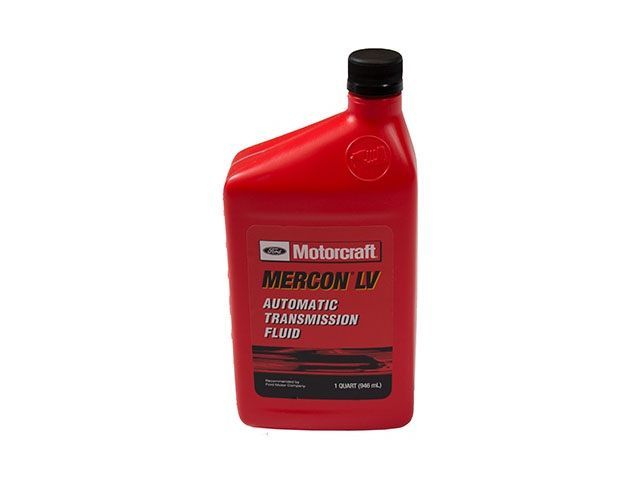
Typical fix: Perform a transmission fluid drain-and-fill with the correct Motorcraft MERCON LV fluid. A full flush is generally not recommended on higher-mileage vehicles where it hasn't been done regularly, as it can sometimes dislodge debris and worsen problems. A fluid change is unlikely to fix P0741 if a hard part has already failed.
Est. part cost: $100-$250
Rare But Worth Checking
- Damaged Wiring Harness: While less common, wiring between the PCM and the transmission can become damaged, causing a loss of signal to the TCC solenoid. This should be ruled out with a continuity test before replacing internal parts.
- Faulty Powertrain Control Module (PCM): It is extremely rare for the PCM to be the cause. This should only be considered after every other possibility has been exhaustively tested and eliminated.
Diagnosis Steps
- Check Transmission Fluid: Verify the fluid level is correct using the dipstick and that the fluid is clean and red, not dark brown or burnt-smelling. The correct fluid for this transmission is Motorcraft MERCON LV.
- Scan for Codes: Use an OBD-II scanner that can read transmission-specific codes to confirm P0741 and check for other related codes, especially P1744.
- Monitor Live Data: With a professional scan tool, drive the vehicle at highway speed (above 45 mph) and monitor the TCC command PID, TCC slip RPM PID, and TCC solenoid pressure. Confirm that the PCM is commanding lock-up (duty cycle > 0%) and that solenoid pressure rises (a healthy system may show ~90 PSI). If the command is active but slip remains high (over ~200 RPM), the problem is mechanical or hydraulic.
- Test the TCC Solenoid Circuit: Check the wiring from the PCM to the transmission connector for continuity and shorts. A technician can also command the solenoid on and off to listen for a click, though a click doesn't rule out a mechanical sticking issue.
- Inspect Valve Body: If circuits are good, the next step is to drop the transmission pan and inspect the valve body and solenoid assembly. Look for debris in the pan. This is the most likely culprit if P1744 is also present.
- Condemn Torque Converter: If the fluid, wiring, and solenoid/valve body are all confirmed to be good, the torque converter itself has failed internally and must be replaced.
Parts You'll Likely Need
- Torque Converter
(OEM #DA8Z-7902-G)— This is the ultimate cause if the internal lockup clutch is worn out. Replacement is a very large job requiring transmission removal.
Trusted brands: Motorcraft, LuK, Diamond T, Jasper, Precision of New Hampton
OEM price range: $330-$490
Aftermarket price range: $250-$500 - Transmission Solenoid Body Assembly
(OEM #AA5Z-7Z369-B)— This assembly contains the TCC solenoid. It is a common failure point due to sticking valves or solenoid failure and is often the cause when P0741 is paired with P1744.
Trusted brands: Motorcraft, Bosch
OEM price range: $250-$400
Aftermarket price range: $200-$350 - Motorcraft MERCON LV Automatic Transmission Fluid
(OEM #XT-10-QLVC)— The correct fluid is required for any related service. Low or incorrect fluid can cause this code on its own.
Trusted brands: Motorcraft
OEM price range: $8-$12 per quart
Aftermarket price range: $7-$10 per quart
Related Codes That Often Appear With This One
- P1744 — This Ford-specific code for 'Torque Converter Clutch System Performance' often accompanies P0741. It specifically points to a mechanical or hydraulic failure rather than an electrical one, strengthening the case for a bad valve body or torque converter.
Technical Service Bulletins (TSBs) & Recalls
- TSB 18-2160: While for the 10R80 transmission, it indicates that when P0741 and P1744 are present, the cause is a sticking TCC valve in the main control valve body, a pattern applicable to the 6F55.
- TSB SB45277: Notes a transmission fluid leak from the converter housing area on Police Utility Explorers with the 6F50/6F55, which could lead to low fluid levels and cause a P0741 code.
- Bulletin #TSB 20-2117: States that vehicles may exhibit an illuminated MIL with DTCs P0741 and P1744 due to a sticking torque converter clutch (TCC) valve.
Platform-Specific Known Issues
- A relevant Ford Technical Service Bulletin (TSB 18-2160) for other models with a similar transmission design notes that codes P0741 and P1744 together are caused by a sticking TCC valve, and the prescribed fix is to replace the main control (valve body) assembly.
- Owner experiences on forums like explorerforum.com frequently discuss the dilemma of replacing just the solenoid pack versus the torque converter. One user on a Ford forum with a P0741 code went through a frustrating process of replacing the solenoid pack (no fix), then the valve body (no fix), and finally the torque converter, which also did not fix the issue, highlighting the importance of accurate initial diagnosis.
Mechanic-Grade Diagnostic Values
- TCC Solenoid Pressure (Live Data) — expected: Approx. 90 PSI when commanded ON. Failure: Significantly lower pressure when commanded, indicating a leak or stuck valve.
- TCC Solenoid Resistance — expected: 10-30 Ohms (general specification). Failure: Reading outside of the specified range indicates an electrical failure of the solenoid coil.
Scan Tool Commands That Help
- Ford IDS, FORScan, or equivalent professional scanner: Solenoid Body Strategy Programming — This is a mandatory procedure after replacing the transmission solenoid body. The 13-digit solenoid strategy number and 7-digit solenoid body ID, found on the new part, must be entered into the PCM to ensure correct shift pressures and timing.
- Ford IDS, FORScan, or equivalent professional scanner: Reset Transmission Adaptive Tables / Relearn — After replacing any major transmission component like the valve body or torque converter, or performing a fluid service, resetting the adaptive learning tables allows the transmission to relearn shift points and clutch apply pressures with the new components or fluid, preventing harsh shifts.
OEM Part Supersession History
DA8Z-7902-A→DA8Z-7902-G— Updated part revision from the manufacturer.
Heads up: The new part number is a direct replacement for the old one.AA5Z-7Z369-B→AA5Z-7G391-A— Updated part revision from the manufacturer. This is the solenoid body assembly.
Heads up: The new part number is a direct replacement for the old one.
Model Year Variations Within This Range
- 2011-2019: These models use Motorcraft MERCON LV transmission fluid. This is a change from pre-2010 models which may have used MERCON V. Using the wrong fluid can cause shifting problems and damage.
- 2011-2019: The valve body used in this generation is the 'late' style, identified by a casting number beginning with 'AA5P'. This is distinct from the 'early' style (casting #7T4P) used in 2007-2009 models.
Diagnostic Flowchart
Other Known Issues on This Vehicle
Issues unrelated to this code that are worth knowing about as an owner of this generation:
- Internal Water Pump Failure (3.5L V6) 🔴 High — Common after 100,000 miles. Failure can cause coolant to mix with engine oil, leading to catastrophic engine damage. (Ref: No specific recall, but it is a widely documented issue and the subject of a dismissed lawsuit.)
- Power Transfer Unit (PTU) Failure/Leak 🔴 High — Common on AWD models. The unit can overheat due to a lack of a drain plug for servicing, leading to fluid breakdown and gear failure. Repair costs are high, often $2,200-$3,200.
- Exhaust Odor / Carbon Monoxide in Cabin 🔴 High — Affects 2011-2017 models. Caused by unsealed seams or faulty drain valves in the rear of the vehicle, allowing exhaust fumes to enter, especially under hard acceleration. (Ref: Multiple TSBs issued (e.g., TSB 16-0166, TSB 17-0029) and a Ford 'complimentary service program' was initiated, but not a full recall.)
- Power Steering Rack Failure 🟠 Medium — Common on early 5th generation models (2011-2013). Can result in a loss of power steering assist. Several recalls were issued to address aspects of the system. (Ref: Multiple recalls issued for various steering components.)
- Cracked/Warped Exhaust Manifolds 🟠 Medium — Can occur on the 3.5L V6, leading to exhaust leaks that can sometimes be drawn into the cabin, contributing to the exhaust odor issue.
Used vs. New Parts: Buying Guide for This Vehicle
When a used part is the smart pick: A complete, low-mileage used transmission from a warrantied salvage yard can be a cost-effective alternative to a full rebuild if the price is right. However, buying individual used electronic or hydraulic components like a valve body or solenoid pack is a significant gamble with no way to verify condition before installation.
Donor-vehicle mileage cap: roughly under 70000 miles for the part to have meaningful remaining life.
What to inspect on the donor part:
- Verify the donor vehicle's mileage.
- If possible, check the transmission fluid from the donor vehicle. It should be reddish and not smell burnt.
- Ask for a warranty (typically 30-90 days) from the salvage yard.
- Ensure the donor vehicle was not involved in a severe front-end collision that could have damaged the transmission.
OEM-only on this vehicle (don't cheap out):
- Transmission Solenoid Body Assembly: Due to the requirement for programming specific strategy and ID numbers to the PCM, using an OEM (Motorcraft) or OEM-supplier (Bosch) part is critical for a successful repair.
Aftermarket brands forum-validated for this vehicle:
- LuK (Torque Converter)
- Diamond T (Torque Converter)
- Precision of New Hampton (Torque Converter)
- TransGo (Valve Body Shift Kits)
Brands owners have reported issues with on this vehicle:
- Unbranded, low-cost valve bodies from online marketplaces like eBay or Walmart Marketplace are frequently just used parts that have been cleaned, not properly remanufactured, and can fail to resolve the issue or introduce new ones.
Real Owner Stories
Aggregated from forums and TSBs cited above. Mileages and costs reflect what owners reported in those sources.
2002 Ford Explorer
Symptoms: Check transmission light illuminated with code P0741.
What fixed it: The story serves as a warning of misdiagnosis; the owner replaced the solenoid pack and then the torque converter, but the code remained, indicating the root cause was not addressed by 'throwing parts' at the problem.
Source hint: Explorer Forum thread titled '2002 Explorer Check trans / P0741 code'
1996 Ford Explorer
Symptoms: O/D light blinking and P0741 code present.
What fixed it: The diagnostic path involved dropping the pan to inspect for debris and checking the valve body gasket integrity before deciding whether to condemn the torque converter.
Source hint: Ford Truck Enthusiasts Forums thread titled 'O/D Blink - P0741 code'
Ford F150 (6R80 transmission)
Symptoms: Transmission shudder accompanied by both P1744 and P0741 codes.
What fixed it: The combination of codes pointed directly to the TCC solenoid being commanded on but failing to operate mechanically, with P0741 confirming the resulting slip.
Source hint: Ford F150 Forum thread titled '6r80 shudder and p1744 and po741 code'
Ford Fusion
Symptoms: Engine light and code P0741 appearing while driving at 30mph.
What fixed it: An owner reported in NHTSA ODI #11705988 that after being diagnosed with code P0741 at only 54,618 miles, they were told the vehicle required a completely new transmission at a cost of $6,800.00.
Related OBD-II Codes
Frequently Asked Questions
Does TSB 18-2160 apply to my 2011-2019 Ford Explorer 3.5L V6?
Can a transmission fluid leak cause the P0741 code on a Police Utility Explorer?
Should I perform a full transmission flush to fix the shuddering on my high-mileage Explorer?
What specific transmission fluid should I use for my 2011-2019 Explorer 3.5L?
Is there an easy way to check the transmission fluid level on this model?
If I replace the solenoid body assembly, is there a programming step required?
Helpful Videos

We Have This Part in Stock



The information in this article is provided for general reference and educational purposes only. Vehicle specifications, procedures, and part compatibility can vary by production date, trim level, and region. Always consult your vehicle's factory service manual and verify part numbers before purchasing or performing repairs. Safety-critical components such as airbags, seat belts, and braking systems should be installed by a qualified professional.
- Ford Explorer:
- 🧭 Diagnostic Flowchart
- 🎬 Helpful Videos
- 🛍️ Shop This Part
- What's Unique About the 2011-2019 Ford Explorer
- Symptoms You May Notice
- Most Likely Causes
- Rare But Worth Checking
- Diagnosis Steps
- Parts You'll Likely Need
- Related Codes That Often Appear With This One
- Technical Service Bulletins (TSBs) & Recalls
- Platform-Specific Known Issues
- Mechanic-Grade Diagnostic Values
- Scan Tool Commands That Help
- OEM Part Supersession History
- Model Year Variations Within This Range
- Other Known Issues on This Vehicle
- Used vs. New Parts: Buying Guide for This Vehicle
- Real Owner Stories
- 2002 Ford Explorer
- 1996 Ford Explorer
- Ford F150 (6R80 transmission)
- Ford Fusion
- Related OBD-II Codes
- Frequently Asked Questions
- 🎟️ Get 5% Off