

P0741 on 2000-2007 Ford Focus: Torque Converter Clutch Performance Causes and Fixes
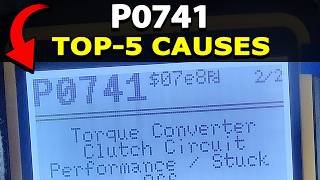
On a 2000-2007 Ford Focus, code P0741 usually means the torque converter clutch is slipping. This is often caused by worn internal bushings in the transmission's front pump or a faulty TCC solenoid. Addressing this early can prevent a full transmission replacement.
- P0741 on a 2000-2007 Focus indicates the torque converter clutch is slipping, not just an electrical fault.
- The most probable cause is a known mechanical weak point: worn stator bushings inside the transmission pump, requiring significant labor to fix.
- Other causes include a faulty TCC solenoid, worn torque converter, or low/dirty fluid.
- Driving for extended periods with this code can cause severe transmission overheating and damage, leading to much more expensive repairs.
- Due to the high likelihood of a major internal mechanical fault, professional diagnosis is strongly recommended before replacing parts.
What's Unique About the 2000-2007 Ford Focus
The 2000-2007 Ford Focus with the 2.0L engine uses the 4F27E automatic transmission (also known as the FN4A-EL in Mazda vehicles). A very common and well-documented failure point on these transmissions is the wear of two specific bushings inside the stator of the front pump. This wear allows hydraulic pressure, which is meant to apply the torque converter clutch, to leak into the release circuit. This pressure loss directly prevents the torque converter clutch from applying correctly, causing the P0741 code. While solenoids or fluid can be at fault, this internal bushing wear is a notorious and often misdiagnosed issue for the 4F27E.
Generation note: This guide covers the first generation (Mk1, 2000-2004) and the facelifted first generation (Mk1.5, 2005-2007) of the Ford Focus in North America. Both use the 4F27E transmission, and the causes and fixes for P0741 are consistent across this year range.
Symptoms You May Notice
- Check Engine Light is on.
- Flashing Overdrive (O/D) light or transmission warning lamp (may look like a gear with an exclamation point).
- Vehicle may feel like it's shuddering or vibrating at highway speeds (above 45-55 mph).
- Engine RPM is higher than usual when cruising on the highway.
- Noticeable decrease in fuel economy.
- Transmission may shift harshly after the code is set.
- In some cases, the vehicle may stall after coming to a stop from high speed.
- Replacing only the torque converter without addressing the worn stator bushings. If the bushings are the root cause of the pressure loss, a new converter will not fix the problem and will likely fail prematurely.
- Replacing the TCC solenoid when the issue is a hydraulic leak from worn bushings or a worn valve body bore.
- Repeatedly changing the transmission fluid without diagnosing the underlying mechanical or hydraulic fault.
Most Likely Causes
- Worn Stator Support Bushings in Front Pump 🔴 High Probability This is a widely recognized design weakness in the 4F27E transmission. The two bushings that separate TCC apply and release pressures wear out, causing a hydraulic leak that prevents the clutch from engaging properly. The wear is often attributed to a lack of support for the turbine shaft.
How to confirm: A professional technician can perform an air pressure test on the stator support after removing the transmission pump to check for leakage past the bushings. This is the definitive test to confirm this specific failure.
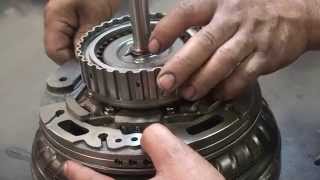
Typical fix: The transmission must be removed to replace the front pump assembly or, more commonly, press out the old bushings and install new ones. Aftermarket bushing kits are available from companies like Sonnax (Part #46000-01K) and Omega Machine & Tool. Simply replacing the torque converter will not fix the issue if the bushings are the root cause.
Est. part cost: $20-$50 for a bushing kit, $200-$400 for a complete pump assembly - Faulty Torque Converter Clutch (TCC) Solenoid 🟡 Medium Probability → Shop Automatic Transmission Torque Converter Solenoids are a common failure item in many automatic transmissions. They can fail electrically (open/short circuit) or mechanically (sticking). The TCC function is controlled by a combination of on/off and PWM solenoids in the 4F27E.
How to confirm: A technician can command the solenoid on and off with a capable scan tool to check for response. The solenoid's electrical resistance can also be tested with a multimeter at the transmission case connector. Access for replacement requires dropping the transmission pan.
Typical fix: Replace the suspect solenoid, which is usually sold as part of a complete solenoid pack. This requires draining the transmission fluid, removing the oil pan, and removing the valve body to access the solenoid pack.
Est. part cost: $50-$150 for a remanufactured solenoid pack - Low or Degraded Transmission Fluid ⚪ Low Probability → Shop Transmission Assembly While not specific to the Focus, low fluid level reduces hydraulic pressure, and old, burnt fluid loses its frictional properties, both of which can contribute to clutch slippage. The 4F27E in these model years specifies Mercon V fluid.
How to confirm: Check the transmission fluid level and condition using the dipstick. The fluid should be at the correct level, red in color, and not smell burnt. Metal shavings in the pan are a sign of significant internal damage.
Typical fix: Perform a transmission fluid and filter change. Use fluid that meets Ford's Mercon V specification. Note that Ford did not include a drain plug on the 4F27E pan, but a pan from a Mazda with the same transmission (FN4A-EL) can be fitted, which does have a drain plug.
Est. part cost: $60-$120 for fluid and a filter kit - Worn Torque Converter ⚪ Low Probability → Shop Automatic Transmission Torque Converter The internal clutch inside the torque converter can wear out over time, especially if driven with low fluid or other issues causing excessive heat and slippage. However, this is often a symptom of the stator bushing issue, not the root cause.
How to confirm: This is typically diagnosed after all other possibilities (fluid, solenoids, wiring, valve body, stator bushings) have been ruled out. It requires transmission removal to inspect or replace.
Typical fix: Replace the torque converter. This is a major repair that involves removing the transmission. It should be done in conjunction with checking/replacing the stator bushings to prevent a repeat failure.
Est. part cost: $200-$500
Rare But Worth Checking
- Worn Valve Body: → Shop Transmission Valve Body The TCC control valve within the valve body can wear its bore, causing a pressure leak similar to the stator bushings. This is less common but possible. Aftermarket solutions like oversized valves from Sonnax exist for this problem.
- Damaged Wiring or Connectors: An open or short in the wiring to the TCC solenoid can prevent it from operating. This is worth checking before condemning internal parts. Poor ground connections under the airbox are a known issue on the Focus platform and can cause various transmission faults.
Diagnosis Steps
- Check the transmission fluid level and condition. Ensure it is full and does not look or smell burnt. Use MERCON V fluid.
- Use a scan tool to check for any other transmission-related codes.
- Monitor live data with a scan tool to observe the commanded TCC duty cycle versus the actual torque converter slip RPM. This will confirm if the slip is happening when lock-up is commanded. A slip greater than 200 RPM when commanded to lock will trigger the code.
- Inspect the transmission wiring harness and connectors for any visible damage, corrosion, or loose connections. Pay special attention to the ground points under the airbox.
- Test the solenoid resistances from the main transaxle case connector using a multimeter to avoid dropping the pan for initial checks. Compare readings to specifications.
- If the above steps do not identify the cause, the next step is to drop the transmission pan to visually inspect the fluid for excessive metal debris and to gain access to the solenoids and valve body.
- At this point, professional diagnosis is recommended to test for worn stator bushings (requires transmission removal and special tools) or valve body issues.
Parts You'll Likely Need
- Torque Converter Clutch (TCC) Solenoid Pack
(OEM #48420K-R (interchange part number))— The solenoids control the hydraulic fluid flow for the lock-up clutch and are a common failure point. They can stick or fail electrically. They are typically replaced as a complete pack.
Trusted brands: Motorcraft, Rostra
OEM price range: $80-$150
Aftermarket price range: $40-$90 - Transmission Front Pump Stator Support Bushings
(OEM #Sonnax #46000-01K (aftermarket kit))— Worn stator support bushings within the pump are a primary cause of P0741 on the 4F27E transmission. Replacing these bushings is critical.
Trusted brands: Sonnax, Omega Machine & Tool
OEM price range: N/A (sold as pump assembly)
Aftermarket price range: $20-$50 - Torque Converter — The internal lock-up clutch can wear out, or the converter can be damaged by excessive heat from prolonged slipping. Often replaced during a transmission rebuild.
Trusted brands: Motorcraft, Luk
OEM price range: $300-$500
Aftermarket price range: $150-$250 - Transmission Filter and Gasket Kit — This should be replaced any time the transmission pan is removed for service, such as replacing a solenoid.
Trusted brands: Motorcraft, Wix, ATP
OEM price range: $30-$50
Aftermarket price range: $15-$30
Related Codes That Often Appear With This One
- P0740 — P0740 indicates an electrical circuit malfunction for the TCC solenoid, while P0741 indicates a performance problem (slippage). They can appear together if an electrical fault is causing the performance issue.
- P1744 — This is another Ford-specific code related to TCC performance, often pointing to a large amount of slippage being detected. A TSB for other Ford models links P0741 and P1744 to internal torque converter damage.
Technical Service Bulletins (TSBs) & Recalls
- While no TSB was found specifically for the 2000-2007 Focus and P0741, Ford TSB 19-2100 for later models links P0741 directly to internal torque converter damage, showing a pattern of this code indicating serious internal faults.
Platform-Specific Known Issues
- Owner Experience: Replacing Transmission Doesn't Fix P0741: → Shop Transmission Assembly A Ford Focus owner on Reddit reported that even after replacing the entire transmission with a new unit (including torque converter and solenoids), the P0741 code returned immediately. The only part not swapped was the transmission 'sleeve'. This experience underscores that the problem can sometimes lie in components outside the main transmission assembly or be related to a persistent control issue.
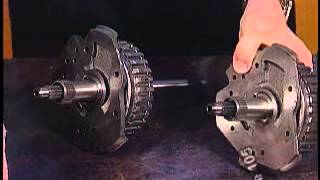
- Definitive Diagnosis: Air Checking Stator Bushings: Multiple transmission repair guides and videos specifically for the 4F27E emphasize that the root cause of P0741 is often worn stator support bushings. A definitive diagnostic procedure involves removing the transmission pump, inserting the turbine shaft into the stator, and using compressed air to check for leaks between the apply and release circuits. This test confirms the hydraulic leak before expensive parts are replaced.
Mechanic-Grade Diagnostic Values
- Torque Converter Slip RPM (Live Data) — expected: Near 0 RPM when TCC is commanded locked.. Failure: A consistent slip of >60-200 RPM when lockup is commanded will set the P0741 code.
- Shift Solenoid 'A' or 'B' (On/Off) Resistance — expected: 10.9 - 26.2 Ohms at 70°F (20°C). Failure: Resistance outside this range indicates a failed solenoid coil.
- Shift Solenoid 'C', 'D', or 'E' (PWM) Resistance — expected: 1.0 - 4.2 Ohms at 70°F (20°C). Failure: Resistance outside this range indicates a failed solenoid coil.
- EPC Solenoid (PWM) Resistance — expected: 2.4 - 7.3 Ohms at 70°F (20°C). Failure: Resistance outside this range indicates a failed solenoid coil.
- Transaxle Fluid Temp (TFT) Sensor Resistance — expected: 33.5k - 41.2k Ohms at 70°F (20°C). Value decreases as temperature increases (e.g., 7.08k - 8.01k Ohms at 140°F).. Failure: Readings that are grossly out of spec for a given temperature can affect TCC lockup strategy.
Scan Tool Commands That Help
- Ford IDS / FORScan / Professional Scan Tool: TCC Solenoid Command (On/Off or Duty Cycle %) — Use this bidirectional control to manually command the TCC solenoid on and off while monitoring TCC slip RPM. This helps determine if the solenoid is responding to commands from the PCM, isolating a mechanical/hydraulic issue from an electrical one.
- Ford IDS / FORScan / Professional Scan Tool: Live Data Monitoring (TCC_SLIP_RPM, TCC_DSD) — Monitor the desired TCC slip (TCC_DSD) versus the actual slip RPM (TCC_SLIP_RPM) during a test drive. This is the primary data the PCM uses to set the P0741 code and is essential for confirming the fault condition.
Wiring & Ground Locations
- Main Transmission Grounds — Underneath the airbox assembly on the driver's side of the engine bay. Typically two ground wires are secured to the chassis with 10mm bolts.. The Focus platform is known for poor ground connections at these points due to paint on the chassis. A bad ground can cause a host of erratic transmission electronic issues, including incorrect solenoid operation, even if the transmission itself is healthy. Cleaning these grounds to bare metal is a common first step.
- Main Battery Ground — The main negative battery cable grounds to the chassis near the battery, often with a 13mm bolt.. While less common than the grounds under the airbox, ensuring the primary system ground is clean and tight is fundamental for all electronic components, including the PCM and transmission controls.
- Transaxle Case Connector — The main electrical connector on the top or front of the transaxle case.. This connector's pins can be used to test the resistance of all internal solenoids without removing the transmission pan. An ATSG document provides a chart mapping each solenoid to specific pins on this connector.
Real Owner Repair Stories
- Reddit user, r/FordFocus (Ford Focus Mk1, 386,000 km) — P0741 code, transmission malfunction light and harsh shifting appears after exceeding 70 km/h. The issue goes away after a restart until 70 km/h is exceeded again.
❌ Tried (didn't work) Changed transmission fluid 3 times with correct Mercon V., Installed a brand new (zero km) 4F27E transmission, including a new torque converter and solenoids., Replaced the ECU (PCM).
✅ What actually fixed it The user reported the problem persisted even after replacing the entire transmission and ECU, strongly suggesting the root cause was external to the transmission, such as a wiring harness issue, a problem with a related sensor (like VSS or MAF, which they planned to check next), or a fault in the replacement parts. This serves as a critical cautionary tale against assuming the transmission itself is the sole cause. - NHTSA ODI #11376846 — An owner reported that the check engine light came on and the engine was making a whining noise. Codes P0741 and P1744 for TCC were found, and the vehicle was shifting poorly after exiting the expressway.
- NHTSA ODI #10331898 — A driver experienced a flashing O/D light and was told by a repair shop that the torque converter clutch was at fault with error code P0741.
- NHTSA ODI #10078728 — After a diagnostic test found code P0741, a technician noted that the issue could be either a solenoid or the converter, preventing the transmission from locking up for a 1:1 conversion.
- NHTSA ODI #11721087 — An owner reported downshift issues when traveling through canyons or going uphill, which triggered codes P0741-00 and P1744-00, suggesting a potential issue with the lead frame.
When the Usual Fixes Don't Work
- A common assumption is that P0741 on a 4F27E is almost always an internal transmission fault like worn stator bushings. However, as one owner's story shows, it is possible to replace the entire transmission with a new unit and still have the exact same P0741 symptoms. This proves that external factors like wiring, grounds, or other sensor inputs to the PCM can create the conditions for this code, and they must be ruled out before condemning a transmission, especially if the fluid is clean and the failure is intermittent or speed-dependent.
OEM Part Supersession History
Transmission assembly starting with 'XS4P'→Transmission assembly starting with '1S4P'— Final drive gear ratio change for better engine performance.
Heads up: If a newer '1S4P' transmission is installed in a vehicle that originally had an 'XS4P' unit, the PCM must be recalibrated to accommodate the new gear ratios to prevent shift timing and TCC lockup problems.Ford MERCON V ATF (XT-5-QMC)→Ford MERCON LV ATF (XT-10-QLVC)— Ford phased out Mercon V and updated specifications to the lower viscosity LV fluid.
Heads up: While Ford authorized Mercon LV for back-servicing 2000-2007 models, some transmission specialists and owners prefer to stick with a Mercon V equivalent fluid, believing the viscosity change can affect shift feel in older, higher-mileage units. Using the wrong fluid type (e.g., Mazda M5 fluid) can cause damage.
Model Year Variations Within This Range
- 2000: Transmissions built before December 2000 have a different final drive gear ratio than those built after. Pre-change part numbers typically start with 'XS4P', while post-change start with '1S4P'. Swapping between them without a PCM calibration will cause issues.
Diagnostic Flowchart
Other Known Issues on This Vehicle
Issues unrelated to this code that are worth knowing about as an owner of this generation:
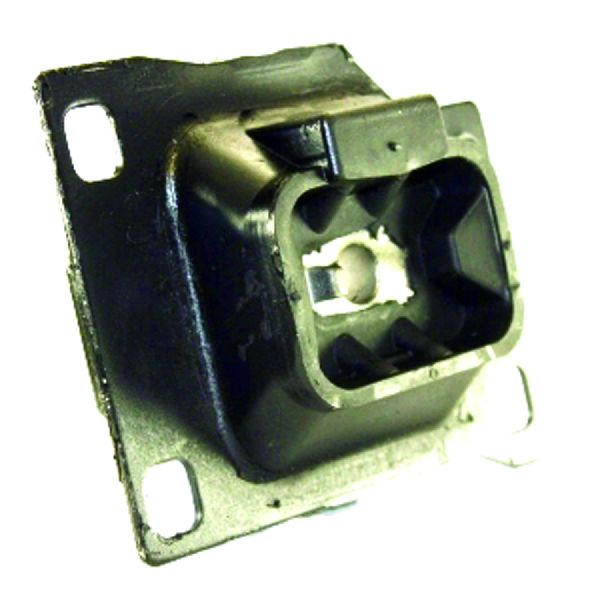
- Passenger-Side Engine Mount Failure 🔴 High — Very common, often occurs after 60,000 miles. The hydraulic-filled mount collapses, causing severe vibration at idle and while driving. (Ref: A TSB was issued for 2000-2011 models regarding engine vibration.)
- Leaking Valve Cover Gasket 🟠 Medium — Common on the 2.0L Zetec engine as it ages. The gasket becomes hard and brittle, causing oil to leak onto the exhaust manifold.
- Rear Suspension Clunking/Noise 🟡 Low — Frequently reported. Often caused by worn rear xsway bar end links or shock mounts. Can sound like loose items in the trunk. (Ref: TSB #16861 addresses rattling from rear suspension over small bumps.)
- Ignition Lock Cylinder Failure 🔴 High — A widely reported problem where the key will not turn in the ignition, stranding the driver. It is the single most common complaint for this generation.
- Alternator Failure / Wiring Pigtail 🟠 Medium — The alternator can fail, but a common related issue is the failure of the three-wire pigtail connector, which can cause intermittent charging issues or a no-charge condition.
- Broken Wires in Hatch/Trunk Lid Harness 🟡 Low — Wires in the flexible harness between the body and the rear hatch/trunk can break from repeated opening and closing, causing issues with the trunk release, license plate lights, or creating strange electrical faults.
Used vs. New Parts: Buying Guide for This Vehicle
When a used part is the smart pick: For this specific code, buying a used transmission from a junkyard is a high-risk, low-reward choice. The most common cause, worn stator support bushings, is a design flaw that will likely be present in any high-mileage used unit. A used part only makes sense if it's from a very low-mileage donor and you can get a strong warranty.
Donor-vehicle mileage cap: roughly under 80000 miles for the part to have meaningful remaining life.
What to inspect on the donor part:
- Check the fluid on the dipstick of the donor car if possible. If it's dark, burnt, or has metal flake, walk away.
- Look for service records indicating a recent transmission replacement or rebuild.
- Inspect the case for cracks or signs of heavy impact.
OEM-only on this vehicle (don't cheap out):
- While not strictly OEM-only, using a high-quality remanufactured torque converter from a reputable brand (like Motorcraft or Luk) is highly recommended over a cheap, no-name unit.
Aftermarket brands forum-validated for this vehicle:
- Sonnax (for internal valve body parts and stator bushings)
- Rostra (for transmission solenoids)
- Wix / ATP (for filters and gaskets)
Brands owners have reported issues with on this vehicle:
- Unbranded, low-cost solenoid packs from online marketplaces are a gamble; they often have high failure rates and may not be properly calibrated.
Real Owner Stories
Aggregated from forums and TSBs cited above. Mileages and costs reflect what owners reported in those sources.
2000-2007 Ford Focus 2.0L
Symptoms: The owner replaced the entire transmission unit, including the torque converter and solenoids, but the P0741 code returned immediately. The only component not replaced was the transmission 'sleeve'.
What fixed it: The source indicates the problem persisted even after a full transmission swap, suggesting the issue can lie in components outside the main assembly or persistent control issues.
Source hint: Reddit - r/FordFocus - '4F27E / P0741 Fault'
2008 Ford Focus
Symptoms: The vehicle triggered a P0741 code and the owner found significant metal shavings inside the transmission pan.
What fixed it: Due to the internal damage evidenced by metal debris, a full transmission rebuild was recommended.
Source hint: Reddit - r/MechanicAdvice - 'My kids 08 Ford Focus...got a code P741'
NHTSA Reported Performance Issues
Symptoms: According to NHTSA ODI #10663437, an owner reported the check engine light remained on for code P0741, causing the car to drive improperly at highway speeds because the torque converter would not lock up as intended.
What fixed it: Diagnostic reports often suggest that when the TCC is not locking up, it may be due to a solenoid or the converter itself (NHTSA ODI #10078728).
Related OBD-II Codes
Frequently Asked Questions
Does Ford TSB 19-2100 apply to my 2000-2007 Focus?
What specific transmission fluid should I use for my 2000-2007 Ford Focus to avoid P0741 issues?
Is there a way to make transmission fluid changes easier on the Focus 4F27E?
I replaced my torque converter but P0741 came back. What did I miss?
Are there specific aftermarket parts recommended for the stator bushing failure?
Where should I check for wiring issues related to P0741 on this vehicle?
Helpful Videos

We Have This Part in Stock

The information in this article is provided for general reference and educational purposes only. Vehicle specifications, procedures, and part compatibility can vary by production date, trim level, and region. Always consult your vehicle's factory service manual and verify part numbers before purchasing or performing repairs. Safety-critical components such as airbags, seat belts, and braking systems should be installed by a qualified professional.
- Ford Focus:
- 🧭 Diagnostic Flowchart
- 🎬 Helpful Videos
- 🛍️ Shop This Part
- What's Unique About the 2000-2007 Ford Focus
- Symptoms You May Notice
- Most Likely Causes
- Rare But Worth Checking
- Diagnosis Steps
- Parts You'll Likely Need
- Related Codes That Often Appear With This One
- Technical Service Bulletins (TSBs) & Recalls
- Platform-Specific Known Issues
- Mechanic-Grade Diagnostic Values
- Scan Tool Commands That Help
- Wiring & Ground Locations
- Real Owner Repair Stories
- When the Usual Fixes Don't Work
- OEM Part Supersession History
- Model Year Variations Within This Range
- Other Known Issues on This Vehicle
- Used vs. New Parts: Buying Guide for This Vehicle
- Real Owner Stories
- 2000-2007 Ford Focus 2.0L
- 2008 Ford Focus
- NHTSA Reported Performance Issues
- Related OBD-II Codes
- Frequently Asked Questions
- 🎟️ Get 5% Off