

P0741 on 2018 Ford Mustang: Torque Converter Clutch Performance Causes and Fixes
On a 2018 Ford Mustang with the 10R80 transmission, code P0741 is most often caused by a sticking valve in the main control valve body, particularly on models built on or before November 20, 2017. Ford issued technical service bulletin (TSB) 20-2117 for this issue, and the official fix involves replacing the entire valve body assembly. This is a complex job requiring special procedures and is not recommended for most DIYers.
- For a 2018 Mustang, P0741 is very likely caused by a faulty main control valve body, especially on vehicles built before late November 2017.
- Check for Ford TSB 20-2117, as it directly addresses this problem.
- The recommended fix is a complete replacement of the valve body, not just a single solenoid.
- This is a complex repair that requires professional service; it is not recommended for a typical DIYer.
- Driving with this code can lead to more severe transmission damage, so it should be addressed promptly.
What's Unique About the 2018-2018 Ford Mustang
The 2018 Ford Mustang uses the 10-speed 10R80 automatic transmission, which was co-developed with GM and is known for a range of issues including harsh shifting and internal component failures. For this specific model year, Ford identified a known issue with the main control valve body that could cause P0741. A sticking Torque Converter Clutch (TCC) valve inside the valve body was a common problem on vehicles built on or before November 20, 2017, leading Ford to issue a specific Technical Service Bulletin (TSB 20-2117, which superseded 18-2160) to address it. This TSB is critical because it directs technicians to replace the valve body as the primary fix when P0741 is present with P1744, avoiding misdiagnosis.
Symptoms You May Notice
- Check Engine Light is on.
- Reduced fuel efficiency.
- Transmission may feel like it's slipping or hunting for gears.
- Shuddering or vibration, sometimes described as driving over rumble strips, especially at steady cruising speeds.
- Engine RPM is higher than usual at highway speeds.
- Harsh or delayed shifts, which can be a general symptom of 10R80 issues.
- Vehicle may stall after driving at high speeds.
- Transmission overheating, especially under load.
- Replacing only the torque converter when the actual issue is the main control valve body. This is a common mistake if the technician is not aware of Ford's TSB 20-2117 for this specific vehicle and build date.
- Replacing only the TCC solenoid instead of the entire valve body assembly. Forum discussions suggest this often fails to resolve the P0741/P1744 codes on affected vehicles.
Most Likely Causes
- Sticking TCC Valve in Main Control Valve Body 🔴 High Probability → Shop Transmission Valve Body Ford issued TSB 20-2117 (superseding 18-2160) specifically for 2018 Mustangs built on or before Nov 20, 2017, identifying a sticking TCC valve as the primary cause. This is a well-documented manufacturing defect in the valve body for this production period.
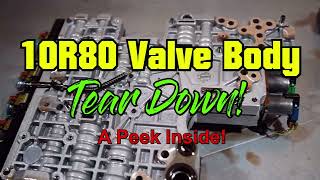
How to confirm: A technician will verify the vehicle's build date and check for the presence of both P0741 and P1744 as specified in the TSB. If both codes are present and the build date matches, the TSB directs replacement of the valve body without further diagnostics. A vacuum test on the valve body could also pinpoint a worn TCC damper valve bore. 🎬 See this video for a detailed look inside the valve body.
Typical fix: Replace the entire main control valve body assembly with the updated part (JL3Z-7A100-B or its successor) and perform a transmission adaptive learning procedure. The procedure requires a scan tool and results in firmer-than-normal shifts for several days as the computer relearns.
Est. part cost: $400-$700 - Low or Contaminated Transmission Fluid 🟡 Medium Probability → Shop Transmission Assembly The 10R80 transmission is sensitive to fluid condition and level. Contaminated fluid can cause valves and solenoids to stick, leading to various shifting issues including P0741. Only Mercon ULV fluid should be used; using any other type can cause damage.
How to confirm: Check the transmission fluid level and condition. The fluid should be clean, at the proper level, and not smell burnt. The 10R80 requires a specific fluid, Motorcraft Mercon ULV (XT-12-QULV).
Typical fix: Perform a transmission fluid and filter change using the correct Motorcraft Mercon ULV fluid. Note that a simple fluid change is unlikely to fix a mechanical issue like a sticking valve body.
Est. part cost: $100-$200 - Torque Converter Failure ⚪ Low Probability → Shop Automatic Transmission Torque Converter While less common than the valve body issue on early 2018 models, the internal clutch of the torque converter can wear out, causing shudder and slip that triggers P0741. This becomes a more likely cause if the valve body has already been replaced or if the vehicle was built after the TSB date.
How to confirm: A technician can monitor TCC slip RPM using a diagnostic scan tool. If slip is high when lockup is commanded and the valve body/solenoids are confirmed to be working, the converter is likely the cause. A Ford Edge owner reported a dealer quote of nearly $7,000 for a similar repair.
Typical fix: Replace the torque converter. This is a major repair that requires removing the transmission from the vehicle.
Est. part cost: $500-$1000
Rare But Worth Checking
- Faulty TCC Solenoid: → Shop Transmission Valve Body The TCC solenoid is part of the valve body assembly. While it can fail independently, on this specific vehicle, replacing the entire valve body is the more common and recommended repair per TSB 20-2117. A user on the Mustang6G forum tried replacing only the TCC solenoid for codes P0741/P1744 without success, reinforcing that the issue is often the valve body itself.
- Wiring or Connector Issues: Damaged wiring or a poor connection to the transmission can interrupt the signal to the TCC solenoid, causing the code. This should be inspected before replacing major components.
- CDF Drum Failure: A deeper, known mechanical issue with the 10R80 is the failure of the 'CDF' clutch drum. A bushing can walk out of its bore, causing a major internal hydraulic leak. While this often throws other clutch performance or gear ratio codes, a significant pressure loss could potentially contribute to a TCC lockup failure, making it an edge-case cause for P0741, especially if other shift abnormalities are present.
Diagnosis Steps
- Use an OBD-II scanner to confirm P0741 and check for other codes, especially P1744.
- Check the vehicle's build date. If it is on or before November 20, 2017, TSB 20-2117 is the primary diagnostic path.
- If TSB applies (P0741/P1744 present and correct build date), the recommended procedure is to replace the main control valve body.
- If TSB does not apply, inspect the transmission fluid level and condition. Ensure it is clean, full, and does not smell burnt. The 10R80 transmission requires Mercon ULV fluid.
- With a professional scan tool, monitor live data for Torque Converter Clutch (TCC) slip RPM while driving. A high slip RPM when lockup is commanded indicates a problem.
- Inspect the transmission wiring harness and connectors for any visible damage, corrosion, or loose connections.
- If fluid and wiring are good, further diagnosis of the TCC solenoid and torque converter itself is required. This may involve dropping the transmission pan for access.
Parts You'll Likely Need
- Main Control Valve Body Assembly
(OEM #JL3Z-7A100-B (superseded by JL3Z-7A100-D))— This is the most common failure point for the P0741 code on early 2018 Mustangs, as identified by Ford in TSB 20-2117. The original part number JL3Z-7A100-B has been superseded by JL3Z-7A100-D.
Trusted brands: Motorcraft
OEM price range: $500-$700
Aftermarket price range: $400-$600 - Automatic Transmission Fluid (Mercon ULV)
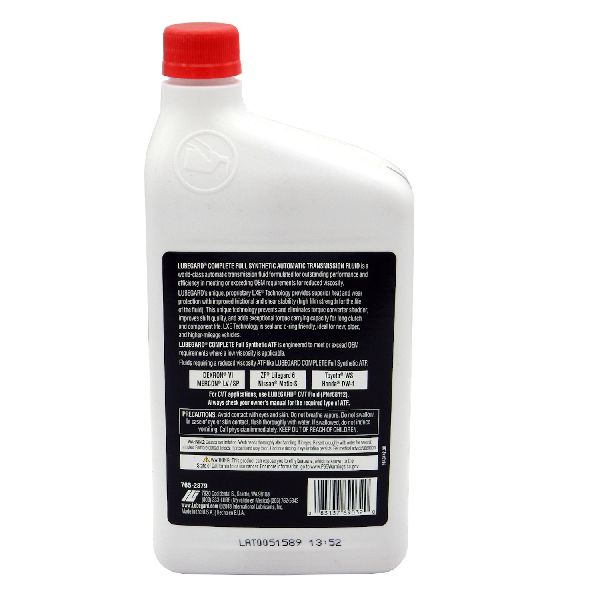
(OEM #XT-12-QULV)— Required when replacing the valve body or performing any internal transmission service. Using the correct fluid is critical for 10R80 transmission function. TSB 18-2160 specifies a quantity of 6 quarts for the job.
Trusted brands: Motorcraft
OEM price range: $10-$15 per quart
Aftermarket price range: $8-$12 per quart - Transmission Filter and Pan Gasket — A new filter and gasket should be installed whenever the transmission pan is removed for service, such as replacing the valve body.
Trusted brands: Motorcraft, Wix
OEM price range: $40-$60
Aftermarket price range: $20-$40
Related Codes That Often Appear With This One
- P1744 — This code, 'Torque Converter Clutch System Performance', is specifically mentioned alongside P0741 in Ford's TSB 20-2117. Their appearance together on a 2018 Mustang built before Nov 20, 2017, strongly points to the main control valve body issue as the root cause.
Technical Service Bulletins (TSBs) & Recalls
- TSB 20-2117 / 18-2160: Addresses an illuminated MIL with DTCs P0741 and P1744 due to a sticking torque converter clutch (TCC) valve in the main control valve body on vehicles built on or before 20-Nov-2017. The fix is to replace the valve body assembly.
- TSB 21-2315: A newer TSB for 2018-2021 Mustangs addressing harsh/delayed shifts, which can also be caused by sticking valves in the main control body, indicating ongoing issues with the 10R80 valve body design.
Platform-Specific Known Issues
- Ford TSB 20-2117 (superseding 18-2160) was issued for 2018 Mustangs built on or before November 20, 2017, for DTCs P0741 and P1744 caused by a sticking TCC valve in the main control valve body.
Mechanic-Grade Diagnostic Values
- TCC Solenoid and Shift Solenoid (A-F) Coil Resistance — expected: 5.0 - 5.4 Ohms at 68°F (20°C). Failure: A reading outside this range, or an open/short circuit, indicates a faulty solenoid. However, P0741 is a performance code, so an in-spec solenoid can still be present if the fault is mechanical (sticking valve).
- TCC Solenoid Commanded Pressure (Live Data) — expected: Pressure should rise to approximately 90 PSI when lock-up is commanded by the scan tool.. Failure: Failure to build pressure or erratic readings can indicate a stuck solenoid, valve body issue, or leak.
- TCC Slip Speed (Live Data) — expected: Should drop to near 0 RPM when the TCC is commanded to lock at cruising speed.. Failure: A continued difference of over 200 RPM between engine and transmission input speed after lock-up is commanded confirms the slip condition that sets the code.
Scan Tool Commands That Help
- FORScan: Clear Transmission Adaptive Tables — This service function is required after replacing the valve body or torque converter to reset the transmission's learned shift parameters. It must be followed by the adaptive learning drive cycle.
- FORScan: Halt Transmission Adaptive Learning — Some owners and tuners use this function to disable the adaptive learning process after a satisfactory shift quality is achieved, preventing the system from re-learning undesirable behaviors. This is an advanced/off-label use.
- Ford IDS (or equivalent professional scanner): TCC Solenoid On/Off Command — A bidirectional command to manually engage and disengage the torque converter clutch solenoid while monitoring live data (like TCC slip and pressure) to verify solenoid and hydraulic circuit response.
Wiring & Ground Locations
- Main Transmission Connector (C168B) — On the side of the 10R80 transmission case.. This is the main electrical interface for all transmission solenoids, including the TCC solenoid. Inspecting for corrosion, pushed pins, or harness damage here is a key step before condemning internal parts.
- Engine-to-Chassis Ground Strap — On the S550 chassis, there is a ground strap from the back of the driver's side cylinder head to the firewall. Another connects to the passenger side motor mount and runs to the strut tower.. A poor ground connection can cause a variety of electrical issues and erratic behavior in control modules, potentially affecting the TCM's ability to accurately control solenoids. While not a primary cause, it's a foundational check.
- G300 — On older New Edge Mustangs, this ground was next to the parking brake and grounded the transmission control switch. While the specific designator may differ on the 2018 model, checking grounds in the center console/shifter area is relevant.. Grounds specific to the transmission control system are critical for proper operation.
OEM Part Supersession History
JL3Z-7A100-B→JL3Z-7A100-D— The original valve body was prone to a sticking TCC valve as identified in TSB 18-2160. The superseding part is the revised assembly intended to correct this manufacturing defect.
Model Year Variations Within This Range
- 2018 (built on or before Nov 20, 2017): Vehicles built in this early production window are highly susceptible to the sticking TCC valve in the main control body, as specified in TSB 18-2160 and its successor, 20-2117. For these vehicles, P0741 accompanied by P1744 is a near-certain indicator of a valve body failure.
Diagnostic Flowchart
Other Known Issues on This Vehicle
Issues unrelated to this code that are worth knowing about as an owner of this generation:
- Coyote Engine "BBQ Tick" / Typewriter Tick 🟡 Low — Very common intermittent ticking noise from the engine, particularly on 2018+ models with the Gen 3 Coyote 5.0L. It has been present since 2011 but is more audible on newer models. Ford has a TSB stating no repair should be attempted. (Ref: TSB exists but advises no repair.)
- Harsh/Delayed Shifting (10R80 Transmission) 🟠 Medium — Widespread complaints of harsh upshifts/downshifts, clunking, and gear hunting are common across all vehicles with the 10R80. Numerous TSBs have been issued for software updates and component replacements. (Ref: TSB 18-2274, TSB 21-2357, TSB 24-2046)
- Manual Transmission (MT82) Shift Fork Failure 🔴 High → Shop Transmission Assembly — On 5.0L models with the manual transmission, the 1-2 shift fork was prone to breaking, resulting in an inability to use first or second gear. (Ref: TSB 18-2267)
- Metallic Rattle from Transmission Bellhousing (5.0L) 🟠 Medium → Shop Transmission Assembly — Some 2018-2019 models with the 5.0L engine may exhibit a metallic rattle due to torque converter studs contacting the engine-to-transmission spacer plate. The fix requires transmission removal to replace the plate. (Ref: TSB 19-2358)
Used vs. New Parts: Buying Guide for This Vehicle
When a used part is the smart pick: For this specific repair, obtaining a used part is strongly discouraged. The primary cause is a known manufacturing defect in the valve body for this model year. A used part from a donor vehicle of the same era is highly likely to have the same defect or develop it shortly after installation.
What to inspect on the donor part:
- Not applicable, as a used valve body should not be considered for this repair.
OEM-only on this vehicle (don't cheap out):
- Main Control Valve Body Assembly: Due to the known defect and the requirement for a specific updated part (JL3Z-7A100-D), only a new OEM Ford/Motorcraft part should be used to ensure a permanent fix.
- Automatic Transmission Fluid (Mercon ULV): The 10R80 is extremely sensitive to fluid type. Only the specified Motorcraft Mercon ULV (XT-12-QULV) or a licensed equivalent should be used to prevent damage.
Brands owners have reported issues with on this vehicle:
- Any non-specified transmission fluid.
- Remanufactured or used valve bodies of the original defective design.
Real Owner Stories
Aggregated from forums and TSBs cited above. Mileages and costs reflect what owners reported in those sources.
2019 Mustang GT
Symptoms: The vehicle triggered codes P0741 and P1744. The owner attempted to fix it by replacing only the TCC solenoid.
What fixed it: The problem persisted after the solenoid swap, confirming that the entire valve body required replacement as suggested by other community members.
Source hint: Mustang6G.com - Thread '10r80 Shifting Issues' (May 2024)
2018 Mustang GT
Symptoms: Experienced various shifting problems with the 10R80 transmission.
What fixed it: Proactively replaced the valve body, which resolved the shifting issues.
Source hint: Mustang6G.com - Thread 'Fixed my 2018 GT's 10R80' (Apr 2022)
2017-2018 Ford F-150 (10R80)
Symptoms: Codes P0741 and P1744 present; dealer suggested both the torque converter and valve body were faulty.
What fixed it: Replacement of the torque converter and valve body.
Cost: $5,000-$5,000
Source hint: F150forum.com - Thread 'Cost to replace TCC and Valvebody?' (Mar 2021)
Related OBD-II Codes
Frequently Asked Questions
Does TSB 20-2117 apply to my 2018 Ford Mustang?
What is the recommended fix for a 2018 Mustang with a sticking TCC valve according to Ford?
My 2018 Mustang is shuddering like I'm driving over rumble strips; is this related to P0741?
What type of transmission fluid should be used in my 2018 Mustang's 10R80 transmission?
Will my Mustang drive differently after the valve body is replaced?
Is there a TSB for harsh shifting on newer Mustangs beyond the 2018 model year?
Helpful Videos
We Have This Part in Stock


The information in this article is provided for general reference and educational purposes only. Vehicle specifications, procedures, and part compatibility can vary by production date, trim level, and region. Always consult your vehicle's factory service manual and verify part numbers before purchasing or performing repairs. Safety-critical components such as airbags, seat belts, and braking systems should be installed by a qualified professional.
- Ford Mustang:
- 🧭 Diagnostic Flowchart
- 🎬 Helpful Videos
- 🛍️ Shop This Part
- What's Unique About the 2018-2018 Ford Mustang
- Symptoms You May Notice
- Most Likely Causes
- Rare But Worth Checking
- Diagnosis Steps
- Parts You'll Likely Need
- Related Codes That Often Appear With This One
- Technical Service Bulletins (TSBs) & Recalls
- Platform-Specific Known Issues
- Mechanic-Grade Diagnostic Values
- Scan Tool Commands That Help
- Wiring & Ground Locations
- OEM Part Supersession History
- Model Year Variations Within This Range
- Other Known Issues on This Vehicle
- Used vs. New Parts: Buying Guide for This Vehicle
- Real Owner Stories
- 2019 Mustang GT
- 2018 Mustang GT
- 2017-2018 Ford F-150 (10R80)
- Related OBD-II Codes
- Frequently Asked Questions
- 🎟️ Get 5% Off