

P0741 on 2000-2007 Ford Taurus 3.0L V6: Causes and Fixes for Torque Converter Clutch Issues
On a 2000-2007 Ford Taurus, code P0741 is most often caused by a failing Torque Converter Clutch (TCC) solenoid within the AX4N/4F50N transmission. Replacing this solenoid, which is accessible from a side case on the transmission, is the most common fix. The OEM part number is F8AZ-7G136-AA. Expect the part to cost between $70 and $150.
- P0741 on a 2000-2007 Taurus almost always points to an issue with the Torque Converter Clutch (TCC) system.
- The most likely culprit is a failed TCC solenoid, which is a relatively inexpensive part.
- Before assuming a major transmission failure, always start by checking the transmission fluid level and condition.
- While DIY replacement of the solenoid is possible, it is a complex job and may be best left to a professional.
- Continuing to drive with this code can cause excessive heat and lead to more serious, expensive transmission damage.
What's Unique About the 2000-2007 Ford Taurus
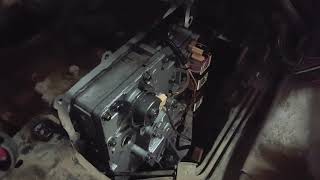
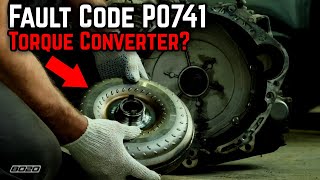
For the fourth-generation Ford Taurus with the 3.0L V6 and the AX4N (also known as 4F50N) 🎬 Watch: A real-world diagnosis of P0741 on this specific transmission. transmission, the P0741 code is very frequently linked to a specific, accessible part: the TCC solenoid. Unlike many other vehicles where this code can lead to a full transmission rebuild, on this Taurus, the solenoid is often the direct point of failure and is located in a side case, making it replaceable without removing the entire transmission. A known issue is an incorrect replacement transmission with the wrong sprocket gear ratio being installed, which can also trigger this code. It's also important to note that some 2002-2003 models used an AX4S transmission, which does not interchange with the more common AX4N/4F50N.
Symptoms You May Notice
- Check Engine Light is on
- Transmission may feel like it's slipping or shifting harshly.
- Shuddering or vibrations, especially when accelerating at highway speeds.
- Engine RPMs are higher than usual at cruising speeds (no drop when TCC should engage).
- Reduced fuel economy.
- In some cases, the Overdrive (O/D) light may blink.
- Vehicle may stall after high-speed driving or when coming to a stop.
- Transmission overheating warning light may illuminate.
- Replacing the entire transmission or torque converter when only the TCC solenoid has failed.
Most Likely Causes
- Faulty Torque Converter Clutch (TCC) Solenoid 🔴 High Probability → Shop Automatic Transmission Torque Converter The TCC solenoid is a very common failure point on the AX4N/4F50N transmission. Over time, the solenoid can fail electrically (short or open) or mechanically (sticking due to debris or wear).
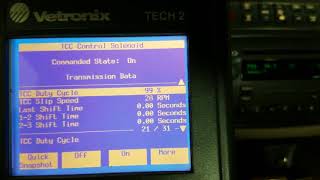
How to confirm: A mechanic can use a scan tool to monitor the TCC command and actual slip RPM. 🎬 See how to perform a quick test on the TCC solenoid. If the PCM commands lock-up and the solenoid doesn't activate or slip remains high, the solenoid is suspect. The solenoid's resistance can also be tested with a multimeter; for the AX4N, the later design should have a resistance between 13-24 Ohms. The original design had a much lower resistance of 0.98-1.6 Ohms.
Typical fix: Replace the TCC solenoid. It is located in a side case on the transmission, often accessible after removing the battery and airbox. The OEM part number is F8AZ-7G136-AA. 🎬 Watch: Step-by-step walkthrough of the TCC solenoid replacement process. It's noted that the updated replacement part often has a blue electrical connector, whereas the original may be gray.
Est. part cost: $70-$150 - Low or Dirty Transmission Fluid 🟡 Medium Probability → Shop Transmission Assembly
How to confirm: Check the transmission fluid level and condition using the dipstick. The fluid should be at the correct level, red in color, and not smell burnt. Dark, burnt-smelling fluid or fluid with metal shavings indicates internal wear and can cause solenoid passages to clog.
Typical fix: Perform a transmission fluid and filter change. If the fluid is very old and dark on a high-mileage vehicle, a full flush is sometimes debated, but low or contaminated fluid must be addressed. Using the correct fluid type (MERCON V for this transmission) is critical.
Est. part cost: $50-$100 for fluid and filter - Worn or Damaged Valve Body ⚪ Low Probability → Shop Transmission Valve Body The valve body contains passages and valves that direct fluid flow. Wear in the TCC regulator valve bore can cause a pressure loss, preventing the clutch from engaging properly. This is a known issue in Ford transmissions of this era.
How to confirm: This is difficult to confirm without disassembling the transmission and inspecting the valve body. It's typically diagnosed after replacing the TCC solenoid and checking fluid doesn't solve the issue. A transmission specialist may perform pressure tests.
Typical fix: Replace the valve body or, more commonly, have a specialist ream the worn valve bore and install an oversized valve kit from a brand like Sonnax.
Est. part cost: $200-$500 for a remanufactured valve body or repair kit
Rare But Worth Checking
- Failing Torque Converter: → Shop Automatic Transmission Torque Converter The internal clutch of the torque converter itself can fail mechanically. This is a major repair that requires removing the transmission. It's often misdiagnosed when the actual problem is a simpler component like the solenoid. The OEM part number for a remanufactured converter for some 1998-2003 models is F8DZ7902CARM.
- Incorrect Transmission Sprockets: → Shop Transmission Assembly If the transmission has been replaced with a used unit, it may have the wrong internal drive and driven sprockets for the vehicle's final drive ratio. This causes the PCM to see an incorrect speed differential and set P0741, even if the TCC is working perfectly.
- Damaged Wiring or Connectors: A short or open in the wiring harness leading to the TCC solenoid can prevent it from receiving the signal from the PCM. This is less common than solenoid failure but should be checked for corrosion or damage during diagnosis.
Diagnosis Steps
- Check for other stored trouble codes that could be related, especially P1744.
- Check the transmission fluid level and condition. Top off or replace if low or dirty. Ensure MERCON V fluid is used.
- Using a capable scan tool, monitor the live data for TCC slip RPM while driving. When the PCM commands TCC lock-up (duty cycle should increase), the slip RPM should drop to near zero (ideally under 10 RPM). If slip remains high (over 80-200 RPM), there is a mechanical or hydraulic issue.
- If slip is high, the next step is to test the TCC solenoid. This involves checking its resistance with a multimeter to see if it's within factory specifications (typically 13-24 Ohms for the updated design).
- Inspect the wiring and connector to the transmission case and the internal harness leading to the TCC solenoid for any visible damage, corrosion, or loose connections.
- If the fluid is good and the solenoid and wiring test okay, the problem may be internal, such as a worn valve body bore or a failing torque converter itself.
- If the vehicle has a history of a transmission replacement, verify the correct sprockets are installed if possible, as this is a known, though rare, cause.
Parts You'll Likely Need
- Torque Converter Clutch (TCC) Solenoid
(OEM #F8AZ-7G136-AA)— This is the most frequent failure point for code P0741 on this specific vehicle and transmission combination.
Trusted brands: Motorcraft, Rostra, Wells
OEM price range: $90-$150
Aftermarket price range: $70-$100 - Transmission Filter Kit — Should be replaced whenever the transmission pan is dropped for service, such as a fluid change or solenoid replacement.
Trusted brands: Motorcraft, ATP
OEM price range: $30-$50
Aftermarket price range: $20-$40
Related Codes That Often Appear With This One
- P1744 — P1744 (Torque Converter Clutch System Performance) is a Ford-specific code that is very similar to P0741 and often appears alongside it, pointing to the same set of potential failures in the TCC system.
- P0740 — P0740 (Torque Converter Clutch Circuit Malfunction) indicates an electrical fault in the TCC circuit, whereas P0741 points to a performance problem (slippage). P0740 might be seen if the solenoid has an electrical open or short.
Technical Service Bulletins (TSBs) & Recalls
- TSB 03-20-07: Addresses DTCs P0741 and P1744 on 2000-2003 Taurus/Sable with AX4N, among other vehicles. It points towards potential issues with the pump assembly and main control valve body, suggesting inspection for wear and damage.
- TSB 16809: Mentions P0741 or P1744 stored in memory for models from 1996 to 2003, indicating this is a long-recognized issue.
Platform-Specific Known Issues
- A Ford Technical Service Bulletin (TSB 03-20-7) was issued for multiple vehicles including the Taurus/Sable for codes P0741/P1744, often related to issues in the pump and valve body, recommending inspection and potential replacement of these components.
- The TCC solenoid is known to be a high-failure item, with an updated part (often with a blue connector and higher resistance) being the recommended replacement over the original gray connector version.
Mechanic-Grade Diagnostic Values
- TCC Solenoid Resistance (Updated Design) — expected: 13 - 24 Ohms. Failure: A reading outside this range indicates a faulty solenoid.
- TCC Solenoid Resistance (Original Design) — expected: 0.98 - 1.6 Ohms. Failure: A reading outside this range indicates a faulty solenoid. This design is largely obsolete.
- TCC Slip RPM (Live Scan Data) — expected: Near 0 RPM (ideally < 10 RPM) when TCC is commanded to 100% lockup.. Failure: Sustained slip of over 80-200 RPM during commanded lockup indicates a hydraulic or mechanical failure.
Scan Tool Commands That Help
- Ford IDS / Professional Scan Tool (e.g., Solius, Autel): TCC Solenoid PID / Output State Control — While driving at a steady speed (e.g., 30-45 mph), a technician can command the TCC solenoid ON and OFF to verify its electrical function and feel for the corresponding engagement/disengagement of the clutch. This helps isolate a faulty solenoid from other hydraulic issues.
Wiring & Ground Locations
- C1472 — The main transmission vehicle harness connector, which connects the external wiring to the internal transmission harness.. This is the primary point for testing the TCC solenoid's resistance and checking for shorts/opens from outside the transmission. Resistance for the TCC can be measured between pins 1 and 2.
- G104 — Right front side of the engine compartment.. A poor engine or chassis ground can cause erratic behavior in computer-controlled systems, including the PCM and transmission controls. Verifying this ground is clean and tight is a basic diagnostic step.
- G107 — Top left side of the engine compartment.. Similar to G104, this is another critical ground point for engine and transmission electronics. A compromised ground here can lead to intermittent and hard-to-diagnose electrical issues.
Real Owner Repair Stories
- YouTube - '2003 Ford Taurus with code P0741, AX4N Trans' (2003 Ford Taurus with AX4N/4F50N transmission) — Check Engine Light with code P0741. Scan tool showed TCC slip of over 80 RPM when commanded to lock.
❌ Tried (didn't work) The vehicle had a history of a recent transmission replacement with a used unit, which was the source of the problem.
✅ What actually fixed it The root cause was an incorrect sprocket set inside the used transmission. The vehicle required a 35-tooth drive and 38-tooth driven sprocket, but the installed unit had a 34/39 set. This incorrect ratio caused the PCM to calculate a slip that wasn't a hydraulic failure. Replacing the sprockets with the correct set and rebuilding the transmission resolved the P0741 code, with post-repair slip showing a healthy 0-4 RPM.
Documented NHTSA Reports
- An owner reported that their O/D light started to flash rapidly, and a diagnostic check revealed code P0741, which was attributed to the torque converter clutch (NHTSA ODI #10331898).
- In NHTSA ODI #10078728, a technician performed a diagnostic and found code P0741, noting that the torque converter was not locking up to perform a 1:1 conversion.
- A report in NHTSA ODI #11376846 describes a vehicle making a whining noise followed by codes P0741 and P1744; the vehicle reportedly shifted poorly after exiting the expressway and entered a limp mode.
- NHTSA ODI #10663437 notes that a vehicle did not drive properly at highway speeds because the torque converter failed to lock up as intended, triggering a persistent P0741 code.
- According to NHTSA ODI #11195793, an owner experienced codes P0741 and P1744 simultaneously, which resulted in a critical decrease in fuel economy.
"I Checked Everything" — The Actual Cause
- A common scenario is that the TCC solenoid is replaced, but the P0741 code returns. This often happens when the root cause is not the solenoid itself, but wear in the hydraulic circuit it controls. Specifically, the TCC regulator valve bore within the main valve body can wear out, causing a pressure leak that prevents the new solenoid from effectively applying the clutch. In these cases, the solenoid and wiring test perfectly, but the hydraulic leak remains the true, unaddressed problem.
OEM Part Supersession History
F3DZ-7G136-A (and others)→F8AZ-7G136-AA— Improved durability and clutch application performance. The design was changed from a low-resistance (0.98-1.6 Ohm) solenoid with a white or black connector to a high-resistance (13-24 Ohm) solenoid with a blue connector.
Heads up: The new high-resistance solenoid is the standard service replacement and is generally backward compatible with older AX4N/AX4S models that used the low-resistance part. The PCM can adapt. However, using an old low-resistance solenoid in a system designed for the high-resistance part is not advised.
Model Year Variations Within This Range
- 2000-2007: The transmission designation changed from AX4N to 4F50N around 2001, but they are functionally very similar for this diagnosis. The most significant variation is the potential for some 2002-2003 models to have the AX4S transmission, which has different internal components (like shift solenoids with diodes) and is not interchangeable with the AX4N/4F50N.
Diagnostic Flowchart
Other Known Issues on This Vehicle
Issues unrelated to this code that are worth knowing about as an owner of this generation:
- Transmission Failure (General) 🔴 High → Shop Transmission Assembly — Widespread across the AX4N/4F50N and AX4S transmissions. Failures can occur at various mileages, often before 150,000 miles. (Ref: Multiple TSBs exist for various transmission symptoms.)
- Leaking Valve Cover Gaskets 🟠 Medium — Very common. Oil leaks from the valve covers, often dripping onto the hot exhaust manifold, causing a burning smell and smoke.
- Failed Camshaft Position Sensor 🟠 Medium — A common failure item that can cause stalling, rough idling, or a no-start condition.
- Broken Coil Springs 🔴 High — Front and rear coil springs are known to rust and break, causing a sudden drop in ride height and a clunking noise. This is especially common in regions that use road salt. (Ref: A recall (04S17) was issued for certain 1999-2001 models for front coil spring corrosion.)
- Failed Hydraulic Engine Mounts 🟠 Medium — The fluid-filled lower engine mounts are prone to leaking and collapsing, leading to a loud clunk on acceleration and excessive engine vibration.
- Clogged PCV System 🟡 Low — The PCV valve and hoses can become clogged, leading to increased crankcase pressure, which can cause oil leaks from seals and gaskets.
Used vs. New Parts: Buying Guide for This Vehicle
When a used part is the smart pick: For this specific repair, using used parts is highly discouraged for the primary failure components. A used wiring harness, transmission side cover, or mounting bolts from a junkyard could be a cost-effective choice if those specific items are damaged during repair.
Donor-vehicle mileage cap: roughly under 100000 miles for the part to have meaningful remaining life.
What to inspect on the donor part:
- For a complete transmission assembly, verify the donor vehicle's year and engine to ensure the internal sprocket ratios are correct.
- Check the transmission fluid on the dipstick of the donor car if possible. Pink/red fluid is a good sign; dark, burnt-smelling fluid is a major red flag.
- Look for external damage to the transmission case, pan, and connectors.
OEM-only on this vehicle (don't cheap out):
- Complete Transmission Assembly: The risk of getting a unit with incorrect internal sprockets or pre-existing wear is extremely high, as documented in repair stories. A professionally remanufactured unit is a much safer investment.
Aftermarket brands forum-validated for this vehicle:
- Sonnax: Widely regarded by transmission specialists for high-quality valve body repair kits, including oversized valves and reaming tools to fix worn TCC regulator bores.
- Rostra: A commonly cited aftermarket manufacturer for transmission solenoids.
Brands owners have reported issues with on this vehicle:
- Unbranded, 'white-box' solenoids from online marketplaces are a gamble. Failure rates can be high, and resistance values may not be within the required specification, leading to a repeat repair.
Real Owner Stories
Aggregated from forums and TSBs cited above. Mileages and costs reflect what owners reported in those sources.
2002 Ford Taurus 3.0L V6 — ~120000 miles
Symptoms: Check Engine Light on with code P0741. Owners on the Taurus Car Club of America forum discussed this as a common failure where the TCC solenoid in the side cover fails.
What fixed it: Replacing the TCC solenoid located in the side cover of the AX4N transmission.
Source hint: Taurus Car Club of America (taurusclub.com)
2003 Ford Taurus 3.0L V6 — ~150000 miles
Symptoms: The TCC solenoid failed electrically or mechanically due to wear, a high-failure item for this platform.
What fixed it: Installation of an updated TCC solenoid (part F8AZ-7G136-AA) with a blue connector and 13-24 Ohms resistance.
Source hint: YouTube - 'Ford Taurus P0741 TCC Solenoid Replacement'
Related OBD-II Codes
Frequently Asked Questions
Does TSB 03-20-7 apply to my 2002 Ford Taurus with the AX4N transmission?
I'm replacing the TCC solenoid on my 2005 Taurus; which part should I use?
Can I replace the TCC solenoid without removing the entire transmission?
What type of transmission fluid should I use for my 2000-2007 Taurus to avoid P0741 issues?
My Taurus is stalling after I exit the highway; could this be related to code P0741?
Is there a recall for the transmission issues causing P0741 on my 2004 Taurus?
Helpful Videos



We Have This Part in Stock


The information in this article is provided for general reference and educational purposes only. Vehicle specifications, procedures, and part compatibility can vary by production date, trim level, and region. Always consult your vehicle's factory service manual and verify part numbers before purchasing or performing repairs. Safety-critical components such as airbags, seat belts, and braking systems should be installed by a qualified professional.
- Ford Taurus:
- 🧭 Diagnostic Flowchart
- 🎬 Helpful Videos
- 🛍️ Shop This Part
- What's Unique About the 2000-2007 Ford Taurus
- Symptoms You May Notice
- Most Likely Causes
- Rare But Worth Checking
- Diagnosis Steps
- Parts You'll Likely Need
- Related Codes That Often Appear With This One
- Technical Service Bulletins (TSBs) & Recalls
- Platform-Specific Known Issues
- Mechanic-Grade Diagnostic Values
- Scan Tool Commands That Help
- Wiring & Ground Locations
- Real Owner Repair Stories
- Documented NHTSA Reports
- "I Checked Everything" — The Actual Cause
- OEM Part Supersession History
- Model Year Variations Within This Range
- Other Known Issues on This Vehicle
- Used vs. New Parts: Buying Guide for This Vehicle
- Real Owner Stories
- 2002 Ford Taurus 3.0L V6 — ~120000 miles
- 2003 Ford Taurus 3.0L V6 — ~150000 miles
- Related OBD-II Codes
- Frequently Asked Questions
- 🎟️ Get 5% Off