

P0741 on 2018-2022 Honda Accord: Torque Converter Clutch Causes and Fixes
For 2018-2022 Accords with the 2.0T engine and 10-speed automatic, P0741 almost always means a failed torque converter, a costly repair that requires transmission removal. For the 1.5T with the CVT, the first step is a transmission fluid change with Honda HCF-2 fluid, which may solve the issue for a much lower cost. If that fails, a faulty TCC solenoid is the next likely culprit.
- For a 2018-2022 Accord, you must first identify your transmission: the 1.5T engine has a CVT, and the 2.0T engine has a 10-speed automatic. The repair path is different for each.
- If you have the 1.5T CVT, your first and most important diagnostic step is to check the transmission fluid. A simple drain and fill with Honda HCF-2 fluid might fix the problem.
- If you have the 2.0T 10-speed automatic, code P0741 is very likely caused by a failed torque converter, which is a major and expensive repair requiring transmission removal.
- Do not ignore this code. Driving with a P0741 will cause the transmission to overheat, leading to significantly more damage and higher repair costs.
What's Unique About the 2018-2022 Honda Accord
The 10th generation Accord (2018-2022) uses two different automatic transmissions, and the cause of P0741 differs significantly between them. For models with the 2.0L Turbo engine and 10-speed automatic, this code often points to a mechanical failure of the torque converter itself, a pattern seen in other modern Honda/Acura vehicles with geared transmissions like the Odyssey and RDX. For models with the 1.5L Turbo engine and Continuously Variable Transmission (CVT), the issue is more likely to start with degraded fluid or a faulty solenoid, which are less severe repairs.
Symptoms You May Notice
- Check Engine Light is on
- Flashing "D" (Drive) indicator on the dashboard
- "Transmission System Problem" message on the multi-information display
- Engine RPM is higher than usual or fluctuates at highway speeds
- Vehicle shudders or vibrates, sometimes feeling like driving over rumble strips
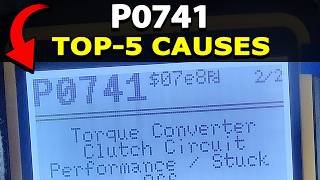
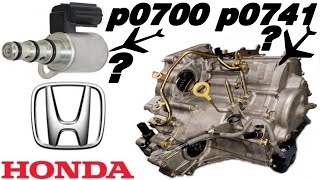
- Noticeable decrease in fuel economy 🎬 Watch: A breakdown of P0741 causes and common fixes.
- Engine may stall when coming to a stop
- Delayed or harsh shifting
- Replacing only the TCC solenoid on a 2.0T model when the root cause is the mechanical failure of the torque converter itself.
- Performing a fluid change on a vehicle where the fluid is already full of metal shavings, which will not fix the underlying mechanical damage.
- Replacing the entire transmission on a 1.5T CVT model without first attempting a fluid change and diagnosing the TCC solenoid.
Most Likely Causes
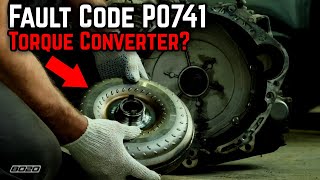
- Failed Torque Converter (2.0T 10-Speed Models) 🔴 High Probability → Shop Automatic Transmission Torque Converter This is a known issue on modern Honda/Acura geared automatic transmissions. The Acura RDX and Honda Odyssey, which share similar transmission architecture, have documented histories of this failure causing P0741. Honda has issued warranty extensions for other models with similar 6-speed transmissions for the same code, citing a crack in the internal lock-up piston.
How to confirm: A technician will use a scan tool to monitor TCC slip RPM while driving. If the clutch is commanded to lock but significant slip (over ~50-100 RPM) is still present, and fluid/solenoids are okay, the torque converter is condemned.
Typical fix: Replace the torque converter. This is a major repair that requires removing the transmission. The ATF warmer and filter should also be replaced.
Est. part cost: $700-$1600 - Low, Degraded, or Incorrect Transmission Fluid (1.5T CVT Models) 🔴 High Probability → Shop Transmission Assembly CVTs are extremely sensitive to fluid condition and level. The required Honda HCF-2 fluid has specific friction properties, and using old, incorrect, or low fluid can prevent the TCC from operating correctly, leading to slippage.
How to confirm: Check the transmission fluid level and condition. The fluid should be translucent, not dark, burnt-smelling, or glittery with metal. If the service history is unknown or the fluid is dirty, a fluid service is the mandatory first step.
Typical fix: Perform a transmission fluid drain and fill using only genuine Honda HCF-2 fluid. A complete 'flush' using a pressurized machine should be avoided.
Est. part cost: $50-$150 - Faulty Torque Converter Clutch (TCC) Solenoid or Valve Body (1.5T CVT Models) 🟡 Medium Probability → Shop Automatic Transmission Torque Converter Debris from normal wear can clog the fine screens on the TCC solenoid or passages within the valve body, preventing proper hydraulic pressure from reaching the lock-up clutch. This is the next logical step if a fluid change does not resolve the P0741 code.
How to confirm: A technician can use a high-end scan tool to command the TCC solenoid on and off to check for an audible click and response. The solenoid can also be removed and tested for resistance with a multimeter and function by applying 12v power.
Typical fix: Replace the faulty TCC solenoid. In more severe cases of clogging or internal wear, the entire transmission valve body may need to be replaced.
Est. part cost: $150-$800 - Internal Transmission Damage ⚪ Low Probability → Shop Transmission Assembly If initial symptoms are ignored, the excessive heat and metal debris from a failing TCC or torque converter can cause widespread damage to other internal components, such as clutches, bearings, or the CVT belt/pulleys.
How to confirm: Draining the transmission fluid and finding a significant amount of metal shavings or clutch material in the fluid or on the magnetic drain plug. A small amount of fine metallic dust is normal, but larger flakes are a sign of terminal failure.
Typical fix: Complete transmission replacement or rebuild.
Est. part cost: $4000-$7000
Rare But Worth Checking
- Wiring Harness or Connector Issue: While not common, damage to the wiring leading to the transmission can cause a loss of signal to the TCC solenoid, mimicking an internal part failure. Always visually inspect the harness for damage, corrosion, or rodent activity before replacing expensive components.
Diagnosis Steps
- Verify the code with an OBD-II scanner and check for any other related codes. Document and clear them.
- Check the transmission fluid level and condition. For the 1.5T, ensure it is Honda HCF-2 fluid. For the 2.0T, ensure it is Honda ATF DW-1.
- If the fluid is low or dirty on a 1.5T CVT, perform a drain and fill, clear the code, and test drive to see if the issue returns. This is the most cost-effective first step.
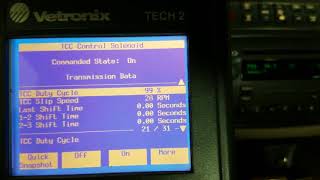
- Use a professional scan tool to monitor live data during a test drive at steady highway speeds (e.g., 55 mph). Key parameters are Engine RPM, Transmission Input Speed, and TCC Slip RPM.
- Observe TCC command status. When the PCM commands lock-up, the slip RPM should drop to near zero. If slip remains high (>50-100 RPM) when commanded, a mechanical or hydraulic issue is present.
- With the engine off, use the scan tool to command the TCC solenoid on and off to check for an audible click from the transmission case.
- If the solenoid does not respond or the slip remains high, inspect the wiring and connectors for the TCC solenoid for any visible damage or corrosion.
- If wiring is good, test the solenoid's resistance with a multimeter and compare to factory specifications. The solenoid can also be removed and bench-tested. 🎬 See how to perform a quick solenoid function test.
- If the fluid, wiring, and solenoid are all confirmed to be good, the problem is almost certainly the torque converter (especially on 2.0T models) or a deeper internal issue like the valve body.
- Before authorizing a major repair like a torque converter replacement, it is wise to drain the fluid and inspect the pan/magnet for excessive metal debris, which would indicate a more severe failure requiring a full transmission replacement.
Parts You'll Likely Need
- Torque Converter
(OEM #26000-6B8-345)— This is the most common point of failure for the P0741 code on 2.0T models with the 10-speed automatic transmission.
Trusted brands: Honda Genuine
OEM price range: $1100-$1600
Aftermarket price range: $400-$800 - Honda Genuine CVT Fluid HCF-2
(OEM #08200-HCF2)— For the 1.5T CVT models, incorrect or degraded fluid is a primary cause of P0741. Using the correct OEM fluid is critical for proper TCC operation.
Trusted brands: Honda Genuine
OEM price range: $15-$25 per quart - Torque Converter Clutch (TCC) Solenoid — On 1.5T CVT models, this solenoid can become clogged or fail electrically, making it a common cause if a fluid change doesn't resolve the code.
Trusted brands: Honda Genuine, Rostra, Duralast
OEM price range: $150-$300
Aftermarket price range: $80-$150
Related Codes That Often Appear With This One
- P0700 — P0700 is a generic code indicating the Transmission Control Module (TCM) has stored a fault. It acts as a messenger to turn on the check engine light for transmission-specific codes like P0741.
Technical Service Bulletins (TSBs) & Recalls
- TSB 23-029 / 24-013 (Acura RDX): While for the RDX, this TSB is highly relevant as it describes the exact failure mode (cracked lock-up piston) causing P0741 in modern Honda/Acura geared transmissions and resulted in a warranty extension.
- TSB 23-078 (Honda Pilot/Ridgeline): Similar to the RDX TSB, this extends the warranty for P0741 caused by a defective torque converter in other Honda models with 6-speed automatic transmissions, showing a pattern of this specific failure.
Mechanic-Grade Diagnostic Values
- TCC / Shift Solenoid Resistance (Older/General Honda Spec) — expected: 12 - 25 Ohms. Failure: A reading outside this range (either open circuit/infinite or shorted/zero) indicates a failed solenoid coil.
- TCC Solenoid Resistance (Modern PWM Type) — expected: ~5 Ohms. Failure: A significant deviation from this value suggests a faulty solenoid.
Scan Tool Commands That Help
- Honda i-HDS (Honda Diagnostic System): TCC Solenoid Active Test — This bidirectional command allows a technician to manually activate and deactivate the TCC solenoid with the engine off. Listening for an audible 'click' from the transmission confirms the solenoid is mechanically responding to the electrical command. A lack of a click points to a stuck or failed solenoid, or a wiring issue.
- Professional OBD-II Scan Tool with Live Data: Monitor TCC Slip RPM — This is the primary diagnostic method during a test drive. The technician commands TCC lock-up and watches the 'TCC Slip RPM' PID. If the command is 'On' but the slip remains high (e.g., > 50-100 RPM), it confirms a hydraulic or mechanical failure (slipping clutch) and rules out a simple electrical fault.
Real Owner Repair Stories
- Saab 9-3 forum (uksaabs.co.uk) (2006 Saab 9-3 2.0t Automatic (Note: Different vehicle, but illustrates a common P0741 diagnostic path)) — P0741 code and limp mode when going uphill with a heavy load. Shuddering feeling around the time of torque converter lock-up.
❌ Tried (didn't work) Partial ATF drain and fill with correct fluid., Cleaning speed sensors., Testing TCC solenoid resistance (which tested good).
✅ What actually fixed it The user concluded the torque converter itself was slipping mechanically under load, even though the control solenoid was functioning electrically. The final fix was not explicitly stated, but the diagnosis pointed directly to torque converter replacement.
OEM Part Supersession History
26000-6B8-315, 26000-6B8-325, 26000-6B8-335→26000-6B8-345— Component revision and improvement by the manufacturer. The multiple supersessions suggest Honda may have been addressing the underlying failure mode of the torque converter in the 2.0T models.
Model Year Variations Within This Range
- 2021-2022: For the 2021 model year, the Accord received a mid-cycle refresh. While the core 1.5T/CVT and 2.0T/10-speed powertrain combinations remained the same, Honda recalibrated the throttle response for better performance. The infotainment system was updated with a standard 8-inch screen, and wireless Apple CarPlay/Android Auto became available. The Honda Sensing safety suite software was also tweaked for smoother adaptive cruise control and lane centering. These changes are primarily software and electronic and are not known to directly alter the root causes of P0741, but may affect diagnostic procedures using the onboard systems.
- 2021-2022: The six-speed manual transmission option, previously available on some trims, was discontinued for the 2021 model year.
Diagnostic Flowchart
Other Known Issues on This Vehicle
Issues unrelated to this code that are worth knowing about as an owner of this generation:
- Failing Fuel Injectors (1.5T) 🔴 High — Common, can occur as early as 40,000-60,000 miles. Can lead to rough idle, stalling, limp mode, and potentially subsequent head gasket failure. (Ref: Honda has issued service bulletins and a software recall to address related symptoms (DTC P0172/P030X), but injector replacement is often required.)
- Leaking A/C Condenser 🟠 Medium — Very common across 2018-2020 models. A/C blows warm due to refrigerant leaking from tiny holes in the condenser. (Ref: Honda Service Bulletin 21-018 extended the warranty on the A/C condenser to 10 years with unlimited mileage.)
- Sticky Steering 🔴 High — Affects 2022+ models primarily, but the issue is widespread across many Honda/Acura vehicles. Causes momentary notchiness or increased effort in steering at highway speeds. (Ref: NHTSA investigation EA23003 and Honda TSB 23-037 address the issue, which may lead to a recall. The cause is an improperly manufactured steering gearbox.)
- Low-Pressure Fuel Pump Failure 🔴 High — Affects certain 2018-2019 models. The fuel pump can fail, causing the engine to stall while driving. (Ref: NHTSA Recall 20V-314. Honda dealers will replace the fuel pump assembly free of charge.)
- Phantom Warning Lights / BCM Glitch 🟡 Low — Common on 2018-2020 models. Multiple warning lights (Braking System, ACC, etc.) can illuminate simultaneously due to a software glitch in the Body Control Module (BCM). Often related to a weak 12V battery. (Ref: Honda Recall X95 (NHTSA 20V-777) was issued to update the BCM software.)
Used vs. New Parts: Buying Guide for This Vehicle
When a used part is the smart pick: For the 1.5T CVT model, a used TCC solenoid or even a complete valve body from a low-mileage donor vehicle can be a cost-effective repair if the original part has failed electrically or is clogged. For the 2.0T 10-speed, a used torque converter is NOT recommended due to the high probability of it having the same inherent defect that caused the original failure.
Donor-vehicle mileage cap: roughly under 60000 miles for the part to have meaningful remaining life.
What to inspect on the donor part:
- Verify the donor vehicle's mileage and check its history for any reported transmission issues.
- When buying a used valve body or solenoid pack, inspect the electrical connectors for corrosion or damage.
- Ask the seller if they can confirm the part was tested or came from a vehicle that was running and driving without transmission codes.
OEM-only on this vehicle (don't cheap out):
- Torque Converter (2.0T 10-Speed): Given the known failure pattern, a new OEM part (PN 26000-6B8-345) is the safest choice to ensure you get the latest revised version.
- CVT Fluid (1.5T): Only use Honda Genuine HCF-2 fluid. CVTs are extremely sensitive to fluid properties, and aftermarket equivalents are a common cause of transmission problems.
Aftermarket brands forum-validated for this vehicle:
- Certified Transmission
- H and A Transmissions
- Gearspeed
- Ace Transmission
Brands owners have reported issues with on this vehicle:
- Unbranded, no-name solenoids or valve bodies from online marketplaces are a high risk for both CVT and 10-speed models. The precise calibration needed for modern transmissions is often lacking, leading to repeat failures.
Real Owner Stories
Aggregated from forums and TSBs cited above. Mileages and costs reflect what owners reported in those sources.
2018 Honda Accord 2.0T — ~90000 miles
Symptoms: P0741 code appearing; universal dealer recommendation for the issue.
What fixed it: Full torque converter replacement.
Source hint: driveaccord.net forum threads regarding 10th gen 2.0T models
2018 Honda Accord 1.5T
Symptoms: Check Engine Light on with P0741 code.
What fixed it: The context mentions a user on r/accord with a 1.5T, but the specific fix for that user was not fully detailed in the provided snippet beyond the diagnostic path for CVTs.
Source hint: Reddit r/accord
Related OBD-II Codes
Frequently Asked Questions
Does the warranty extension for the Acura RDX (TSB 23-029) apply to my 2018-2022 Honda Accord 2.0T?
What specific transmission fluid should I use for my 1.5T CVT Accord to fix P0741?
Is there a TSB for the Honda Accord regarding the torque converter failure?
Can I just change the fluid on my 2.0T 10-speed Accord to fix this code?
My dashboard shows 'Transmission System Problem' and a flashing 'D' indicator; is this related to P0741?
Will a transmission flush fix the P0741 code on my CVT Accord?
Helpful Videos
We Have This Part in Stock

The information in this article is provided for general reference and educational purposes only. Vehicle specifications, procedures, and part compatibility can vary by production date, trim level, and region. Always consult your vehicle's factory service manual and verify part numbers before purchasing or performing repairs. Safety-critical components such as airbags, seat belts, and braking systems should be installed by a qualified professional.
- Honda Accord:
- 🧭 Diagnostic Flowchart
- 🎬 Helpful Videos
- 🛍️ Shop This Part
- What's Unique About the 2018-2022 Honda Accord
- Symptoms You May Notice
- Most Likely Causes
- Rare But Worth Checking
- Diagnosis Steps
- Parts You'll Likely Need
- Related Codes That Often Appear With This One
- Technical Service Bulletins (TSBs) & Recalls
- Mechanic-Grade Diagnostic Values
- Scan Tool Commands That Help
- Real Owner Repair Stories
- OEM Part Supersession History
- Model Year Variations Within This Range
- Other Known Issues on This Vehicle
- Used vs. New Parts: Buying Guide for This Vehicle
- Real Owner Stories
- 2018 Honda Accord 2.0T — ~90000 miles
- 2018 Honda Accord 1.5T
- Related OBD-II Codes
- Frequently Asked Questions
- 🎟️ Get 5% Off