

P0741 on 2017-2022 Honda CR-V: CVT Torque Converter Clutch Causes and Fixes
On a 2017-2022 CR-V with a CVT, code P0741 is most often caused by low, dirty, or incorrect CVT fluid, or a faulty torque converter lock-up solenoid. Always start by checking the fluid (it must be Honda HCF-2). If the fluid is fine, professional diagnosis of the transmission's internal solenoids or the torque converter itself is necessary. Some owners report dealers quoting a full transmission replacement without performing these basic diagnostic steps first.
- P0741 on a 2017-2022 CR-V points to a problem with the torque converter lock-up system in the CVT.
- The most important first step is to check the CVT fluid. It must be the correct level, clean, and the specific Honda HCF-2 type.
- Do not assume the cause is the same as other Hondas from this era; the CR-V's CVT has different failure points than their geared automatic transmissions.
- This is a serious code that should be addressed promptly to avoid overheating and destroying the expensive CVT.
- Repair almost always requires professional diagnosis and service, as the most likely causes after fluid are internal transmission components.
What's Unique About the 2017-2022 Honda CR-V
While many other Honda models from this era (like the Pilot, Odyssey, and Accord V6) had well-documented issues with P0741, those problems were specific to their 6-speed automatic transmissions (6AT). Honda issued multiple TSBs (e.g., 23-076, 23-077, 23-078) and warranty extensions for a manufacturing defect causing a 'cracked lock-up piston' in the 6AT's torque converter. The 2017-2022 CR-V uses a different powertrain: a Continuously Variable Transmission (CVT). Therefore, the common failure point is different. For the CR-V, diagnosis must focus on the specific needs of the CVT, 🎬 Watch: A detailed breakdown of P0741 on this CR-V model. primarily the fluid condition and the electronic control solenoids, rather than assuming the cracked piston defect found in other Honda models.
Symptoms You May Notice
- Check Engine Light is on
- Engine RPM is higher than usual at highway speeds
- Reduced or sluggish acceleration
- Noticeable decrease in fuel economy
- Vehicle may shudder or vibrate at cruising speeds
- In some cases, the 'D' (Drive) indicator on the dashboard may flash 🎬 See what a blinking D-light means for your transmission.
- Erratic or poor shifting behavior
- Dashboard may "light up" with multiple warnings, including brake failure alerts and PRND indicators (as seen in NHTSA ODI #11562208)
- Assuming the CR-V has the same torque converter failure (cracked piston) as Honda models with 6-speed automatic transmissions. The diagnostic approach for the CVT is different.
- Replacing the torque converter without first thoroughly checking the CVT fluid and testing the control solenoids.
- Immediately recommending a full transmission replacement without performing step-by-step diagnostics.
Most Likely Causes
- Low, Degraded, or Incorrect CVT Fluid 🔴 High Probability CVTs are highly sensitive to fluid level and quality. The correct fluid (Honda HCF-2) contains specific friction modifiers essential for proper operation. Using the wrong fluid, running low, or using old, burnt fluid can easily cause lock-up clutch and solenoid issues.
How to confirm: Check the CVT fluid level and condition. The fluid should be translucent and not smell burnt. Ensure only Honda HCF-2 fluid is used. When draining the fluid, inspect it for metal debris or excessive clutch material, which indicates a more severe internal problem.
Typical fix: Perform a CVT fluid drain and fill with genuine Honda HCF-2 fluid. 🎬 Watch: Step-by-step guide to changing your CVT fluid correctly. Multiple drain-and-fills may be needed if the fluid is very dirty. If the code returns quickly, the issue is likely not just the fluid itself.
Est. part cost: $50-$150 for fluid - Faulty Torque Converter Lock-Up Control Solenoid 🟡 Medium Probability → Shop Automatic Transmission Torque Converter This electronic solenoid controls the flow of hydraulic fluid to engage the lock-up clutch. It can fail electrically or, more commonly, become clogged with debris from old fluid, causing it to stick. NHTSA ODI #11702634 notes that P0741 can appear alongside P0746 (Pressure Control Solenoid Performance) when internal control issues arise.
How to confirm: A technician can use a diagnostic scanner (like the Honda HDS) to command the solenoid on and off to check its response. The solenoid's electrical resistance can also be tested (typically between 12-25 ohms for many Honda solenoids).
Typical fix: Replace the faulty solenoid. On this CVT, the solenoid is often part of the valve body assembly, which may need to be replaced as a unit.
Est. part cost: $200-$600 for the solenoid or valve body assembly - Failing Torque Converter 🟡 Medium Probability → Shop Automatic Transmission Torque Converter
How to confirm: If the fluid and control solenoids are confirmed to be working correctly, the problem is likely a mechanical failure of the lock-up clutch inside the torque converter itself. This is a diagnosis of exclusion after other, more common causes are ruled out.
Typical fix: This is a major repair that requires removing the transmission from the vehicle to replace the torque converter.
Est. part cost: $400-$800 for the torque converter - Clogged Passages in the Valve Body ⚪ Low Probability → Shop Transmission Valve Body Small metal particles or sludge from old, broken-down fluid can clog the intricate passages within the transmission's valve body, preventing proper hydraulic pressure from reaching the lock-up clutch.
How to confirm: This is typically diagnosed after ruling out fluid and solenoid issues. It may require disassembly and inspection of the valve body.
Typical fix: In some cases, the valve body can be cleaned, but it is often replaced as an assembly. One TSB for an Accord model noted an 89% success rate with valve body replacement for this code.
Est. part cost: $400-$800 for the valve body assembly
Rare But Worth Checking
- Damaged Wiring Harness: Check the wiring and connectors leading to the transmission for any visible damage, corrosion, or loose connections before suspecting internal components.
- Faulty Powertrain Control Module (PCM): This is extremely rare. The PCM should only be considered as a cause after all other transmission-related possibilities have been exhaustively ruled out by a professional.
Diagnosis Steps
- Scan the PCM for any other stored trouble codes to see if other issues are present, such as P0700.
- Check the level and condition of the CVT fluid. The fluid should be at the correct level, not dark or burnt, and must be Honda HCF-2 type fluid.
- If the fluid is dirty or contains debris, drain it through a fine mesh strainer to inspect for metal particles. The presence of metal indicates a significant internal mechanical failure.
- If the fluid is simply old or low, perform a drain and fill with HCF-2 fluid, clear the code, and test drive the vehicle at highway speeds (e.g., 60 mph for at least 20 seconds) to see if the code returns.
- Use an advanced diagnostic scan tool (like the Honda HDS) to monitor live data, specifically engine RPM, transmission input speed, and the commanded state of the Torque Converter Clutch (TCC).
- Command the TCC lock-up solenoid on and off with the scan tool to verify its operation. Listen for a click.
- If the solenoid does not respond, test the solenoid's resistance and check for proper voltage and ground at its electrical connector.
- If the fluid is good and the solenoid tests operational, the issue is likely an internal mechanical problem with the valve body or the torque converter itself, requiring transmission removal for repair.
Parts You'll Likely Need
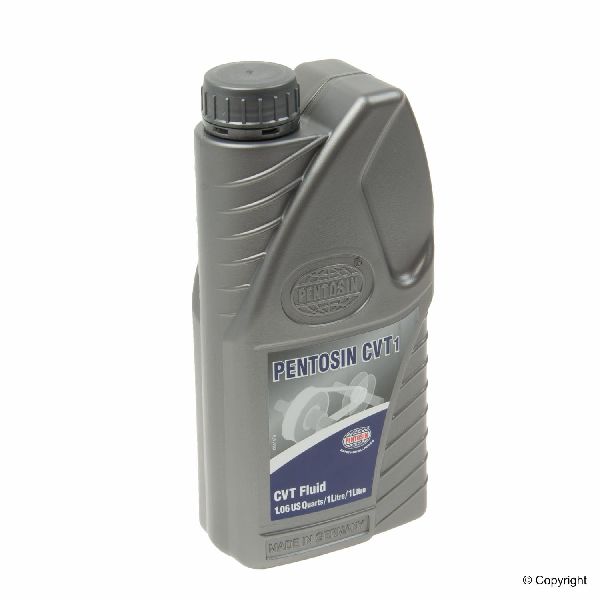
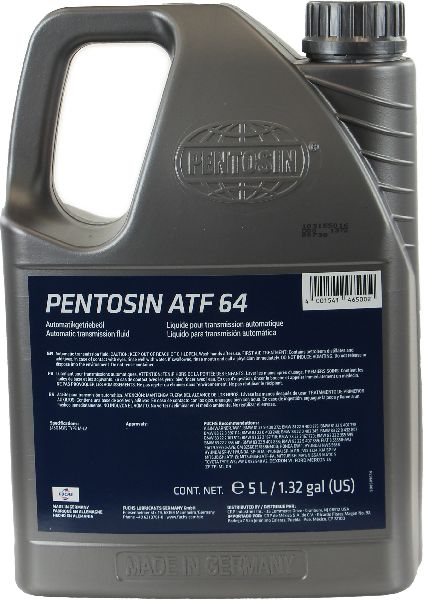
- Honda Genuine HCF-2 CVT Fluid
(OEM #08200-HCF2)— The CVT is extremely sensitive to fluid type. Using the correct OEM fluid is the first and most critical step in addressing this code. A drain and fill requires approximately 4-5 quarts.
Trusted brands: Honda
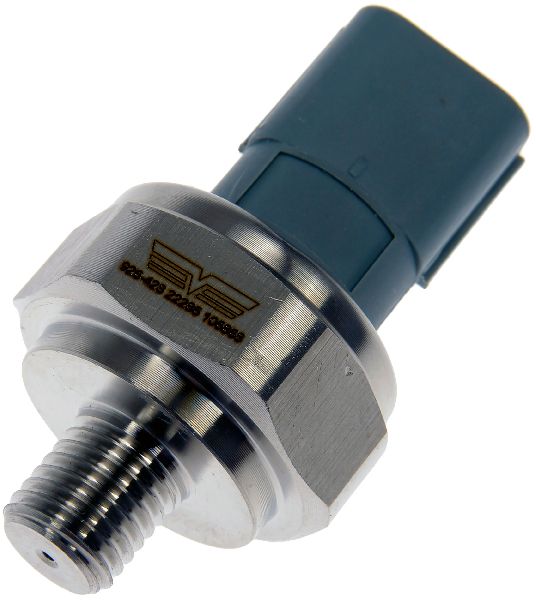
OEM price range: $15-$25 per quart - CVT Torque Converter Lock-Up Solenoid / Valve Body Assembly
(OEM #Varies by VIN, dealer confirmation required.)— This solenoid controls the lock-up function and is a common point of failure, often due to contamination from old fluid. It is frequently integrated into the valve body and replaced as a complete unit.
Trusted brands: Honda (OEM)
OEM price range: $400-$800
Aftermarket price range: $200-$500 - Torque Converter
(OEM #Varies by VIN, dealer confirmation required.)— If the control system is working correctly, the mechanical clutch inside the torque converter has likely failed. This requires transmission removal to replace.
Trusted brands: Honda (OEM)
OEM price range: $400-$800
Aftermarket price range: $300-$600
Related Codes That Often Appear With This One
- P0700: Transmission Control System Malfunction. This is a generic code indicating that the Transmission Control Module (TCM) has stored a fault, which in this case would be the P0741.
- P0746: Pressure Control Solenoid Performance or Stuck Off.
- P0780: Shift Malfunction.
Technical Service Bulletins (TSBs) & Recalls
- NOTE: While Honda has issued warranty extensions and TSBs (e.g., A23-077, 23-076, 23-078) for P0741 on other models like the Odyssey, Pilot, and Accord, those bulletins apply to vehicles with 6-speed automatic transmissions and a specific internal defect (cracked lock-up piston). They do NOT apply to the CVT-equipped 2017-2022 Honda CR-V and should only be used to differentiate the failure modes between transmission types.
- A manufacturer service bulletin (TSB #23-078) specifically addresses torque converter failures associated with DTC P0741, though it primarily targets models with traditional automatic transmissions rather than the CR-V's CVT (NHTSA ODI #11723321).
Platform-Specific Known Issues
- Dealer Tendency to Recommend Full Transmission Replacement: → Shop Transmission Assembly There are owner reports of dealerships immediately quoting a full transmission replacement (costing upwards of $8,000) for a P0741 code, without first performing basic diagnostic steps like checking the fluid or testing solenoids. Owners should insist on a methodical diagnosis starting with the least expensive and most common causes.
Mechanic-Grade Diagnostic Values
- Torque Converter Clutch (TCC) Solenoid and Shift Solenoid Resistance — expected: 12 - 25 Ohms. Failure: A reading outside of this range (e.g., infinite for an open circuit, or near zero for a short) indicates a faulty solenoid coil.
- TCC Solenoid Activation Test — expected: An audible 'click' when 12V is briefly applied to the solenoid's power and ground terminals.. Failure: No click indicates the solenoid's internal plunger is mechanically stuck or the coil is completely dead.
Scan Tool Commands That Help
- Honda Diagnostic System (HDS): Shift Solenoid Valve E Test — According to Honda's diagnostic procedure for P0741 on some models, this test is used to command the solenoid and listen for a click, verifying its mechanical and basic electrical function without removal.
- Honda Diagnostic System (HDS): Clutch Pressure Control (Linear) Solenoid Valve A Test — This is another HDS-specific test in the diagnostic flowchart for P0741. It checks the operation of a related pressure control solenoid. The HDS provides a 'NORMAL' or 'FAILURE' result.
- Honda Diagnostic System (HDS): Monitor OBD STATUS for P0741 — After clearing the code and performing a specific test drive (e.g., 60 mph for at least 20 seconds), a technician uses the HDS to see if the test status shows as 'FAILED'. This confirms the fault is present and not intermittent before proceeding with major repairs.
Real Owner Repair Stories
- Reddit user on r/Honda (2017 Honda CR-V, 82,000 miles) — Check Engine Light on with the 'D' (Drive) indicator blinking. No other noticeable driving issues; vehicle drove smoothly.
❌ Tried (didn't work) The owner took the vehicle to a Honda service center. The service center refused to perform a transmission fluid flush, which was the owner's initial request based on online research.
✅ What actually fixed it The dealership immediately recommended a full transmission replacement at a cost of $8,000, claiming a fluid change would only be a temporary 'bandage'. The owner posted this story seeking advice, highlighting a common owner complaint where dealers jump to the most expensive repair without performing incremental diagnostics. The final repair is not stated, but the story is a valuable data point on common misdiagnoses. - NHTSA ODI #11702634 — An owner reported that their vehicle failed completely near home, only moving in reverse. Diagnostic results confirmed P0741 (Torque Converter Clutch Circuit Performance/Stuck Off) along with P0780 and P0746.
- NHTSA ODI #11701650 — An owner reported that the P0741 code and torque converter issues persisted even after the transmission was flushed on four separate occasions.
- NHTSA ODI #11690250 — A report for a similar Honda powertrain describes the failure mode as pressure bleed-down and eventual loss of clutch capacity, resulting in shuddering, hesitation, and loss of power associated with DTC P0741.
OEM Part Supersession History
22-053→22-053 (revised)— A product update for 2021 CR-V models involved a CVT replacement due to an improper heat treatment on the driven pulley. The service bulletin was later revised, updating a part number and adding a step to the repair procedure.
Heads up: This specific campaign applies to a known manufacturing defect on 2021 models and is not a direct fix for P0741 across all years, but it indicates a potential point of failure within the CVT for that model year.
Diagnostic Flowchart
Used vs. New Parts: Buying Guide for This Vehicle
When a used part is the smart pick: For a P0741 code on a modern CVT like the one in the 2017-2022 CR-V, using used parts is generally not recommended for internal components like the valve body or torque converter. The risk of inheriting the same or other problems is high. A used part might make sense for external components like a wiring harness or the Transmission Control Module (TCM) if it has been properly diagnosed as the sole point of failure, which is rare.
Donor-vehicle mileage cap: roughly under 60000 miles for the part to have meaningful remaining life.
What to inspect on the donor part:
- Verify the donor vehicle was not in a severe front-end collision that could have damaged the transmission.
- Ask for maintenance records if possible, specifically looking for evidence of regular CVT fluid changes.
- Inspect the CVT fluid from the donor transmission if possible; it should not be dark, burnt, or contain metal shavings.
- Ensure the part comes from a reputable salvage yard with a warranty or return policy.
OEM-only on this vehicle (don't cheap out):
- CVT Fluid (Honda HCF-2)
- Valve Body Assembly
- Torque Converter
Brands owners have reported issues with on this vehicle:
- Unbranded or generic solenoids and valve bodies from online marketplaces are a significant risk. The precise calibration of these components is critical in a CVT, and aftermarket versions often lack the quality control of the OEM part, leading to a quick return of the P0741 code or other shifting problems.
Real Owner Stories
Aggregated from forums and TSBs cited above. Mileages and costs reflect what owners reported in those sources.
2017 Honda CR-V — 82000 miles
Symptoms: The Check Engine Light came on and the green 'D' (Drive) indicator began blinking. The vehicle otherwise drove smoothly with no other signs of a problem.
What fixed it: The owner was advised by a Honda dealership that a full transmission replacement was required. The dealer refused to perform a fluid change, calling it a 'bandage,' and skipped other diagnostic steps.
Cost: $8000
Source hint: Reddit r/Honda
2023 Honda Civic Touring 1.5T
Symptoms: A P0741 code appeared after the vehicle had a transmission swap, even with fresh HCF-2 fluid.
What fixed it: The owner's diagnostic plan was to investigate further by checking sensors, the TCC solenoid, and potentially the torque converter. The final repair was not specified in the report.
Source hint: CivicXI Forum: 'Touring 1.5t cvt p0741'
Related OBD-II Codes
Frequently Asked Questions
My dealer immediately quoted an $8,000 transmission replacement for P0741 on my 2017 CR-V. Is this the only fix?
What is the correct transmission fluid for my 2017-2022 Honda CR-V to address a P0741 code?
Will a simple CVT fluid drain and fill fix the P0741 code?
I saw TSBs like A23-077 for P0741 on other Hondas. Do these apply to my CR-V's CVT?
My 'D' (Drive) indicator is flashing along with the Check Engine Light. Is this related to P0741?
Is this P0741 issue also found on other Hondas like the Civic or Accord?
Helpful Videos

We Have This Part in Stock


The information in this article is provided for general reference and educational purposes only. Vehicle specifications, procedures, and part compatibility can vary by production date, trim level, and region. Always consult your vehicle's factory service manual and verify part numbers before purchasing or performing repairs. Safety-critical components such as airbags, seat belts, and braking systems should be installed by a qualified professional.
- Honda CR-V:
- 🧭 Diagnostic Flowchart
- 🎬 Helpful Videos
- 🛍️ Shop This Part
- What's Unique About the 2017-2022 Honda CR-V
- Symptoms You May Notice
- Most Likely Causes
- Rare But Worth Checking
- Diagnosis Steps
- Parts You'll Likely Need
- Related Codes That Often Appear With This One
- Technical Service Bulletins (TSBs) & Recalls
- Platform-Specific Known Issues
- Mechanic-Grade Diagnostic Values
- Scan Tool Commands That Help
- Real Owner Repair Stories
- OEM Part Supersession History
- Used vs. New Parts: Buying Guide for This Vehicle
- Real Owner Stories
- 2017 Honda CR-V — 82000 miles
- 2023 Honda Civic Touring 1.5T
- Related OBD-II Codes
- Frequently Asked Questions
- 🎟️ Get 5% Off