

P0741 on 2011-2014 Kia Forte Koup: Torque Converter Clutch Solenoid Fixes
On a 2011-2014 Kia Forte Koup, code P0741 is almost always caused by a faulty torque converter clutch (TCC) solenoid inside the A6GF1 transmission. Kia issued a service bulletin (TSBTRA051R1) for this exact issue, advising replacement of the specific solenoid. Expect a professional repair costing $400-$900; do not let a shop sell you a new transmission without diagnosing the solenoid first, as this is the manufacturer-recommended fix.
- P0741 on your Forte Koup is very likely a bad TCC solenoid, not a failed transmission.
- Reference Kia TSB TSBTRA051R1 when talking to a repair shop to ensure they diagnose the solenoid before quoting a full transmission replacement.
- Always check the transmission fluid level and condition first, as low or dirty fluid can cause shifting problems.
- This is not a beginner-friendly DIY repair; professional service is strongly recommended due to the complexity of working inside the transmission.
- Do not ignore this code. Driving with it can lead to transmission overheating and much more expensive internal damage.
What's Unique About the 2011-2014 Kia FORTE KOUP
The 6-speed automatic transmission (model A6GF1) used in this era of Kia Forte is known for solenoid-related problems. The issue became so common that Kia released a Technical Service Bulletin (TSB-TRA051 and its revision, TSBTRA051R1) advising technicians to replace the specific Damper Clutch (TCC) solenoid for a P0741 code, rather than replacing the entire transmission. This makes diagnosis on the Forte Koup more direct than on many other vehicles where the cause could be more ambiguous.
Diagnostic Flowchart
Tap your situation to follow the diagnostic path that matches what you're seeing on this vehicle.
Generation note: The 2011-2014 model years span the first (TD, 2010-2013) and second (YD, 2014-2018) generations of the Forte Koup. However, both generations in this range used the same A6GF1 6-speed automatic transmission, making the causes and fixes for P0741 consistent.
Symptoms You May Notice
- Check Engine Light is on
- Engine RPMs are higher than normal at highway speeds
- Noticeable decrease in fuel economy
- Transmission may feel like it's slipping or hesitating to shift
- Vehicle may feel sluggish during acceleration
- Shuddering or vibration at cruising speeds, sometimes described as driving over rumble strips
- In some cases, the car may stall when coming to a stop because the clutch fails to disengage
- The transmission may get stuck in a single gear (limp mode)
- Transmission overheating
- Replacing the entire transmission. A common mistake is to assume the entire transmission has failed when only the inexpensive TCC solenoid is bad. The Kia TSB specifically advises against this.
- Replacing the torque converter. The torque converter is often replaced when the actual problem is a faulty TCC solenoid or a clogged valve body. Diagnosis should rule out the solenoid first before condemning the converter.
Most Likely Causes
- Faulty Torque Converter Clutch (TCC) Solenoid 🔴 High Probability → Shop Automatic Transmission Torque Converter This is a well-documented failure on the A6GF1 transmission, as acknowledged by Kia's own Technical Service Bulletins (TSBTRA051 and TSBTRA051R1). These bulletins explicitly state to replace the solenoid for this DTC.
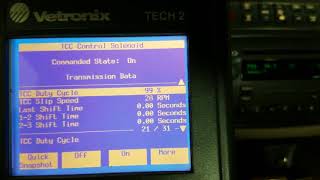
How to confirm: A professional technician can use a scan tool to monitor the TCC slip speed and command the solenoid on/off. If the solenoid doesn't respond or the slip remains high (over 200 RPM) when lockup is commanded, the solenoid is likely faulty. A technician can also use a stethoscope to listen for a 'click' from the solenoid during an actuation test. 🎬 Watch: How to diagnose and test solenoids on Kia transmissions.
Typical fix: Replace the TCC solenoid (also called the Damper Clutch solenoid). This part is located inside the transmission oil pan and is attached to the valve body. The transmission pan gasket and fluid should be replaced at the same time.
Est. part cost: $30-$150 - Low or Dirty Transmission Fluid 🟡 Medium Probability → Shop Transmission Assembly The Forte Koup from this era does not have a transmission dipstick, making it difficult for owners to check the fluid level and condition themselves, potentially leading to it being overlooked.
How to confirm: A mechanic must check the fluid level via a fill plug on the side of the transmission case. The fluid should be at the correct level, pinkish-red in color, and not smell burnt. Dark, burnt fluid or fluid with metal shavings indicates a more serious internal problem, possibly a failing torque converter.
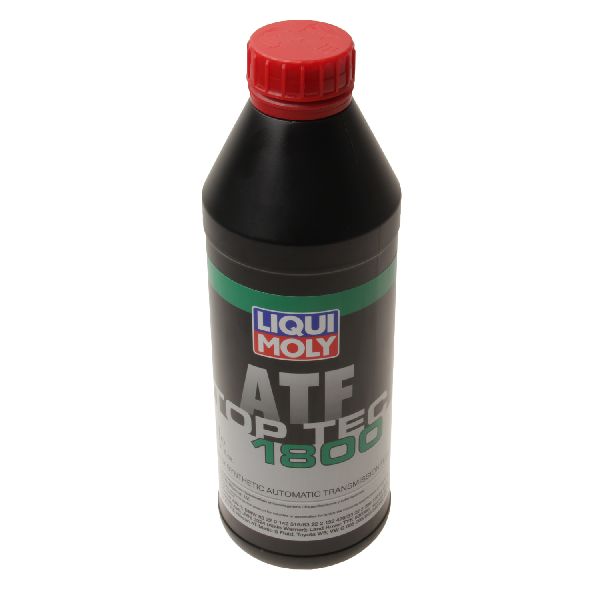
Typical fix: Perform a transmission fluid drain-and-fill using Kia-specified SP-IV fluid. A full flush is generally not recommended on high-mileage transmissions if the service history is unknown, as it can sometimes cause other issues.
Est. part cost: $70-$150 - Damaged Wiring or Connectors ⚪ Low Probability
How to confirm: Inspect the transmission wiring harness for any signs of damage, corrosion, or loose connections leading to the transmission control module and the main connector on the transmission case itself. TSB-TRA051R1 also mentions checking the harness for shorts.
Typical fix: Repair or replace the damaged section of the wiring harness.
Est. part cost: $20-$200
Rare But Worth Checking
- Failing Torque Converter: → Shop Automatic Transmission Torque Converter While the solenoid is the most common culprit, the internal clutch mechanism of the torque converter itself can wear out, preventing lock-up. This is a much more expensive repair and is often indicated by metal shavings in the transmission fluid.
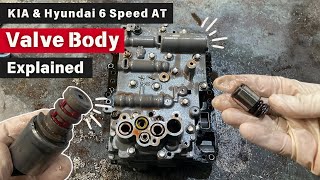
- Faulty Valve Body: → Shop Transmission Valve Body The valve body directs hydraulic fluid to the correct components. Clogged passages or a malfunctioning valve within the body can prevent the TCC from engaging. The A6-series transmissions are known to sometimes have premature wear in the valve body bores, which can occur in as few as 40,000 miles. 🎬 Watch: A detailed explanation of the A6GF1 valve body components.
- Faulty Transmission Control Module (TCM) or Software: → Shop Transmission Assembly While rare for this specific issue, other Kia models have had P0741 addressed with a TCM software update. It's a less likely but possible cause if all mechanical and electrical components test fine. In some cases, heat and vibration can cause internal failure of the driver ICs on the TCM circuit board.
Diagnosis Steps
- Verify the code P0741 is present using an OBD-II scanner.
- Check the transmission fluid level and condition. This must be done by a mechanic as there is no dipstick. Ensure it is full and does not appear dark, burnt, or contain debris.
- Using an advanced scan tool (like Kia's GDS), monitor the live data for Torque Converter Slip Speed while driving at a steady cruising speed (above 45 mph). The slip should drop to near zero when the TCC is commanded to lock.
- If slip remains high, use the scan tool's actuation test to command the TCC solenoid ON and OFF. Listen for an audible click from the transmission pan with a stethoscope to confirm mechanical operation.
- Inspect the transmission wiring harness for any visible damage or corrosion.
- If the fluid is clean, wiring is intact, and the solenoid does not respond correctly to commands, the most likely cause is a failed TCC solenoid, as per Kia TSB TSBTRA051R1.
- For a definitive diagnosis, a technician may need to drop the transmission pan to visually inspect the solenoid and test its resistance with a multimeter. The expected resistance is approximately 5.1 Ohms for the TCC (VFS) solenoid.
Parts You'll Likely Need
- Torque Converter Clutch (TCC) Solenoid
(OEM #46313-2F000 (Verify with VIN))— This is the most common failure point for code P0741 on this vehicle, as documented by Kia's own service bulletins.
Trusted brands: Kia (OEM), Rostra, Mopar, Mobis
OEM price range: $80-$150
Aftermarket price range: $30-$90 - Kia SP-IV Automatic Transmission Fluid
(OEM #UM013 CH059)— The fluid must be drained to access the solenoid and must be replaced with the correct OEM-specified fluid to prevent damage.
Trusted brands: Kia (OEM)
OEM price range: $15-$25 per quart - Transmission Pan Gasket
(OEM #45285-2F000 (Verify with VIN))— The gasket should be replaced anytime the transmission pan is removed to prevent leaks.
Trusted brands: Kia (OEM), Fel-Pro
OEM price range: $20-$40
Aftermarket price range: $10-$25
Related Codes That Often Appear With This One
- P0743 — This code indicates an electrical circuit fault for the TCC solenoid, while P0741 indicates a performance problem. They can appear together if the solenoid is failing both electrically and mechanically. TSB-TRA051R1 lists them together as part of the same potential solenoid issue.
- P0730 — Incorrect Gear Ratio. If the TCC issue is severe enough to cause significant slipping, it can sometimes trigger general gear ratio error codes.
- P0748, P0753, P0758, P0763, P0768, P0773 — These are all codes for other solenoids within the same A6GF1 transmission. TSB-TRA051R1 groups these codes together, indicating that a single event or widespread wear could cause multiple solenoid failures.
Technical Service Bulletins (TSBs) & Recalls
- TSBTRA051R1
Platform-Specific Known Issues
- Kia issued Technical Service Bulletin TSBTRA051R1, which specifically addresses DTC P0741 on vehicles with the 6-speed automatic transmission. It instructs technicians to replace the Damper Clutch (TCC) solenoid instead of the entire transaxle assembly to resolve the issue.
- The A6GF1 transmission in the Forte Koup does not have a transmission fluid dipstick, meaning fluid level and condition checks must be performed by a mechanic from a fill plug on the transmission case.
Mechanic-Grade Diagnostic Values
- TCC Solenoid (Variable Force Solenoid) Resistance — expected: 5.1 - 5.3 Ohms. Failure: A reading of 0 Ohms (short), infinite/O.L. (open), or a value significantly different from the specification.
- On/Off Shift Solenoid Resistance — expected: 10 - 11 Ohms. Failure: A reading outside this range indicates a failure of an on/off type shift solenoid, which can be present alongside a P0741 code.
- Torque Converter Slip Speed (Live Data) — expected: Near 0 RPM when TCC is commanded ON at cruising speed.. Failure: A sustained slip of over 200 RPM for several seconds while the TCC is commanded ON indicates the clutch is not locking up.
Scan Tool Commands That Help
- Kia GDS (Global Diagnostic System): Solenoid Actuation Test — This bidirectional command allows a technician to individually command the TCC solenoid on and off while the vehicle is stationary. It is used to verify if the solenoid is mechanically clicking (heard with a stethoscope) and if the PCM driver circuit is functional. This can help isolate a failed solenoid from a wiring or PCM issue before removing the transmission pan.
- Kia GDS (Global Diagnostic System): Reset Adaptive Values — After replacing a solenoid or performing other transmission repairs, this function should be used to clear the transmission's learned shift patterns. This allows the TCM to relearn the characteristics of the new components for optimal shift quality.
Wiring & Ground Locations
- Transmission Ground Strap — A primary ground point for the transmission is often a strap or cable connected to a stud on the transmission bell housing, frequently near the starter motor.. A poor or missing transmission ground can cause a variety of electrical issues, including erratic solenoid operation and incorrect sensor readings, potentially leading to a P0741 code. The TCM and solenoids rely on a stable ground reference for proper function.
- Chassis Ground Bolt — Inside the cabin, a factory ground bolt is often located to the side of the main fuse panel, behind a kick panel. It will appear as a silver bolt with multiple ground wires already attached.. The Transmission Control Module (TCM) requires a clean chassis ground. If this ground point is loose or corroded, it can cause unpredictable behavior from the TCM, which could manifest as false solenoid performance codes.
Model Year Variations Within This Range
- 2011-2012 vs 2013+: On earlier A6-family transmissions (pre-2013), the transmission fluid temperature sensor was a separate component. On 2013 and later models, the temperature sensor is integrated into the internal wiring harness. The later-style harness with the integrated sensor is a recommended upgrade for earlier models if the harness is being replaced.
Helpful Videos

We Have This Part in Stock

The information in this article is provided for general reference and educational purposes only. Vehicle specifications, procedures, and part compatibility can vary by production date, trim level, and region. Always consult your vehicle's factory service manual and verify part numbers before purchasing or performing repairs. Safety-critical components such as airbags, seat belts, and braking systems should be installed by a qualified professional.
- Kia FORTE KOUP:
- 🧭 Diagnostic Flowchart
- 🎬 Helpful Videos
- 🛍️ Shop This Part
- What's Unique About the 2011-2014 Kia FORTE KOUP
- Symptoms You May Notice
- Most Likely Causes
- Rare But Worth Checking
- Diagnosis Steps
- Parts You'll Likely Need
- Related Codes That Often Appear With This One
- Technical Service Bulletins (TSBs) & Recalls
- Platform-Specific Known Issues
- Mechanic-Grade Diagnostic Values
- Scan Tool Commands That Help
- Wiring & Ground Locations
- Model Year Variations Within This Range
- 🎟️ Get 5% Off