

P0741 on 2018 Lincoln Navigator: Torque Converter Clutch Stuck Off Causes and Fixes
On a 2018 Lincoln Navigator, code P0741 is most often caused by a faulty main control valve body in the 10R80 transmission, an issue addressed by a Ford Technical Service Bulletin (TSB 20-2117). The fix is a valve body replacement, which is a professional job costing between $1,000 and $2,000.
- For a 2018 Lincoln Navigator, P0741 is very likely caused by a faulty main control valve body, especially if the vehicle was built before late November 2017.
- Check for Ford/Lincoln TSB 20-2117, as it directly addresses this problem and prescribes the solution.
- The recommended fix is a complete replacement of the valve body, not just a single solenoid or a fluid change.
- This is a complex repair that requires professional service and a specialized computer relearn procedure afterward.
What's Unique About the 2018-2018 Lincoln Navigator
The 2018 Navigator uses the 10-speed 10R80 automatic transmission. For this specific model year, Ford and Lincoln identified a common manufacturing issue. A sticking valve inside the main control valve body was found to be the root cause of P0741, especially on vehicles built on or before November 20, 2017. This led to the release of Technical Service Bulletin TSB 20-2117 (which superseded TSB 18-2160), providing a clear diagnostic path and a specific part replacement to resolve the issue.
Symptoms You May Notice
- Check Engine Light is on
- Engine RPM is higher than usual at highway speeds
- Noticeable decrease in fuel economy
- Vehicle may shudder or vibrate at cruising speeds, sometimes described as feeling like driving over rumble strips
- Transmission may feel like it's slipping or exhibit harsh shifting
- In some cases, the transmission may overheat
- Replacing only the TCC solenoid instead of the entire valve body assembly. The TSB specifies replacing the complete assembly because the issue is a sticking valve, not necessarily a failed solenoid.
- Replacing the torque converter first. While the converter can fail, on this specific vehicle the valve body is the much more likely culprit according to the manufacturer's own service bulletin.
- Performing a transmission fluid flush. While correct fluid is critical, a flush alone will not fix a mechanically sticking valve.
Most Likely Causes
- Sticking Valve in Main Control Valve Body 🔴 High Probability → Shop Transmission Valve Body A known issue on 10R80 transmissions built on or before November 20, 2017, as documented in Ford TSB 20-2117. The TCC valve is prone to sticking in its bore.
How to confirm: Confirm the vehicle's build date. If it's on or before 11/20/2017 and P0741 is present (especially with P1744), the TSB applies. A technician can monitor TCC slip RPM with a scan tool to confirm the failure to lock up.
Typical fix: Replace the main control valve body assembly and perform the adaptive learning drive cycle.
Est. part cost: $600-$900 - Low or Dirty Transmission Fluid 🟡 Medium Probability → Shop Transmission Assembly
How to confirm: Check the transmission fluid level and condition. The 10R80 transmission is sensitive to fluid level and requires clean, correct-spec Motorcraft MERCON ULV fluid. A fluid change may be attempted, but it is unlikely to fix the TSB-related mechanical issue.
Typical fix: Perform a transmission fluid service, which may involve a drain and fill or a full fluid exchange. Ensure the correct ULV fluid is used.
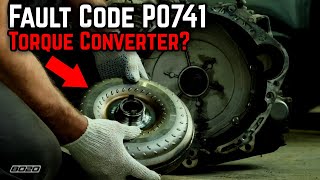
Est. part cost: $150-$300 - Failed Torque Converter ⚪ Low Probability → Shop Automatic Transmission Torque Converter
How to confirm: If the valve body and fluid are good, the internal clutch of the torque converter itself may have failed. This is confirmed by inspecting for excessive metal debris in the transmission pan and by ruling out other causes. In some cases, a failed valve body can cause damage to the torque converter, requiring both to be replaced.
Typical fix: Replace the torque converter. This is a major repair that requires removing the transmission from the vehicle.
Est. part cost: $500-$1000
Rare But Worth Checking
- Wiring or Connector Issue: A damaged wire or loose connection to the transmission's internal harness could disrupt the signal to the TCC solenoid, but this is less common than the mechanical/hydraulic issues. Ford documentation often classifies P0741 as a non-electrical, hydraulic/mechanical performance code.
- Faulty Powertrain Control Module (PCM): This is extremely rare. The PCM should only be considered after all other possibilities, including the TSB, have been thoroughly investigated and ruled out.
Diagnosis Steps
- Use an OBD-II scanner to confirm P0741 is the active code and check for any other codes, especially P1744.
- Check the vehicle's build date. If it is on or before November 20, 2017, TSB 20-2117 is highly relevant.
- Check the transmission fluid level and condition. The fluid should be at the correct level, red in color, and not smell burnt. The 10R80 does not have a traditional dipstick and must be checked by a technician.
- Using an advanced scan tool, monitor the Torque Converter Clutch (TCC) slip RPM while driving at highway speeds. When lockup is commanded, the slip should be near zero. If it remains high (over 200 RPM), it confirms a lockup failure.
- If the TSB applies (correct build date and codes P0741/P1744 are the only ones present), the next step is to replace the main control valve body.
- If the TSB does not apply and the fluid is good, further diagnosis of the TCC solenoid circuit, wiring, and the torque converter itself is required.
Parts You'll Likely Need
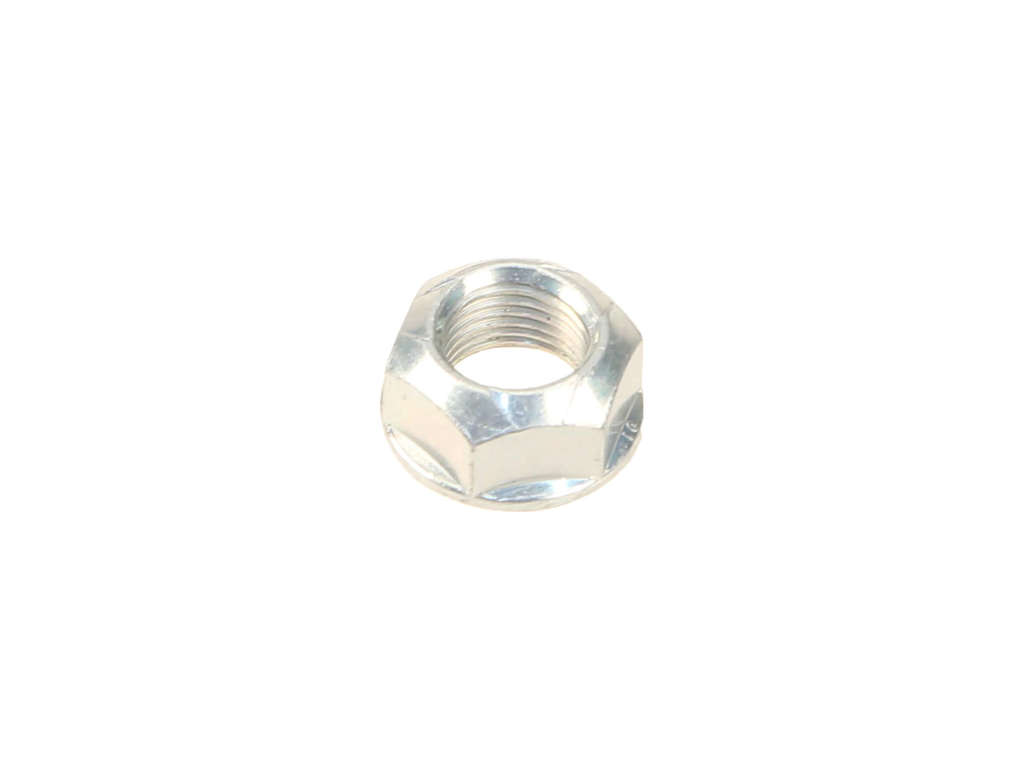
- Main Control Valve Body Assembly
(OEM #JL1Z-7A100-A)— This is the specific fix recommended by Lincoln/Ford in TSB 20-2117 for vehicles built on or before 11/20/2017 to correct a sticking TCC valve. This part number is specified for the 2018 Navigator with Electronic Auto Shift.
Trusted brands: Motorcraft
OEM price range: $600-$900 (plus a $200 core charge in some cases) - Motorcraft MERCON ULV Automatic Transmission Fluid
(OEM #XT-12-QULV)— This is the required fluid for the 10R80 transmission. The system will need to be refilled after replacing the valve body, typically requiring around 6 quarts for this job.
Trusted brands: Motorcraft
OEM price range: $15-$25 per quart
Related Codes That Often Appear With This One
- P1744 — This code for 'Torque Converter Clutch System Performance' is specifically mentioned alongside P0741 in TSB 20-2117 as being caused by the same sticking valve in the main control body. If both codes are present, it is a very strong confirmation of the TSB issue.
Technical Service Bulletins (TSBs) & Recalls
- TSB 20-2117: Supersedes TSB 18-2160. Addresses DTCs P0741 and P1744 on 10R80 transmissions due to a sticking TCC valve in the main control valve body for vehicles built on or before 20-Nov-2017. Recommends replacement of the valve body assembly.
- TSB 18-2160: The original TSB for this issue, later superseded by 20-2117. It listed the affected vehicles and the valve body replacement procedure.
Platform-Specific Known Issues
- The 10R80 transmission in 2018+ Ford and Lincoln vehicles has been the subject of multiple TSBs and some class-action lawsuits for various shifting complaints, though TSB 20-2117 is the most direct document related to code P0741.
- An owner of a 2018 Navigator reported needing a valve body replacement as one of several major mechanical failures on the vehicle.
Mechanic-Grade Diagnostic Values
- TCC Solenoid Coil Resistance — expected: 5.0 - 5.4 Ohms at 68°F (20°C). Failure: A reading outside this range indicates a faulty solenoid. However, P0741 is a performance code, so an in-spec electrical reading does not rule out a mechanical issue like a sticking valve.
- TCC Slip Speed (Live Data PID: TC_SLIPACT) — expected: Near 0 RPM when TCC lock-up is commanded at cruising speed.. Failure: A sustained value over 200 RPM when lock-up is commanded confirms the slip condition that sets P0741.
- TCC Solenoid Line Pressure (Live Data) — expected: Pressure should rise to approximately 90 PSI when lock-up is commanded. A technician noted seeing 72-75 PSI at idle in all ranges on a functioning vehicle.. Failure: Failure to build pressure or erratic readings can indicate a stuck solenoid or valve body issue.
Scan Tool Commands That Help
- Ford IDS / FORScan: Transmission Adaptive Tables Reset / TCM - Reset all adaptations — This is a mandatory step after replacing the main control valve body. It clears the transmission's learned shift strategy to allow it to adapt to the new component. Failure to perform this reset can result in poor shift quality and continued issues.
- Ford IDS / FORScan: Adaptive Learning Drive Cycle — Must be performed after resetting the adaptive tables. This specific, multi-step procedure involves a series of gentle accelerations, stops, and gear shifts to allow the TCM to relearn the transmission's unique parameters and ensure proper shift quality.
- Ford IDS: Transmission Strategy Download — When replacing the main control valve body, the 13-digit solenoid body strategy number etched on the new part must be entered into the PCM/TCM using the scan tool. This ensures software compatibility between the module and the new solenoid body.
Wiring & Ground Locations
- PCM Connector C175T, Pin 46 — The Powertrain Control Module (PCM) is located on the firewall. C175T is the middle connector on the left side.. Pin 46 on connector C175T is the specific circuit that controls the Torque Converter Clutch (TCC) solenoid. This is the exact pin to test for voltage, signal, or continuity when diagnosing a potential wiring issue between the PCM and the transmission.
- 10R80 Transmission Case Connector — The main electrical connector on the transmission case.. This is the primary connection point for all transmission electronics. The TCC solenoid signal from the PCM passes through this connector. A pinout diagram for this connector is required to trace the TCC circuit (Pin 16, Solenoid Pressure Control 3) for continuity and check for corrosion or damage.
Real Owner Repair Stories
- YouTube user 'DIY F-150' (2019 Ford F-150 3.5L EcoBoost (10R80 Transmission)) — Torque converter slip and shudder when going uphill under moderate acceleration, before the transmission downshifts.
❌ Tried (didn't work) The user went straight to diagnosis with FORScan, observing actual TCC slip exceeding the desired slip value, confirming the problem.
✅ What actually fixed it The user diagnosed a failing torque converter based on the slip data and the fact that Ford had gone through three part revisions for the torque converter since the truck was new. The video documents the process of replacing the torque converter.
OEM Part Supersession History
TSB 18-2160→TSB 20-2117— Updated service procedure and information for the same underlying issue of a sticking TCC valve.
Model Year Variations Within This Range
- 2018 (build date on or before Nov 20, 2017): Vehicles built on or before this date are specifically called out in TSB 20-2117 as being prone to a sticking TCC valve in the main control valve body, making this the primary diagnosis for P0741. Vehicles built after this date likely have an updated valve body from the factory, and other causes should be considered more strongly.
Diagnostic Flowchart
Other Known Issues on This Vehicle
Issues unrelated to this code that are worth knowing about as an owner of this generation:
- 3.5L EcoBoost Cam Phaser Rattle on Cold Start 🔴 High — Very common. A loud rattling or knocking noise for a few seconds after a cold start. Can lead to timing issues if ignored. (Ref: Ford Customer Satisfaction Program 21N03 and various TSBs (e.g., 21-2119) were issued to address this by replacing the VCT cam phasers.)
- Power Running Board Failure 🟠 Medium — Common. The power-deployable running boards may get stuck in the deployed or retracted position, often due to dirt/debris in the hinge mechanism or motor failure. (Ref: No specific TSB, but a widely reported issue. Often resolved by cleaning and lubricating the pivot points, but sometimes requires motor or module replacement.)
- Harsh or Erratic Shifting (10R80 Transmission) 🟠 Medium — Frequently reported. Owners complain of jerky shifts, delayed engagement, and clunking noises, separate from the P0741 code. This has been the subject of multiple TSBs and class-action lawsuits. (Ref: Multiple TSBs exist for software updates and mechanical fixes for various shift quality complaints, such as TSB 23-2123.)
- Leaking Valve Cover Gaskets 🟡 Low — Reported by some owners, leading to a burning oil smell as oil drips onto hot engine components. (Ref: No specific TSB, but mentioned in owner forums and complaints.)
Used vs. New Parts: Buying Guide for This Vehicle
When a used part is the smart pick: For this specific repair, a used main control valve body is NOT recommended. The part is known for a specific mechanical sticking failure (the TCC valve bore) which is addressed by a revised OEM part. A used part from a junkyard, especially from an early-build vehicle, is highly likely to have the same defect.
What to inspect on the donor part:
- Not applicable, as a used part is not advised.
OEM-only on this vehicle (don't cheap out):
- Main Control Valve Body Assembly
Brands owners have reported issues with on this vehicle:
- Any non-OEM or unverified remanufactured valve bodies should be avoided due to the complexity of the component and the specific nature of the TSB fix.
Real Owner Stories
Aggregated from forums and TSBs cited above. Mileages and costs reflect what owners reported in those sources.
2018 Lincoln Navigator 3.5L EcoBoost
Symptoms: The owner reported needing a valve body replacement as one of several major mechanical failures on the vehicle.
What fixed it: Replacement of the valve body.
Source hint: vehicle_specific_issues
2017 Ford F-150 3.5L EcoBoost (10R80)
Symptoms: Owner reported codes P0741 and P1744.
What fixed it: The dealer quoted a replacement of both the valve body and the torque converter.
Cost: $5,000-$5,000
Source hint: f150forum.com - 'Cost to replace TCC and Valvebody?'
Related OBD-II Codes
Frequently Asked Questions
Does TSB 20-2117 apply to my 2018 Lincoln Navigator?
My Navigator is shuddering like I'm driving over rumble strips; is this related to P0741?
Can I use any transmission fluid to fix the P0741 code in my Navigator?
What is the recommended fix if my Navigator was built before November 20, 2017?
Is it okay to buy a used valve body to save money on this repair?
Could my P0741 code be related to the harsh shifting I've been experiencing?
Helpful Videos
We Have This Part in Stock


The information in this article is provided for general reference and educational purposes only. Vehicle specifications, procedures, and part compatibility can vary by production date, trim level, and region. Always consult your vehicle's factory service manual and verify part numbers before purchasing or performing repairs. Safety-critical components such as airbags, seat belts, and braking systems should be installed by a qualified professional.
- Lincoln Navigator:
- 🧭 Diagnostic Flowchart
- 🎬 Helpful Videos
- 🛍️ Shop This Part
- What's Unique About the 2018-2018 Lincoln Navigator
- Symptoms You May Notice
- Most Likely Causes
- Rare But Worth Checking
- Diagnosis Steps
- Parts You'll Likely Need
- Related Codes That Often Appear With This One
- Technical Service Bulletins (TSBs) & Recalls
- Platform-Specific Known Issues
- Mechanic-Grade Diagnostic Values
- Scan Tool Commands That Help
- Wiring & Ground Locations
- Real Owner Repair Stories
- OEM Part Supersession History
- Model Year Variations Within This Range
- Other Known Issues on This Vehicle
- Used vs. New Parts: Buying Guide for This Vehicle
- Real Owner Stories
- 2018 Lincoln Navigator 3.5L EcoBoost
- 2017 Ford F-150 3.5L EcoBoost (10R80)
- Related OBD-II Codes
- Frequently Asked Questions
- 🎟️ Get 5% Off