

P0741 on 2020-2024 Mazda CX-30 2.5L: Torque Converter Clutch Causes and Fixes
On a 2020-2024 Mazda CX-30, code P0741 most often indicates a failing torque converter, which is a known issue documented in a Mazda Technical Service Bulletin (TSB). This is a major repair requiring transmission removal and is not a typical DIY job. The TSB specifically notes that excessive wear of the lock-up clutch contaminates the fluid, which directly causes the performance issue that triggers the code.
- P0741 on a 2020-2024 CX-30 is a serious code that points to a problem with the torque converter lock-up system.
- A Mazda TSB specifically identifies premature torque converter failure as a known issue on this vehicle, making it the most likely cause.
- Check the transmission fluid immediately. If it's dark, burnt, or contains metallic particles, stop driving if possible and have the vehicle inspected.
- This is not a simple DIY fix. The most common repair requires removing the transmission to replace the torque converter.
- Always use the correct Mazda-specific transmission fluid (FZ or A7) when refilling or flushing the system.
What's Unique About the 2020-2024 Mazda CX-30
For this specific generation of Mazda CX-30, there is a Technical Service Bulletin (TSB MC-10246127-0001, also listed as 05-005/23) that directly addresses a related problem. The bulletin notes that excessive wear of the lock-up clutch inside the torque converter can contaminate the transmission fluid with metal particles, causing a 'chirp' noise during the 3-4 shift. 🎬 Watch: Hear the specific chirp noise mentioned in the TSB. This known mechanical weakness makes a failing torque converter a much more likely cause for P0741 on this vehicle compared to the generic possibilities of faulty wiring or solenoids. The issue is noted to be prevalent in models with the 2.5L engine featuring cylinder deactivation.
Symptoms You May Notice
- Check Engine Light is on
- A 'chirp' noise when the transmission shifts from 3rd to 4th gear.
- Engine RPM is higher than usual at highway speeds, as the TCC fails to lock up.
- Noticeable decrease in fuel economy.
- A shuddering or vibration feeling during acceleration or at cruising speeds.
- Vehicle may stall when coming to a stop.
- Transmission may feel like it's slipping or hunting for gears.
- Replacing only the TCC solenoid when the actual problem is a mechanically failing torque converter that has contaminated the system. This may temporarily fix the issue but it will return as more debris clogs the new solenoid.
- Performing a simple drain and fill without addressing the source of the fluid contamination (the torque converter).
Most Likely Causes
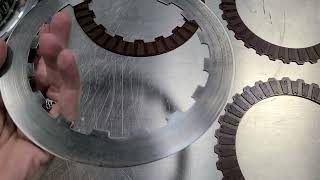
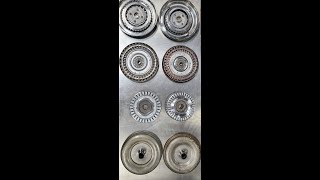
- Failing Torque Converter 🔴 High Probability → Shop Automatic Transmission Torque Converter A Mazda TSB (MC-10246127-0001 / 05-005/23) documents a known issue with excessive wear of the internal lock-up clutch, 🎬 See a teardown of the Skyactiv torque converter and clutches. which is the direct cause of the performance issue that triggers P0741. The wear contaminates the fluid with metallic particles.
How to confirm: A technician can use a scan tool to monitor the TCC slip speed in real-time. If slip is high (over 200 RPM) when lock-up is commanded, and the fluid is dark and contains metallic debris, the converter is failing.
Typical fix: Replace the torque converter and flush the transmission fluid multiple times (per the TSB, a drain and fill is performed twice) to remove contaminants. An 'Initial Learning' procedure must be performed after replacement.
Est. part cost: $400-$800 - Low or Contaminated Transmission Fluid 🔴 High Probability → Shop Transmission Assembly The fluid becomes contaminated as a direct result of the torque converter wearing out, as noted in the TSB. While low fluid can cause P0741 on any vehicle, on this platform, contaminated fluid is more often a *symptom* of the primary failure (the torque converter) rather than the root cause itself.
How to confirm: Check the transmission fluid level and condition. The fluid should be a specific blue color (Mazda ATF-FZ) or red (Mazda ATF-A7 for 2023+ models with cylinder deactivation). Dark, burnt-smelling fluid with shiny particles indicates a serious internal problem.
Typical fix: If the fluid is simply low, a top-off may temporarily resolve the issue. If the fluid is contaminated, it must be replaced, and the root cause (highly likely the torque converter on this vehicle) must be addressed.
Est. part cost: $80-$250 for fluid, depending on how many drain-and-fills are needed. - Faulty Torque Converter Clutch (TCC) Solenoid ⚪ Low Probability → Shop Automatic Transmission Torque Converter While a common cause on other vehicles, this is less likely on the CX-30 with P0741 due to the known mechanical TSB issue. The solenoid is part of the valve body inside the transmission.
How to confirm: A technician can test the solenoid's resistance with a multimeter and use a scan tool to command it on and off to check for an electrical response. This is often done after confirming the wiring is intact and the fluid is clean, which is unlikely if the TSB issue is present.
Typical fix: Replace the TCC solenoid or the entire valve body assembly. This requires draining the transmission fluid and removing the transmission oil pan.
Est. part cost: $50-$150 for a solenoid, more for a full valve body. - Damaged Wiring or Connectors ⚪ Low Probability
How to confirm: Visually inspect the wiring harness going to the transmission for any signs of damage, corrosion, or loose connections. A continuity test can be performed on the TCC solenoid circuit with a multimeter.
Typical fix: Repair or replace the damaged section of the wiring harness.
Est. part cost: $10-$100
Rare But Worth Checking
- Internal Valve Body Issue: → Shop Transmission Valve Body The valve body directs hydraulic fluid to actuate components. A stuck valve or a passage clogged by debris from the failing torque converter could prevent the TCC from engaging, even if the solenoid is good.
- Faulty Transmission Control Module (TCM): → Shop Transmission Assembly This is very rare. The TCM is the computer that controls the transmission. It should only be considered after all other mechanical and electrical causes have been ruled out.
Diagnosis Steps
- Check the transmission fluid level and condition. Look for a dark color, burnt smell, or metallic particles, which strongly suggest internal failure per TSB MC-10246127-0001.
- Use an OBD-II scanner with live data capability to monitor 'TCC Slip Speed' or 'Torque Converter Slip Speed' while driving. When the TCC is commanded 'ON' at cruising speed, the slip should drop to near zero. If it remains high (e.g., >200 RPM), there is a mechanical or hydraulic problem.
- Listen for a 'chirp' noise during the 3-4 upshift, as this is a specific symptom mentioned in the TSB for this failure.
- Inspect the transmission wiring harness and connectors for any visible damage, corrosion, or loose pins.
- If the fluid were clean and wiring intact (unlikely on this platform), the next step would be to test the TCC solenoid's resistance and function. 🎬 Watch: How to diagnose P0741 and test the TCC solenoid.
- Given the known TSB, if symptoms of high TCC slip and contaminated fluid are present, a failing torque converter is the most probable cause, and further electrical diagnosis may be unnecessary.
Parts You'll Likely Need
- Torque Converter
(OEM #FZC6-19-100)— This is the most likely failure point on this specific vehicle, as documented by manufacturer TSB MC-10246127-0001 regarding premature lock-up clutch wear.
Trusted brands: Mazda OE
OEM price range: $680-$870
Aftermarket price range: $250-$500 - Automatic Transmission Fluid (ATF)
(OEM #0000-FZ-113E-01 (ATF-FZ, Blue) or 0000-A7-115-QT (ATF-A7, Red, for 2023+ models with cylinder deactivation))— The fluid must be replaced during a torque converter replacement. The TSB specifies a two-time drain-and-fill procedure to flush contaminants. Use only the specified Mazda fluid; using incorrect fluid can cause shifting problems.
Trusted brands: Mazda OE, Ravenol ATF FZ, Idemitsu TLS-LV
OEM price range: $20-$30 per quart
Aftermarket price range: $15-$25 per quart - Transmission Drain Plug Gasket — The TSB specifies replacing the drain plug gasket after the final fluid fill. It's a cheap part that prevents leaks.
Trusted brands: Mazda OE
OEM price range: $2-$5
Aftermarket price range: $1-$3
Technical Service Bulletins (TSBs) & Recalls
- MC-10246127-0001 / 05-005/23: Addresses a chirp noise from the automatic transaxle during the 3-4 shift, caused by contaminated ATF from excessive wearing of the lock-up clutch in the torque converter. The repair procedure is to replace the torque converter and perform a double drain-and-fill of the ATF.
- 05-002/16: A general bulletin about the requirement to use only ATF-FZ (blue) fluid in Skyactiv-Drive transmissions.
- SA-033/22: Addresses a valve train tapping/rattling noise on cold starts for engines with cylinder deactivation, which could be misidentified by an owner as a transmission issue.
Platform-Specific Known Issues
- Mazda TSB MC-10246127-0001 (also 05-005/23) was issued for 2020-2024 CX-30s (among other models with the 2.5L engine with cylinder deactivation) for a chirp noise during the 3-4 shift caused by excessive wear of the torque converter lock-up clutch, which contaminates the ATF. This mechanical failure directly relates to the condition monitored by code P0741.
Mechanic-Grade Diagnostic Values
- TCC Feedback Hydraulic Pressure — expected: Normal operation involves variable pressure.. Failure: DTC P0741 can be set if TCC slip is >200 RPM while feedback hydraulic pressure is 200 kPa (29.0 psi) or more, indicating the system is trying to apply the clutch but a mechanical/hydraulic failure is preventing lock-up.
- TCC Solenoid Resistance (General Reference) — expected: On/off solenoids typically measure around 10-30 ohms. PWM solenoids are often lower, around 5 ohms. Note: Specific values for the PY-VPS transmission were not found in public documents, always refer to the vehicle-specific service manual.. Failure: A reading of 0 ohms indicates a short, while a very high or infinite reading indicates an open circuit.
Scan Tool Commands That Help
- Mazda Diagnostic and Repair Software (MDARS): Freeze Frame Data / Snapshot Data — Used to record the exact vehicle status (ATF temperature, vehicle speed, etc.) at the moment the P0741 DTC was triggered. This is the first step in Mazda's official diagnostic procedure.
- Mazda Diagnostic and Repair Software (MDARS): PID/Data Monitor Inspection — Allows for real-time monitoring of transmission PIDs (Parameter IDs) like TCC slip speed, turbine speed, and commanded vs. actual gear to confirm the torque converter is failing to lock up when commanded by the TCM.
- Mazda Diagnostic and Repair Software (MDARS): Initial Learning Procedure — This is a mandatory procedure after replacing the torque converter or transmission. It allows the TCM to learn the hydraulic and mechanical characteristics of the new components for proper shift quality and TCC operation.
Wiring & Ground Locations
- Transmission Main Connector (Case Connector) — On the exterior of the automatic transaxle housing.. This is the primary electrical interface for all internal transmission solenoids, including the TCC solenoid. A visual inspection for corrosion, bent pins, or a loose connection here is a crucial first step in ruling out a simple electrical issue before condemning internal components.
- Main Engine Bay Ground Points — Typically located on the chassis rails, inner fenders, and near the battery. A detailed diagram shows specific points for the CX-30 in the engine room.. A poor ground connection for the Powertrain Control Module (PCM) or Transmission Control Module (TCM) can cause erratic behavior and false codes. While not a primary cause for P0741 given the TSB, checking major grounds is part of a thorough electrical diagnosis.
Real Owner Repair Stories
- Reddit user on r/askcarguys (2019 Mazda CX-5 with 64,000 miles (same engine family and TSB applies)) — Started hearing a chirp noise when shifting from 3rd to 4th gear, exactly as described in TSB 05-005/23.
❌ Tried (didn't work) Initial dealer visit and contact with Mazda corporate.
✅ What actually fixed it The owner was just outside the 5yr/60k powertrain warranty. After persistent follow-up with both the dealer and Mazda corporate, citing the TSB as evidence of a known manufacturing defect, Mazda agreed to cover most of the repair under goodwill. The owner paid a $500 deductible for the full TSB procedure (torque converter replacement). - Reddit user on r/MazdaCX30 (2021/2022 (2-year-old) Mazda CX-30 2.5L with 45,000 km) — High RPMs in low gears (shifting at 2000-2500 RPM), increased fuel consumption from ~7 L/100km to ~9.3 L/100km. No Check Engine Light was on.
❌ Tried (didn't work) Initial dealer visit found no codes on the computer.
✅ What actually fixed it The symptoms, which are consistent with TCC slip, were resolved after a system update was performed as part of a separate security-related recall. The owner suspects the update included a 'factory reset' of the transmission control module's adaptive learning values, which restored normal shift behavior. This suggests that in some early-stage cases without a hard fault, a TCM software update or relearn procedure might be a viable step. - NHTSA ODI #10536609 — An owner of a Mazda vehicle reported that error code P0741 indicated the torque converter solenoid needed to be replaced, noting after research that this appears to be a recurring problem with the manufacturer.
- NHTSA ODI #747289 — A driver reported encountering error code P0741; they stopped and restarted the vehicle to reset it, but noted that initially no specific problem was found or fixed by the dealer.
- NHTSA ODI #751990 — An owner was informed of transmission failure after diagnostics returned codes P1744, P0741, and P1783, and was initially advised to perform a transmission service and "wait and see."
- NHTSA ODI #10162479 — A technician pulled a code of P0741 for a slipping torque converter, leading to a recommendation for a full transmission replacement.
- NHTSA ODI #738516 — A report detailed diagnostic codes P1744 (TCC performance) and P0741 (TCC stuck), with the owner noting through research that many others had experienced the same issue.
OEM Part Supersession History
FZC6-19-100→FZC6-19-100— No supersession found. This part number appears to be the consistent OEM part for the affected vehicle range.
Heads up: This part is specified for the 2.5L engine with cylinder deactivation. While it may physically fit other transmissions, using it in a non-specified application is not recommended.
Model Year Variations Within This Range
- 2023-2024: Starting with 2023 models equipped with the 2.5L engine with cylinder deactivation, Mazda switched from the blue ATF-FZ fluid to a new red ATF-A7 fluid (P/N 0000-A7-115-QT). The two fluids are NOT interchangeable. Using the wrong fluid will void the warranty and can cause serious transmission issues. The dipstick is marked with either 'FZ' or 'A7' to indicate the correct fluid.
Diagnostic Flowchart
Other Known Issues on This Vehicle
Issues unrelated to this code that are worth knowing about as an owner of this generation:
- Valve Train Tapping/Rattling Noise 🟡 Low — Common on new vehicles or after multiple short trips without full warmup. Affects engines with cylinder deactivation. (Ref: TSB SA-033/22 (previously E001/21))
- Premature Battery Failure 🟠 Medium — Some owners report battery failure within 1-2 years of ownership.
- Fragile Instrument Cluster Lens 🟡 Low — The plastic cover over the gauge cluster is known to be extremely soft and scratches very easily, even with a microfiber cloth.
- Phantom Braking (Smart Brake Support) 🟠 Medium — Some owners report the automatic emergency braking system engaging unexpectedly, though this is a complaint across many modern vehicles with this technology.
- Excessive Oil Consumption (Turbo Models) 🔴 High — Primarily reported on 2021 Turbo models, some owners have experienced excessive oil consumption potentially linked to faulty valve stem seals.
Used vs. New Parts: Buying Guide for This Vehicle
When a used part is the smart pick: For this specific P0741 issue, sourcing a used part is generally NOT recommended. The primary failure is a wear-related defect in the torque converter, as documented by the TSB. A used torque converter from a junkyard likely has the same defect or is already partially worn, providing no long-term reliability.
Donor-vehicle mileage cap: roughly under 10000 miles for the part to have meaningful remaining life.
What to inspect on the donor part:
- If forced to consider a used transmission assembly, source it from a vehicle with the lowest possible mileage and a documented history of no transmission complaints.
- Avoid any parts from a vehicle that shows signs of front-end collision damage, which can shock the transmission and torque converter.
- When replacing the torque converter, it is an opportune time to inspect the drive plate (flexplate) for hairline cracks, especially around the bolt holes.
OEM-only on this vehicle (don't cheap out):
- Torque Converter: Given the specific nature of the TSB-documented failure, the OEM part (FZC6-19-100) is the only guaranteed-to-fit and revised component. Aftermarket converters may not have the same internal design or friction material, risking a repeat failure.
- Automatic Transmission Fluid (ATF): Strictly use Mazda OE ATF-FZ (Blue) or ATF-A7 (Red) as specified for your model year. There is no reliable 'universal' equivalent for these specific low-viscosity fluids.
Brands owners have reported issues with on this vehicle:
- Unknown or 'white box' torque converter brands should be avoided. The complexity and labor cost of this job make it critical to use a high-quality, reliable part to prevent having to do the job twice.
Real Owner Stories
Aggregated from forums and TSBs cited above. Mileages and costs reflect what owners reported in those sources.
2020-2024 Mazda CX-30 2.5L
Symptoms: A 'chirp' noise specifically occurring during the automatic transaxle upshift from 3rd to 4th gear.
What fixed it: Replacement of the torque converter and a double drain-and-fill of the automatic transmission fluid (ATF).
Source hint: TSB MC-10246127-0001 / 05-005/23
2020-2024 Mazda CX-30 2.5L
Symptoms: High revs and poor fuel economy, suggesting the transmission is not locking up correctly at cruising speeds.
What fixed it: A transmission relearning procedure was suggested as a potential step.
Source hint: r/MazdaCX30 - 'Transmission / torque converter issue?'
Related OBD-II Codes
Frequently Asked Questions
Does TSB 05-005/23 apply to my 2020-2024 Mazda CX-30?
What is causing the 'chirp' noise when my CX-30 shifts from 3rd to 4th gear?
Can I use any transmission fluid to fix the P0741 code on my CX-30?
Is the tapping noise I hear on cold starts related to the P0741 transmission code?
What is the official Mazda repair procedure for a P0741 caused by torque converter wear?
Why is my fuel economy dropping along with the Check Engine Light?
Helpful Videos


We Have This Part in Stock

The information in this article is provided for general reference and educational purposes only. Vehicle specifications, procedures, and part compatibility can vary by production date, trim level, and region. Always consult your vehicle's factory service manual and verify part numbers before purchasing or performing repairs. Safety-critical components such as airbags, seat belts, and braking systems should be installed by a qualified professional.
- Mazda CX-30:
- 🧭 Diagnostic Flowchart
- 🎬 Helpful Videos
- 🛍️ Shop This Part
- What's Unique About the 2020-2024 Mazda CX-30
- Symptoms You May Notice
- Most Likely Causes
- Rare But Worth Checking
- Diagnosis Steps
- Parts You'll Likely Need
- Technical Service Bulletins (TSBs) & Recalls
- Platform-Specific Known Issues
- Mechanic-Grade Diagnostic Values
- Scan Tool Commands That Help
- Wiring & Ground Locations
- Real Owner Repair Stories
- OEM Part Supersession History
- Model Year Variations Within This Range
- Other Known Issues on This Vehicle
- Used vs. New Parts: Buying Guide for This Vehicle
- Real Owner Stories
- 2020-2024 Mazda CX-30 2.5L
- 2020-2024 Mazda CX-30 2.5L
- Related OBD-II Codes
- Frequently Asked Questions
- 🎟️ Get 5% Off