

P0741 on 2013-2019 Nissan Sentra: CVT Torque Converter Clutch Causes and Fixes
On a 2013-2019 Nissan Sentra, code P0741 is a serious issue, almost always indicating an internal problem with the CVT transmission. The most common fix is replacing the transmission's valve body or the entire CVT unit, a repair costing several thousand dollars. It is rarely a simple sensor or fluid issue.
- P0741 on a 2013-2019 Sentra is a serious code that almost always points to a major, expensive internal CVT failure.
- Do not attempt simple fixes like replacing a single solenoid; the problem is typically the entire valve body assembly or the complete transmission.
- Diagnosis and repair should be performed by a professional technician following the steps in Nissan's service bulletins.
- The repair will cost several thousand dollars, whether it's a valve body replacement or a full CVT replacement.
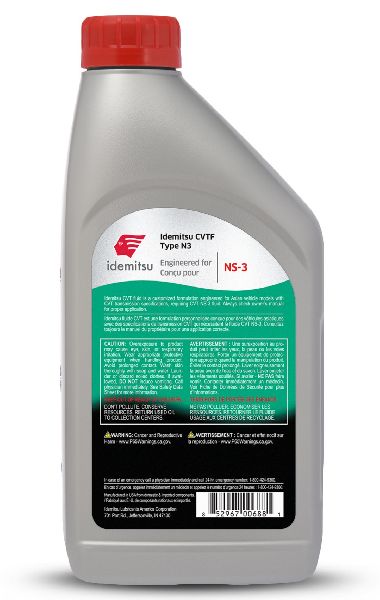
- Always use genuine Nissan NS-3 fluid for any transmission service on this vehicle.
What's Unique About the 2013-2019 Nissan Sentra
The 2013-2019 Nissan Sentra uses a Jatco Continuously Variable Transmission (CVT), most commonly the RE0F11A (also known as JF015E). For this specific platform, P0741 is a major red flag and rarely points to a simple, inexpensive fix. The Jatco CVT is known for issues where fine metal particles contaminate the fluid and cause valves in the valve body to stick or wear prematurely. Nissan has issued Technical Service Bulletins (like NTB19-040H and its predecessors) that guide technicians through a specific diagnostic flowchart for this code. The procedure often leads to the conclusion of a failed control valve (valve body) or a necessary replacement of the entire CVT assembly, rather than a simple external sensor or solenoid issue.
Symptoms You May Notice
- Engine RPM is higher than usual at highway speeds (not dropping as expected)
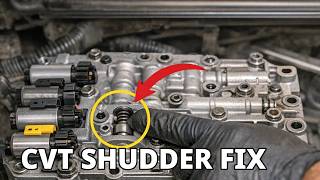
- Vehicle shudders or vibrates, especially during light acceleration 🎬 See: Why your Nissan CVT shudders under light throttle or at cruising speeds.
- Reduced fuel economy.
- Hesitation or a feeling of reduced power.
- Check Engine Light is on
- Transmission overheating warning light may appear
- Replacing only the torque converter clutch (TCC) solenoid. On these CVTs, the solenoids are integrated into the valve body assembly, and the fault is typically a hydraulic or mechanical issue within the assembly (like a stuck valve or worn bore), not an individual electrical solenoid failure.
Most Likely Causes
- Internal CVT Failure (Control Valve / Valve Body) 🔴 High Probability This is a widely documented issue with this model's Jatco CVT. Metal debris from normal wear can contaminate the fluid and score the delicate channels and bores within the valve body, or cause the integrated solenoids to stick. The TCC regulator valve and secondary pulley regulator valve bores are particularly common wear points.
How to confirm: A technician follows the diagnostic procedure in Nissan TSB NTB19-040H. This involves checking for other codes and then removing the valve body to inspect the CVT belt with a borescope. If the belt is okay, the control valve is the confirmed culprit.
Typical fix: Replace the control valve (valve body) assembly and the transmission strainer, followed by a fluid fill with Nissan CVT Fluid NS-3 and a TCM reprogram/relearn procedure.
Est. part cost: $800-$1500 - Internal CVT Failure (Complete Assembly) 🔴 High Probability If the torque converter failure or other internal issues have created excessive debris, or if the CVT's belt and pulley system is damaged, the entire unit is compromised. This is a common failure mode for this transmission, leading to class-action lawsuits and extended warranty programs from Nissan.
How to confirm: During the TSB diagnostic procedure, if a borescope inspection reveals evidence of CVT belt slippage (scoring, damage), the entire transmission must be replaced. Also, if P0741 is present with other codes like P0776 or P17F1, the TSB directs an immediate CVT assembly replacement.
Typical fix: Replace the entire CVT assembly with a new or remanufactured unit.
Est. part cost: $3000-$5000 - Failed Torque Converter 🟡 Medium Probability → Shop Automatic Transmission Torque Converter The lock-up clutch inside the torque converter can wear out or fail mechanically, preventing it from engaging. This failure can also release debris that damages the valve body and the rest of the CVT.
How to confirm: This is often diagnosed after ruling out the valve body. If a new valve body doesn't fix the issue, or if there's a large amount of specific types of metal in the pan, the torque converter is condemned. The transmission must be removed to replace it.
Typical fix: Replace the torque converter. This requires removing the transmission from the vehicle.
Est. part cost: $400-$800 - Low or Degraded CVT Fluid ⚪ Low Probability While low fluid can cause pressure issues, it's rarely the root cause for a P0741 on this CVT. More often, degraded or contaminated fluid is a symptom of one of the internal failures listed above. Simply changing the fluid without addressing the root cause is unlikely to provide a long-term fix.
How to confirm: Check the CVT fluid level and condition. The fluid should be translucent green and free of burnt smell or visible metal particles. Note: This vehicle has no dipstick; the level must be checked via a specific procedure involving a fill plug and overflow tube at a specific temperature.
Typical fix: Perform a CVT fluid drain and fill using only Nissan CVT Fluid NS-3. This is unlikely to be a permanent fix if internal damage has already occurred.
Est. part cost: $150-$250
Diagnosis Steps
- Scan the TCM for P0741 and any other related codes. Note all codes present, as codes like P0776 or P17F1 change the diagnostic path.
- Consult Nissan TSB NTB19-040H (or its latest revision) for the diagnostic flowchart based on the stored codes.
- Check the CVT fluid level and condition. This requires a specific procedure as there is no dipstick. Look for dark, burnt fluid or shiny metal particles.
- If directed by the TSB for codes P0741/P0744, raise the vehicle and remove the transmission oil pan and control valve (valve body).
- Using a borescope, inspect the CVT belt and pulleys for scoring or damage as outlined in the TSB.
- If belt damage is found, the CVT assembly must be replaced.
- If the belt appears okay, the issue is confirmed to be the control valve. Replace the control valve assembly.
- After repairs, install a new pan strainer, clean the pan magnets, and reinstall the pan with a new gasket.
- Fill the transmission with the correct amount of Nissan CVT Fluid NS-3 and perform a final level check at the correct temperature.
- Clear all codes, perform any required TCM relearn procedures with a capable scan tool, and perform a test drive to verify the repair.
Parts You'll Likely Need
- CVT Assembly (Transmission) — This is the required fix if a borescope inspection reveals belt/pulley damage, or if P0741 is paired with other severe fault codes, per Nissan's TSB. Many owners on forums report total costs between $4,500 and $8,000 for this job at a dealer.
Trusted brands: Nissan OE, Jatco (OEM supplier)
OEM price range: $3500-$5000
Aftermarket price range: $2500-$4000 (Remanufactured) - CVT Control Valve (Valve Body)
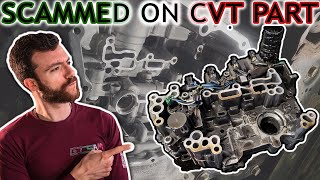
(OEM #31705-X428E)— This is the most likely cause if the CVT belt and pulleys are not damaged. It contains the solenoids and hydraulic valves that control lock-up. The OEM part number is often superseded; 31705-X428E is a common replacement.
Trusted brands: Nissan OE, Hitachi
OEM price range: $1000-$1500
Aftermarket price range: $700-$1200 - Nissan CVT Fluid NS-3
(OEM #999MP-NS300P)— This is the only approved fluid for this transmission. Any repair involving the valve body or a full replacement will require a fluid refill of several quarts.
Trusted brands: Nissan OE
OEM price range: $20-$25 per quart
Related Codes That Often Appear With This One
- P0868 — Indicates low transmission fluid pressure. This often appears with P0741 as a failing valve body or internal debris can cause widespread pressure control failures.
- P0776 — Relates to the Pressure Control Solenoid 'B'. Since the solenoids are part of the valve body, a failure in the valve body often triggers multiple solenoid and performance codes. The TSB specifically directs a CVT replacement if this code is present.
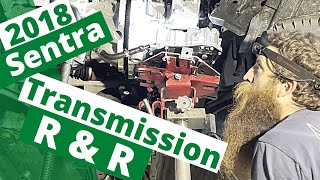
- P17F1 — This is a Nissan-specific code indicating a CVT judder or internal fault. If seen with P0741, Nissan's TSB often directs the technician to replace the entire CVT assembly 🎬 Watch: Complete Nissan Sentra CVT removal and installation walkthrough immediately.
- P0744 — An intermittent version of the TCC circuit fault. It is included in the same TSB diagnostic tree as P0741 and points to the same set of failures (valve body or full CVT).
Technical Service Bulletins (TSBs) & Recalls
- NTB19-040H: The primary TSB for diagnosing P0741 and related CVT codes. It provides a detailed flowchart for inspection and determining whether the valve body or the entire CVT needs replacement.
- Bulletin #NTB19-040c: A manufacturer service bulletin noting that MIL illumination with DTC P0741 or P0744 may be accompanied by symptoms of hesitation and/or reduced power.
- Bulletin #NTB19-040F: This technical update addresses stored codes P0741, P0744, and P17F1, confirming these faults are often associated with a noticeable reduction in vehicle power.
- Bulletin #NTB19-040E: An amended manufacturer bulletin that guides technicians when P0741 is stored alongside other performance codes like P0841 or P0965.
Platform-Specific Known Issues
- The Jatco CVT7 (RE0F11A/JF015E) used in this Sentra is known for a high failure rate, with P0741 being a common indicator of the need for a valve body or complete unit replacement.
- Nissan extended the warranty on some CVT transmissions for other models and years, but many 2013-2019 Sentra owners may be outside of any warranty coverage for this expensive repair.
Mechanic-Grade Diagnostic Values
- TCC Solenoid Resistance — expected: 6.1Ω at 20°C (68°F), 7.7Ω at 80°C (176°F). Failure: A reading significantly outside this range, or an open/short circuit, indicates a failed solenoid. This test is performed at the transmission case connector, between pin 6 and the transmission case ground.
- Other Valve Body Solenoid Resistance (Line Pressure, Primary Pressure, etc.) — expected: Approximately 5.3Ω at 20°C (68°F) to 6.7Ω at 80°C (176°F). Failure: While not the direct cause of P0741, checking other solenoids can help condemn the entire valve body assembly if multiple readings are out of spec.
- Live Data: TCC Slip Speed — expected: Near zero RPM when TCC lock-up is commanded by the scan tool.. Failure: If the scan tool commands the TCC 'ON' at cruising speed and the slip speed does not drop to near zero, it confirms the lock-up clutch is not engaging.
Scan Tool Commands That Help
- Nissan CONSULT-III plus: TCC DYNAMIC TEST — This bidirectional test allows a technician to manually command the TCC solenoid on and off at low speeds (approx. 10 mph) to feel for engagement and watch the tachometer and TCC slip speed data. If the TCC does not engage during this test, it points directly to a hydraulic or mechanical issue.
- Nissan CONSULT-III plus: ERASE MEMORY DATA — This procedure is required after replacing the valve body to clear adaptive learning values from the TCM.
- Nissan CONSULT-III plus: Auxiliary gearbox clutch point learning — This mandatory procedure must be performed after replacing the valve body. Failure to do so can result in a no-move condition. The procedure must be performed twice in a row.
- Nissan CONSULT-III plus: Erase/Write Calibration Data — When replacing the entire CVT assembly or a valve body that includes a new ROM, the calibration data from the new part (often supplied on a disc or QR code) must be written to the TCM.
Wiring & Ground Locations
- Transmission Control Module (TCM) — For the 2013-2019 Sentra, the TCM is a separate unit located in the engine bay, behind the battery and airbox assembly, near the driver's side strut tower. It is held on by two 10mm nuts and has a single large electrical connector.. While rarely the cause, a faulty TCM or poor connection at the TCM could theoretically cause this code. Its location is important for advanced circuit testing between the module and the transmission.
- Transmission Case Connector — This is the main round electrical connector on the outside of the CVT case where the vehicle harness connects to the internal transmission wiring.. This is the primary access point for testing the TCC solenoid's resistance (Pin 6 to ground) without removing the transmission pan.
- Main Chassis/Transmission Ground — A primary ground strap typically runs from the negative battery terminal or chassis directly to a bolt on the transmission case.. A poor ground connection can cause erratic behavior in transmission solenoids and sensors, leading to various fault codes. Ensuring this connection is clean and tight is a crucial preliminary check.
Real Owner Repair Stories
- AliExpress User Review/Guide (2012 Nissan Sentra (B17 platform, same as 2013-2019)) — Erratic shifting at highway speeds, sudden jerks between 45-60 mph, followed by delayed engagement from a stop.
❌ Tried (didn't work) The owner's mechanic confirmed it was not low fluid or worn belts.
✅ What actually fixed it The problem was identified as an internal hydraulic control failure. Replacing the entire JF015E valve body assembly resolved all symptoms.
OEM Part Supersession History
31705-X428B, 31705-X428C→31705-X428E— Manufacturer revision to address reliability issues and improve performance.
Heads up: The latest part number (31705-X428E) should always be used to ensure all engineering updates are included.
Model Year Variations Within This Range
- 2013-2015 vs 2016-2019: The JF015E valve body has two distinct variations. The pre-2016 version is different from the 2016+ version, and they are not interchangeable. When ordering a replacement for a 2016 model, it is critical to verify with pictures which version is installed in the vehicle, as it was a transition year.
Diagnostic Flowchart
Other Known Issues on This Vehicle
Issues unrelated to this code that are worth knowing about as an owner of this generation:
- Mass Air Flow (MAF) Sensor Failure/P0101 Code 🟠 Medium — Common issue. Often caused by a dirty throttle body or cracked air intake hose, not always a bad sensor. (Ref: NTB16-027d)
- Faulty Brake Light Switch 🔴 High — Widespread on 2016-2019 models. Can prevent brake lights from working or prevent the car from starting. (Ref: Recall PM971)
- Front Suspension Clunking/Popping 🟠 Medium — Common on earlier 2013-2015 models. Typically caused by worn strut mounts or bearings.
- Engine Stalling at Low Speeds 🔴 High — Often related to the MAF sensor issue or a cracked air intake hose causing incorrect air/fuel mixture.
- EVAP System Faults 🟡 Low — Can cause a check engine light and issues refueling. Often due to a faulty canister vent valve or hose. (Ref: Various TSBs exist)
Used vs. New Parts: Buying Guide for This Vehicle
When a used part is the smart pick: For this specific repair, a used part is highly discouraged. A complete used CVT assembly from a low-mileage donor is a possibility but carries significant risk. A used valve body is almost never a smart choice, as the failure is due to internal wear that is not visible.
Donor-vehicle mileage cap: roughly under 50000 miles for the part to have meaningful remaining life.
What to inspect on the donor part:
- Verify the donor vehicle's VIN to confirm it did not have an open recall or prior history of transmission issues.
- If possible, get a sample of the CVT fluid from the donor transmission. It must be translucent green, with no burnt smell or visible metallic particles.
- Obtain a warranty from the salvage yard, ideally 90 days or more, to cover the part in case of immediate failure.
OEM-only on this vehicle (don't cheap out):
- CVT Fluid (must be Nissan NS-3)
- CVT Control Valve (Valve Body) - An OEM or high-quality remanufactured unit is strongly recommended over a used part.
Aftermarket brands forum-validated for this vehicle:
- Sonnax: Does not sell complete valve bodies, but manufactures high-quality oversized valves and repair kits (like kit 33741F-01K) used by professional transmission rebuilders to restore worn valve bodies.
- Remanufactured Valve Bodies from specialists like Sunbelt Valve Body Builders are a viable alternative to new OEM.
Brands owners have reported issues with on this vehicle:
- Generic, unbranded valve bodies from non-specialized sellers (e.g., on eBay or AliExpress) are extremely risky. One user story noted that a cheap, non-spec valve body led to catastrophic transmission failure within weeks.
Real Owner Stories
Aggregated from forums and TSBs cited above. Mileages and costs reflect what owners reported in those sources.
2013-2019 Nissan Sentra
Symptoms: Multiple users reporting dealer quotes for CVT replacement due to internal failure and performance codes.
What fixed it: Some owners reported success in getting Nissan corporate customer care to cover part of the replacement cost even when the vehicle was out of warranty.
Cost: $4,500-$9,000
Source hint: Reddit r/Nissan: Multiple threads discuss CVT replacement costs
2013-2019 Nissan Sentra
Symptoms: P0741/P0744 codes present; vehicle requires valve body replacement.
What fixed it: Replacing the valve body (control valve), which involves removing the oil pan, following a specific bolt pattern, and reconnecting the main harness connector.
Source hint: YouTube: Several DIY videos show the process of replacing the valve body on a Sentra
Related OBD-II Codes
Frequently Asked Questions
Which Nissan TSB should my mechanic use to diagnose P0741 on my 2013-2019 Sentra?
My Sentra is vibrating at highway speeds and has a P0741 code. Does this mean I need a whole new transmission?
Can I use any CVT fluid to fix the P0741 shuddering issue?
Is there a recall for the CVT issues causing P0741 in the 2013-2019 Sentra?
What does the dealer look for when they pull the transmission pan for this code?
Why is my engine RPM higher than normal on the highway with this code?
Helpful Videos
We Have This Part in Stock




The information in this article is provided for general reference and educational purposes only. Vehicle specifications, procedures, and part compatibility can vary by production date, trim level, and region. Always consult your vehicle's factory service manual and verify part numbers before purchasing or performing repairs. Safety-critical components such as airbags, seat belts, and braking systems should be installed by a qualified professional.
- Nissan Sentra:
- 🧭 Diagnostic Flowchart
- 🎬 Helpful Videos
- 🛍️ Shop This Part
- What's Unique About the 2013-2019 Nissan Sentra
- Symptoms You May Notice
- Most Likely Causes
- Diagnosis Steps
- Parts You'll Likely Need
- Related Codes That Often Appear With This One
- Technical Service Bulletins (TSBs) & Recalls
- Platform-Specific Known Issues
- Mechanic-Grade Diagnostic Values
- Scan Tool Commands That Help
- Wiring & Ground Locations
- Real Owner Repair Stories
- OEM Part Supersession History
- Model Year Variations Within This Range
- Other Known Issues on This Vehicle
- Used vs. New Parts: Buying Guide for This Vehicle
- Real Owner Stories
- 2013-2019 Nissan Sentra
- 2013-2019 Nissan Sentra
- Related OBD-II Codes
- Frequently Asked Questions
- 🎟️ Get 5% Off