

P0741 on 2005-2010 Pontiac G6 2.4L: Torque Converter Clutch Causes and Fixes
P0741 on a Pontiac G6 with the 2.4L engine usually means the Torque Converter Clutch (TCC) solenoid has failed or transmission fluid is low/dirty. Expect to pay $40-$100 for a new solenoid, but the repair is labor-intensive as it requires accessing the transmission's side cover. Always check transmission fluid level and condition first, as this is the simplest and cheapest potential fix.
- P0741 on your Pontiac G6 means the torque converter clutch is failing to lock, which hurts fuel economy and can damage the transmission if ignored.
- Always start by checking the transmission fluid level and condition. This is the simplest and cheapest potential fix.
- The most likely mechanical failure is the TCC solenoid, but replacing it on the G6 2.4L is a labor-intensive job requiring professional service.
- Driving for an extended period with this code can lead to transmission overheating and a much more expensive repair, such as a full torque converter replacement or transmission rebuild.
What's Unique About the 2005-2010 Pontiac G6
The Pontiac G6 with the 2.4L engine uses the 4-speed 4T45-E automatic transmission, which is known for solenoid failures. Unlike some vehicles where solenoids are easily accessible by dropping the oil pan, on the 4T45-E, the TCC solenoid is located on the valve body behind the side cover of the transmission. This makes replacement a significantly more labor-intensive job that often requires lowering the subframe and removing the driver-side axle to gain access. Many owners are surprised by the high labor cost for what seems like a small part, with some shops quoting $800-$1000 for the job.
Symptoms You May Notice
- Check Engine Light is on
- Reduced fuel economy
- Engine RPM is higher than usual at highway speeds
- Shuddering or vibrations at cruising speeds
- Transmission may feel like it's slipping or hunting for gears
- Transmission overheating (in prolonged cases)
- In some cases, clearing the code with a scan tool may temporarily resolve the symptoms, suggesting an intermittent electrical or hydraulic sticking issue.
- Sluggish acceleration at times, as noted in some owner reports regarding this fault code.
- Replacing the entire transmission without first diagnosing the TCC solenoid or checking fluid condition.
- Replacing the torque converter when the issue is only a faulty solenoid. A proper diagnosis using a scan tool to monitor TCC slip RPM is crucial.
- Assuming the transmission is bad when the symptoms are temporarily fixed by clearing the code, which often points to a sticking solenoid or intermittent electrical issue rather than a hard mechanical failure.
Most Likely Causes
- Failed Torque Converter Clutch (TCC) Solenoid 🔴 High Probability → Shop Automatic Transmission Torque Converter The solenoids in the 4T45-E transmission are a known common failure point due to heat and wear over time. They can fail electrically (open/short) or mechanically (sticking).
How to confirm: A professional can use a bi-directional scan tool to command the TCC solenoid on and off to see if it responds and monitor TCC slip RPM. An electrical test can also check for an internal short or open in the solenoid's coil; resistance should be within spec 🎬 See this guide on testing and replacing the TCC solenoid. (typically 10-15 ohms for this type).
Typical fix: Replace the TCC solenoid. This requires removing the transmission side cover 🎬 Watch: Step-by-step walkthrough of the 4T45 transmission solenoid installation. for access, which is a labor-intensive job.
Est. part cost: $40-$100 - Low, Dirty, or Incorrect Transmission Fluid 🟡 Medium Probability → Shop Transmission Assembly Many G6 models do not have a traditional transmission dipstick, making it difficult for owners to check the fluid level and condition regularly. Old, contaminated, or incorrect fluid (DEXRON-VI is required) can cause solenoids to stick or operate poorly.
How to confirm: The vehicle must be lifted and level to check the fluid via the check/fill plug on the side 🎬 Watch: How to check transmission fluid without a dipstick. of the transmission while the engine is running and the fluid is warm. The fluid should be red and clear, not brown, black, or smell burnt.
Typical fix: Perform a transmission fluid drain and fill using DEXRON-VI fluid. If the fluid is very dark or contains debris, a full fluid exchange and filter change is recommended as a first step before attempting more invasive repairs.
Est. part cost: $50-$150 - Worn or Damaged Torque Converter ⚪ Low Probability → Shop Automatic Transmission Torque Converter A GM Technical Service Bulletin (TSB) notes that the clutch friction material inside the converter can delaminate or become damaged, causing this code and contaminating the transmission fluid with debris. This can happen even if the solenoid is functioning correctly.
How to confirm: This is typically diagnosed after confirming the solenoid and fluid are good. If the solenoid is commanded on and the TCC slip speed remains high, the converter itself is likely the problem. Inspecting the transmission pan for excessive clutch material (looks like dark, fine mud) is another indicator.
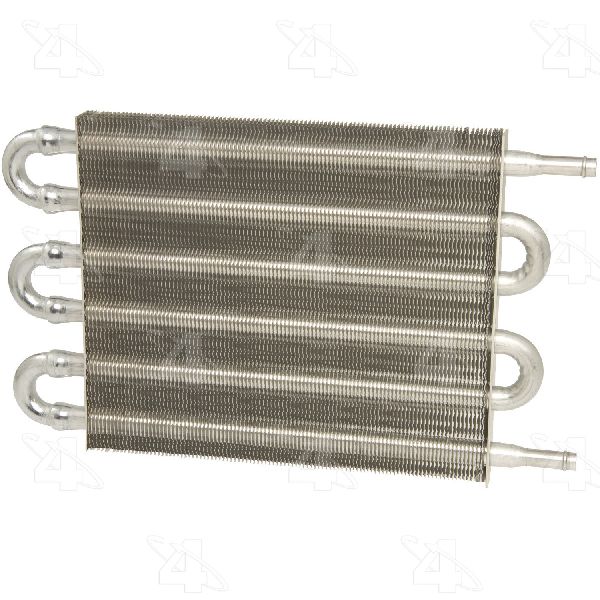
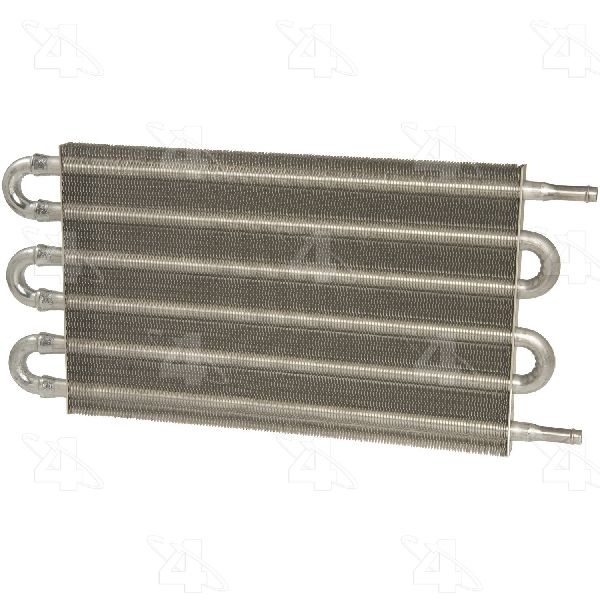
Typical fix: Replace the torque converter. This is a major repair that requires removing the entire transmission from the vehicle. It is critical to also flush the transmission cooler lines and replace the fluid and filter to prevent debris from damaging the new converter.
Est. part cost: $200-$500 - Internal Wiring or Valve Body Issues ⚪ Low Probability → Shop Transmission Valve Body
How to confirm: This requires visual inspection of the internal wiring harness when the transmission side cover is removed. The valve body passages can be inspected for blockages, scoring, or sticking valves. A worn TCC regulator valve bore in the valve body can also cause this code.
Typical fix: Repair or replace the internal transmission wiring harness. In some cases, the entire valve body may need to be cleaned, reamed with an oversized valve kit, or replaced.
Est. part cost: $100-$600
Rare But Worth Checking
- Damaged Turbine Shaft Bushing: A GM TSB (20-NA-078) mentions that a worn turbine shaft front bushing can cause a pressure leak in the TCC apply circuit, leading to a P0741 code. This would require significant transmission disassembly to repair.
- Defective Engine Control Module (ECM): While rare, some Pontiac owners have reported that a defective ECM, which controls the torque converter solenoid, was identified as a possible cause for the P0741 code (NHTSA ODI #10487621).
Diagnosis Steps
- Scan the vehicle's computer for P0741 and any other related codes. Note if P0700 is also present.
- Check the transmission fluid level and condition. This is the easiest and cheapest thing to check first. The fluid must be DEXRON-VI, at the correct level, bright red, and not smell burnt.
- If the fluid is low, top it off and clear the code to see if it returns. If the fluid is old and dirty, perform a fluid and filter change.
- Using a bi-directional scan tool, monitor the TCC slip speed while driving. At a steady cruising speed (e.g., 55 mph), command the TCC solenoid to lock. The slip speed should drop to near zero (under 50 RPM).
- If the slip speed does not drop, the issue is hydraulic or mechanical. If the slip speed drops as commanded, the issue may be intermittent or related to the conditions under which the PCM automatically tries to lock the converter.
- Test the TCC solenoid circuit. Check for power and ground at the transmission connector. Test the resistance of the solenoid itself; it should be within the manufacturer's specified range (typically 10-15 ohms).
- If the solenoid and wiring test good, but the clutch does not engage when commanded, the problem is likely mechanical. This could be a stuck valve in the valve body, a faulty TCC solenoid, or a failed torque converter.
- At this point, accessing the transmission internals is necessary. Remove the side cover to inspect and replace the TCC solenoid. While there, inspect the valve body for scoring or debris.
- If replacing the solenoid does not fix the issue, the torque converter itself is the most likely remaining culprit, requiring transmission removal for replacement.
Parts You'll Likely Need
- Torque Converter Clutch (TCC) Solenoid
(OEM #24227792)— This solenoid is the most common failure point for code P0741 on the 4T45-E transmission used in the G6 2.4L. It is often sold as part of a larger solenoid kit.
Trusted brands: ACDelco, Rostra, Sonnax
OEM price range: $50-$80
Aftermarket price range: $35-$60 - Automatic Transmission Fluid
(OEM #ACDelco 10-9395 (DEXRON-VI))— Low or degraded fluid is a common cause and should always be checked. The correct fluid, DEXRON-VI, is critical for the health and proper function of the 4T45-E transmission.
Trusted brands: ACDelco DEXRON-VI, Valvoline MaxLife Full Synthetic
OEM price range: $8-$12 per quart
Aftermarket price range: $7-$10 per quart - Torque Converter
(OEM #24211329 (example, verify by VIN))— If the solenoid and fluid are good, the internal clutch of the torque converter has likely failed, requiring replacement of the entire unit.
Trusted brands: ACDelco (Remanufactured), LuK, Transtar
OEM price range: $300-$500
Aftermarket price range: $150-$300
Related Codes That Often Appear With This One
- P0700 — This is a generic code that simply means the Transmission Control Module (TCM) has stored a fault code. It will almost always appear alongside a specific transmission code like P0741.
- P0740 — P0740 indicates an electrical circuit malfunction for the TCC solenoid, while P0741 indicates a performance problem (stuck off). They can appear together if an electrical fault is preventing the clutch from engaging.
Technical Service Bulletins (TSBs) & Recalls
- DTC P0741 (Torque Converter Clutch (TCC) System Stuck Off) Set: This GM bulletin discusses how a worn turbine shaft bushing can cause a pressure leak for the TCC apply circuit, resulting in code P0741. This is a potential cause if solenoid replacement does not resolve the issue.
- Diagnostic Tips for DTC P0741: Torque Converter Clutch Stuck Off: → Shop Automatic Transmission Torque Converter This GM bulletin for 6-speed transmissions (though the principle applies) notes that damaged TCC friction material can cause the code. It emphasizes checking line pressure and flushing the cooler, as debris can cause wider damage.
Platform-Specific Known Issues
- The 2005-2010 Pontiac G6 with the 2.4L engine uses the 4-speed 4T45-E transmission, which is shared with the Chevrolet Cobalt, HHR, and Saturn Ion. Solenoid failures are a well-docume
Mechanic-Grade Diagnostic Values
- TCC PWM Solenoid Resistance — expected: 10 to 11 ohms at 68°F (20°C). Failure: An open circuit (infinite resistance) or a reading significantly outside the specified range indicates a failed solenoid coil.
- TCC Slip Speed (Scan Tool Live Data) — expected: Should drop to near zero (< 50 RPM) when TCC is commanded ON.. Failure: If slip speed remains high (e.g., > 120 RPM) when the TCC is commanded ON, it indicates a mechanical or hydraulic failure of the clutch to apply.
Scan Tool Commands That Help
- Tech 2 / GDS2: TCC Dynamic Test or Solenoid Test — This bidirectional function allows a technician to manually command the TCC solenoid ON and OFF while driving to verify its operation. If the TCC engages and disengages as commanded, it helps isolate the problem to the control side (TCM logic, wiring) versus a hard mechanical/hydraulic failure.
- Tech 2 / GDS2: Solenoid Cleaning Procedure — This function, available on some older Tech 2 software versions, rapidly cycles the solenoids to attempt to dislodge small pieces of debris. It was removed from GM software in 2009 but may be present on older tools. It can be a last-ditch effort before component replacement for a suspected sticking solenoid.
Wiring & Ground Locations
- G105 / G106 — On the left rear side of the engine compartment, on an engine or transmission stud, below the upper coolant hose. The exact designation (G105 or G106) can vary slightly by year and specific engine hardware.. This is a critical ground point shared by the Engine Control Module (ECM) and the Transmission Control Module (TCM). A loose or corroded connection at this stud can cause a host of intermittent electronic issues, including erratic TCM behavior and false transmission codes. It is a known failure point where the wires can break inside the insulation right at the ring terminal.
- 23-Way Case Connector — The main round electrical connector on the side of the 4T45-E transmission case.. This is the primary interface between the TCM and the internal transmission components, including the TCC solenoid. Checking for power and signal on the appropriate pins here is a key step in diagnosing an electrical fault vs. an internal one. A pinout diagram is required for testing.
OEM Part Supersession History
24212690→24227792— Part has been updated or revised by the manufacturer for improved durability or performance.
Heads up: The new part number (24227792) is the correct service replacement for the original. Some documentation notes that this part may require programming or special setup procedures, though this is more common on newer 6-speed+ transmissions.
Diagnostic Flowchart
Other Known Issues on This Vehicle
Issues unrelated to this code that are worth knowing about as an owner of this generation:
- Electric Power Steering (EPS) Failure 🔴 High — Very common, typically occurs around 70,000-100,000 miles. Can be intermittent at first, with a 'Power Steering' message on the dash. (Ref: GM Recall 14V153000 was issued to address a sudden loss of power steering assist.)
- Fractured Transmission Shift Cable 🔴 High → Shop Transmission Assembly — Common enough to warrant a major recall. The cable end clip can break, causing a mismatch between the shifter position and the actual transmission gear. (Ref: GM Recall 12V46000 (NHTSA ID) was issued for 2008-2010 models with the 4-speed automatic transmission.)
- Poor Body Control Module (BCM) Connector Contact 🟡 Low — Can cause various strange electrical issues, most notably brake lights not working. The connector is located in the passenger footwell. (Ref: A related recall (14V252000) addresses voltage fluctuations in the BCM that can affect brake lights.)
- Timing Chain Wear (2.4L Ecotec) 🟠 Medium — The timing chain, guides, and tensioners can wear prematurely, especially with infrequent oil changes. Listen for a rattling noise on startup.
- Faulty Turn Signal / Multifunction Switch 🟡 Low — A common annoyance where the turn signal fails to cancel after a turn, or sometimes doesn't activate at all.
Used vs. New Parts: Buying Guide for This Vehicle
When a used part is the smart pick: For this repair, obtaining a used valve body from a low-mileage donor vehicle can be a cost-effective alternative to purchasing reaming tools or a new valve body, especially if the TCC regulator valve bore is suspected to be worn. A complete used transmission is generally not recommended unless the current unit has catastrophic damage, as the cost of labor for swapping it is very high.
Donor-vehicle mileage cap: roughly under 80000 miles for the part to have meaningful remaining life.
What to inspect on the donor part:
- Verify the donor vehicle's mileage. Look for transmissions from vehicles with under 80,000 miles.
- Ask the dismantler if the fluid was checked. Bright red fluid is a good sign; dark, brown, or burnt-smelling fluid indicates a transmission that was likely already failing.
- If possible, inspect the electrical connector pins for corrosion or damage.
- Ensure the donor vehicle was not involved in a severe front-end collision that could have cracked the transmission case.
Aftermarket brands forum-validated for this vehicle:
- Sonnax: Widely regarded in the transmission repair community for high-quality problem-solver parts, especially their oversized valve kits and improved solenoids.
- Rostra: A common and generally reliable aftermarket manufacturer for transmission solenoids.
- TransGo: Known for their shift kits and valve body repair solutions, though Sonnax is more frequently cited for fixing this specific TCC valve bore issue.
Brands owners have reported issues with on this vehicle:
- Unnamed, 'white box' solenoid kits from online marketplaces can have high failure rates. Sticking with a known brand like ACDelco, Sonnax, or Rostra is highly recommended for a labor-intensive job like this.
Real Owner Stories
Aggregated from forums and TSBs cited above. Mileages and costs reflect what owners reported in those sources.
2005-2010 Pontiac G6 2.4L
Symptoms: The owner noticed high RPMs at highway speeds. After clearing the P0741 code with a scan tool, the symptoms temporarily disappeared.
What fixed it: The issue was identified as a sticking TCC solenoid rather than a completely failed torque converter.
Source hint: GM-Trucks.com thread titled 'P0741, is this a converter or solenoid issue?'
2006-2011 Chevrolet HHR 2.4L
Symptoms: The P0741 Torque Converter stuck off code returned even after the owner had already replaced the transmission solenoids.
What fixed it: The failure was determined to be within the torque converter itself or the valve body, demonstrating that solenoid replacement does not always resolve the code.
Source hint: Chevy HHR Network thread titled 'P0741 Torque Converter stuck off code after replacing solenoids'
Documented NHTSA Reports
NHTSA ODI #10353691
Symptoms: An owner reported a continuous check engine light with code P0741. They noted that the vehicle acceleration was sluggish at times.
NHTSA ODI #10905001
Symptoms: A report describes a vehicle experiencing a faulty shift and a faulty start accompanied by error code P0741.
NHTSA ODI #10282602
Observations: An owner noted that the P0741 code has been very common with newer Pontiac vehicles and requested an investigation into whether it is a widespread fault.
Related OBD-II Codes
Frequently Asked Questions
How do I check the transmission fluid level on my 2005-2010 Pontiac G6 to see if it's causing the P0741 code?
Does GM Technical Service Bulletin 20-NA-078 apply to my P0741 issue?
I cleared the P0741 code and my G6 drove fine for a bit. Does this mean it's fixed?
What specific transmission fluid should I use in my Pontiac G6 2.4L to prevent solenoid sticking?
Is the P0741 code common on other cars similar to the Pontiac G6?
If I need to replace the TCC solenoid on my G6, how difficult is the repair?
Helpful Videos



We Have This Part in Stock

The information in this article is provided for general reference and educational purposes only. Vehicle specifications, procedures, and part compatibility can vary by production date, trim level, and region. Always consult your vehicle's factory service manual and verify part numbers before purchasing or performing repairs. Safety-critical components such as airbags, seat belts, and braking systems should be installed by a qualified professional.
- Pontiac G6:
- 🧭 Diagnostic Flowchart
- 🎬 Helpful Videos
- 🛍️ Shop This Part
- What's Unique About the 2005-2010 Pontiac G6
- Symptoms You May Notice
- Most Likely Causes
- Rare But Worth Checking
- Diagnosis Steps
- Parts You'll Likely Need
- Related Codes That Often Appear With This One
- Technical Service Bulletins (TSBs) & Recalls
- Platform-Specific Known Issues
- Mechanic-Grade Diagnostic Values
- Scan Tool Commands That Help
- Wiring & Ground Locations
- OEM Part Supersession History
- Other Known Issues on This Vehicle
- Used vs. New Parts: Buying Guide for This Vehicle
- Real Owner Stories
- 2005-2010 Pontiac G6 2.4L
- 2006-2011 Chevrolet HHR 2.4L
- Documented NHTSA Reports
- NHTSA ODI #10353691
- NHTSA ODI #10905001
- NHTSA ODI #10282602
- Related OBD-II Codes
- Frequently Asked Questions
- 🎟️ Get 5% Off