

P0741 on 2005-2009 Subaru Legacy: Torque Converter Clutch Causes and Fixes
For a 2005-2009 Subaru Legacy, code P0741 almost always points to a failing torque converter or a bad torque converter clutch (TCC) lock-up solenoid. The shuddering symptom is a key indicator. A complete torque converter replacement is the most common fix and can cost between $1,500 and $2,500 at a shop.
- P0741 on a 2005-2009 Legacy indicates the torque converter clutch is failing to lock up as commanded by the vehicle's computer.
- The most common symptoms are a shudder at highway speeds, stalling when stopping, and reduced fuel economy.
- While low fluid or a bad solenoid can cause this code, the most frequent fix for this specific vehicle is replacing the entire torque converter.
- This is a serious issue that can lead to transmission damage if ignored. Professional diagnosis and repair are strongly recommended.
- Expect a costly repair, as replacing the torque converter requires removing the transmission from the vehicle.
What's Unique About the 2005-2009 Subaru Legacy
The 4-speed automatic transmission (4EAT) in this generation of Subaru Legacy is known for torque converter issues as it ages. While the solenoid can fail, the torque converter itself is a frequent culprit, often due to internal wear of the clutch material or failure of internal seals. Owners often report shuddering and stalling at stops, which are classic signs of torque converter failure on this platform. Some owners have had success with just a solenoid replacement, but many end up needing a new torque converter.
Symptoms You May Notice
- Check Engine Light is on
- Flashing 'AT OIL TEMP' light on the dashboard
- Vehicle shudders or vibrates, especially when accelerating at highway speeds (40-60 mph), feeling like driving over rumble strips.
- Engine stalls when coming to a stop.
- Noticeable decrease in fuel economy.
- Transmission slipping or harsh shifting.
- Sluggish acceleration.
- Engine RPMs are higher than usual at highway cruising speeds.
- Replacing the entire transmission when only the torque converter was needed.
- Replacing the torque converter when a less expensive solenoid or wiring issue was the actual problem.
Most Likely Causes
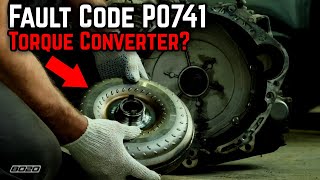
- Failing Torque Converter 🔴 High Probability → Shop Automatic Transmission Torque Converter The internal clutch lining and seals within the original torque converters on these models are known to wear out over time, leading to an inability to lock up properly. Debris from the worn clutch material can then circulate in the fluid, causing further issues.
How to confirm: A mechanic can use a professional scan tool to monitor TCC slip speed while driving. If the slip speed remains high (over 200 RPM) when the lock-up command is active and other components (fluid, solenoid) are good, the torque converter is faulty.
Typical fix: Replace the torque converter. This requires removing the transmission.
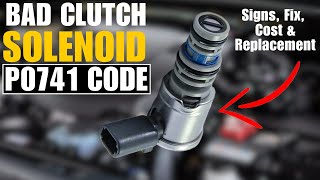
Est. part cost: $250-$600 for a remanufactured unit. - Faulty Torque Converter Clutch (TCC) Lock-Up Solenoid 🟡 Medium Probability → Shop Automatic Transmission Torque Converter The solenoid is an electronic component located inside the transmission that can fail electrically or become clogged with debris from old fluid. Some model years had defective solenoids from the factory.
How to confirm: The solenoid's resistance can be tested with a multimeter to see if it's within the manufacturer's specifications, which is typically 10-16 ohms for the 4EAT. It can also be tested for function by applying voltage. This requires dropping the transmission fluid pan and accessing the valve body.
Typical fix: Replace the TCC solenoid, which is typically part of the valve body assembly. In many cases, the entire valve body is replaced.
Est. part cost: $150-$300 - Low or Dirty Transmission Fluid 🟡 Medium Probability → Shop Transmission Assembly Low fluid levels reduce hydraulic pressure needed to actuate the clutch, while old, dirty fluid can clog the solenoid and valve body passages, preventing proper TCC operation.
How to confirm: Check the transmission fluid dipstick for level and condition. The fluid should be reddish and clear, not dark brown, black, or smell burnt.
Typical fix: Perform a transmission fluid drain-and-fill or a full fluid flush. Use only Subaru-specified ATF-HP fluid or a compatible equivalent like Idemitsu ATF-HP.
Est. part cost: $80-$200 for fluid. - Damaged Valve Body ⚪ Low Probability → Shop Transmission Valve Body The valve body contains channels and valves that direct fluid. It can become warped or clogged with debris, preventing proper operation of the TCC circuit. This is often a result of running with contaminated fluid for too long.
How to confirm: This is usually diagnosed after replacing the TCC solenoid and verifying fluid is good. Inspection may show scoring or stuck valves. A dealership tech in one forum thread suspected a new valve body was faulty after a replacement didn't fix the issue.
Typical fix: Replace the transmission valve body.
Est. part cost: $500-$1000
Rare But Worth Checking
- Wiring Issues: The wiring harness to the transmission or the internal wiring to the TCC solenoid can become damaged or corroded, causing an intermittent or permanent electrical fault.
- Faulty Transmission Control Module (TCM): → Shop Transmission Assembly In very rare cases, the computer that controls the transmission can fail, though this is unlikely and should be the last item considered after all other possibilities are exhausted.
Diagnosis Steps
- Check and verify the transmission fluid level and condition. If low, top it off. If dark, burnt, or full of debris, a fluid change may be necessary, but be aware this may not solve the underlying problem.
- Use an advanced OBD-II scanner to monitor live data, specifically the torque converter slip speed and the TCC solenoid command status.
- While driving at a steady speed (above 45 mph), observe if the scanner shows the TCC being commanded 'ON' but the slip RPM remains high (above 200 RPM). If so, the lock-up is failing.
- If possible, manually command the TCC solenoid 'ON' and 'OFF' with the scan tool to check for a response.
- Inspect the external wiring harness connected to the transmission for any signs of damage, corrosion, or loose connections.
- If external checks pass, drop the transmission pan to access the TCC solenoid. Test the solenoid's resistance with a multimeter. It should be between 10-16 ohms.
Parts You'll Likely Need
- Torque Converter
(OEM #31100AB010 (superseded by 31100AB011))— This is the most frequent failure point for the P0741 code on this specific vehicle, due to internal wear of the clutch material.
Trusted brands: Subaru (OEM), AISIN, Transtar
OEM price range: $500-$770
Aftermarket price range: $250-$450 - Torque Converter Clutch (TCC) Solenoid — This solenoid controls the flow of fluid to engage the lock-up clutch. It can fail electrically or get stuck. It is often part of the valve body assembly.
Trusted brands: Rostra, Subaru (OEM)
OEM price range: $200-$350
Aftermarket price range: $100-$200 - Subaru ATF-HP Transmission Fluid
(OEM #SOA868V9241)— Correct fluid is critical for the proper function of the transmission and its components. Using the wrong fluid can cause shifting problems and shudder.
Trusted brands: Subaru (OEM), Idemitsu ATF Type HP
OEM price range: $12-$20 per quart
Aftermarket price range: $8-$15 per quart
Related Codes That Often Appear With This One
- P0700 — P0700 is a general transmission fault code that simply indicates the Transmission Control Module (TCM) has stored a specific fault code, in this case, P0741. It is an informational code.
- P0740 — P0740 indicates a general electrical circuit malfunction for the TCC, while P0741 is more specific about the performance (stuck off). They can appear together if there's an underlying electrical issue.
Mechanic-Grade Diagnostic Values
- TCC (Lock-Up) Solenoid Resistance — expected: 10 - 16 Ω. Failure: A reading outside this range indicates a faulty solenoid coil.
- Shift Solenoids A & B Resistance — expected: 18 - 33 Ω. Failure: Readings outside this range suggest a problem with the shift solenoids, which could be checked while the valve body is accessible.
- EPC (Line Pressure) Solenoid Resistance — expected: 2.3 - 5.5 Ω. Failure: An out-of-spec reading on the EPC solenoid can cause widespread shifting and pressure issues, not just TCC problems.
- Torque Converter Turbine Speed Sensor Resistance — expected: 450 - 650 Ω. Failure: An incorrect resistance reading points to a faulty speed sensor, which can affect lock-up control.
Scan Tool Commands That Help
- Subaru Select Monitor (or equivalent professional scanner): TCC Solenoid Activation Test / Transmission Output Controls — This bidirectional command allows a technician to manually activate the TCC solenoid with the engine off but key on. Hearing a 'click' from the transmission pan area confirms the solenoid is mechanically moving and the wiring to it is functional. No click points to a dead solenoid or a wiring fault.
- Subaru Select Monitor: Current Data Display & Save — Used to monitor live transmission data, including TCC slip RPM, commanded TCC status, and transmission fluid temperature. This is essential for confirming that the TCM is commanding lock-up but the mechanical system is failing to achieve it (slip RPM remains high).
Wiring & Ground Locations
- Transmission Connector (T4) — On the transmission housing, accessible from the engine bay.. This is the main connector for testing transmission components without dropping the pan. The TCC solenoid can be tested from here.
- TCC Solenoid Pin at T4 Connector — Pin #7 (Purple wire) on the T4 transmission connector.. This is the specific pin to probe when measuring the resistance of the TCC lock-up solenoid from outside the transmission.
- TCM Ground Points — The ECU/TCM grounds are critically tied to the top of the intake manifold.. Subarus are known for having mediocre factory grounds. A poor ground connection at the intake manifold can cause a host of bizarre electrical issues, including erratic TCM behavior that could potentially trigger a P0741. Cleaning these ground points is a crucial, often overlooked, diagnostic step.
Real Owner Repair Stories
- LegacyGT.com Forum User (2004 Subaru Legacy 2.5L) — P0741 code, no lockup.
❌ Tried (didn't work) Replaced the transmission valve body with a new OEM part.
✅ What actually fixed it The user's story was a cautionary tale. After replacing the valve body didn't work, a dealership incorrectly diagnosed the *new* valve body as faulty. The user suspected the actual cause was the torque converter itself, which is the next logical step after a known-good valve body and solenoid fail to resolve the issue. The thread highlights the high probability of the torque converter being the root cause even when other components are suspected.
OEM Part Supersession History
31100AB010→31100AB011— Part revision/update by Subaru.31100AB150→31100AB210, then 31100AB211— Part revision/update by Subaru. The change occurred from 03/10/2007 onwards.
Heads up: Vehicles manufactured after March 2007 use a different torque converter. It is critical to verify the vehicle's production date when ordering this part.
Model Year Variations Within This Range
- 2008-2009: A part change for the torque converter occurred in March 2007 for the 2008 model year. Vehicles from 2008-2009 use a different torque converter (PN 31100AB211) than earlier models in this generation. While the function is the same, interchangeability may be affected.
Diagnostic Flowchart
Other Known Issues on This Vehicle
Issues unrelated to this code that are worth knowing about as an owner of this generation:
- External Head Gasket Leak 🔴 High — Very common, typically occurs between 100,000 and 150,000 miles. The single-layer steel (SLS) gasket fails due to thermal cycling between the iron block and aluminum heads.
- Front Lower Control Arm Bushing Failure 🟠 Medium — The large, fluid-filled rear bushing on the front control arm commonly fails between 90,000 and 100,000 miles, causing clunking noises over bumps and steering wander. (Ref: A recall (NHTSA 11V-464) was issued for control arm rust, but the bushing failure is a separate, common wear-and-tear issue.)
- Clogged Turbo Banjo Bolt Filters 🔴 High — Applies to turbocharged GT models. Small mesh screens in the oil feed banjo bolts for the turbo and AVCS can clog with debris, starving the turbo of oil and causing catastrophic failure. (Ref: Subaru issued several TSBs advising on the inspection and, in many cases, removal of these filters.)
- Melting/Sticky Dashboard 🟡 Low — Common in vehicles exposed to high heat and humidity, leading to a class-action lawsuit. The dashboard surface becomes shiny, sticky, and soft.
Used vs. New Parts: Buying Guide for This Vehicle
When a used part is the smart pick: A used valve body from a low-mileage, verified-running donor car can be a cost-effective option if the original is confirmed to be warped or clogged. However, the solenoids on the used part should still be tested for resistance before installation.
Donor-vehicle mileage cap: roughly under 80000 miles for the part to have meaningful remaining life.
What to inspect on the donor part:
- Ask for the VIN of the donor car to verify its model year and mileage.
- Inspect the fluid passages for any signs of metallic debris or sludge.
- Ensure all electrical connectors are intact and free of corrosion.
- If possible, test the resistance of all solenoids on the donor valve body before purchase.
OEM-only on this vehicle (don't cheap out):
- Torque Converter: While remanufactured units from reputable brands are acceptable, cheap, no-name aftermarket torque converters are a significant risk. Given the high labor cost of replacement, using an OEM or a top-tier remanufactured part is strongly advised to avoid repeat failure.
Aftermarket brands forum-validated for this vehicle:
- Idemitsu (for ATF-HP fluid)
- Rostra (for transmission solenoids)
- IPT (Import Performance Trans) for upgraded valve bodies
Brands owners have reported issues with on this vehicle:
- Unbranded, 'white box' torque converters and valve bodies from online marketplaces should be avoided due to high failure rates.
Real Owner Stories
Aggregated from forums and TSBs cited above. Mileages and costs reflect what owners reported in those sources.
2007 Outback 2.5 base wagon 4EAT — 196000 miles
Symptoms: AT Oil Light flashing and CEL on, with codes P0700 and P0741.
What fixed it: The owner investigated remedies ranging from flushing fluid to changing out the valve body solenoids or the entire valve body assembly.
Source hint: r/subaruoutback
2004 Legacy 2.5L — ~150000 miles
Symptoms: P0741 code present. Replaced the valve body with a new OEM part, but the problem persisted. Solenoid resistance on both old and new parts was 13 ohms.
What fixed it: The diagnostic process suggested the root cause was the torque converter itself rather than the valve body.
Source hint: LegacyGT.com - Thread: '2004 Legacy 2.5L P0741 code help'
2003 Legacy — ~125000 miles
Symptoms: P0741 fault code.
What fixed it: Potential fixes identified included the TCC solenoid, torque converter, wiring, or a faulty Engine Coolant Temperature (ECT) sensor.
Source hint: Reddit (r/subaru) - Thread: ''03 Legacy P0741 fault code'
Related OBD-II Codes
Frequently Asked Questions
What specific transmission fluid should I use for my 2005-2009 Subaru Legacy to avoid P0741 issues?
My 2005 Legacy is shuddering between 40-60 mph; is this related to the P0741 code?
Can a faulty Engine Coolant Temperature (ECT) sensor cause a P0741 on my Legacy?
What is the specific resistance range for the TCC solenoid on the 4EAT transmission?
Is there a recall for the control arms on my 2005-2009 Legacy that might be related to the vibration I'm feeling?
If I replace the valve body on my Legacy, will it definitely fix the P0741 code?
Helpful Videos

We Have This Part in Stock

The information in this article is provided for general reference and educational purposes only. Vehicle specifications, procedures, and part compatibility can vary by production date, trim level, and region. Always consult your vehicle's factory service manual and verify part numbers before purchasing or performing repairs. Safety-critical components such as airbags, seat belts, and braking systems should be installed by a qualified professional.
- Subaru Legacy:
- 🧭 Diagnostic Flowchart
- 🎬 Helpful Videos
- 🛍️ Shop This Part
- What's Unique About the 2005-2009 Subaru Legacy
- Symptoms You May Notice
- Most Likely Causes
- Rare But Worth Checking
- Diagnosis Steps
- Parts You'll Likely Need
- Related Codes That Often Appear With This One
- Mechanic-Grade Diagnostic Values
- Scan Tool Commands That Help
- Wiring & Ground Locations
- Real Owner Repair Stories
- OEM Part Supersession History
- Model Year Variations Within This Range
- Other Known Issues on This Vehicle
- Used vs. New Parts: Buying Guide for This Vehicle
- Real Owner Stories
- 2007 Outback 2.5 base wagon 4EAT — 196000 miles
- 2004 Legacy 2.5L — ~150000 miles
- 2003 Legacy — ~125000 miles
- Related OBD-II Codes
- Frequently Asked Questions
- 🎟️ Get 5% Off