

P0742 on 2004-2010 GMC Sierra 2500: Torque Converter Clutch Stuck On Causes and Fixes
P0742 on a 2004-2010 GMC Sierra 2500 means the Torque Converter Clutch (TCC) is stuck on, which can cause stalling at stops. The most common cause is a faulty TCC solenoid inside the transmission. Replacing the solenoid is a frequent fix, costing around $50-$150 for the part. Diagnosis should follow GM TSB PIP4290A to differentiate between an internal transmission fault and an external wiring or TCM issue.
- P0742 means the torque converter clutch is stuck engaged, which is very likely to cause your truck to stall when you stop.
- The most probable cause is a failed TCC solenoid inside the transmission.
- A GM Technical Service Bulletin (PIP4290A) exists for this exact issue and provides a reliable diagnostic procedure for your mechanic to follow.
- Do not ignore this code. Stalling in traffic is a safety risk, and continued driving can lead to more severe transmission damage.
- The fix often involves replacing the TCC solenoid, which is much cheaper than replacing the entire transmission.
What's Unique About the 2004-2010 Gmc SIERRA 2500
The 2004-2010 GMC Sierra 2500 spans two generations (GMT800 and GMT900) and primarily uses two robust automatic transmissions: the 4L80-E/4L85-E for many gas models (like the 6.0L V8) and the highly regarded Allison 1000 series 5 or 6-speed, especially with the Duramax diesel and 8.1L V8 engines. While generally reliable, the Allison transmission is specifically called out in GM Technical Service Bulletin (PIP4290A) for this P0742 issue, which can cause a surge or stall when stopped in gear. The bulletin provides a clear diagnostic procedure to determine if the fault is internal to the transmission (solenoid, valve body) or an external electrical issue (wiring, TCM).
Diagnostic Flowchart
Tap your situation to follow the diagnostic path that matches what you're seeing on this vehicle.
Generation note: This range covers the end of the GMT800 generation (2004-2006, and 2007 'Classic') and the start of the GMT900 generation (2007-2010). While both generations can exhibit this code, the TSB (PIP4290A) provides slightly different wiring connector identifiers for diagnosis depending on the model year (C-175 for 2001-2007, X-175 for 2008-2013). The underlying causes and fixes are generally the same, focusing on the TCC solenoid within the Allison 1000 or 4L80-E transmissions.
Symptoms You May Notice
- Engine stalling or feeling like it's about to stall when coming to a stop.
- Surging or chugging at low speeds or when decelerating.
- Harsh or abrupt shifts.
- Feels like the brakes are dragging on acceleration.
- Transmission overheating.
- Decreased fuel economy.
- Check Engine Light is on.
- Replacing the entire transmission when only a solenoid is needed. Proper diagnosis following the TSB can prevent this expensive mistake.
- Replacing the torque converter when the issue is a less expensive solenoid or wiring problem.
Most Likely Causes
- Faulty Torque Converter Clutch (TCC) Solenoid 🔴 High Probability → Shop Automatic Transmission Torque Converter The TCC solenoid is an electromechanical part inside the transmission that is constantly working. Over time, it can fail electrically or get stuck due to debris in the fluid. It is the most common point of failure for this code.
How to confirm: A mechanic can command the solenoid on and off with a scan tool and monitor the TCC slip speed; it should be 0 RPM when commanded on and should release at a stop. Resistance can also be checked with a multimeter after dropping the pan. TSB PIP4290A provides a procedure to isolate the fault to the transmission internals, pointing towards the solenoid.
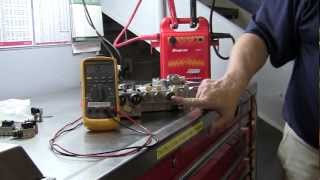
Typical fix: Replace the TCC solenoid, which is located inside the transmission on the valve body. This requires draining the fluid, removing the transmission pan, and often replacing the filter at the same time. 🎬 Watch: How to fix the TCC circuit stuck on
Est. part cost: $50-$150 - Dirty or Low Transmission Fluid 🟡 Medium Probability → Shop Transmission Assembly Contaminated fluid with clutch material or other debris can cause the TCC solenoid or valves in the valve body to stick, preventing proper hydraulic operation. If the fluid is low, it can cause overheating which damages seals and components.
How to confirm: Check the transmission fluid dipstick. The fluid should be at the correct level, bright red, and not smell burnt. Dark, burnt-smelling fluid or fluid with visible metal particles indicates a problem and potential for internal damage.
Typical fix: Perform a transmission fluid and filter change. If significant debris is found in the pan, further internal inspection is needed as this may indicate a more serious failure.
Est. part cost: $75-$200 for fluid and filter - Wiring or Connector Issues ⚪ Low Probability
How to confirm: Inspect the transmission wiring harness and the main 20-way connector for corrosion, damage, or loose pins. A short to power on the TCC control wire can hold the solenoid on. The TSB specifically mentions disconnecting this connector as a key diagnostic step.
Typical fix: Repair or replace the damaged section of the wiring harness or clean the connectors with electrical contact cleaner.
Est. part cost: $20-$100 - Faulty Torque Converter ⚪ Low Probability → Shop Automatic Transmission Torque Converter
How to confirm: This is usually diagnosed after all other possibilities (solenoid, fluid, wiring) have been ruled out. If replacing the TCC solenoid doesn't fix the issue, the mechanical clutch inside the converter itself may have failed or become warped.
Typical fix: Replace the torque converter. This is a major repair that requires removing the transmission from the vehicle.
Est. part cost: $300-$800
Rare But Worth Checking
- Failing Transmission Control Module (TCM): → Shop Transmission Assembly The TCM could be sending a continuous 'on' signal to the solenoid due to an internal short. TSB PIP4290A suggests swapping the TCM with a known good one as a final diagnostic step if no other cause is found after isolating the fault to an external source.
- Sticking Valve in the Valve Body: → Shop Transmission Valve Body Debris in the transmission fluid can cause the TCC control valve to stick in its bore, trapping hydraulic pressure and keeping the clutch applied. A fluid flush might help, but sometimes the valve body needs to be removed for cleaning or replacement.
Diagnosis Steps
- Verify the code with a reliable OBD-II scanner. 🎬 Watch: How to check and clear codes without a scan tool
- Check the transmission fluid level and condition. Look for signs of burning or contamination.
- With a scan tool, monitor TCC Duty Cycle and TCC Slip Speed while driving. A duty cycle stuck high (e.g., 90-100%) and a slip speed of 0 RPM when coming to a stop confirms the TCC is not disengaging.
- Inspect the transmission wiring harness and the main 20-way connector for any visible damage, corrosion, or loose connections.
- Follow the diagnostic steps in TSB PIP4290A: Disconnect the 20-way transmission connector (C-175 or X-175). If the stalling condition disappears, the problem is likely external (wiring or TCM). If the vehicle still stalls, the problem is internal to the transmission (likely the TCC solenoid or valve body).
- If the problem is internal, drop the transmission pan and inspect for excessive metal or clutch material.
- Test the resistance of the TCC solenoid. Compare the reading to the manufacturer's specification (typically checked at the transmission connector before dropping the pan 🎬 See this guide on basic transmission solenoid testing).
- If the solenoid tests good, inspect the valve body for sticking valves or scored bores.
- If the problem was isolated as external, meticulously check the wiring harness for shorts to power and test the TCM, potentially by swapping with a known good unit.
Parts You'll Likely Need
- Torque Converter Clutch (TCC) Solenoid
(OEM #ACDelco 29541898 (For 6-speed Allison 1000, 2006+) or ACDelco 8683187 (For 5-speed Allison 1000, 2001-2005))— This solenoid is the most common failure point for a P0742 code, as it is an electronic part submerged in fluid that can wear out or get stuck.
Trusted brands: ACDelco, Bosch (often the OEM manufacturer), Rostra
OEM price range: $70-$150
Aftermarket price range: $40-$100 - Transmission Filter Kit (with Gasket)
(OEM #Varies by transmission (Allison vs 4L80-E) and year.)— This is required whenever the transmission pan is removed to access internal components like the TCC solenoid. A new filter is critical for transmission health.
Trusted brands: ACDelco, Allison, Wix, Fram
OEM price range: $40-$70
Aftermarket price range: $20-$40 - Automatic Transmission Fluid — The transmission fluid must be drained to perform the repair and should be replaced with new, clean fluid meeting GM's specifications (e.g., DEXRON-VI for newer models, check manual for specific type).
Trusted brands: ACDelco, Valvoline, Mobil 1, Castrol
OEM price range: $12-$20 per quart
Aftermarket price range: $8-$15 per quart
Technical Service Bulletins (TSBs) & Recalls
- PIP4290A: Addresses engine surge or stall at a stop with DTC P0742. Provides diagnostic steps to isolate the issue between internal transmission components (solenoid, valve body) and external electrical faults (wiring, TCM) for vehicles with the Allison LCT1000 transmission.
Platform-Specific Known Issues
- GM Technical Service Bulletin PIP4290A directly addresses the symptom of a surge or stall at a stop accompanied by DTC P0742 for this vehicle range, providing a clear diagnostic path to isolate the fault.
Mechanic-Grade Diagnostic Values
- Allison 1000 (6-Speed, 2006-2009) TCC Solenoid Resistance — expected: 5.5 Ohms or 10.5-11.5 Ohms. Failure: A reading significantly outside of these ranges, especially an open or shorted circuit.
- Allison 1000 (5-Speed) TCC Solenoid Resistance — expected: 8-15 Ohms. Failure: A reading outside this range indicates a faulty solenoid.
- 4L80-E (PWM type) TCC Solenoid Resistance — expected: 10-15 Ohms. Failure: A very low reading (e.g., 1.8 ohms) or a very high/open reading.
- Scan Tool - Turbine Speed Sensor RPM at Stop — expected: 0 RPM. Failure: If the turbine speed lags and does not drop to zero quickly when the vehicle comes to a complete stop in gear, it indicates the torque converter clutch is dragging.
- Scan Tool - TCC Commanded State vs. Slip Speed — expected: When TCC is commanded ON (duty cycle ~95-97%), TCC Slip Speed should be 0 RPM. When commanded OFF, slip should be present.. Failure: If TCC Slip Speed is 0 RPM when the TCC is commanded OFF (especially at a stop), it confirms the clutch is stuck on.
Scan Tool Commands That Help
- Tech2 / GDS2 / High-End Scan Tool: TCC Solenoid Bidirectional Control — This command allows the technician to manually energize and de-energize the TCC solenoid while monitoring live data like TCC slip speed. It is used to verify if the solenoid is mechanically stuck or if it responds to commands from the TCM. This is a crucial step before dropping the transmission pan.
- Tech2 / GDS2 / EFILive: Live Data Monitoring: Turbine Speed — This is the primary diagnostic method for a suspected dragging clutch. While stopping the vehicle, the technician must watch the Turbine Speed Sensor data. It should drop to zero RPM immediately as the vehicle stops. A slow or lagging drop to zero confirms the TCC is not fully disengaging, which is the direct cause of the P0742 code.
Wiring & Ground Locations
- C-175 / X-175 — The main 20-pin circular connector on the passenger side of the transmission case. It connects the main engine/chassis harness to the internal transmission harness.. This is the primary diagnostic connector mentioned in TSB PIP4290A. Disconnecting it separates the transmission's internal components from the external wiring and TCM, allowing a technician to determine if the fault is internal or external. It's also where resistance and voltage tests for the TCC solenoid can be performed without dropping the pan.
- Pin J (at C-175/X-175) — Pin J in the 20-pin Allison transmission case connector.. This is the control wire for the TCC Solenoid (Solenoid F). A technician can test for voltage, shorts, and continuity on this specific pin to diagnose the TCC control circuit.
- G101 — On GMT800 models, this ground is typically located on the lower front of the engine block. It serves as a ground for the ECM and TCM.. A poor ground at G101 can cause erratic behavior from the Transmission Control Module (TCM), potentially leading to incorrect solenoid commands or false codes. Ensuring this ground is clean and tight is a critical step in diagnosing any electronic transmission issue.
- G103 / G104 — On GMT800/GMT900 trucks, these grounds are typically found on the rear of the cylinder heads or on the firewall/cowl area above the brake booster.. These are major engine and body grounds. The TCM and other critical modules rely on clean ground paths. Corrosion or looseness at these points can introduce electrical noise and voltage drops, affecting sensor readings and module function, which could contribute to a P0742 code.
Real Owner Repair Stories
- DuramaxDiesels.com forum user (GMC/Chevy with Duramax/Allison) — P0742 code, possible sluggish response on takeoff.
❌ Tried (didn't work) Replacing the TCC solenoid., Checking wiring for grounding issues., Replacing the torque converter.
✅ What actually fixed it The final diagnosis pointed to a stuck converter flow valve within the valve body, or a restrictor that had fallen off the valve. This prevented the TCC from releasing properly, even with a new solenoid and converter. The fix requires removing and servicing the valve body. - DuramaxDiesels.com forum expert Mike L. (Duramax with Allison 6-speed) — P0742 code and surging when TC isn't locked.
❌ Tried (didn't work) Reusing an old torque converter after a transmission rebuild.
✅ What actually fixed it The expert advice pointed to several edge cases often missed: a 'draggy' or incorrectly installed converter flow valve in the valve body, a plugged transmission cooler, or using torque converter mounting bolts that were too long, causing them to bottom out and dimple the converter's billet cover, which physically forces the clutch to drag. The fix requires addressing these mechanical/hydraulic issues, not just replacing electronic parts.
OEM Part Supersession History
Varies for 5-speed→ACDelco 29541898 / GM 29541898— This is the standard OEM TCC (F-Trim) solenoid for the 6-Speed Allison 1000 transmission used from 2006-onwards. It is manufactured by Bosch.
Heads up: This part is not compatible with the 2004-2005 5-speed Allison, which uses a different valve body and solenoid design (e.g., part 8683187). The 6-speed TCC solenoid has a red connector.
Model Year Variations Within This Range
- 2004-2005: These models use the 5-speed Allison 1000. The valve body has one tube on the bottom and either six (pre-'04) or seven ('04-'05) solenoids. The TCC solenoid part number is different from the later 6-speed models.
- 2006-2010: These models use the 6-speed Allison 1000. The valve body is identifiable by having two tubes on the bottom and seven solenoids. The TCC solenoid (F-Trim) has a distinct red plastic connector and uses part number 29541898.
- 2004-2009: A 'G' Solenoid was used to modulate main pressure at idle to reduce noise. This solenoid is present on the 2004-2009 models but was eliminated in 2010 when a new Main Modulating Solenoid was introduced to control line pressure.
- GMT800 (2004-2007 Classic) vs GMT900 (2007.5-2010): The main transmission case connector is designated C-175 on the earlier GMT800 platform and X-175 on the later GMT900 platform, as noted in TSB PIP4290A. While the function is the same, service manual diagrams will use these different identifiers.
Helpful Videos


We Have This Part in Stock

The information in this article is provided for general reference and educational purposes only. Vehicle specifications, procedures, and part compatibility can vary by production date, trim level, and region. Always consult your vehicle's factory service manual and verify part numbers before purchasing or performing repairs. Safety-critical components such as airbags, seat belts, and braking systems should be installed by a qualified professional.
- Gmc SIERRA 2500:
- 🧭 Diagnostic Flowchart
- 🎬 Helpful Videos
- 🛍️ Shop This Part
- What's Unique About the 2004-2010 Gmc SIERRA 2500
- Symptoms You May Notice
- Most Likely Causes
- Rare But Worth Checking
- Diagnosis Steps
- Parts You'll Likely Need
- Technical Service Bulletins (TSBs) & Recalls
- Platform-Specific Known Issues
- Mechanic-Grade Diagnostic Values
- Scan Tool Commands That Help
- Wiring & Ground Locations
- Real Owner Repair Stories
- OEM Part Supersession History
- Model Year Variations Within This Range
- 🎟️ Get 5% Off