

OBD-II Code P0743: Torque Converter Clutch Circuit Electrical
What P0743 means, why it triggers, and how to fix it
- P0743 indicates a strict electrical failure—like an open circuit or short—in the torque converter clutch (TCC) solenoid circuit, ruling out purely mechanical transmission issues.
- Inspect the external transmission wiring harness first; corroded connectors or frayed wires cause over 40% of P0743 codes and cost significantly less to fix than internal parts.
- Limit driving to under 10 miles; an unlocked torque converter reduces fuel economy by up to 20% and rapidly overheats transmission fluid, risking a $3,000+ rebuild.
- Test the TCC solenoid's resistance with a multimeter before replacing it; a healthy solenoid typically reads between 10 and 25 Ohms depending on the manufacturer.
What Does P0743 Mean?
P0743 means the Powertrain Control Module (PCM) detected an electrical fault in the torque converter clutch (TCC) solenoid circuit. The TCC acts like a clutch in a manual car, creating a direct 1:1 mechanical link between the engine and transmission at cruising speeds to improve efficiency and reduce heat. This electrical fault prevents the computer from engaging the TCC, causing shifting problems and reduced fuel economy.
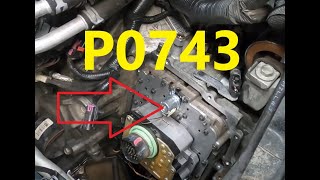
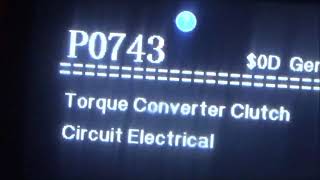
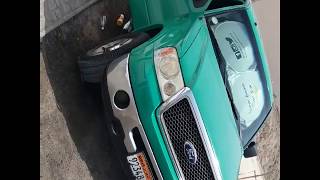
Technical definition: The official SAE/OBD-II definition is "Torque Converter Clutch (TCC) Solenoid Circuit Electrical". The PCM sets this code when it detects a voltage or resistance reading in the TCC solenoid control circuit 🎬 Watch: A breakdown of P0743 causes and common fixes outside the manufacturer's specified range, indicating an open circuit, short to ground, or short to voltage.
Can I Drive With P0743?
Yes, But With Caution. You can drive short distances (5-10 miles), but avoid long trips, high speeds, and towing. Continuing to drive causes poor fuel economy, stalling, and transmission overheating. Some vehicles enter 'limp mode,' locking the transmission in a single gear to prevent damage. Ignoring the issue risks a $3,000+ transmission rebuild.
Common Causes
- Damaged Wiring or Connectors (Very Common) — The external wiring harness leading to the transmission degrades from heat, vibration, and road salt. Corroded connectors or frayed wires disrupt the electrical signal, causing an open or short circuit.
- Faulty Torque Converter Clutch (TCC) Solenoid (Very Common) — The solenoid's internal electromagnetic coil breaks down over time, creating an open circuit or shorting out completely.
- Corroded Ground Straps (Common) — A poor ground connection between the transmission, engine, and chassis causes erratic voltage drops, triggering the code even if the solenoid and wiring are healthy.
- Metal Debris in Transmission Fluid (Less Common) — While dirty fluid usually causes mechanical codes (like P0741), heavy metal shavings in the fluid can magnetically attach to the solenoid and create an electrical short across its terminals.
- Poor Battery Health or Failing Alternator (Rare) — Low system voltage from a weak battery or failing alternator causes the TCM to misinterpret voltage signals, triggering a false P0743. This is usually accompanied by other electrical codes.
- Faulty Transmission Control Module (TCM) (Rare) — The internal driver circuit within the transmission control module that powers the TCC solenoid burns out, preventing signal transmission.
Symptoms
- Check Engine Light On — The PCM illuminates the Malfunction Indicator Lamp (MIL). Some vehicles also display a flashing "D" or transmission-specific 🎬 See how to diagnose a flashing D light on Hondas warning light.
- Poor Fuel Economy — Because the torque converter fails to lock up at highway speeds, the engine runs at a higher RPM, decreasing fuel mileage by 15-20%.
- Shuddering or Harsh Shifting — The vehicle shudders or vibrates between 50-70 mph as the TCC attempts to engage erratically. The transmission also shifts harshly or gets stuck in a single gear (limp mode).
- Engine Stalling When Stopping — If the electrical fault shorts the TCC solenoid in the 'on' position, it keeps the engine locked to the transmission, stalling the engine when you come to a complete stop.
- Transmission Overheating (also visible on scanner) — An unlocked torque converter generates excess friction. Prolonged driving causes the transmission to overheat, producing a burnt fluid smell and risking severe internal damage.
Diagnostic Flowchart
Tap your situation to follow the diagnostic path that matches what you're seeing on this code.
Common Fixes & Costs
- Repair or Replace Wiring Harness/Connectors — Parts: $20-$100, Labor: $100-$300, ~1.5 hr book time (Intermediate)
- Replace Torque Converter Clutch (TCC) Solenoid — Parts: $30-$150, Labor: $150-$400, ~2.5 hr book time (Intermediate)
- Replace Transmission Solenoid Pack — Parts: $200-$450, Labor: $200-$400, ~3.0 hr book time (Professional)
- Change Transmission Fluid and Filter — Parts: $60-$120, Labor: $100-$200, ~1.2 hr book time (DIY)
- Replace Powertrain/Transmission Control Module (PCM/TCM) — Parts: $400-$1000, Labor: $150-$300, ~1.5 hr book time (Professional)
DIY vs Professional
- Repair External Wiring 🟢 Beginner
Tools: Multimeter, wire strippers, soldering iron, heat shrink tubing. - Replace TCC Solenoid 🟢 Beginner
Tools: Socket set, drain pan, torque wrench, multimeter. - Change Transmission Fluid and Filter 🟢 Beginner
Tools: Socket set, drain pan, funnel, new fluid, new filter/gasket.
Used vs. New Parts: Buying Guide
When a used part is worth it: Never buy a used single TCC solenoid. The labor to install it far outweighs the $40 part cost. Used parts only make sense for expensive, integrated solenoid packs ($400+) on older vehicles.
Donor-vehicle mileage cap: roughly under 50000 miles for the part to have meaningful remaining life.
Donor quality checklist:
- Verify the donor vehicle was not scrapped for transmission failure.
- Match OEM part numbers exactly; solenoids look identical but have different internal resistance values.
Decision logic:
- If The part is a single TCC solenoid ($30-$150) → Always buy new OEM. The labor cost to drop the pan twice if a used part fails is not worth the $20 savings.
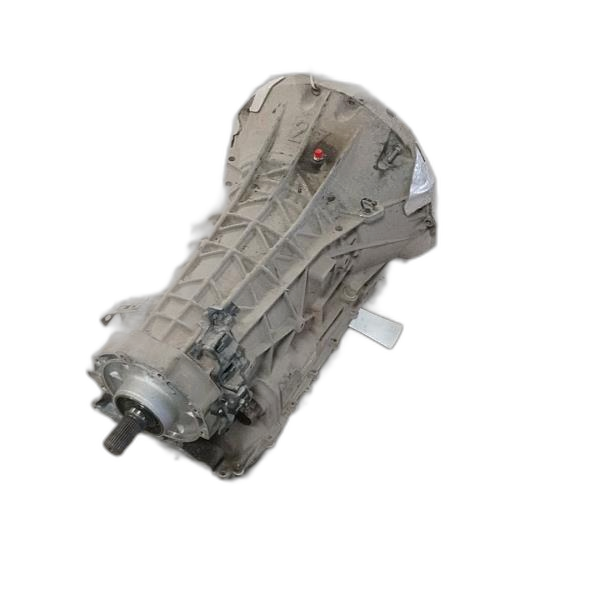
- If The part is an integrated solenoid pack ($400+) → A low-mileage used part from a reputable salvage yard with a 90-day warranty is a viable budget option.
Warranty tradeoff: Used parts offer a 30-90 day part-only warranty. New OEM parts carry a 1-year warranty. Neither covers the $200+ labor cost if the part fails.
Worst-case if a used part fails: $400. If a used solenoid fails, you pay for the labor and fluid replacement a second time.
What Happens If You Wait — Timeline
- 0-1 month: Code sets. Fuel economy drops slightly. No severe drivability symptoms yet. (MPG impact: 5%% · Added cost: $0)
- 1-3 months: Vehicle shudders at highway speeds. Transmission fluid runs 20-40 degrees hotter than normal, accelerating fluid breakdown. (MPG impact: 15%% · Added cost: $150 for premature fluid replacement.)
- 3-6 months: Sustained overheating warps the torque converter. Engine may stall at stops. Fluid smells burnt. (MPG impact: 20%% · Added cost: $1,200 for torque converter replacement.)
- 6+ months: Catastrophic internal failure. Extreme heat destroys clutch packs and seals. Vehicle loses gears. (MPG impact: >20%% · Added cost: $3,500+ for a complete transmission rebuild.)
Cost of Not Fixing It
- 0-1 month: Fuel economy drops by 10-20%. The vehicle shudders at highway speeds. Excess heat begins degrading the transmission fluid. (Added cost: $20-$50 in wasted fuel.)
- 1-6 months: Sustained overheating destroys the fluid's lubricating properties. The torque converter warps and fails mechanically. (Added cost: $800 - $1,500 for a torque converter replacement and transmission flush.)
- 6+ months: Catastrophic transmission failure. Extreme heat burns out clutch packs and destroys internal seals, requiring a complete replacement. (Added cost: $2,800 - $5,200+ for a full transmission rebuild.)
Diagnosis Steps
- Scan for Other Codes
Use an OBD-II scanner to check for pending codes. Other transmission codes (like P0753) or low voltage codes provide crucial context. If multiple solenoid codes appear, suspect a shared ground or main harness issue.
Tools: OBD-II Scanner (Beginner) - Inspect External Wiring and Connectors
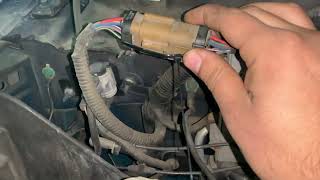
Visually inspect the main transmission wiring harness connector. Look for green corrosion, backed-out pins, or fluid contamination. Check chassis ground straps for tightness and rust.
Tools: Flashlight (Beginner) - Test TCC Solenoid Circuit Resistance
Disconnect the transmission harness. Using a multimeter set to Ohms, measure the resistance across the TCC solenoid pins on the transmission side. Compare to the service manual (typically 10-25 Ohms). Infinity indicates an open coil; near zero indicates a short.
Tools: Digital Multimeter, Vehicle Service Manual (Intermediate) - Check for Power and Ground
Turn the key ON (engine off). Probe the power supply wire at the vehicle-side transmission connector. It must show battery voltage (12.0-12.6V). Check the ground pin for less than 0.1V. Missing power points to a broken wire or bad TCM relay.
Tools: Digital Multimeter (Intermediate) - Check Transmission Fluid
Check the fluid level and condition. Pink/red is healthy. Black, burnt-smelling fluid with heavy metal flakes indicates internal damage that likely shorted the solenoid or requires a transmission rebuild.
Tools: Rag (Beginner) - Perform a Bidirectional Solenoid Test
Use a professional scan tool to command the TCC solenoid ON and OFF. Listen for a distinct 'click' from the transmission pan. If it clicks, the circuit and solenoid are electrically intact, pointing to a TCM or hydraulic issue.
Tools: Professional Bi-Directional Scan Tool (Advanced) - Analyze Live Scan Tool Data
Monitor 'TCC Commanded Duty Cycle' and 'TCC Slip Speed' while driving. When duty cycle is >0%, slip speed must drop near zero. If the TCM commands 0% constantly, the module is disabling the system due to the electrical fault.
Tools: Advanced OBD-II Scan Tool (Advanced) - Inspect Internal Components
If external wiring and power checks pass but resistance is out of spec, drop the transmission pan. Inspect the internal wiring harness for pinched wires and test the solenoid directly at its base to confirm failure.
Tools: Socket Set, Drain Pan, Multimeter (Advanced)
When This Code Triggers (Freeze-Frame Conditions)
- Engine Coolant Temp: 175-215°F (The engine must reach full operating temperature before the PCM commands the TCC to engage.)
- Vehicle Speed: 45-65 mph (Lock-up is commanded at steady highway speeds to maximize fuel efficiency.)
- Engine Load: 20-60% (The fault triggers under light to moderate cruising loads where a 1:1 RPM ratio is expected.)
Related Codes
- P0740 — A general TCC circuit malfunction code. P0743 is more specific, pinpointing a strict electrical fault (open/short). If you have both, diagnose the electrical issue first.
- P0741 — Indicates 'TCC Performance or Stuck Off.' This is a mechanical/hydraulic code. The PCM commands lockup, the electrical circuit is fine, but the RPM doesn't drop. Points to a stuck valve or bad torque converter.
- P0753 — Indicates 'Shift Solenoid A Electrical.' Seeing P0743 and P0753 together guarantees a shared electrical failure, such as a disconnected main harness, blown transmission fuse, or bad ground.
- P2769 — Indicates 'TCC Circuit Low.' A highly specific version of P0743 that points directly to a short to ground or a solenoid coil with abnormally low resistance.
Climate & Environmental Factors
- Road Salt and Moisture: Vehicles in the 'Salt Belt' frequently suffer from P0743 due to galvanic corrosion on exposed transmission connectors, which increases circuit resistance and blocks the 12V signal.
- Extreme Heat: Sustained high operating temperatures from towing degrade the insulation on internal wiring harnesses and bake the solenoid's electromagnetic coil, causing premature electrical failure.
How to Talk to a Mechanic About This Code
Say this: "I have an OBD-II code P0743 for the torque converter clutch circuit. I'd like to book a diagnostic appointment. Please start by checking the external wiring, connectors, and ground points for corrosion before testing the internal TCC solenoid's resistance."
This proves you understand the code is electrical, not mechanical. It forces the shop to perform a $150 wiring check before quoting a $3,000 transmission rebuild.
Avoid saying:
- 'My transmission is shuddering, I think it's dying.' (Invites an expensive rebuild quote)
- 'Just replace the TCC solenoid.' (Skips the diagnostic step; if a wire is broken, the new solenoid won't fix it)
Questions to ask before authorizing the repair:
- What were the exact resistance (Ohm) and voltage readings for the TCC solenoid circuit?
- Did you find any corrosion or damage on the external wiring harness?
- Does the repair quote include new transmission fluid and a filter?
Where to Take It: Dealer vs Independent vs Chain
- Dealer:
Use only if under warranty or if a new TCM requires proprietary flashing.
Best for: Vehicles under powertrain warranty., When a new TCM is required and needs dealer-specific VIN programming.
Downsides: Highest labor rates ($150-$250/hr)., Often recommend replacing entire valve bodies rather than splicing a $20 wire. (Typical cost: +40% vs. baseline) - Independent Shop:
Best fit. An independent transmission specialist provides the most accurate electrical diagnosis at a fair labor rate.
Best for: Out-of-warranty vehicles., Diagnosing electrical shorts and replacing individual solenoids.
Downsides: Requires verifying the shop has a dedicated transmission specialist on staff. (Typical cost: +0% vs. baseline) - Chain Shop:
AVOID. P0743 requires precise electrical circuit testing that quick-lube chains cannot perform.
Best for: Basic fluid changes and tire rotations.
Downsides: Technicians lack advanced oscilloscope and multimeter training., High risk of misdiagnosing an electrical short as a dead transmission. (Typical cost: -10% vs. baseline)
When to Walk Away From the Repair
If the repair cost exceeds 50% of the vehicle's private-party value, sell or trade in the vehicle.
- Car worth $4000, fix is $3200: Walk away. If the code was ignored and destroyed the transmission, a $3,200 rebuild on a $4,000 car is a total loss.
- Car worth $10000, fix is $450: Fix it. A $450 solenoid replacement is standard maintenance and well worth the investment.
What Scan Tool You Need for This Code
Minimum: A scanner that reads live transmission data, specifically 'TCC Commanded State' and 'TCC Slip Speed'.
A $20 code reader only shows the P0743 code. It cannot show if the computer is actively commanding the solenoid ON, which is required to separate a wiring issue from a module issue.
Budget: BlueDriver Pro Scan Tool (~$100) — Connects via Bluetooth to graph live data PIDs like TCC slip speed, proving if the lock-up is failing.
Mid-range: Foxwell NT510 Elite (~$180) — Offers bidirectional control to manually command the TCC solenoid ON and OFF, instantly testing the circuit's integrity without driving.
Professional: Autel MaxiCOM MK808S (~$400) — Provides full bidirectional control, extensive live data streams, and performs transmission adaptation relearns after a repair.
Rent vs buy: Auto parts stores read codes for free, but their tools lack live data. Buying a $100 BlueDriver is mandatory for DIY diagnosis.
How to Clear the Code After You Fix It
- Use an OBD-II scan tool to clear the stored codes.
- Verify transmission fluid is full and at operating temperature.
- Perform a complete drive cycle to reset readiness monitors.
Drive cycle (~20 minutes): Start cold, idle for 3 minutes. Drive in stop-and-go traffic for 10 minutes. Accelerate smoothly to 55-60 mph and maintain a steady speed for 10 minutes to force the PCM to command TCC lockup.
Readiness monitors affected: Comprehensive Component Monitor
Before emissions retest: drive at least 50 miles to fully set monitors.
Watch out for:
- Disconnecting the battery clears the code but resets all emissions monitors, causing an automatic smog test failure.
- If the electrical short wasn't fixed, the code returns the moment the vehicle hits 45 mph.
Will This Fail Emissions / State Inspection?
Yes — this code typically fails an OBD-II emissions inspection.
- California: An active P0743 code is an automatic smog check failure. A full drive cycle must be completed after repair to set readiness monitors.
- New York: The NYS DMV inspection includes an OBD-II scan. An illuminated Check Engine Light for P0743 results in immediate failure.
Most Commonly Affected Vehicles
- Ford F-150 (1998-2010) — Highly prone to corroded external solenoid connectors and faulty internal molded leadframe harnesses.
- Chevrolet / GMC Silverado / Sierra (1999-2013) — The 4L60-E transmission frequently develops short circuits in the internal solenoid wiring due to heavy vibration from towing.
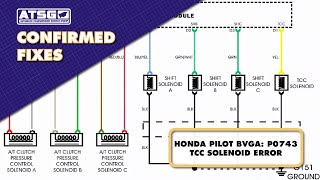
- Honda Accord, Pilot, Odyssey (2000-2008) — A loose or corroded G101 ground wire on the intake manifold is a notorious, zero-cost fix for this code. Check it before buying parts.
- Dodge / Ram Ram 1500, Grand Caravan (2000-2012) — Requires replacing the entire integrated solenoid pack assembly rather than a single TCC solenoid.
- Kia Rio, Sportage, Sorento (2011-2015) — TSB TSBTRA051R1 confirms a high failure rate for the individual TCC solenoid. Resistance should test at ~5.1 ohms.
- Toyota Camry (2002-2011) — Frequently stems from TCC solenoid coil burnout in vehicles over 100,000 miles.
- Volkswagen Jetta, Golf (2003-2010) — Internal wiring harness degradation in the 01M and 09A transmissions triggers this code and forces 3rd-gear limp mode.
- Subaru Outback, Forester (1996-2009) — A dented transmission pan from improper jacking pinches the internal duty cycle C solenoid wires, causing an immediate short.
Manufacturer-Specific Notes
- Honda: On V6 models, a failing TCC solenoid leaks transmission fluid directly into its own electrical connector, causing a short. Always unplug the connector and check for wet fluid inside the pins.
- Subaru: The lock-up solenoid in older 4-speed automatics is identical to a cheaper Nissan part, but the connector differs. Splicing the Subaru connector onto the Nissan solenoid saves significant money.
- Dodge / Chrysler: Solenoids are integrated into a single 'solenoid pack'. A failure in the TCC circuit requires replacing the entire block, increasing part costs.
Real Owner Stories
2008 Ford F-150 at 145K miles - The Misdiagnosis
Check Engine Light with P0743. Transmission shuddered at 55 mph. A shop immediately replaced the TCC solenoid for $450.
What they tried:
- Shop replaced the TCC solenoid and performed a fluid change.
Outcome: The code returned within 20 miles. A second mechanic found the main transmission wiring harness connector packed with green corrosion. Cleaning the pins and applying dielectric grease permanently fixed the issue for $120.
Lesson: Always inspect external wiring and connectors before authorizing internal transmission work. Corrosion is a primary cause of P0743 on trucks.
2007 Honda Odyssey at 110K miles - The Simple Fix
P0743 code appeared, and the engine stalled every time the van came to a complete stop.
What they tried:
- Owner cleaned the main G101 ground point on the intake manifold, which was corroded.
- Replaced the externally mounted TCC solenoid.
Outcome: Replacing the $80 OEM solenoid and cleaning the ground connection solved the stalling immediately. The repair took one hour in the driveway.
Lesson: Honda V6 models feature an external TCC solenoid that is easy to replace. Checking the G101 ground is a mandatory, free diagnostic step.
How to Prevent This Code From Triggering
- Change transmission fluid and filter at recommended intervals. (Every 30,000-60,000 miles.) — Clean fluid prevents heavy metal shavings from accumulating and magnetically shorting out the electronic solenoids.
- Inspect and clean chassis ground points. (Annually.) — Corroded grounds cause unstable voltage. The TCM misinterprets these fluctuations as a solenoid circuit fault, triggering false codes.
Frequently Asked Questions
Can I fix a P0743 code myself?
If the cause is a corroded external connector or a bad ground wire, yes. Replacing the TCC solenoid requires dropping the transmission pan, which is an intermediate DIY job. Diagnosing complex wiring shorts requires advanced multimeter skills.
Will replacing the TCC solenoid always fix a P0743 code?
No. While a faulty solenoid is common, the problem frequently lies in a corroded wiring harness, a bad ground, or a blown fuse. Proper multimeter diagnosis is mandatory to avoid wasting money on unnecessary parts.
My car went into 'limp mode,' is this related to P0743?
Yes. To protect the transmission from overheating when a critical electrical fault is detected, the TCM activates 'limp mode'. This locks the transmission into 2nd or 3rd gear and limits engine power.
What happens if I ignore the P0743 code?
Ignoring it causes a 15-20% drop in fuel economy and forces the transmission to run excessively hot. Over time, this heat destroys the fluid and warps internal components, requiring a $3,000+ rebuild.
How much does it cost to diagnose a P0743 code?
Most repair shops charge a standard diagnostic fee ranging from $100 to $165. This fee is usually credited toward the final repair cost if you authorize the shop to perform the work.
Why did the code come back after I replaced the solenoid?
The original problem was likely not the solenoid. The fault is almost certainly a broken wire in the harness, a corroded connector pin, or a burned-out driver inside the Transmission Control Module (TCM).
Can a bad battery cause a P0743 code?
Yes. A weak battery or failing alternator causes system-wide low voltage. The TCM interprets this low voltage on the TCC circuit as a fault, triggering a false P0743 code.
Key Takeaways
- P0743 indicates a strict electrical failure—like an open circuit or short—in the torque converter clutch (TCC) solenoid circuit, ruling out purely mechanical transmission issues.
- Inspect the external transmission wiring harness first; corroded connectors or frayed wires cause over 40% of P0743 codes and cost significantly less to fix than internal parts.
- Limit driving to under 10 miles; an unlocked torque converter reduces fuel economy by up to 20% and rapidly overheats transmission fluid, risking a $3,000+ rebuild.
- Test the TCC solenoid's resistance with a multimeter before replacing it; a healthy solenoid typically reads between 10 and 25 Ohms depending on the manufacturer.
Helpful Videos
Shop the Parts Behind P0743
Below are the parts most often responsible for code P0743, ranked by how frequently each one is the actual culprit (per the diagnosis above). Tap any to see what we have for your vehicle.





The information in this article is provided for general reference and educational purposes only. Vehicle specifications, procedures, and part compatibility can vary by production date, trim level, and region. Always consult your vehicle's factory service manual and verify part numbers before purchasing or performing repairs. Safety-critical components such as airbags, seat belts, and braking systems should be installed by a qualified professional.
- 🧭 Diagnostic Flowchart
- 🎬 Helpful Videos
- 🛍️ Shop This Part
- What Does P0743 Mean?
- Can I Drive With P0743?
- Common Causes
- Symptoms
- Common Fixes & Costs
- DIY vs Professional
- Used vs. New Parts: Buying Guide
- What Happens If You Wait — Timeline
- Cost of Not Fixing It
- Diagnosis Steps
- When This Code Triggers (Freeze-Frame Conditions)
- Related Codes
- Climate & Environmental Factors
- How to Talk to a Mechanic About This Code
- Where to Take It: Dealer vs Independent vs Chain
- When to Walk Away From the Repair
- What Scan Tool You Need for This Code
- How to Clear the Code After You Fix It
- Will This Fail Emissions / State Inspection?
- Most Commonly Affected Vehicles
- Manufacturer-Specific Notes
- Real Owner Stories
- 2008 Ford F-150 at 145K miles - The Misdiagnosis
- 2007 Honda Odyssey at 110K miles - The Simple Fix
- How to Prevent This Code From Triggering
- Frequently Asked Questions
- Can I fix a P0743 code myself?
- Will replacing the TCC solenoid always fix a P0743 code?
- My car went into 'limp mode,' is this related to P0743?
- What happens if I ignore the P0743 code?
- How much does it cost to diagnose a P0743 code?
- Why did the code come back after I replaced the solenoid?
- Can a bad battery cause a P0743 code?
- Key Takeaways
- 🎟️ Get 5% Off