

P0743 on 2011-2015 Kia Optima: TCC Solenoid Circuit Fault Causes and Fixes
For a 2011-2015 Kia Optima, code P0743 almost always points to a failed Torque Converter Clutch (TCC) solenoid inside the transmission. A Kia Technical Service Bulletin confirms this is a known issue. The solenoid is one of a block of solenoids accessible after removing the transmission side pan. A professional repair, including the part, fluid, and gasket, typically costs between $300 and $500.
- P0743 on a 2011-2015 Optima points to an electrical fault in the Torque Converter Clutch (TCC) solenoid circuit.
- A Kia Technical Service Bulletin (TSBTRA051R1) confirms this is a known issue and the fix is to replace the solenoid, not the entire transmission.
- The most likely cause is a failed TCC solenoid itself, which is located inside the transmission oil pan.
- Symptoms include a Check Engine Light, poor fuel economy, and higher-than-normal RPMs at highway speeds.
- While driving is possible, it's not recommended for long periods as it can cause further transmission damage from overheating.
What's Unique About the 2011-2015 Kia OPTIMA
What's notable for this specific Kia Optima and its platform mates (like the Hyundai Sonata) is that the manufacturer has issued a Technical Service Bulletin (TSB #TSBTRA051R1) that directly addresses this code. The TSB advises technicians to replace the specific solenoid rather than the entire transaxle assembly. This is a crucial piece of information that can save owners a significant amount of money by avoiding an unnecessary and expensive transmission replacement. The transmission used is the A6MF1, which is widely known for solenoid issues across various Hyundai and Kia models.
Diagnostic Flowchart
Tap your situation to follow the diagnostic path that matches what you're seeing on this vehicle.
Symptoms You May Notice
- Check Engine Light is on
- Transmission may not shift smoothly or may feel like it's slipping
- Reduced fuel economy, often by 2-5 MPG.
- Engine RPMs are higher than usual at highway speeds
- Vehicle may shudder or feel like it's about to stall when coming to a stop.
- Harsh or delayed engagement of the torque converter lock-up, which can feel like a kick.
- Replacing the entire transmission assembly. The official Kia TSB (TSBTRA051R1) specifically advises against this, recommending solenoid replacement instead.
- Replacing the torque converter. The P0743 code points to an electrical circuit fault, not a mechanical failure of the converter itself.
Most Likely Causes
- Failed Torque Converter Clutch (TCC) Solenoid 🔴 High Probability → Shop Automatic Transmission Torque Converter A known issue acknowledged by Kia's Technical Service Bulletin (TSBTRA051R1), which recommends replacing the solenoid for this code. The A6MF1 transmission family has a history of solenoid failures due to internal wear or contamination.
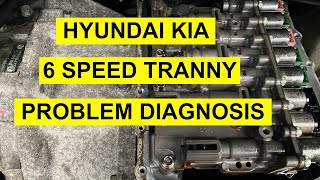
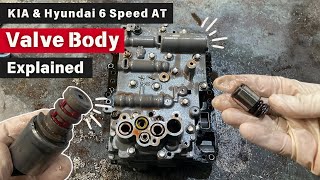
How to confirm: After dropping the transmission pan, the solenoid's resistance can be tested with a multimeter. The specification for these solenoids is typically between 4 and 7 ohms. A reading far outside this range (e.g., an open circuit or a direct short) confirms a failed solenoid. 🎬 See how to diagnose and test solenoids on most Kia models. You can also briefly apply 12V power to the solenoid to listen for a solid 'click'; a weak or absent click indicates a mechanical failure.
Typical fix: Replace the faulty TCC solenoid. This involves draining the transmission, removing the side pan, unbolting the valve body harness and solenoid retainer, and installing the new one, followed by a new pan gasket and fresh fluid. 🎬 Watch: Step-by-step guide to removing and replacing the transmission solenoid.
Est. part cost: $30-$100 - Low or Dirty Transmission Fluid 🟡 Medium Probability → Shop Transmission Assembly Many owners are unaware that this 'sealed' transmission requires fluid changes, typically every 30,000-40,000 miles. Old, contaminated fluid can cause solenoids to stick or overheat.
How to confirm: Check the transmission fluid level and condition. These vehicles do not have a traditional dipstick, so checking the fluid level must be done from a fill plug on the side of the transmission when the vehicle is level and at operating temperature. If the fluid is dark, burnt-smelling, or contains metallic debris, it needs to be changed.
Typical fix: Perform a transmission fluid drain-and-fill using Kia-specific SP-IV fluid. If the fluid is very dirty, a new transmission filter should also be installed. This may sometimes resolve the issue if it's caused by a temporarily stuck solenoid.
Est. part cost: $60-$150 - Damaged Wiring or Connectors ⚪ Low Probability
How to confirm: Visually inspect the external wiring harness leading to the transmission for any signs of damage, corrosion, or loose connections. The internal harness and its main connector plug can be inspected once the transmission pan is removed. Check for bent or corroded pins.
Typical fix: Repair or replace the damaged section of the wiring harness or the connector.
Est. part cost: $20-$200
Rare But Worth Checking
- Faulty Powertrain Control Module (PCM): → Shop Engine Control Module (ECM) This is very rare and should only be considered after all other possibilities, including the solenoid and wiring, have been thoroughly tested and ruled out.
Diagnosis Steps
- Check the transmission fluid level and condition. Ensure it is full and not burnt. The correct fluid is Kia SP-IV.
- Use an OBD-II scanner to confirm P0743 and check for any other related transmission codes.
- Inspect the external transmission wiring harness and connectors for visible damage, corrosion, or loose pins.
- Drain the transmission fluid and remove the side-mounted transmission valve body cover.
- Visually inspect the TCC solenoid and internal wiring for any obvious issues like burnt connectors.
- Using a multimeter set to ohms, test the resistance of the TCC solenoid. It should be between 4-7 ohms. An open circuit (infinite resistance) or a short (near-zero resistance) confirms a bad solenoid.
- If the solenoid tests good, check for 12V power and a control signal at the solenoid's connector with the key on to diagnose the wiring circuit.
- If the solenoid and wiring are confirmed to be good, the issue may lie with the Powertrain Control Module (PCM), but this is very uncommon.
Parts You'll Likely Need
- Automatic Transmission Control Solenoid (TCC)
(OEM #46313-3B770)— This is the most common failure part for code P0743 on this vehicle, as supported by the manufacturer's TSB. It is also described as the '2-6 Brake and Torque Converter Clutch' solenoid.
Trusted brands: Kia/Hyundai (OEM)
OEM price range: $70-$110
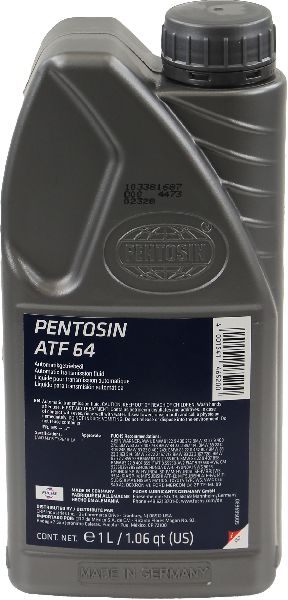
Aftermarket price range: $40-$80 - Automatic Transmission Fluid
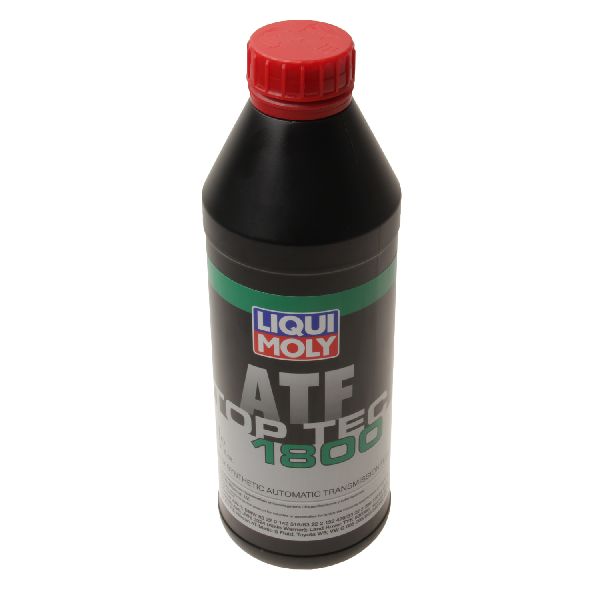
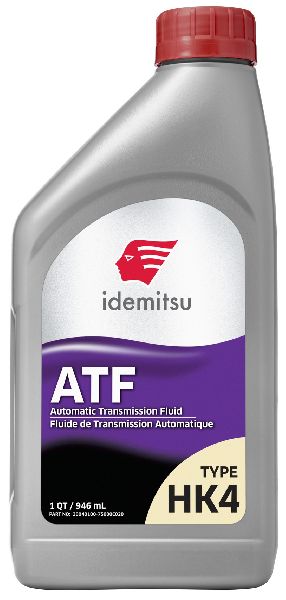
(OEM #Kia SP-IV)— Fluid must be replaced when the transmission pan is removed for the solenoid replacement. Approximately 4-5 quarts are needed for a drain and fill.
Trusted brands: Kia/Hyundai (OEM), Idemitsu TLS-LV, Valvoline MaxLife Multi-Vehicle ATF
OEM price range: $18-$25 per quart
Aftermarket price range: $10-$18 per quart - Automatic Transmission Pan Gasket
(OEM #45283-3B010 or 45283-3B810)— A new gasket is required to prevent leaks after reinstalling the transmission pan. Part number may vary slightly by production date.
Trusted brands: Kia/Hyundai (OEM)
OEM price range: $25-$50
Aftermarket price range: $15-$30
Related Codes That Often Appear With This One
- P0741 — Indicates a performance issue (stuck off) with the same TCC system.
- P0748, P0753, P0758, P0763, P0768, P0773 — These are all electrical fault codes for other solenoids in the same 6-speed automatic transmission, as mentioned in TSB TSBTRA051R1. Their appearance together often points to a common electrical (harness) or fluid-related problem.
Technical Service Bulletins (TSBs) & Recalls
- TSBTRA051R1: Advises on the replacement of various shift solenoids, including the one related to P0743, for 6-speed automatic transaxles and specifically warns against replacing the entire transaxle for these codes. It covers a wide range of Hyundai/Kia models from the era.
Platform-Specific Known Issues
- The A6MF1 6-speed automatic transaxle used in this generation of Optima is known to have issues with various shift solenoids, leading Kia to issue TSB #TSBTRA051R1. This bulletin covers a range of solenoid-related codes, including P0743, and recommends solenoid replacement as the primary fix. Owners on forums frequently confirm that replacing the solenoid pack or the individual TCC solenoid resolves the code and associated shifting problems.
Mechanic-Grade Diagnostic Values
- TCC Solenoid (PWM-type) Coil Resistance — expected: Approximately 5.0 ohms (typical range 4-7 ohms). Failure: A reading of infinite resistance (open circuit) or near-zero ohms (short circuit).
- TCC Solenoid 'Click Test' — expected: A sharp, audible 'click' each time 9V or 12V power is briefly applied to the solenoid's terminals.. Failure: No click, a weak click, or an inconsistent click, which indicates internal mechanical sticking or failure, even if resistance is normal.
- TCC Solenoid Voltage (Live Data) — expected: The PCM/TCM sends a Pulse Width Modulated (PWM) signal, not a simple on/off 12V. Voltage will vary depending on lock-up demand.. Failure: A signal that is stuck at 0V or battery voltage, or does not change with driving conditions, may indicate a wiring or PCM driver fault.
Scan Tool Commands That Help
- Kia GDS (Global Diagnostic System) or equivalent professional scanner: Actuation Test — As per TSB TSBTRA051R1, this command is used to force the TCM to activate the solenoids. A technician can then listen with a stethoscope to confirm if the solenoid is physically responding, which helps isolate a wiring issue from a faulty solenoid.
- Kia GDS (Global Diagnostic System) or equivalent professional scanner: Resetting Auto Transmission Adaptive Values (or 'Init Of TCU Learning') — This procedure is required after replacing the transmission or solenoids. It clears the learned shift adaptations from the TCM, allowing it to relearn shift points and pressures with the new components for optimal shift quality.
Wiring & Ground Locations
- TCU Fuse — In the main engine compartment fuse box. On a 2013 Optima, it is a 20A fuse labeled 'TCU number one'.. This fuse supplies power to the Transmission Control Module. A blown fuse would cut power to the entire control circuit, potentially causing a P0743 code along with other transmission codes.
When the Usual Fixes Don't Work
- A common diagnostic trap is relying solely on a multimeter resistance test. A solenoid can have the correct coil resistance (e.g., ~5 ohms) when cold but still be faulty. The failure may be mechanical (sticking internally) or thermal (failing only when the transmission fluid heats up). This is why the 'click test' (applying 12V to check for mechanical actuation) and checking for intermittent failure when hot are critical steps. A solenoid that passes a resistance test but fails a click test is a prime example of why the code might persist after a seemingly 'good' diagnosis.
OEM Part Supersession History
Unknown/Varies by early production year→46313-3B770— This is the current OEM part number for the TCC solenoid ('2-6 Brake and Torque Converter Clutch') that fits a wide range of Kia/Hyundai models, including the 2011-2015 Optima.
Heads up: While this part is widely used, it is always critical to verify fitment with the vehicle's VIN before ordering, as minor variations can exist.
Model Year Variations Within This Range
- 2011-2015: No significant variations affecting the diagnosis or repair of P0743 are commonly documented within this generation. The A6MF1 transmission and its known solenoid issues are consistent across these model years, and all are covered by the same TSB (TSBTRA051R1).
Helpful Videos



We Have This Part in Stock



The information in this article is provided for general reference and educational purposes only. Vehicle specifications, procedures, and part compatibility can vary by production date, trim level, and region. Always consult your vehicle's factory service manual and verify part numbers before purchasing or performing repairs. Safety-critical components such as airbags, seat belts, and braking systems should be installed by a qualified professional.
- Kia OPTIMA:
- 🧭 Diagnostic Flowchart
- 🎬 Helpful Videos
- 🛍️ Shop This Part
- What's Unique About the 2011-2015 Kia OPTIMA
- Symptoms You May Notice
- Most Likely Causes
- Rare But Worth Checking
- Diagnosis Steps
- Parts You'll Likely Need
- Related Codes That Often Appear With This One
- Technical Service Bulletins (TSBs) & Recalls
- Platform-Specific Known Issues
- Mechanic-Grade Diagnostic Values
- Scan Tool Commands That Help
- Wiring & Ground Locations
- When the Usual Fixes Don't Work
- OEM Part Supersession History
- Model Year Variations Within This Range
- 🎟️ Get 5% Off