

P0746 on 2011-2016 Hyundai Elantra: Pressure Control Solenoid 'A' Causes and Fixes
P0746 on a 2011-2016 Elantra most often indicates a problem with the A6MF1 6-speed automatic transmission, usually caused by contaminated fluid or a failed pressure control solenoid. The first step is checking the transmission fluid; a full fix often requires replacing the solenoid and fluid, costing between $300 and $800 at a shop.
- P0746 on your Elantra is a serious transmission code that should be addressed immediately to prevent catastrophic damage.
- The most likely cause is old, dirty transmission fluid or a failed pressure control solenoid.
- Start your diagnosis by checking the transmission fluid's level and condition. It must be the correct Hyundai SP-IV type.
- This is not a simple DIY fix. Replacing the solenoid requires removing the transmission oil pan and valve body, which is best left to a professional.
- Do not ignore this code. Driving with a P0746 can quickly escalate a relatively inexpensive solenoid repair into a multi-thousand dollar transmission replacement.
What's Unique About the 2011-2016 Hyundai Elantra
The 2011-2016 Hyundai Elantra uses the A6MF1 6-speed automatic transmission, which is known to be sensitive to fluid condition. On this specific platform, the P0746 code is frequently triggered not just by a simple solenoid failure, but by degraded or contaminated transmission fluid that clogs the fine hydraulic passages within the valve body, leading to the solenoid's malfunction. Owners often experience this code as the vehicle ages and the fluid breaks down, making regular fluid service more critical than on some other vehicles. Additionally, the reducing valve bores in the A6MF1 valve body are known to wear prematurely, which can cause unstable supply pressure to the solenoids even if the fluid is clean.
Symptoms You May Notice
- Harsh, erratic, or delayed gear shifts.
- Transmission gets stuck in one gear (limp mode), often 3rd gear.
- Transmission slipping, where the engine revs higher but the car doesn't accelerate properly.
- Illuminated Check Engine Light or other transmission warning indicators.
- Noticeable increase in fuel consumption.
- Vehicle may feel sluggish or lack power.
- Transmission overheating.
- Immediately replacing the solenoid without checking the fluid condition. Dirty fluid can cause a new solenoid to fail quickly.
- Replacing the entire transmission when only the solenoid or valve body is faulty.
- Overlooking a worn valve body bore after replacing a solenoid. If the bore that supplies the solenoid is worn, the new solenoid will still not receive stable pressure, and the code will return.
Most Likely Causes
- Low or Contaminated Transmission Fluid 🔴 High Probability → Shop Transmission Assembly The A6MF1 transmission is sensitive to fluid breakdown. Debris from normal wear accumulates over time, turning the fluid into an abrasive slurry that clogs passages and damages solenoids.
How to confirm: Check the transmission fluid via the fill plug (this model does not have a dipstick). The fluid should be bright red and translucent. If it is dark brown/black, smells burnt, or contains visible particles, it is contaminated.
Typical fix: Perform a complete transmission fluid drain and fill. A full fluid flush may be necessary to clean internal passages. Always use fluid meeting the Hyundai SP-IV specification.
Est. part cost: $70-$150 - Faulty Pressure Control Solenoid 'A' 🔴 High Probability → Shop Transmission Valve Body
How to confirm: After confirming fluid is clean and full, a technician can use a scan tool to monitor the solenoid's commanded versus actual state. The solenoid's electrical resistance can be tested with a multimeter and should be between 10-11 Ohms. A definitive test involves applying 12V directly to see if it 'clicks'.
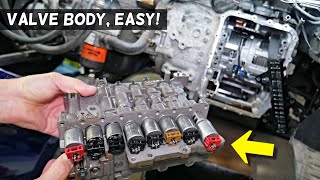
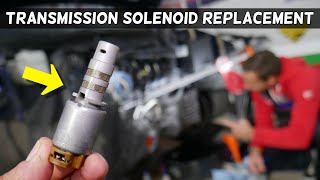
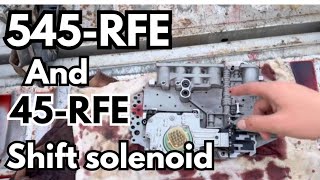
Typical fix: Replace the faulty solenoid. This part is located on the valve body, requiring removal of the transmission oil pan and valve body assembly. 🎬 Watch: Step-by-step guide to replacing the transmission solenoid.
Est. part cost: $80-$250 - Clogged or Worn Valve Body 🟡 Medium Probability → Shop Transmission Valve Body Sludge and debris from old fluid can block the intricate channels within the valve body. Furthermore, the reducing valve bores in the A6MF1 are known for premature wear, which destabilizes hydraulic pressure to the solenoids.
How to confirm: This is diagnosed after ruling out the fluid and the solenoid itself. A technician may inspect the valve body for sludge and score marks in the valve bores during solenoid replacement.
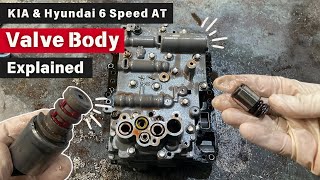
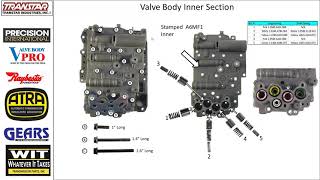
Typical fix: In some cases, the valve body can be removed and professionally cleaned. Worn bores can sometimes be repaired with reaming tools and oversized valves from kits by TransGo or Sonnax. More often, the entire valve body is replaced as an assembly. 🎬 See how the A6MF1 valve body works and how to inspect it.
Est. part cost: $500-$1300 - Wiring or Connector Issues ⚪ Low Probability
How to confirm: Visually inspect the wiring harness leading to the transmission for any signs of fraying, corrosion, or damage. A multimeter can be used to check for continuity between the TCM and the solenoid connector.
Typical fix: Repair or replace the damaged section of the wiring harness or the connector.
Est. part cost: $20-$100
Rare But Worth Checking
- Failing Transmission Control Module (TCM): → Shop Transmission Assembly This is uncommon, but possible if all other components (fluid, solenoid, wiring) test good. The TCM may fail to send the correct signal to the solenoid.
- Failing Internal Transmission Pump: → Shop Transmission Assembly A worn-out pump cannot generate sufficient line pressure for the entire system, which can trigger a pressure-related code like P0746. This usually comes with other symptoms like whining noises.
Diagnosis Steps
- Check the transmission fluid level and condition. If low, top it off and check for leaks. If dark, burnt, or full of debris, a fluid and filter change is the first step.
- Use a quality OBD-II scanner to check for any other transmission-related codes and review freeze-frame data.
- Inspect the transmission wiring harness and connectors for visible damage, corrosion, or loose connections.
- With a professional scan tool, monitor the live data for the commanded state of Pressure Control Solenoid 'A' and the transmission line pressure.
- If possible, drop the transmission oil pan to inspect for excessive metal shavings, which would indicate a severe internal mechanical failure.
- Test the resistance of the solenoid with a multimeter. For the A6MF1, the on/off solenoids (like PCS 'A') should measure between 10-11 Ohms. This can often be done at the transmission case connector without removing the pan.
- If the solenoid tests good electrically, the next step is to remove the valve body to inspect for blockages, worn bores, or to directly test and replace the solenoid.
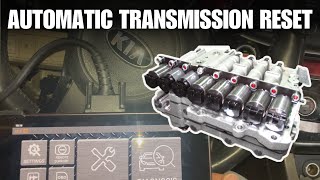
- If a solenoid or valve body is replaced, use a Hyundai GDS (or equivalent) to perform the 'Resetting Auto T/A values' function to clear the transmission's adaptive memory.
- After resetting, perform the adaptive value relearn procedure by driving the vehicle through specific shift patterns to ensure smooth operation.
Parts You'll Likely Need
- Pressure Control Solenoid
(OEM #46313-3B030)— This solenoid is the component identified by the code and is a frequent failure point due to either internal wear or contamination from old fluid.
Trusted brands: Hyundai Genuine, Rostra, Mopar (for cross-reference)
OEM price range: $150-$250
Aftermarket price range: $80-$150 - Automatic Transmission Fluid
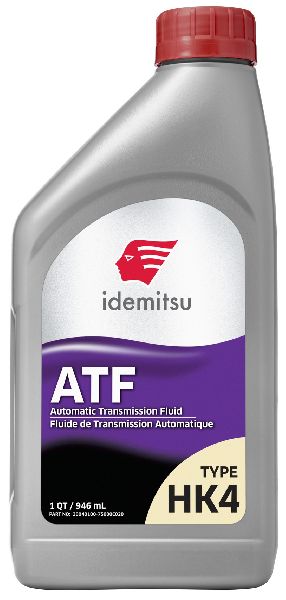
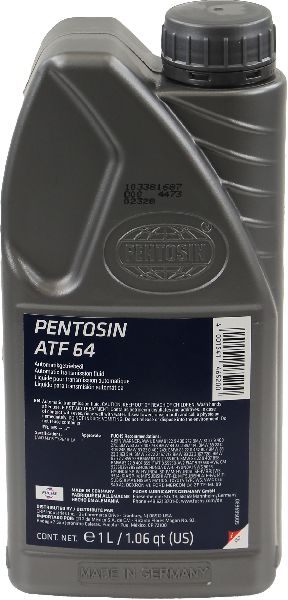
(OEM #SP-IV)— Low or contaminated fluid is a leading cause of this code. A fluid change is a critical part of the repair to ensure the new solenoid operates in a clean environment. Use only Hyundai SP-IV specification fluid or a compatible equivalent.
Trusted brands: Hyundai Genuine SP-IV, Idemitsu TLS-LV, Valvoline MaxLife ATF
OEM price range: $15-$25 per quart
Aftermarket price range: $8-$15 per quart - Transmission Filter Kit — When changing the fluid, the filter should also be replaced to remove trapped contaminants and ensure proper fluid flow.
Trusted brands: Hyundai Genuine, Wix, ATP
OEM price range: $40-$70
Aftermarket price range: $20-$40
Related Codes That Often Appear With This One
- P0700 — P0700 is a generic code indicating the Transmission Control Module (TCM) has stored a fault. It acts as a 'heads-up' that a more specific code, like P0746, is the root cause.
- P0745, P0747, P0748, P0749 — These codes all relate to the Pressure Control Solenoid 'A' circuit. P0747 indicates it's stuck 'On', while P0745, P0748 and P0749 point to electrical circuit failures rather than the 'performance' or mechanical issue of P0746.
Technical Service Bulletins (TSBs) & Recalls
- TSB 17-ST-002: Details the warranty extension for the Motor Driven Power Steering (MDPS) flexible rubber coupling, a common source of steering noise unrelated to P0746.
- TSB 17-ST-001: Describes the service procedure for replacing the MDPS coupling on related Hyundai models.
- TSB 11-AT-008-1 / 12-AT-017: Provides the official procedure for resetting and relearning the adaptive values in the TCM using the GDS scan tool after a transmission repair.
Platform-Specific Known Issues
- No Transmission Dipstick: → Shop Transmission Assembly Unlike older vehicles, the 2011-2016 Elantra's A6MF1 transmission does not have a dipstick for checking fluid level. The level must be checked via a fill/check plug on the side of the transmission case while the fluid is at a specific temperature (50-60°C / 122-140°F), which makes the process more difficult for DIYers.
- Solenoid Block Replacement: The pressure control solenoids are often sold as a complete block or harness assembly. While Solenoid 'A' is the trigger, mechanics may recommend replacing the entire solenoid pack as a preventative measure, since they are all the same age and have been operating in the same fluid.
- Required Adaptive Value Reset: After replacing a solenoid, valve body, or the entire transmission, it is mandatory to reset the PCM/TCM's adaptive learning values using a Hyundai GDS scan tool or equivalent. Failure to perform this reset can result in continued harsh shifting or shift flares as the TCM attempts to use old, incorrect data with the new parts.
Mechanic-Grade Diagnostic Values
- Pressure Control Solenoid 'A' (On/Off type) Resistance — expected: 10 - 11 Ohms. Failure: A reading outside this range (open or shorted) indicates a failed solenoid coil.
- Variable Force Solenoids (VFS) Resistance — expected: 5.1 - 5.3 Ohms. Failure: This is for other linear solenoids on the valve body, not PCS 'A'. A different reading indicates a fault in one of those solenoids.
- Transmission Fluid Temperature for Level Check — expected: 50-60°C (122-140°F). Failure: Checking the level when the fluid is too cold or too hot will result in an inaccurate reading, leading to under or overfilling.
- Transmission Fluid Temperature Sensor Resistance — expected: Approx. 2.51k Ohms @ 20°C (68°F). Failure: Incorrect resistance will cause the TCM to receive false temperature data, affecting shift quality and TCC lockup.
Scan Tool Commands That Help
- Hyundai GDS (Global Diagnostic System): Resetting Auto T/A values — This function must be used after replacing the transmission, valve body, or any solenoids to erase the learned adaptive values from the TCM's memory.
- Hyundai GDS (Global Diagnostic System): AT Adaptation Mode / Relearn Adaptive Values — After resetting the adaptive values, this guided procedure involves a specific driving cycle to allow the TCM to relearn clutch fill times and pressures for smooth shifting with the new components.
Wiring & Ground Locations
- Transmission Case Connector — The main electrical connector on the outside of the transmission case.. Allows for testing solenoid resistance without dropping the transmission pan. Solenoid 'A' (SSA) is tested between Pin 10 (Solenoid Power 1) and Pin 18 (SSA Solenoid).
- Solenoid Power Pin 10 — Pin 10 on the 18-pin transmission case connector.. This pin provides power to the 'A' and 'B' shift solenoids (SSA, SSB), as well as the 3-5-R, OD, and TCC solenoids. A fault on this power supply circuit could affect multiple components.
OEM Part Supersession History
46313-3B020→46313-3B030— Standard part revision and update by the manufacturer.
Heads up: The new part number (46313-3B030) is the correct replacement for the original.
Model Year Variations Within This Range
- 2011-2016: While the A6MF1 was used throughout this period, there can be minor differences in the internal wiring harness. Some early harnesses had a detachable temperature sensor, while updated harnesses integrate the sensor. It is recommended to always update to the newer style harness if performing a major repair.
Diagnostic Flowchart
Other Known Issues on This Vehicle
Issues unrelated to this code that are worth knowing about as an owner of this generation:
- Engine Ticking / Piston Slap 🔴 High — Common across the 1.8L Nu engine range, often noticeable on cold starts and can lead to engine failure. (Ref: A class-action lawsuit was settled, extending the powertrain warranty for this issue. Owners report dealers replacing short blocks under warranty.)
- Steering Coupler Failure 🟠 Medium — Extremely common. Owners report a distinct clicking or clunking noise when turning the steering wheel. (Ref: Hyundai issued TSB 17-ST-002, extending the warranty for the flexible steering coupler to 10 years/100,000 miles.)
- Peeling White Paint 🟡 Low — Widespread issue, particularly on vehicles with white paint, where large flakes or sheets of paint peel off the body panels. (Ref: Hyundai extended the paint warranty for this issue on certain models (e.g., Warranty Extension Z05), though owners report mixed success with getting repairs covered.)
- Premature Alternator Failure 🟠 Medium — A known failure item on this generation, leading to the battery light illuminating and a no-start condition.
Used vs. New Parts: Buying Guide for This Vehicle
When a used part is the smart pick: A complete used transmission from a low-mileage donor can be a cost-effective alternative to a full rebuild, but it carries risks. Individual used solenoids are generally not recommended due to their high failure rate and the labor involved in replacement.
Donor-vehicle mileage cap: roughly under 75000 miles for the part to have meaningful remaining life.
What to inspect on the donor part:
- Verify the exact transmission model (A6MF1) from the donor vehicle's VIN.
- Check the color and smell of the transmission fluid from the donor car if possible. Dark, burnt fluid is a major red flag.
- Ask for any available service history for the donor vehicle, specifically looking for regular transmission fluid changes.
- Obtain a warranty from the salvage yard, typically 30-90 days, to protect against receiving a defective unit.
OEM-only on this vehicle (don't cheap out):
- Transmission Control Module (TCM): Aftermarket or improperly matched used TCMs can cause persistent communication and performance issues. A new or professionally remanufactured OEM unit programmed to the vehicle's VIN is the safest choice.
- Solenoids: While some aftermarket brands are acceptable, many forum users and mechanics strongly advise using genuine Hyundai solenoids to avoid premature failure and repeat labor costs.
Aftermarket brands forum-validated for this vehicle:
- Rostra: A well-known manufacturer of transmission electronics, now distributing some OEM solenoids previously sold under the BorgWarner brand.
- TransGo / Sonnax: These brands do not make solenoids but produce highly-regarded kits for repairing worn valve body bores, which is a common related issue.
Brands owners have reported issues with on this vehicle:
- Unbranded, no-name solenoids and valve bodies from online marketplaces (e.g., eBay, AliExpress) are frequently cited as being poorly manufactured or failing shortly after installation.
Related OBD-II Codes
Frequently Asked Questions
My 2011-2016 Elantra doesn't have a transmission dipstick. How do I check the fluid for a P0746 code?
After replacing the pressure control solenoid, my Elantra is still shifting harshly. What did I miss?
The mechanic wants to replace the entire solenoid pack for a single P0746 code. Is this necessary?
What specific transmission fluid should I use in my Elantra to address P0746?
I hear a clicking noise when I turn the steering wheel. Is this related to my P0746 transmission problem?
Can I test the pressure control solenoid myself on my Elantra?
My Elantra's engine is ticking. Could this be causing the P0746 code?
Helpful Videos





We Have This Part in Stock




The information in this article is provided for general reference and educational purposes only. Vehicle specifications, procedures, and part compatibility can vary by production date, trim level, and region. Always consult your vehicle's factory service manual and verify part numbers before purchasing or performing repairs. Safety-critical components such as airbags, seat belts, and braking systems should be installed by a qualified professional.
- Hyundai Elantra:
- 🧭 Diagnostic Flowchart
- 🎬 Helpful Videos
- 🛍️ Shop This Part
- What's Unique About the 2011-2016 Hyundai Elantra
- Symptoms You May Notice
- Most Likely Causes
- Rare But Worth Checking
- Diagnosis Steps
- Parts You'll Likely Need
- Related Codes That Often Appear With This One
- Technical Service Bulletins (TSBs) & Recalls
- Platform-Specific Known Issues
- Mechanic-Grade Diagnostic Values
- Scan Tool Commands That Help
- Wiring & Ground Locations
- OEM Part Supersession History
- Model Year Variations Within This Range
- Other Known Issues on This Vehicle
- Used vs. New Parts: Buying Guide for This Vehicle
- Related OBD-II Codes
- Frequently Asked Questions
- 🎟️ Get 5% Off