

P0746 on 2003-2009 Toyota 4Runner 4.7L V8: Pressure Control Solenoid 'A' (SL1) Causes and Fixes
This code points to a problem with the 'SL1' shift solenoid in the transmission. The most common fixes are addressing low or dirty transmission fluid or replacing the faulty SL1 solenoid itself. Expect to pay $200-$500 for a solenoid replacement.
- P0746 on a 4th Gen V8 4Runner specifically points to the Shift Solenoid SL1.
- Always check the transmission fluid level and condition first, as low or dirty fluid is a very common cause.
- The fix almost always involves dropping the transmission pan, so replacing the filter and fluid at the same time is highly recommended.
- The SL1 solenoid can be tested with a multimeter for resistance (5.0-5.6 Ω) to confirm failure before buying a new part.
- Use only Toyota World Standard (WS) or an equivalent certified ATF to avoid causing new problems.
What's Unique About the 2003-2009 Toyota 4Runner
The 2003-2009 4Runner with the 4.7L V8 uses the robust Aisin-built A750F 5-speed automatic transmission (primarily in 2005-2009 models; 2003-2004 used the A340F 4-speed). For the A750F gearbox, the generic 'Solenoid A' from the code definition is definitively identified as the 'SL1' linear solenoid. This clarity is a major advantage in diagnosis, as it points directly to a specific component within the valve body, removing much of the guesswork found with other vehicles.
Symptoms You May Notice
- Harsh, erratic, or delayed gear shifts, sometimes described as a 'bang' or 'clunk' when shifting.
- Transmission slipping, where engine RPMs increase but speed does not.
- Vehicle enters 'limp mode', becoming stuck in a single gear (often 2nd or 3rd).
- Failure to shift into certain gears, or refusal to downshift.
- Increased fuel consumption.
- Transmission overheating warning light may illuminate.
- Illuminated Check Engine Light.
- An unusual roaring sound coming from the vehicle has also been reported in conjunction with this code (NHTSA ODI #11639882).
- Immediately replacing the solenoid without checking the fluid condition first. Dirty fluid can cause a perfectly good solenoid to malfunction.
- Replacing the entire transmission when only a single solenoid or a fluid service was required.
- Incorrectly checking the transmission fluid level due to not following the temperature-specific procedure, leading to an overfill or underfill condition that mimics other faults.
Most Likely Causes
- Low or Dirty Transmission Fluid 🔴 High Probability → Shop Transmission Assembly The A750F is a 'sealed' unit without a dipstick, making fluid checks less frequent for many owners. Over time, fluid degrades and collects debris, which can impede solenoid function.
How to confirm: The fluid level must be checked via a specific procedure involving an overflow plug on the transmission pan while the fluid is within a narrow temperature range (typically 115-130°F or 46-56°C). 🎬 Watch this DIY guide for filter service and fluid level checks. The fluid should be bright red/pink (Toyota WS) and not smell burnt. Dark or contaminated fluid indicates a problem.
Typical fix: Perform a transmission fluid drain-and-fill. If the fluid is very dirty, multiple drain-and-fills or a full fluid exchange may be necessary. Use only Toyota World Standard (WS) ATF.
Est. part cost: $60-$150 for fluid - Faulty Shift Solenoid Valve (SL1) 🔴 High Probability → Shop Transmission Valve Body The solenoid is an electro-mechanical part that cycles thousands of times. It can fail electrically (coil burnout) or mechanically (plunger sticks from debris). This is the most common component failure for this code.
How to confirm: After dropping the transmission pan, remove the solenoid and test its resistance with a multimeter. 🎬 See how to test transmission shift solenoids with a multimeter. For the A750F, the SL1 solenoid's resistance should be between 5.0 and 5.6 ohms at 68°F (20°C). You can also apply 12V power to see if it makes an audible click, confirming mechanical operation.
Typical fix: Replace the faulty SL1 solenoid. This part is located inside the transmission on the valve body.
Est. part cost: $70-$150 - Clogged Transmission Filter or Valve Body 🟡 Medium Probability → Shop Transmission Assembly Metallic debris from normal wear can clog the filter screen, starving the system of fluid pressure, or block the fine passages within the valve body that the SL1 solenoid directs fluid through. In some Toyota models, a diagnosis of P0746 has led to the replacement of the valve body assembly and internal clutch kits (NHTSA ODI #11644315).
How to confirm: When the transmission pan is removed for solenoid inspection, the filter will be visible. Inspect it for heavy contamination or sludge. Inspect the valve body for sludge or debris in its channels.
Typical fix: Replace the transmission filter and clean the valve body passages with a specialized cleaner. In severe cases, the valve body may need to be replaced.
Est. part cost: $30-$60 for a filter kit - Wiring or Connector Issue ⚪ Low Probability The wiring harness leading to the transmission can be exposed to heat, moisture, and road debris, potentially causing corrosion or damage over time, especially at the main connector on the transmission case.
How to confirm: Visually inspect the wiring harness going to the transmission for any breaks, frays, or corrosion at the main connector. Perform a continuity test from the TCM connector to the solenoid connector inside the pan.
Typical fix: Repair the damaged section of the wire or clean/replace the corroded connector.
Est. part cost: $5-$50 for wiring supplies
Rare But Worth Checking
- Failing Transmission Control Module (TCM/ECM): → Shop Transmission Assembly This is very uncommon. The TCM/ECM should only be suspected after all other components (fluid, solenoid, wiring, and valve body) have been thoroughly tested and confirmed to be working correctly.
- Failing Internal Transmission Pump: → Shop Transmission Assembly A worn transmission pump can fail to generate adequate line pressure, which can trigger this code. This is typically accompanied by whining noises from the transmission and more severe, widespread shifting problems.
Diagnosis Steps
- Check the transmission fluid level and condition. This is critical on the 'sealed' A750F transmission and requires a specific procedure.
- To check the fluid, the vehicle must be level and the transmission fluid temperature must be between 115-130°F (46-56°C). This can be read with a scan tool or by entering a diagnostic mode by jumping pins on the OBD-II port.
- With the engine idling, remove the 'check' plug (5mm Allen) from the pan. A small trickle of fluid indicates a correct level. No fluid means it's low; a strong gush means it's overfilled.
- Scan for any other transmission-related trouble codes. Address other codes first if they are present.
- Using a professional scan tool, perform an Active Test to command the SL1 solenoid on and off to check its response.
- Inspect the transmission's main electrical connector and wiring harness for visible damage, corrosion, or loose connections.
- Drop the transmission oil pan and inspect for excessive metal shavings or clutch debris on the magnets. A small amount of fine metallic dust is normal.
- While the pan is off, remove the SL1 solenoid. Measure its coil resistance using a multimeter (spec: 5.0-5.6 Ω).
- Carefully apply 12V power to the solenoid terminals to verify it makes a 'click' sound, indicating it is not mechanically stuck.
- If the solenoid and wiring test good, inspect the valve body for blockages or stuck valves.
- If all else fails, the problem may be a faulty ECM, though this is rare.
Parts You'll Likely Need
- Shift Solenoid Valve SL1
(OEM #35210-60010)— This is the specific solenoid ('A') identified by the P0746 code for the A750F transmission. It directly controls hydraulic pressure for shifting and is the most likely component to have failed internally.
Trusted brands: Toyota (OEM), Aisin, Rostra
OEM price range: $120-$180
Aftermarket price range: $70-$120 - Automatic Transmission Fluid (Toyota WS)
(OEM #00289-ATFWS)— Replacing the solenoid requires draining the fluid. It is critical to refill with the correct OEM-specified fluid to ensure proper transmission performance and longevity.
Trusted brands: Toyota, Idemitsu, Aisin
OEM price range: $12-$18 per quart
Aftermarket price range: $8-$15 per quart - Transmission Filter and Pan Gasket Kit
(OEM #35330-60050 (Filter), 35168-60010 (Gasket))— When the transmission pan is removed, the filter should always be replaced to ensure clean fluid flow, and a new gasket is required to prevent leaks.
Trusted brands: Toyota (OEM), Wix, ATP
OEM price range: $50-$80
Aftermarket price range: $25-$50
Related Codes That Often Appear With This One
- P0745 — This is the general code for Pressure Control Solenoid 'A' circuit malfunction. It can appear with P0746 if there's an electrical fault.
- P0747 — This code means Pressure Control Solenoid 'A' is Stuck On, the opposite of P0746. Seeing them together could indicate an intermittent electrical or mechanical problem.
Technical Service Bulletins (TSBs) & Recalls
- While not directly for P0746, Toyota issued TSBs for noisy idler pulleys on the 2UZ-FE engine, recommending updated parts with a rear washer to better seal the bearing. This is a common maintenance item an owner might encounter.
Platform-Specific Known Issues
- The 2003-2004 V8 4Runners used a 4-speed A340F transmission which has a traditional dipstick. The 2005-2009 V8 models use the 5-speed A750F which is a 'sealed' unit without a dipstick. The procedure for checking fluid on the A750F is complex and a common source of error.
- To check the A750F fluid level, the transmission fluid must be at a specific temperature (115-130°F). This can be measured with a scan tool or by putting the vehicle in a special diagnostic mode by jumping pins 4 and 13 on the OBD-II port and following a specific shift pattern until the 'A/T OIL TEMP' light illuminates.
- A user on YouTube commented on a P0746 video describing a scenario where the car would drive for a while after a fluid change but the code would return, suggesting an underlying mechanical or valve body issue not solved by fluid alone.
Mechanic-Grade Diagnostic Values
- Shift Solenoid SL1 Resistance — expected: 5.0 to 5.6 Ω at 20°C (68°F). Failure: Resistance outside this range indicates a faulty solenoid coil.
- Shift Solenoid S1/S2 (On/Off type) Resistance — expected: 11 to 15 Ω at 20°C (68°F). Failure: Resistance outside this range. Note: This is for different solenoids in the same valve body, useful for comparison.
- Line Pressure at Idle (D Range) — expected: 362 - 420 kPa (53 - 61 psi). Failure: Pressure below this range can indicate a weak pump, fluid leak, or clogged filter.
- Line Pressure at Stall Speed (D Range) — expected: 1,110 - 1,270 kPa (161 - 184 psi). Failure: Low pressure at stall indicates significant hydraulic issues (pump, converter, or major internal leaks).
- Voltage at ECM Connector Pins for SL1 — expected: Pulsing voltage (duty cycle) when active. A constant 12V or 0V when it should be active indicates a wiring or ECM driver issue.. Failure: No voltage or incorrect static voltage during commanded operation.
Scan Tool Commands That Help
- Toyota Techstream: Active Test: 'SHIFT' — This function allows the technician to manually command the transmission to shift into each gear while driving (under 31 mph) or stationary. By comparing the commanded gear on the scan tool to the actual gear engaged, you can verify if the SL1 solenoid (and others) are responding to the ECM's commands. Failure to shift as commanded points to a hydraulic or mechanical issue rather than a sensor input problem.
- Toyota Techstream: Data List: 'SHIFT' — While test driving, this PID shows the gear position being commanded by the ECM. This should be monitored alongside vehicle speed and engine RPM to confirm if the transmission is actually achieving the commanded gear.
- Toyota Techstream: Reset Memory (AT Initialization) — This procedure should be performed after replacing the transmission assembly, valve body, or ECM. It resets the transmission's learned adaptive values. Note that simply disconnecting the battery will not perform this reset.
Wiring & Ground Locations
- ECM (Engine Control Module) — Located in the engine bay, on the passenger side, near the firewall. It is a silver metal box with several large electrical connectors.. The ECM directly controls the SL1 solenoid. All voltage and resistance tests of the control circuit culminate at the ECM's connector pins.
- Engine Block Ground — A primary ground point is located on the engine block, behind the lower control arm on the passenger side. It secures both the main battery negative-to-block cable and a smaller frame-to-block ground wire.. A poor engine ground can cause electrical noise and voltage drops, potentially affecting the ECM's ability to accurately control the transmission solenoids, leading to erratic behavior and fault codes.
- Transmission Harness Connector — Located on the passenger side of the transmission case. This is the main electrical interface between the vehicle's wiring harness and the internal transmission wiring leading to the solenoids.. This connector is a common point for corrosion or damage from road debris and heat. A bad connection here can cause an open or short in the SL1 solenoid circuit.
- ECM Pins for SL1 Solenoid — At the ECM connector E16, pin 19 is SL1+ and pin 18 is SL1-.. These are the specific pins to test for continuity and voltage when diagnosing a circuit fault between the ECM and the solenoid, ruling out wiring issues.
Real Owner Repair Stories
- YouTube user 'YepThatsIt' (Toyota FJ Cruiser with A750F transmission (shared with 4Runner)) — Soft shifts in all gears.
✅ What actually fixed it The user performed a transmission service and, as a preventative/diagnostic measure, swapped the positions of the SL1 and SL2 solenoids. Since the SL2 solenoid is used more frequently, swapping it with the less-used SL1 can sometimes restore crisper shifting if the original SL2 was becoming weak but not yet fully failed. This suggests a potential diagnostic tactic: if symptoms change or improve after swapping solenoids, it confirms a solenoid performance issue. - NHTSA ODI #11644315 — An owner reported a "Pressure Control Solenoid 'A' Performance stuck off - P0746" condition. A second opinion confirmed the need for a valve body assembly and internal clutch kits.
OEM Part Supersession History
89661-35A40→89661-35A41— Standard revision update by the manufacturer.
Heads up: These parts are for the 2005 4Runner 4.7L 2WD model. While they supersede, always confirm the part number on your original unit before ordering a replacement.89661-35A50 or 89661-35A51→89661-35A52— Standard revision update by the manufacturer.
Heads up: These parts are for the 2004-2005 4Runner 4.7L 4WD model. Confirm the part number on the original ECM.
Model Year Variations Within This Range
- 2003-2004: These models used the 4-speed A340F transmission. While some principles are similar, the valve body, solenoids, and specific diagnostic procedures are different from the A750F.
- 2005-2009: These models use the 5-speed A750F transmission, which is the primary focus of this article. It is a 'sealed' unit without a dipstick and has different internal components and diagnostic procedures compared to the earlier 4-speed.
Diagnostic Flowchart
Other Known Issues on This Vehicle
Issues unrelated to this code that are worth knowing about as an owner of this generation:
- Cracked Exhaust Manifolds 🔴 High — Very common, especially on higher mileage (100k+) vehicles. Often presents as a ticking noise when the engine is cold that may disappear as it warms up.
- Secondary Air Injection System (SAIS) Failure 🟠 Medium — Common on 2005+ models with the VVT-i engine. The air pump or switching valves can fail, leading to a check engine light and limp mode. Often occurs over 150k miles.
- Frame Rust 🔴 High — A notorious issue for this generation, especially in regions that use road salt. Rust can severely compromise the frame's structural integrity. This was the subject of a class-action lawsuit. (Ref: Class-action lawsuit (not a formal recall for all years/models))
- Seized Brake Calipers 🟠 Medium — Front brake calipers are known to seize, causing uneven pad wear, pulling to one side during braking, and excessive heat. This is a frequent maintenance issue.
- Head Gasket Failure (1GR-FE V6) 🔴 High — While this article focuses on the V8, the V6 engine (1GR-FE) available in this generation is known for a specific head gasket issue, particularly around 125k-150k miles.
Used vs. New Parts: Buying Guide for This Vehicle
When a used part is the smart pick: A used valve body assembly from a low-mileage donor can be a cost-effective option, as it often comes complete with all solenoids. Given that valve body wear itself can be a cause, this is often a better bet than just replacing a single solenoid in a high-mileage transmission. A single used OEM solenoid is also a reasonable choice if tested for resistance and function before installation.
Donor-vehicle mileage cap: roughly under 120000 miles for the part to have meaningful remaining life.
What to inspect on the donor part:
- Verify the donor vehicle's mileage if possible.
- Ask for photos of the transmission pan magnets from the donor vehicle; an excessive amount of metallic sludge or chunks is a major red flag for internal damage.
- When buying a complete valve body, ensure all electrical connectors are intact with no broken clips or corrosion.
- For individual solenoids, ensure the o-rings are present and not brittle, though they should be replaced anyway.
OEM-only on this vehicle (don't cheap out):
- Transmission Control Module (ECM): While aftermarket options exist, they often have compatibility or programming issues. A used, correctly part-numbered OEM unit or a professionally remanufactured OEM unit is a much safer choice.
Aftermarket brands forum-validated for this vehicle:
- Solenoids: Aisin (the OEM manufacturer), Rostra
- Valve Bodies: Nomad Heavy Duty (for improved performance), JASPER (remanufactured), Sonnax (for repair kits/components).
- Transmission Fluid (WS): Idemitsu, Aisin (both are suppliers to Toyota)
Brands owners have reported issues with on this vehicle:
- Unbranded, no-name solenoids or valve bodies from online marketplaces without significant positive reviews and seller history can be risky due to poor quality control and incorrect calibration.
Real Owner Stories
Aggregated from forums and TSBs cited above. Mileages and costs reflect what owners reported in those sources.
2005-2009 Toyota 4Runner 2UZ-FE 4.7L V8
Symptoms: The car would drive for a while after a fluid change, but the P0746 code would return.
What fixed it: The issue was not resolved by a fluid change alone, suggesting an underlying mechanical or valve body issue was the root cause.
Source hint: YouTube comment cited in vehicle_specific_issues
Toyota Vehicle with P0746
Symptoms: An unusual roaring sound was heard coming from the vehicle. Diagnostic scanning revealed error codes P27137f, P08BB, and P0746.
What fixed it: The vehicle was taken to a dealer where it was diagnosed with transmission failure (NHTSA ODI #11639882).
Related OBD-II Codes
Frequently Asked Questions
How do I check the transmission fluid on my 2007 4Runner V8? I can't find a dipstick.
What kind of transmission fluid should I use for a drain-and-fill on my 4.7L V8 4Runner?
I think my SL1 solenoid is bad. How can I test it on my 4Runner before buying a new one?
Does my 2004 V8 4Runner have the same 'sealed' transmission as the later models?
I have a Lexus GX470 with the same symptoms. Is the diagnosis for P0746 the same as for the 4Runner?
I saw a TSB mentioned for the 2UZ-FE engine. Is it related to this P0746 transmission code?
Helpful Videos

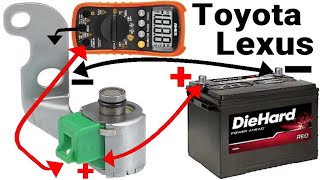
We Have This Part in Stock

The information in this article is provided for general reference and educational purposes only. Vehicle specifications, procedures, and part compatibility can vary by production date, trim level, and region. Always consult your vehicle's factory service manual and verify part numbers before purchasing or performing repairs. Safety-critical components such as airbags, seat belts, and braking systems should be installed by a qualified professional.
- Toyota 4Runner:
- 🧭 Diagnostic Flowchart
- 🎬 Helpful Videos
- 🛍️ Shop This Part
- What's Unique About the 2003-2009 Toyota 4Runner
- Symptoms You May Notice
- Most Likely Causes
- Rare But Worth Checking
- Diagnosis Steps
- Parts You'll Likely Need
- Related Codes That Often Appear With This One
- Technical Service Bulletins (TSBs) & Recalls
- Platform-Specific Known Issues
- Mechanic-Grade Diagnostic Values
- Scan Tool Commands That Help
- Wiring & Ground Locations
- Real Owner Repair Stories
- OEM Part Supersession History
- Model Year Variations Within This Range
- Other Known Issues on This Vehicle
- Used vs. New Parts: Buying Guide for This Vehicle
- Real Owner Stories
- 2005-2009 Toyota 4Runner 2UZ-FE 4.7L V8
- Toyota Vehicle with P0746
- Related OBD-II Codes
- Frequently Asked Questions
- 🎟️ Get 5% Off