P0746 on 2007-2011 Toyota Camry 3.5L V6: Pressure Control Solenoid 'A' Causes and Fixes
P0746 on a 2007-2011 Camry V6 almost always points to a problem with the Pressure Control Solenoid 'A' (SL1) in the U660E transmission. The most common fix is replacing the faulty solenoid, along with a transmission fluid and filter change. Expect to pay $150-$250 for the parts and 2-4 hours of labor. This is a very common issue on the U660E transmission, which is shared with many other Toyota and Lexus models.
21 minutes to read
2007-2011 Toyota Camry
Most Likely Cause
Low or Dirty Transmission Fluid
Difficulty
5/5
Est. Time
3.5 hrs
DIY Doable?
🔧 Shop
Shop Labor
$400 – $850
Parts Price
$100 – $350
⚠️Drivable, but...— You can drive, but it's not recommended. Continued driving can lead to harsh shifting, poor performance, transmission overheating, and potentially severe internal transmission damage, resulting in a much more expensive repair. Some owners report the vehicle may suddenly stop moving.
Key Takeaways
P0746 on a 2007-2011 Camry V6 is a serious code that points to a fault with the SL1 pressure control solenoid.
Do not continue driving for an extended period, as you risk severe transmission damage.
The first and easiest step is to have the transmission fluid level and condition checked by a professional.
The most likely repair involves replacing the SL1 solenoid, the transmission filter, and the fluid.
Due to the complexity of accessing internal transmission components, this repair is not recommended for DIY beginners.
The trouble code P0746 stands for "Pressure Control Solenoid 'A' Performance or Stuck Off". On this specific Toyota Camry, it means the Transmission Control Module (TCM) has detected that the solenoid responsible for regulating the main hydraulic fluid pressure, known as solenoid 'A' or 'SL1', is not working correctly. The TCM commands a specific pressure for smooth shifting, and this code is triggered when the solenoid fails to achieve that pressure, often because it is mechanically stuck in the 'off' position or a passage in the valve body is blocked.
What's Unique About the 2007-2011 Toyota Camry
The 2007-2011 Camry V6 uses the U660E 6-speed automatic transmission, which is known for being sensitive to fluid condition and can develop shifting issues and valve body problems. While Toyota issued a TSB (TC007-07) for harsh shifting when cold that could be fixed with a computer reflash, the P0746 code points more directly to a hydraulic or mechanical fault rather than just a software issue. The failure of the SL1 pressure control solenoid is a well-documented issue on this transmission across multiple vehicle platforms.
Professional service recommended: This repair requires dropping the transmission oil pan and removing the valve body to access the internal solenoids, which can be complex and messy. Professional service is recommended to ensure correct diagnosis and repair. An electronic scan tool like Toyota's Techstream is also needed to perform active tests and potentially reset transmission adaptations after the repair.
Symptoms You May Notice
Harsh, abrupt, or delayed gear shifts, especially from 1st to 3rd gear.
Transmission slipping (engine revs high but car doesn't accelerate properly).
Vehicle gets stuck in one gear (limp mode).
Check Engine Light is on, often accompanied by the VSC (Vehicle Stability Control) light.
Decreased fuel economy.
Transmission may feel like it's jerking or shuddering.
A quiet, motorized whining sound from the transmission area.
An unusual roaring sound coming from the vehicle, as noted in some diagnostic reports.
⚠️ Don't Waste Money on the Wrong Fix
Replacing the entire transmission without first diagnosing the specific solenoid. A single solenoid is far cheaper than a full transmission replacement or rebuild.
Assuming any shifting issue is related to the TCM software flash (TSB TC007-07) without checking for the P0746 code, which points to a specific hydraulic/mechanical fault.
Most Likely Causes
Low or Dirty Transmission Fluid🔴 High Probability→ Shop Transmission Assembly The U660E transmission is sensitive to fluid level and condition. Over time, fluid breaks down and accumulates debris, which can clog solenoid passages and the valve body. How to confirm: Check the transmission fluid level and condition. The fluid should be bright red and clear, not dark brown, black, or smell burnt. Note: This transmission does not have a traditional dipstick; checking the level is a specific procedure involving an overflow plug at a specific fluid temperature. 🎬 Watch: How to check transmission fluid level without a dipstick Typical fix: Perform a transmission fluid drain-and-fill or a full fluid exchange using Toyota Genuine ATF WS (World Standard) fluid. Some mechanics caution against a full flush on high-mileage transmissions that haven't been regularly serviced, as it can dislodge debris and cause more problems. Est. part cost: $60-$150
Faulty Pressure Control Solenoid 'A' (SL1)🔴 High Probability→ Shop Transmission Valve Body The internal plunger of the solenoid can wear down or get stuck from debris in the transmission fluid, leading to failure. This is the most common point of failure for this code. How to confirm: After dropping the transmission pan, the solenoid can be tested. A mechanic will check its resistance (should be 5.0-5.6 Ω at 68°F/20°C) and apply 12V power to listen for a 'click', indicating it's actuating. The SL1 solenoid has a brown connector. 🎬 See how to test and replace the pressure control solenoid Typical fix: Replace the faulty SL1 solenoid. This is done by removing the transmission pan and valve body to access the solenoid. Est. part cost: $150-$250
Clogged Transmission Filter or Valve Body🟡 Medium Probability→ Shop Transmission Assembly Clutch material and other fine debris can clog the transmission filter or the intricate passages within the valve body, starving the solenoid of the fluid pressure it needs to operate. How to confirm: When the transmission pan is removed, inspect the filter and the magnets in the pan. A clogged filter or a large amount of metallic sludge on the magnets indicates a problem. The valve body itself may have blocked passages that are not externally visible. Typical fix: Replace the transmission filter and clean the valve body passages. If the valve body is heavily contaminated or warped, it may need to be replaced entirely. Remanufactured valve bodies are available. Est. part cost: $40-$80 for a filter kit; $800+ for a valve body.
Wiring or Connector Damage⚪ Low Probability How to confirm: Visually inspect the wiring harness going to the transmission for any signs of fraying, corrosion, or damage. A multimeter can be used to check for continuity between the TCM and the solenoid connector. Typical fix: Repair or replace the damaged section of the wiring harness or the connector. Est. part cost: $20-$200
Rare But Worth Checking
Faulty Transmission Control Module (TCM): → Shop Transmission Assembly This is rare, but if the solenoid and wiring test good, the TCM itself might not be sending the correct command. On the 2007-2011 Camry, the TCM is located behind the glove box, making it accessible for testing. This should be the last item to consider after all other causes are ruled out.
Failing Transmission Pump or Internal Mechanical Failure: → Shop Transmission Assembly If there is a significant amount of metal debris in the pan, it could indicate a more severe internal failure of the pump, clutch packs, or case bearing bores, which would prevent the system from building pressure. NHTSA ODI #11639882 describes a case where P0746 was present alongside an unusual roaring sound, which was ultimately diagnosed as a total transmission failure.
Diagnosis Steps
Check the transmission fluid level and condition. This requires a specific procedure using the overflow plug since there is no dipstick.
Scan the vehicle for all stored trouble codes to see if P0746 appears with any other relevant codes.
Using a professional scan tool (like Toyota Techstream), monitor the live data for commanded vs. actual transmission line pressure.
Perform an 'Active Test' with a scan tool to command the SL1 solenoid on and off to check its response.
Lift the vehicle and visually inspect the transmission wiring harness and main connector for damage.
Drop the transmission oil pan and inspect the fluid and magnets for excessive metal debris.
Test the solenoid's resistance with a multimeter (Specification: 5.0-5.6 ohms at 68°F/20°C).
Apply a 12V power source to the solenoid to confirm it makes an audible click.
If the solenoid fails these tests, replace it. If it passes, the issue is likely a blockage in the valve body or a problem with the TCM/wiring.
Parts You'll Likely Need
Pressure Control Solenoid 'A' (SL1)(OEM #35210-33030) — This is the component directly identified by the P0746 code and is the most common point of failure. It is a linear solenoid with a brown connector, also used for the SL3 position. Trusted brands: Rostra, Aisin (OEM) OEM price range: $200-$300 Aftermarket price range: $150-$250
Automatic Transmission Fluid (Toyota WS)(OEM #00289-ATFWS) — Fresh fluid is required when replacing the solenoid and helps prevent future failures. Using the correct OEM fluid is critical for this transmission. Trusted brands: Toyota OEM price range: $10-$15 per quart
Transmission Filter and Pan Gasket Kit — The filter should always be replaced when the transmission pan is removed to ensure clean fluid flow. Trusted brands: Wix, ATP, OEM OEM price range: $50-$80 Aftermarket price range: $30-$50
Related Codes That Often Appear With This One
P0745 — This code indicates an electrical circuit malfunction for the same solenoid. Seeing them together strongly suggests a wiring issue or a complete electrical failure of the solenoid coil.
P0776 — This code points to a failure of Pressure Control Solenoid 'B' (SL2). It's common for multiple solenoids to fail around the same time due to contaminated fluid or high mileage.
P2714 — This code is for Pressure Control Solenoid 'D' Performance. Seeing multiple solenoid codes together often points to widespread fluid contamination or a failing valve body.
Technical Service Bulletins (TSBs) & Recalls
TC007-07: Addresses a harsh upshift or downshift condition when the transmission is cold. This is a software (ECU) reflash and is distinct from the mechanical/hydraulic fault indicated by P0746.
Platform-Specific Known Issues
The U660E transmission in this Camry generation is noted for having shifting issues, such as hesitation or harsh shifts, that can sometimes be caused by software but are often linked to fluid condition or failing solenoids.
A manufacturer service bulletin for a related Toyota model (NHTSA ODI #11644315) notes that P0746 can be diagnosed as a performance issue where the solenoid is "stuck off," often requiring a valve body assembly or internal clutch kits.
A ClubLexus forum thread from a 2007 ES350 owner (same transmission) describes getting codes P0746 and P0776 simultaneously, experiencing rough 1-3 shifts, and being able to drive on the highway. This points to the commonality of multiple solenoid failures.
Another ES350 owner on ClubLexus with P0746 reported a quiet motorized whining sound before the transmission stopped engaging, highlighting the potential for sudden failure.
Mechanic-Grade Diagnostic Values
Pressure Control Solenoid (SL1, SL2, SL3, SL4, SLT, SLU) Resistance — expected: 5.0 - 5.6 Ω at 20°C (68°F). Failure: A reading outside this range indicates a faulty solenoid coil.
Pressure Control Solenoid (SL1) Bench Test — expected: An audible 'click' when 12V is applied to terminal 2 (+) and terminal 1 (-) of the solenoid connector.. Failure: No sound or movement indicates the solenoid's internal plunger is mechanically stuck.
Techstream Live Data - Solenoid Duty Cycle — expected: Value should vary with TCM commands during operation.. Failure: A constant 0% or 100% when it should be modulating suggests a stuck solenoid or a command issue from the TCM.
Hidden / Shadow Codes Worth Checking
Pending Fault Code (2-Trip Logic): The TCM will not illuminate the MIL on the first detection of the fault. It sets a temporary internal flag. If the same fault is detected on the subsequent driving cycle, it stores a pending fault code and turns on the Check Engine Light. (see via A standard OBD-II scanner can see the stored code after the second trip. Understanding this logic helps explain why a light may appear intermittently at first.)
Scan Tool Commands That Help
Toyota Techstream: ACTIVE TEST — This function allows a technician to manually command specific gear shifts while driving. It is used to confirm if the transmission's failure to shift is aligned with the solenoid being tested (SL1). For example, if the tool commands a shift that relies on SL1 and the transmission fails to execute it, it strongly points to a fault in that solenoid's hydraulic circuit.
Toyota Techstream: Reset Memory (Transmission Adaptation) — After replacing a solenoid or valve body, the TCM's learned shift adaptations must be reset. If not reset, the TCM may apply incorrect hydraulic pressure based on old wear patterns, leading to continued harsh shifts even with new parts.
Toyota Techstream: Compensation Code Initialization — This is required if the entire TCM is replaced. The new module must be programmed with the transmission's specific compensation code to ensure proper operation.
Wiring & Ground Locations
Engine Harness Grounds — There are two primary ground points for the engine harness. One wire goes from the front valve cover to the chassis near the strut tower, and a second wire goes from the rear valve cover to the chassis near the other strut tower.. A poor engine ground can cause a variety of erratic electronic behaviors and sensor readings, potentially affecting the signals between the TCM and the transmission solenoids.
TCM (Transmission Control Module) — Behind the glove box assembly in the passenger side dashboard.. Unlike some other vehicles with the U660E, the TCM is not mounted on the transmission. This makes it easier to access for testing power, ground, and communication lines if a wiring or module fault is suspected.
SL1 Solenoid Connector — Inside the transmission, on the valve body. It has a brown plastic connector.. These are the specific terminals to use for bench testing. Applying 12V power to terminal 2 (+) and ground to terminal 1 (-) will test the solenoid's mechanical function.
Real Owner Repair Stories
Reddit user in r/MechanicAdvice (2012 Toyota Camry 3.5L (U660E transmission)) — Solenoid-related trouble code, hesitation from a stop, occasional stalling, and shift flares from 2-3 and 3-4. ❌ Tried (didn't work) Replacing only the single indicated faulty solenoid did not fix the issue. ✅ What actually fixed it The user replaced the entire remanufactured valve body with all new solenoids. However, this introduced new problems. The user discovered a potential parts mismatch: their 2012 model requires a valve body with a single pressure switch, but they may have received a valve body from an earlier model (like the 2007-2011) that uses three pressure switches. The company that sold the part claimed it was compatible, but the symptoms suggest otherwise. This highlights the critical importance of verifying model-year specific parts for the valve body.
NHTSA ODI #11639882 — An owner reported noticing an unusual roaring sound coming from the vehicle. Diagnostic error codes including P0746 and P27137f were displayed, and the vehicle was subsequently diagnosed with transmission failure at the dealer.
"I Checked Everything" — The Actual Cause
A common scenario for P0746 is when the solenoid passes electrical resistance and bench tests, yet the code persists. The root cause is often not the solenoid itself, but wear in the aluminum valve body bores. Specifically, the secondary pressure regulator valve bore and the lock-up control valve bore can wear down, causing a loss of hydraulic pressure that prevents the solenoid from functioning correctly in the system. The fix in this case is to replace the valve body, ideally with a remanufactured unit that has oversized valves and reamed bores to restore hydraulic integrity.
Model Year Variations Within This Range
2007-2011 vs 2012+: The valve body design changed around the 2012 model year. Earlier models within this guide's range (2007-2011) use a valve body with three pressure switches. Later models use a design with a single pressure switch. While they may physically bolt up, they are not interchangeable and using the wrong version can cause significant shifting problems.
Diagnostic Flowchart
The P0746 code indicates a performance issue with Pressure Control Solenoid 'A' (SL1). Because the U660E transmission is sensitive to fluid quality, start by verifying fluid levels before mechanical teardown.
Check the ATF WS fluid level using the overflow plug procedure (at 104°F-113°F). What is the fluid condition?
→ Correct the fluid level or perform a drain-and-fill. Note: Avoid a high-pressure flush on high-mileage 2GR-FE platforms to prevent dislodging debris into the valve body.
Inspect the external transmission wiring harness and main connector. Any signs of damage or corrosion?
→ Repair the wiring harness or replace the connector. Corroded pins can cause the TCM to lose communication with the SL1 solenoid.
Using a scan tool (like Toyota Techstream), perform an 'Active Test' to command the SL1 solenoid. Do you hear a motorized whining or clicking?
Drop the transmission pan. What do you find on the magnets and in the filter?
→ The transmission has internal mechanical wear. Replace the filter and clean the valve body. If shifting doesn't improve, the U660E may require a rebuild.
Remove the SL1 solenoid (brown connector). Test resistance with a multimeter. Is it 5.0-5.6 Ω at 68°F?
→ Replace the SL1 Pressure Control Solenoid. This is the most common failure point for the 2007-2011 Camry V6 transmission.
→ The fault lies within the valve body passages or the TCM. Inspect the valve body for warped surfaces or debris blockage before replacing the entire unit.
→ The issue is likely intermittent or software-related. Check for TSB TC007-07 regarding ECU flashing for harsh shifts, though P0746 usually indicates a mechanical blockage.
→ This suggests a shared hydraulic failure or contaminated fluid. Proceed immediately to dropping the pan to inspect for metallic debris from the U660E clutch packs.
Other Known Issues on This Vehicle
Issues unrelated to this code that are worth knowing about as an owner of this generation:
VVT-i Oil Line Rupture🔴 High — Common on early 2GR-FE engines (approx. 2005-2010). An original rubber hose section degrades and can burst, causing rapid and catastrophic oil loss. (Ref: Toyota issued a Limited Service Campaign (LSC) to replace the rubber line with an all-metal part (15772-31030). Many vehicles may still have the original part.)
Melting / Sticky Dashboard🟡 Low — Very common on 2007-2011 Camrys, especially in hot, humid climates. The dashboard material degrades, becoming shiny, sticky, and soft. (Ref: Toyota created a Warranty Enhancement Program (ZE6) to replace affected dashboards, but the program has since expired.)
Excessive Oil Consumption (2AZ-FE Engine)🔴 High — This issue is specific to the 4-cylinder (2AZ-FE) engine, not the V6 (2GR-FE). It is caused by defective piston ring design. The 2GR-FE V6 is not known for this issue. (Ref: A TSB and subsequent warranty extension were issued for the 2AZ-FE engine, but not the 2GR-FE.)
Water Pump Failure🟠 Medium — The water pump on the 2GR-FE can fail prematurely, leading to coolant leaks and potential overheating.
Ignition Coil Failure🟠 Medium — Ignition coils can fail, causing misfires. On the 2GR-FE, the rear bank of three coils is located under the intake manifold, making replacement more labor-intensive.
Used vs. New Parts: Buying Guide for This Vehicle
When a used part is the smart pick: A used valve body from a low-mileage, verified donor vehicle can be a cost-effective alternative to a new or remanufactured one. Given the high cost of a new valve body, this is a common repair strategy. A used transmission case is also a possibility if the original is damaged due to bearing wear, but it must be inspected to ensure the bearing bores are not worn.
Donor-vehicle mileage cap: roughly under 80000 miles for the part to have meaningful remaining life.
What to inspect on the donor part:
For a valve body, ask for the VIN of the donor car to verify mileage and check for accident history (avoid hard impacts).
Visually inspect the used valve body for any signs of scoring on the valve surfaces or heavy sludge.
For a transmission case, physically check that the counter-drive gear bearing is held tightly in its bore and cannot be moved by hand.
OEM-only on this vehicle (don't cheap out):
Automatic Transmission Fluid (ATF) - Always use Toyota Genuine ATF WS. Aftermarket fluids are a major cause of shift problems in the U660E.
Aftermarket brands forum-validated for this vehicle:
Solenoids: Aisin (OEM supplier), Rostra.
Valve Body Repair Kits: Sonnax, TransGo. These companies specialize in kits with oversized valves and other components to correct known wear issues in the original valve body.
Brands owners have reported issues with on this vehicle:
Unbranded, generic 'white box' solenoids or valve bodies from online marketplaces. The hydraulic tolerances in the U660E are very specific, and low-quality parts are a frequent cause of repeat failures.
Real Owner Stories
Aggregated from forums and TSBs cited above. Mileages and costs reflect what owners reported in those sources.
2007 Lexus ES 350 (2GR-FE V6 / U660E)
Symptoms: Experienced rough 1st to 3rd gear shifts and received codes P0746 and P0776 simultaneously, though the vehicle was still able to drive on the highway.
What fixed it: The owner reports point to the commonality of multiple solenoid failures in this transmission platform.
Source hint: ClubLexus forum thread titled 'p0776 p0746'
Lexus ES 350 (2GR-FE V6 / U660E)
Symptoms: Reported a quiet motorized whining sound shortly before the transmission stopped engaging entirely.
What fixed it: The failure was linked to the Pressure Control Solenoid 'A' (SL1) performance.
Source hint: ClubLexus forum thread titled 'tranny p0746 pressure control solenoid a'
Related OBD-II Codes
P0776 — Pressure Control Solenoid 'B' performance/stuck off; often appears simultaneously with P0746 in U660E transmissions due to shared fluid contamination or solenoid wear.
C1201 — Engine Control System Malfunction; often triggered as a secondary code that illuminates the VSC (Vehicle Stability Control) light when a transmission fault like P0746 is detected.
Frequently Asked Questions
Does TSB TC007-07 apply to my P0746 code on my 2007 Camry V6?
TSB TC007-07 addresses harsh upshifts or downshifts specifically when the transmission is cold via an ECU reflash. However, this is distinct from the mechanical or hydraulic fault indicated by P0746, which usually requires physical inspection of the SL1 solenoid or fluid.
I have a 2007 Camry V6; is my engine prone to the excessive oil consumption issue?
No. The excessive oil consumption issue is specific to the 4-cylinder (2AZ-FE) engine. Your 3.5L V6 (2GR-FE) is not known for this issue, though it has other specific concerns like the VVT-i oil line.
How do I check the transmission fluid level on my 2010 Camry V6 to rule out P0746?
The U660E transmission does not have a traditional dipstick. Checking the level requires a specific procedure involving an overflow plug and must be performed at a specific fluid temperature.
What specific solenoid do I need to check for a P0746 code on this vehicle?
You should check the Pressure Control Solenoid 'A' (SL1). It is identifiable by a brown connector and should have a resistance of 5.0-5.6 Ω at 68°F.
Is there a known safety issue with the 2GR-FE engine I should check while fixing the transmission?
Yes, early 2GR-FE engines (2005-2010) are prone to VVT-i oil line ruptures. Toyota issued a Limited Service Campaign (LSC) to replace the original rubber hose with an all-metal part (15772-31030) to prevent catastrophic oil loss.
My dashboard is becoming sticky and shiny; is this covered by Toyota?
Toyota previously offered a Warranty Enhancement Program (ZE6) for the 2007-2011 Camry dashboard degradation, but that program has since expired.
Helpful Videos
▶
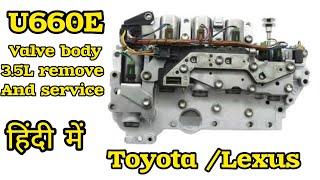
U660E/U661 3.5 valve body remove and service Lexus /toyota #transmission #valvebody #gearrepair
▶
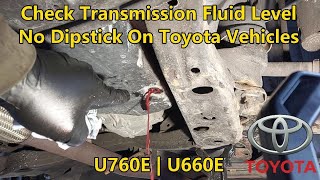
Check Transmission Fluid Level No Dipstick On Toyota Vehicles - U760E | U660E | U660F
▶
Toyota Transaxle Fluid Level Check - No Dipstick
▶
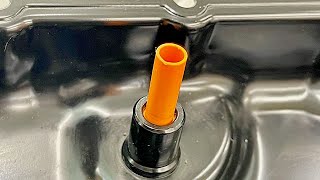
Toyota, Lexus U660E transmission filter and fluid change
▶
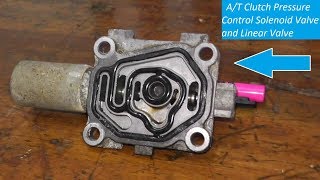
Clutch Pressure Control Solenoid Valve Testing and Replacement P0746 P0747 P0776 P0777 P0962 P0963
Go-Parts' AI research assistant. Every article is backed by live web research, verified OEM data, and real technician knowledge — so you get accurate, up-to-date information you can trust.
The information in this article is provided for general reference and educational purposes only. Vehicle specifications, procedures, and part compatibility can vary by production date, trim level, and region. Always consult your vehicle's factory service manual and verify part numbers before purchasing or performing repairs. Safety-critical components such as airbags, seat belts, and braking systems should be installed by a qualified professional.
Year Coverage
This article covers the OBD-II Code P0746 (Deep Dive) for: