

P0746 on 2012-2017 Toyota Camry 2.5L: Pressure Control Solenoid 'A' Causes and Fixes
P0746 on a 2012-2017 Toyota Camry usually means the 'SL1' pressure control solenoid is failing, is stuck off, or there's an issue with the transmission fluid. The most common fix is replacing the faulty solenoid inside the transmission pan, a job that requires dropping the valve body and is best left to a professional.
- P0746 on your Camry points to a problem with the SL1 shift solenoid, which controls gear changes.
- Before attempting any major repairs, the first step should always be to check the transmission fluid level and condition, as low or dirty fluid is a common cause.
- The most likely fix is replacing the SL1 solenoid, which is located inside the transmission oil pan on the valve body.
- Due to the complexity of accessing internal transmission parts, this repair is not recommended for a DIY beginner and should be handled by a qualified mechanic.
- Continuing to drive with this code can lead to severe and expensive transmission damage.
What's Unique About the 2012-2017 Toyota Camry
The 2012-2017 Camry (XV50 generation) uses a 6-speed automatic transmission (U760E) made by Aisin, which is generally robust. However, this transmission is known for developing a torque converter shudder at higher mileage (80k-120k miles), which prompted Toyota to issue service bulletins (T-SB-0312-17) involving fluid flushes and updated control logic. While that issue is distinct from P0746, it highlights the transmission's sensitivity to fluid condition and control software. For P0746 specifically, the fault is most often a direct failure of the SL1 solenoid itself or contamination in the fluid causing it to stick, rather than a more complex systemic issue.
Symptoms You May Notice
- Check Engine Light is on
- Harsh, abrupt, or delayed shifting.
- Transmission slipping or getting stuck in one gear.
- Vehicle enters 'limp mode' (reduced power).
- Increased fuel consumption.
- Transmission may overheat.
- An unusual roaring sound coming from the vehicle (as reported in NHTSA ODI #11639882).
- Replacing the entire transmission without first diagnosing the specific solenoid or fluid issue.
- Replacing the TCM/ECM when the problem is a much cheaper wiring or solenoid fault.
- Mistaking a torque converter shudder (a separate common issue) for a solenoid failure, or vice-versa, without proper diagnosis.
Most Likely Causes
- Low or Dirty/Contaminated Transmission Fluid 🔴 High Probability → Shop Transmission Assembly While Toyota calls the fluid 'lifetime', it breaks down over time. Contaminated or burnt fluid can clog the fine passages in the valve body and cause solenoids to stick.
How to confirm: Check the transmission fluid level and condition. The fluid should be at the correct level and appear clean and pink/red. Dark, burnt-smelling fluid indicates a problem. Note: These transmissions have a sealed system without a traditional dipstick, requiring a specific procedure involving an overflow plug and checking the fluid at a specific temperature (typically around 95-113°F or 35-45°C).
Typical fix: Perform a transmission fluid drain and fill using only Toyota World Standard (WS) fluid. If the fluid is very dirty, a full flush may be considered, but this can sometimes cause issues on high-mileage transmissions that haven't been regularly serviced.
Est. part cost: $50-$150 for fluid - Faulty Pressure Control Solenoid 'A' (SL1) 🔴 High Probability → Shop Transmission Valve Body Solenoids are electro-mechanical parts that wear out. The internal coil can fail electrically, or the mechanical plunger can get stuck due to debris in the fluid. NHTSA ODI #11644315 describes a similar failure on a related Toyota platform where Pressure Control Solenoid "A" was diagnosed as "stuck off."
How to confirm: A technician can perform an active test using a diagnostic tool like Toyota's Techstream to command the solenoid on and off to check its response. The solenoid's resistance can also be tested with a multimeter; it should be between 5.0 and 5.6 ohms at 68°F (20°C).
Typical fix: Replace the faulty SL1 solenoid. This involves dropping the transmission pan and removing the valve body to access the solenoid.
Est. part cost: $150-$300 for an OEM solenoid - Clogged Transmission Filter or Blocked Valve Body 🟡 Medium Probability → Shop Transmission Assembly Clutch material and other fine metallic debris naturally accumulate over time, which can clog the transmission filter or the small channels within the valve body, restricting fluid flow and causing solenoids to malfunction.
How to confirm: This is usually found during the process of replacing a solenoid. Debris will be visible in the transmission pan and on the pan magnets, and the filter may look dark and clogged.
Typical fix: Replace the transmission filter and clean the valve body passages. In severe cases, the entire valve body may need to be replaced.
Est. part cost: $30-$80 for a filter and gasket kit - Wiring or Connector Issues ⚪ Low Probability Heat and vibration can cause wires leading to or inside the transmission to become brittle, frayed, or shorted over time. Corrosion at the main connector can also interrupt signals.
How to confirm: Visually inspect the external wiring harness for damage. A technician would need to test for continuity and shorts between the TCM/ECM and the transmission connector pins for the SL1 solenoid.
Typical fix: Repair or replace the damaged section of the wiring harness or the connector.
Est. part cost: $20-$500 depending on the extent of damage
Rare But Worth Checking
- Faulty Transmission Control Module (TCM/ECM): → Shop Transmission Assembly This is rare and should only be considered after all other possibilities (fluid, solenoid, wiring) have been thoroughly ruled out. A failure in the module's driver circuit can prevent it from properly commanding the solenoid.
- Internal Transmission Mechanical Failure: → Shop Transmission Assembly If there is a large amount of metal debris in the transmission pan, it could indicate a more severe mechanical failure like a worn clutch pack, damaged pump, or failed torque converter, which would require a full transmission rebuild or replacement. NHTSA ODI #11639882 notes a case where P0746 was present alongside other codes and resulted in a diagnosis of total transmission failure.
Diagnosis Steps
- Scan the system for any other related trouble codes. If other DTCs are present, troubleshoot them first as they may be the root cause.
- Check and verify the transmission fluid level and condition. This is a sealed transmission, so it requires a specific procedure involving bringing the fluid to a specific temperature (e.g., 95-113°F) and using the overflow tube.
- Using a professional scan tool (like Toyota Techstream), perform an active test on the SL1 solenoid to see if it responds to commands while driving. This helps determine if the solenoid is mechanically stuck or if there's a control issue.
- If the active test fails or is inconclusive, drop the transmission pan to visually inspect the fluid, filter, and check for excessive metal debris on the pan magnets.
- Disconnect and remove the SL1 solenoid from the valve body.
- Test the solenoid's resistance with a multimeter. It should be within the manufacturer's specification of 5.0-5.6 ohms at 68°F (20°C).
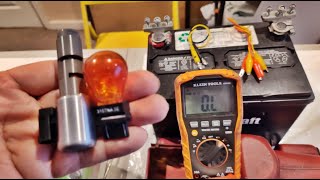
- If resistance is out of spec, the solenoid is bad. If it's within spec, test its mechanical function by applying 12V power (through a 21W bulb) and ground to see if the plunger clicks audibly. 🎬 Watch: How to test Toyota transmission solenoids
- If the solenoid tests good both electrically and mechanically, inspect the wiring harness for any damage, and check the valve body for blockages, scoring, or stuck valves.
- If all components test good, the issue may be with the TCM/ECM or a deeper internal transmission problem.
Parts You'll Likely Need
- Shift Solenoid Valve SL1 (Pressure Control Solenoid 'A')
(OEM #35210-33030)— This specific solenoid is directly identified by the P0746 code on this vehicle and is the most common point of failure. It was previously part number 35210-73010.
Trusted brands: Toyota Genuine, Aisin
OEM price range: $190-$280
Aftermarket price range: $90-$150 - Automatic Transmission Fluid (Toyota WS)
(OEM #00289-ATFWS)— Correct and clean fluid is required for the repair and is critical for the transmission's operation. Only Toyota World Standard (WS) fluid or a fully compatible equivalent should be used.
Trusted brands: Toyota Genuine, Idemitsu TLS-LV, Valvoline MaxLife ATF
OEM price range: $12-$20 per quart
Aftermarket price range: $8-$15 per quart - Transmission Filter and Pan Gasket Kit
(OEM #Filter: 35330-73010, Gasket: 35168-73010)— The filter should always be replaced when the transmission pan is removed to service the solenoids to ensure clean fluid supply.
Trusted brands: Wix, ATP, Toyota Genuine
OEM price range: $50-$80
Aftermarket price range: $25-$50
Related Codes That Often Appear With This One
- P0745 — This code indicates a general electrical circuit malfunction for Solenoid 'A', and an electrical fault can cause the performance fault seen in P0746.
- P0776 — This is a similar performance code but for Pressure Control Solenoid 'B'. If multiple solenoid codes are present, it could point towards a widespread electrical issue, a major fluid problem, or a failing TCM.
Technical Service Bulletins (TSBs) & Recalls
- T-SB-0312-17: Addresses a torque converter shudder on 2012-2014 Camrys with the U760E. While not for P0746, it is a related transmission issue involving fluid and control logic.
- T-SB-0034-14: An earlier, superseded version of the torque converter shudder TSB.
- T-SB-0041-13: Details a fix for a VVT cam gear rattle at cold startup, a common engine issue on this platform.
Mechanic-Grade Diagnostic Values
- SL1 Solenoid Coil Resistance — expected: 5.0 to 5.6 Ω at 20°C (68°F). Failure: Resistance outside of this range indicates a faulty solenoid coil.
- SL1 Solenoid Circuit Continuity at ECM — expected: 5.0 to 5.6 Ω between pins E26-5 (SL1+) and E26-4 (SL1-). Failure: Resistance outside this range points to a wiring issue or a bad solenoid.
- SL1 Solenoid Circuit to Ground — expected: 10 kΩ or higher between pin E26-5 (SL1+) and body ground. Failure: Low resistance indicates a short to ground in the harness or solenoid.
- SL1 Solenoid Commanded State (Techstream Data List) — expected: ON for gears 1-4, OFF for gears 5-6 in drive 'D'. Failure: If the commanded state doesn't match the gear, or if the transmission doesn't shift accordingly during an active test, it points to a control or mechanical issue.
Scan Tool Commands That Help
- Toyota Techstream: Active Test: Control the Shift Position — This allows a technician to manually command gear shifts while driving (above 31 mph) to see if the SL1 solenoid and transmission respond correctly, isolating a mechanical problem from a control problem.
- Toyota Techstream: Utility: Reset Memory — This procedure should be performed after replacing the valve body or solenoids. It clears the transmission's learned values, allowing the TCM to re-adapt to the new components during a specific road test procedure.
- Toyota Techstream: Utility: A/T Code Reset — Used to reset the transaxle compensation code, which may be necessary after replacing major components like the valve body assembly or certain solenoids to ensure the TCM relearns shift characteristics properly.
Wiring & Ground Locations
- ECM Connector E26 — Located at the Engine Control Module (ECM) in the engine bay.. Pins E26-5 (SL1+) and E26-4 (SL1-) are the specific terminals for the SL1 solenoid. A technician can test the entire circuit, including the solenoid and wiring, from this single connector without accessing the transmission itself.
- Transmission Case Connector — On the exterior of the U760E transmission housing.. This is the main electrical connection point for all internal transmission components. A visual inspection is crucial, as loose bolts or corrosion on this connector can cause multiple shifting codes, including P0746.
Real Owner Repair Stories
- YouTube user Gary Ferraro (2010 Toyota Camry 2.5L with U760E (similar platform and issue)) — Check Engine Light with code P2716 (Shift Solenoid 'D' Electrical - which corresponds to the SLT / line pressure solenoid on this model, a similar diagnostic path to SL1).
❌ Tried (didn't work) Replaced the SLT solenoid., Replaced the internal transmission wiring harness.
✅ What actually fixed it The Engine Control Module (ECM/TCM) was the root cause. The ECM continuously monitors the solenoid, and an internal fault in the module's driver circuit was causing it to set the code despite the solenoid and wiring being good. Replacing the ECM with an updated part number (ending in '20' instead of '10') resolved the issue permanently. - NHTSA ODI #11644315 — An owner reported a P0746 code for Pressure Control Solenoid "A" Performance stuck off. A second opinion suggested the issue required a valve body assembly and internal clutch kits.
OEM Part Supersession History
35210-73010→35210-33030— Part has been updated by the manufacturer.
Heads up: The new part number (35210-33030) is the correct replacement for the original.
Model Year Variations Within This Range
- 2012-2014: These model years were specifically cited in TSBs (T-SB-0312-17) for a torque converter shudder issue. While P0746 is a separate problem, it indicates that the transmission control logic and fluid formulation were a focus for Toyota in the early years of this generation, and later models (2015-2017) may have benefited from factory improvements.
Diagnostic Flowchart
Other Known Issues on This Vehicle
Issues unrelated to this code that are worth knowing about as an owner of this generation:
- Torque Converter Shudder 🟠 Medium — Common between 80,000-120,000 miles. Feels like driving over rumble strips at 25-50 mph under light load. (Ref: T-SB-0312-17 (supersedes T-SB-0034-14). Recommends ECM logic update and potential torque converter replacement.)
- Melting/Sticky Dashboard 🟡 Low — Widespread issue in high-heat, high-humidity climates, causing a shiny, sticky dashboard surface that creates glare. (Ref: Warranty Enhancement Program ZE6. Offered extended coverage for dashboard replacement, though the program had deadlines and part availability issues.)
- Faulty Door Lock Actuators 🟠 Medium — Very common for one or more door lock actuators to fail, resulting in the door not locking/unlocking electronically. Often preceded by a buzzing noise. (Ref: No recall, but the issue is widely documented by owners and has been the subject of class-action lawsuits.)
- Cold Start VVT Cam Gear Rattle 🟠 Medium — A brief rattle (about half a second) on cold startups, often mistaken for a timing chain issue. Caused by the VVT cam gear losing oil pressure. (Ref: T-SB-0041-13. The fix is to replace the camshaft timing gear assembly.)
- Excessive Oil Consumption 🟡 Low — Some 2AR-FE engines can consume oil due to issues with low-tension piston rings, though it is less prevalent than in the previous 2AZ-FE engine. Regular oil changes are critical.
Used vs. New Parts: Buying Guide for This Vehicle
When a used part is the smart pick: A complete, low-mileage used valve body assembly from a reputable JDM importer or a verified wreck could be a cost-effective alternative to replacing individual solenoids, especially if valve body bore wear is suspected. A complete used transmission is also a viable option if significant metal debris is found in the pan, indicating widespread internal failure.
Donor-vehicle mileage cap: roughly under 60000 miles for the part to have meaningful remaining life.
What to inspect on the donor part:
- Verify the donor vehicle's mileage (look for importers who provide this).
- Inspect the fluid color and smell from the donor transmission if possible. It should not be dark brown or burnt.
- Check all electrical connectors for corrosion, bent pins, or cracks.
- Ensure the valve body comes with a short warranty or return policy.
OEM-only on this vehicle (don't cheap out):
- Shift Solenoid (SL1): Due to the precise nature of hydraulic control, using a genuine Toyota or Aisin (the OEM manufacturer) solenoid is highly recommended to avoid performance issues.
- Transmission Control Module (ECM/TCM): If the module is the fault, a new or professionally remanufactured unit is the safest bet. Used modules can be problematic and may require special programming.
Aftermarket brands forum-validated for this vehicle:
- Sonnax: Known for producing high-quality valve body repair kits and upgraded components that address known wear points in the U760E.
Brands owners have reported issues with on this vehicle:
- Unbranded, no-name solenoid kits from online marketplaces. While cheap, their calibration and longevity are highly questionable and can cause more shifting problems than they solve.
Real Owner Stories
Aggregated from forums and TSBs cited above. Mileages and costs reflect what owners reported in those sources.
2012-2014 Toyota Camry 2.5L — ~100000 miles
Symptoms: Owners reported a transmission shudder that felt like driving over rumble strips at speeds between 25-50 mph under light load.
What fixed it: A software update to the ECM logic combined with a full transmission fluid exchange and the addition of extra magnets to the pan to capture debris.
Source hint: BobIsTheOilGuy thread 'Toyota Transmission Shudder TSB - Protect Yourself'
Toyota Camry — NHTSA ODI #11639882
Symptoms: An owner noticed an unusual roaring sound coming from the vehicle. Diagnostic scanning displayed error codes P0746, P27137f, and P08BB.
What fixed it: The vehicle was taken to a dealer where it was diagnosed with total transmission failure.
Related OBD-II Codes
Frequently Asked Questions
Does the torque converter shudder TSB T-SB-0312-17 apply to my 2012-2014 Camry?
Can I check the transmission fluid level myself on a 2015 Camry 2.5L?
What specific transmission fluid should I use for my 2AR-FE Camry to avoid solenoid issues?
Is there a specific electrical test for the SL1 solenoid on this model?
My dashboard is sticky and creating a glare; is this related to my transmission code?
Why did my Camry enter 'limp mode' when the P0746 code triggered?
Helpful Videos


We Have This Part in Stock

The information in this article is provided for general reference and educational purposes only. Vehicle specifications, procedures, and part compatibility can vary by production date, trim level, and region. Always consult your vehicle's factory service manual and verify part numbers before purchasing or performing repairs. Safety-critical components such as airbags, seat belts, and braking systems should be installed by a qualified professional.
- Toyota Camry:
- 🧭 Diagnostic Flowchart
- 🎬 Helpful Videos
- 🛍️ Shop This Part
- What's Unique About the 2012-2017 Toyota Camry
- Symptoms You May Notice
- Most Likely Causes
- Rare But Worth Checking
- Diagnosis Steps
- Parts You'll Likely Need
- Related Codes That Often Appear With This One
- Technical Service Bulletins (TSBs) & Recalls
- Mechanic-Grade Diagnostic Values
- Scan Tool Commands That Help
- Wiring & Ground Locations
- Real Owner Repair Stories
- OEM Part Supersession History
- Model Year Variations Within This Range
- Other Known Issues on This Vehicle
- Used vs. New Parts: Buying Guide for This Vehicle
- Real Owner Stories
- 2012-2014 Toyota Camry 2.5L — ~100000 miles
- Toyota Camry — NHTSA ODI #11639882
- Related OBD-II Codes
- Frequently Asked Questions
- 🎟️ Get 5% Off