

P0746 on 2013-2018 Toyota RAV4: Pressure Control Solenoid 'A' Causes and Fixes
On a 2013-2018 RAV4, code P0746 is most often caused by low or dirty transmission fluid, or a failing shift solenoid (SL1). A transmission fluid and filter change is the first step, but you may need to replace the solenoid, which is located inside the transmission pan and is accessible after removing it.
- P0746 on your RAV4 points to a performance issue with Shift Solenoid SL1, which controls gear shifting.
- The most common causes are old/dirty transmission fluid or a failed solenoid; start your diagnosis by checking the fluid.
- Driving with this code can lead to severe transmission damage. The vehicle may shift erratically or get stuck in one gear.
- Repair involves dropping the transmission pan and is best left to a professional or experienced DIYer.
- Always use Toyota World Standard (WS) transmission fluid for this repair to ensure proper transmission function.
What's Unique About the 2013-2018 Toyota RAV4
The 2013-2018 RAV4 uses the U760E (FWD) or U760F (AWD) 6-speed automatic transmission. While generally reliable, this code often points to issues that can be resolved without a full transmission replacement. The problem is frequently related to the condition of the transmission fluid or the solenoid itself, rather than a major mechanical failure. One source specifically noted that this generation of RAV4 can be prone to P0746 due to a shorted wire in the pressure control solenoid circuit. It's crucial to follow a logical diagnostic path starting with the fluid, as owners who jump to conclusions can waste money on unnecessary parts. With higher mileage, valve body wear can also become a concern in these transmissions.
Symptoms You May Notice
- Harsh, erratic, or delayed gear shifts.
- Transmission slipping (engine RPMs rise without an increase in speed).
- Vehicle enters 'limp mode,' often getting stuck in a single gear.
- Check Engine Light and/or Transmission Warning Light is on.
- Noticeable loss of power.
- Increased fuel consumption.
- Transmission may overheat.
- Replacing the transmission immediately without diagnosis. Many shops may recommend a full transmission replacement, but the issue is often a much cheaper component like a solenoid or even just old fluid.
- Replacing the solenoid without checking the fluid first. Always start with the simplest and most common cause, which is the fluid level and condition.
- Confusing P0746 with torque converter shudder. While both are transmission issues on this platform, the shudder is a distinct problem, often felt at 25-50 mph under light throttle, and is addressed by TSB T-SB-0023-15, which may involve a software update or torque converter replacement.
Most Likely Causes
- Low or Contaminated Transmission Fluid 🔴 High Probability → Shop Transmission Assembly The U760E/F is a 'sealed' transmission without a dipstick, which can lead to neglected fluid service. Over time, the fluid breaks down and accumulates clutch material and metal shavings. This dirty fluid can clog the fine passages in the valve body and cause solenoids to stick. Using fluid other than Toyota WS can also cause issues.
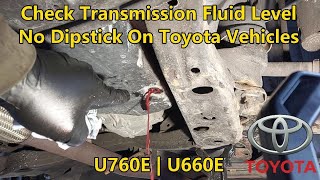
How to confirm: Check the transmission fluid level and condition via the overflow and fill plugs. 🎬 Watch: How to check fluid levels on this sealed transmission. This requires the vehicle to be level and the fluid to be at a specific temperature. The fluid should be pink/red in color and have no burnt smell. Dark, brown, or black fluid with a burnt odor indicates a problem.
Typical fix: Perform a transmission fluid drain-and-fill or a full fluid exchange. It is critical to use only Toyota World Standard (WS) automatic transmission fluid.
Est. part cost: $70-$150 for fluid - Faulty Shift Solenoid 'A' (SL1) 🔴 High Probability → Shop Transmission Valve Body The solenoid is an electromechanical part that can fail from heat and vibration over many miles, either by sticking mechanically or developing an internal electrical fault. 🎬 See this breakdown of P0746 causes and solenoid fixes.
How to confirm: After dropping the transmission pan, the solenoid can be tested. Check its resistance with a multimeter (for Toyota, it should be around 5.0-5.6 ohms at 68°F/20°C). You can also apply 12V power (with a 21W bulb in series) to see if it makes a 'click' sound, indicating the plunger is moving.
Typical fix: Replace the faulty shift solenoid (SL1). This part is located on the valve body and is accessible after removing the transmission oil pan.
Est. part cost: $100-$250 - Clogged Transmission Filter or Valve Body 🟡 Medium Probability → Shop Transmission Assembly If the transmission fluid isn't changed regularly, the filter can become saturated with debris, restricting fluid flow. This debris can also clog the narrow channels within the valve body, preventing correct hydraulic pressure. Valve body wear is a known issue on higher mileage U760E transmissions.
How to confirm: Visually inspect the transmission filter and valve body when the oil pan is removed. Look for thick sludge or metal particles on the filter and in the pan magnets. Inspect valve body passages for blockages.
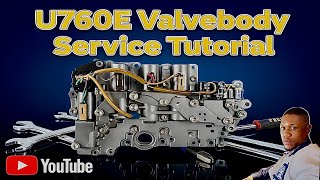
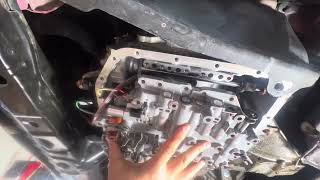
Typical fix: Replace the transmission filter and clean the valve body passages with an appropriate solvent. In severe cases, the entire valve body assembly may need to be replaced. 🎬 Watch: Step-by-step guide to removing the RAV4 valve body.
Est. part cost: $30-$60 for a filter kit; $300+ for a valve body
Rare But Worth Checking
- Damaged Wiring or Connectors: A shorted wire in the pressure control solenoid circuit has been specifically cited as a cause for P0746 on the 2018 RAV4. A visual inspection of the harness for frays, corrosion, or loose connections, both externally and inside the pan, is worthwhile before replacing major parts. A flooded vehicle, for example, can have widespread wiring issues.
- Failing Transmission Control Module (TCM) / ECM: → Shop Transmission Assembly This is very rare. The module that controls the transmission can fail, but all other possibilities, especially fluid, solenoids, and wiring, should be exhausted before considering replacing the computer.
- Internal Mechanical Failure: If multiple solenoid codes appear at once, it could indicate a more severe internal problem like a failing clutch pack or transmission pump, which would require a full rebuild or replacement.
Diagnosis Steps
- Check and verify the transmission fluid level and condition. This is a complex procedure on a sealed transmission and must be done at a specific fluid temperature.
- Use an OBD-II scanner to check for any other codes. Address other codes first, especially any related to power or other transmission solenoids.
- If possible, use an advanced scan tool (like Toyota Techstream) to monitor live transmission data and perform an 'Active Test' to command the SL1 solenoid on and off, observing if the transmission responds.
- Lift the vehicle and visually inspect the transmission wiring harness and connectors for any signs of damage, corrosion, or looseness.
- Drop the transmission oil pan. Inspect the magnets in the pan for excessive metal shavings. A fine metallic paste is normal, but large chunks are not.
- Remove and replace the transmission filter.
- Locate and remove the SL1 shift solenoid from the valve body.
- Test the old solenoid's resistance with a multimeter (target: 5.0-5.6 Ω at 20°C/68°F).
- Test its mechanical function by applying a 12V source (with a 21W bulb in series per service manual) and listening for a solid click.
- If the solenoid tests bad, replace it. If it tests good, the problem is likely a blockage in the valve body or a wiring issue.
- Reinstall the pan with a new gasket, install the new solenoid if needed, and fill with the correct amount of Toyota WS transmission fluid.
- Clear the codes and perform a test drive to see if the issue is resolved.
Parts You'll Likely Need
- Shift Solenoid 'A' (SL1) — This is the specific solenoid identified by the P0746 code. It is the most likely component to have failed if the transmission fluid is clean and at the proper level.
Trusted brands: Aisin, Rostra, Toyota Genuine
OEM price range: $150-$250
Aftermarket price range: $80-$150 - Automatic Transmission Fluid (Toyota WS)
(OEM #00289-ATFWS)— Low, old, or contaminated fluid is a primary cause of this code. A fluid change is required for any repair involving dropping the pan. Using the correct OEM fluid is critical for Toyota transmissions.
Trusted brands: Toyota
OEM price range: $12-$20 per quart - Transmission Valve Body Assembly
(OEM #35410-42050)— In cases of severe contamination, internal valve body wear, or if multiple solenoids are failing, replacing the entire valve body assembly (which includes new solenoids) may be necessary.
Trusted brands: Toyota Genuine
OEM price range: $800-$1200
Related Codes That Often Appear With This One
- P0700 — This is a generic 'Transmission Control System Malfunction' code. It often appears alongside more specific transmission codes like P0746 to indicate a fault has been registered by the TCM.
- P2714 — This code is for 'Pressure Control Solenoid 'D' Performance/Stuck Off'. Seeing it with P0746 suggests a widespread hydraulic issue, possibly from severely contaminated fluid or a failing valve body affecting multiple solenoids.
- P0745, P0747, P0748, P0749 — These are all codes related to Pressure Control Solenoid 'A', indicating circuit malfunctions, high voltage, or being stuck 'on'. Seeing them helps narrow down whether the issue is electrical or mechanical.
Technical Service Bulletins (TSBs) & Recalls
- T-SB-0023-15: Addresses an intermittent shudder felt under light throttle between 25-50 mph on 2013-2015 RAV4s. The fix involves reprogramming the ECM and potentially replacing the torque converter. This is a separate issue from P0746 but is a critical distinction to make during diagnosis.
- T-SB-0077-16: This TSB is for 2016-2017 Tacoma trucks but is a good example of Toyota issuing software updates to fix transmission complaints like harsh shifts, delayed engagement, and gear hunting. While not directly for the RAV4 P0746, it shows a precedent for software-based transmission fixes.
Platform-Specific Known Issues
- A Warranty Enhancement Program (ZE6) was issued for 2013-2015 RAV4s for a torque converter 'shudder' under light throttle. While not directly for P0746, it highlights known drivability issues with the U760 transmission and may involve a software update or torque converter replacement that could be relevant if you experience shuddering.
Mechanic-Grade Diagnostic Values
- Shift Solenoid 'A' (SL1) resistance — expected: 5.0 to 5.6 Ω at 20°C (68°F). Failure: A reading outside this range indicates an internal electrical fault in the solenoid.
- Shift Solenoid 'A' (SL1) voltage at transmission case connector — expected: Approximately 5-6 volts in 1st gear, dropping to 0 volts on a shift to 2nd gear.. Failure: Voltage that does not change when a shift is commanded points to a wiring or ECM/TCM issue.
- Shift Solenoid 'A' (SL1) bench test — expected: A distinct 'click' sound when 12V is applied to terminal 2 (+) and terminal 1 (-) of the solenoid connector.. Failure: No sound indicates the solenoid's internal plunger is mechanically stuck.
Hidden / Shadow Codes Worth Checking
- Pending Fault Code: The ECM does not set the MIL on the first sign of trouble. It first sets a temporary flag. If the same fault is detected on a second consecutive driving cycle, it stores a 'pending fault code' and illuminates the MIL. This means the problem had to occur at least twice in a specific pattern to be registered. (see via A standard OBD-II scanner can read pending codes.)
Scan Tool Commands That Help
- Toyota Techstream / GTS: Active Test: Control the Shift Position — This function allows the technician to manually command the transmission to shift into different gears, bypassing the normal automatic shifting logic. It is used to confirm if the SL1 solenoid is capable of performing its function when directly commanded. By comparing the commanded gear on the scan tool to the actual gear the vehicle is in, you can verify if the solenoid is stuck on or off.
Wiring & Ground Locations
- Transmission Case Connector (SL1) — External connector on the transmission housing.. Terminals 5 and 10 of this connector are the specific pins to back-probe with a voltmeter to test the voltage being sent to the SL1 solenoid from the ECM/TCM during operation.
- SL1 Solenoid Connector — On the solenoid itself, inside the transmission oil pan, attached to the valve body.. Terminals 1 (ground) and 2 (power) are used for bench testing the solenoid with a 12V source to check for mechanical operation (the 'click' test).
"I Checked Everything" — The Actual Cause
- In some cases involving harsh downshifts on the U760E transmission, the root cause is not in the transmission at all. A dirty throttle body or failing Mass Air Flow (MAF) sensor can cause the engine to allow too much air in during coasting. The ECM interprets this as light throttle application and commands higher line pressure in the transmission, resulting in harsh downshifts that can be mistaken for a solenoid or valve body problem.
Model Year Variations Within This Range
- 2013-2015 vs 2016-2018: The RAV4 received a facelift for the 2016 model year which included improved sound insulation and updated styling. Some anecdotal reports mention that the 6-speed automatic in earlier 2013-2015 models could be prone to whining. However, reports of hard shifting and stuttering have been noted by owners of both pre-facelift (2013) and post-facelift (2017) models, suggesting the underlying transmission vulnerabilities may persist across the entire generation.
Diagnostic Flowchart
Other Known Issues on This Vehicle
Issues unrelated to this code that are worth knowing about as an owner of this generation:
- Torque Converter Shudder 🟠 Medium — Common on 2013-2015 models, typically felt between 25-50 mph under light throttle, described as driving over rumble strips. (Ref: T-SB-0023-15; Warranty Enhancement Program POL17-03 extended coverage.)
- Infotainment System Glitches 🟡 Low — Frequently reported after 40,000 miles. Includes unresponsive touchscreens, system reboots, and Bluetooth connectivity problems. (Ref: Software updates were released but may not fix all issues.)
- Power Liftgate Malfunction 🟡 Low — Some 2015-2017 models experience glitches or failure of the power liftgate, especially in cold weather.
- Battery Hold-Down Short Circuit Risk 🔴 High — Affects 2013-2018 models where certain replacement 12V batteries can shift and contact the hold-down bracket, creating a fire risk. (Ref: NHTSA Recall 23V-720.)
- Minor Oil Leaks 🟡 Low — Not widespread, but some owners report minor leaks from the timing cover, oil pan, or engine oil pressure sensor over the vehicle's life.
Used vs. New Parts: Buying Guide for This Vehicle
When a used part is the smart pick: A complete used valve body assembly from a verified low-mileage donor vehicle can be a cost-effective alternative to a new OEM unit, as it often includes all solenoids. A complete used transmission is also an option if a major internal failure is confirmed.
Donor-vehicle mileage cap: roughly under 80000 miles for the part to have meaningful remaining life.
What to inspect on the donor part:
- Verify the donor vehicle's mileage.
- Ask for service records, specifically looking for transmission fluid changes.
- If possible, inspect the fluid from the donor unit; it should be reddish/pink and not smell burnt.
- Avoid parts from vehicles with salvage titles due to flood or severe impact.
OEM-only on this vehicle (don't cheap out):
- Transmission Fluid (Toyota World Standard 'WS' is mandatory)
- Transmission Control Module (TCM/ECM) due to VIN-specific programming requirements.
Aftermarket brands forum-validated for this vehicle:
- Aisin (often the Original Equipment Manufacturer for Toyota)
Real Owner Stories
Aggregated from forums and TSBs cited above. Mileages and costs reflect what owners reported in those sources.
2018 Toyota RAV4 — 108000 miles
Symptoms: A shudder issue.
What fixed it: The vehicle was diagnosed with a torque converter failure. The dealer quoted a full transmission replacement.
Cost: $8000-$8000
Source hint: CarKiller Forum: 2018 toyota rav 4 trasnmission issue
2004 Toyota RAV4
Symptoms: Vehicle entered limp mode and was slipping between 1st and 2nd gear.
What fixed it: The source describes the symptoms associated with code P0746 but does not state what the final repair was.
Source hint: Reddit: 2004 RAV4 Solenoid issue
Documented NHTSA Reports
Toyota Owner Report
Symptoms: An owner reported an unusual roaring sound coming from the vehicle, accompanied by error codes P0746, P27137f, and P08BB. The vehicle was subsequently diagnosed with transmission failure at the dealership (NHTSA ODI #11639882).
Toyota Owner Report
Symptoms: A report describes code P0746 (Pressure Control Solenoid "A" Performance stuck off). A second opinion suggested the issue involved the valve body assembly and clutch kits inside the transmission (NHTSA ODI #11644315).
Related OBD-II Codes
Frequently Asked Questions
My 2014 RAV4 is shuddering under light acceleration. Is this related to the P0746 code?
What is the correct transmission fluid for my 2016 Toyota RAV4?
How can I check the transmission fluid level on my RAV4 if it doesn't have a dipstick?
Is a faulty valve body a common problem on these RAV4s?
My mechanic tested the SL1 solenoid and it seems okay. What else could be causing P0746?
I saw a TSB for a Tacoma (T-SB-0077-16) that fixed shifting issues with a software update. Is there a similar update for my RAV4 for code P0746?
Helpful Videos

We Have This Part in Stock

The information in this article is provided for general reference and educational purposes only. Vehicle specifications, procedures, and part compatibility can vary by production date, trim level, and region. Always consult your vehicle's factory service manual and verify part numbers before purchasing or performing repairs. Safety-critical components such as airbags, seat belts, and braking systems should be installed by a qualified professional.
- Toyota RAV4:
- 🧭 Diagnostic Flowchart
- 🎬 Helpful Videos
- 🛍️ Shop This Part
- What's Unique About the 2013-2018 Toyota RAV4
- Symptoms You May Notice
- Most Likely Causes
- Rare But Worth Checking
- Diagnosis Steps
- Parts You'll Likely Need
- Related Codes That Often Appear With This One
- Technical Service Bulletins (TSBs) & Recalls
- Platform-Specific Known Issues
- Mechanic-Grade Diagnostic Values
- Hidden / Shadow Codes Worth Checking
- Scan Tool Commands That Help
- Wiring & Ground Locations
- "I Checked Everything" — The Actual Cause
- Model Year Variations Within This Range
- Other Known Issues on This Vehicle
- Used vs. New Parts: Buying Guide for This Vehicle
- Real Owner Stories
- 2018 Toyota RAV4 — 108000 miles
- 2004 Toyota RAV4
- Documented NHTSA Reports
- Toyota Owner Report
- Toyota Owner Report
- Related OBD-II Codes
- Frequently Asked Questions
- 🎟️ Get 5% Off