

P0747 on 2018-2024 Buick Enclave: Pressure Control Solenoid 'A' Stuck On Causes and Fixes
On a 2018-2024 Buick Enclave, code P0747 most often indicates a faulty Pressure Control Solenoid 'A' inside the transmission. However, manufacturer bulletins also point to serious internal mechanical issues like out-of-round snap rings or a broken clutch return spring. A peculiar electrical fault, where a faulty Body Control Module (BCM) prevents the transmission from completing a self-test, can also trigger a false P0747. Diagnosis is critical, as fixes range from a BCM replacement to a complet
- P0747 on a 2018-2024 Enclave is a critical code that should be addressed immediately to prevent severe transmission damage.
- While a faulty solenoid is a common cause, be aware of manufacturer TSBs pointing to more complex issues like internal snap ring failure or BCM electrical faults.
- A 'vehicle will not move' condition is a documented symptom for this code on this vehicle. [PIE0720A]
- Do not assume a major repair is needed without proper diagnosis; the cause could be a specific, documented electrical glitch. [PIP5697E]
- Due to the complexity and potential for major damage, diagnosis and repair by a qualified professional is strongly recommended.
What's Unique About the 2018-2024 Buick ENCLAVE
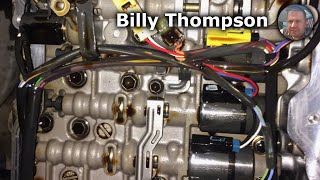
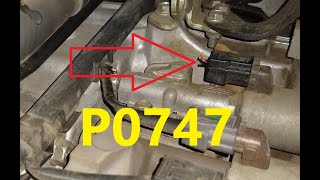
For the 2018-2024 Enclave with the 9T65 transmission, P0747 is not always a simple solenoid failure. General Motors has issued several Technical Service Bulletins (TSBs) highlighting specific, unique causes. One TSB points to out-of-round snap rings deep inside the transmission causing this code, a significant mechanical failure primarily on units built between late 2023 and early 2024. [PIP5974E] Other bulletins document a peculiar electrical issue where a faulty Body Control Module (BCM) fails to supply voltage to the TCM for a sufficient time after engine shutdown. This prevents the TCM from performing its power-down 'dither' self-test, causing it to set a false P0747 on the next startup. [PIP5697B, PIP5697E, 10] These platform-specific issues make professional diagnosis essential 🎬 See this breakdown of common P0747 causes and fixes. to avoid unnecessary repairs.
Diagnostic Flowchart
Tap your situation to follow the diagnostic path that matches what you're seeing on this vehicle.
Symptoms You May Notice
- Vehicle will not move when in Drive or Reverse. [PIE0720A]
- Extremely harsh, jerky, or slamming gear shifts.
- Delayed engagement when shifting from Park into Drive or Reverse.
- Transmission slipping, where engine RPMs rise without an increase in speed.
- Check Engine Light or Transmission Warning Light is on.
- Vehicle may enter 'limp mode,' getting stuck in a single gear.
- Transmission may overheat.
- A rhythmic shudder or vibration during acceleration, sometimes described as driving over rumble strips.
- Replacing the entire transmission without diagnosing specific TSB-related issues. The problem could be an external electrical fault (BCM) that mimics a catastrophic transmission failure.
- Replacing the TCM when the actual fault is with the BCM or the wiring between them, as outlined in TSB #PIP5697E.
- Replacing the pressure control solenoid when the actual fault is a sticking regulator valve within the valve body bore.
Most Likely Causes
- Faulty Pressure Control Solenoid 'A' 🔴 High Probability → Shop Transmission Valve Body Solenoids are a common failure point in modern automatic transmissions due to constant use and exposure to heat and fluid contaminants. They can fail electrically (internal short) or mechanically (stuck plunger).
How to confirm: A technician can command the solenoid on and off with a bi-directional scan tool and monitor pressure readings. Resistance can also be checked with a multimeter (typically 5-7 Ω).
Typical fix: Replace the faulty solenoid. This is often done by dropping the transmission pan and accessing the valve body.
Est. part cost: $50-$150 - Internal Mechanical Failure (Snap Rings or Return Spring) 🟡 Medium Probability Specific GM TSBs identify internal component failures. TSB #PIP5974E points to out-of-round '1-2-3-4-5-6 Clutch Spring Retaining Ring' or '1-2-3-4-5-6 Clutch Backing Plate Retaining Ring' on transmissions built between 10/1/2023 and 4/2/2024. [PIP5974E] TSB #PIE0720A also notes that a broken '1-2-3-4-5-6 clutch piston return spring' can cause a no-move condition with this code. [PIE0720A]
How to confirm: This requires extensive transmission disassembly and inspection. It is typically diagnosed after all external electrical and hydraulic causes are ruled out.
Typical fix: Complete transmission overhaul or replacement to access and replace the failed internal components. GM's guidance under bulletin #20-NA-138 often directs technicians to replace the entire transmission assembly for internal faults rather than repair them.
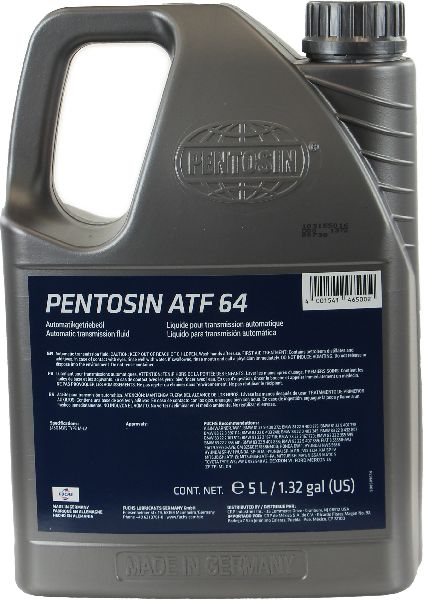
Est. part cost: $1500-$4000+ - Low or Contaminated Transmission Fluid 🟡 Medium Probability → Shop Transmission Assembly
How to confirm: Check the transmission fluid level and condition. Per GM bulletin #22-NA-137, the fluid should be red or dark brown and transparent, not black, and should not smell burnt. Burnt or debris-filled fluid indicates internal clutch damage.
Typical fix: Perform a transmission fluid and filter change. If the fluid is heavily contaminated, it may indicate a more severe internal problem requiring an overhaul.
Est. part cost: $100-$300
Rare But Worth Checking
- Body Control Module (BCM) or Wiring Fault: → Shop Body Control Module TSBs #PIP5697B and #PIP5697E describe a specific scenario where the BCM fails to supply ignition voltage to the TCM for at least 15 seconds after key-off. This interrupts the TCM's power-down self-test, causing a false P0747 on the next startup. Diagnosis involves probing BCM connector X4, terminal 22 (circuit 5985) after key-off to ensure voltage is sustained. If not, and grounds/connections are good, the BCM must be replaced. [PIP5697B, PIP5697E, 10]
- Faulty Transmission Control Module (TCM): → Shop Transmission Assembly While less common, the TCM itself can fail, sending a continuous 'on' signal to the solenoid. This is usually diagnosed after the solenoid, wiring, and BCM have been confirmed to be good.
- Worn Transmission Valve Body: → Shop Transmission Valve Body Even if the solenoid is functional, wear in the valve body bore for the solenoid's regulator valve can cause it to stick. Insufficient balance oil pressure due to this wear can prevent the valve from closing when the solenoid turns off, mimicking a 'stuck on' solenoid. This requires valve body repair or replacement.
Diagnosis Steps
- Check and verify the transmission fluid level and condition. Dark, burnt, or metallic fluid suggests severe internal wear.
- Scan the TCM for codes. Note if P0747 is current or history, and if any other codes (like P0746 or P0700) are present.
- If the code only sets during startup, immediately suspect the BCM issue. Follow the diagnostic procedure in TSB #PIP5697E: After running the engine, turn it off and immediately probe BCM connector X4, terminal 22 (circuit 5985). Verify that voltage (within 4.0V of battery voltage) is present for at least 15 seconds. If it drops out prematurely, inspect BCM power/grounds and replace the BCM if they are good.
- Using a professional scan tool, monitor live transmission data, including line pressure and solenoid command status.
- Perform a bi-directional test to command Solenoid 'A' on and off to see if it responds electrically and if a pressure change is noted.
- Inspect the wiring harness and connectors between the TCM and the transmission for any damage, corrosion, or loose pins.
- If electrical checks pass, the next step is to access the valve body to inspect and test the solenoid directly and check for sticking valves in the valve body itself.
- If the solenoid and valve body are good, the issue is likely a deeper mechanical problem like the out-of-round snap rings (TSB #PIP5974E) or a broken return spring (TSB #PIE0720A), requiring transmission removal and inspection. [PIP5974E, PIE0720A]
Parts You'll Likely Need
- Pressure Control Solenoid
(OEM #Potential P/Ns: 24291625, 24284174, 24278294 (Confirmation for Solenoid 'A' is advised))— This is the most direct cause of the code if it's not a wiring or mechanical issue. The solenoid can fail electrically or mechanically.
Trusted brands: ACDelco
OEM price range: $70-$150
Aftermarket price range: $40-$90 - Body Control Module (BCM) — A known rare cause specific to this platform, as documented in TSBs, where the BCM causes a false P0747 code by interrupting the TCM's self-test procedure. [PIP5697B, PIP5697E, 10]
Trusted brands: ACDelco
OEM price range: $300-$500 - Transmission Snap Ring Kit — Required if the cause is the internal mechanical failure identified in TSB #PIP5974E. [PIP5974E]
Trusted brands: ACDelco
OEM price range: $50-$100
Aftermarket price range: $30-$60
Related Codes That Often Appear With This One
- P0746 — P0746 is for 'Pressure Control Solenoid 'A' Stuck Off'. These codes are often linked in TSBs as they relate to the same component and circuit, just with opposite failure modes. [PIP5974E, PIE0720A, 8]
- P0700 — This is a generic code indicating the TCM has requested the Check Engine Light to be turned on. It will almost always be present alongside a specific transmission code like P0747.
Technical Service Bulletins (TSBs) & Recalls
- PIP5974E: Communicates possible transmission 1-2-3-4-5-6 snap rings out of round causing code P0747.
- PIE0720A: Mentions gathering information regarding Vehicle Will Not Move When in Drive, Neutral and/or Reverse and DTC P0747 Set.
- PIP5697B: Communicates a possible BCM concern if DTC P0747 sets during engine cranking.
- PIP5697E: Communicates a possible BCM and/or circuit 5985 concern if DTC P0747 sets during engine shut down.
- PIE0720: Mentions gathering information regarding Vehicle Will Not Move and DTC P0747 Set.
- 20-NA-136: Provides diagnostic tips and fluid inspection criteria, and previously guided technicians to replace rather than repair transmissions with internal faults.
Platform-Specific Known Issues
- TSB #PIP5974E: Warns that out-of-round 1-2-3-4-5-6 clutch retaining rings can cause P0747, primarily in transmissions built from Oct 2023 to April 2024, indicating a serious internal mechanical fault. [PIP5974E]
- TSB #PIE0720A & #PIE0720: Link code P0747 to a severe 'Vehicle Will Not Move' condition and note that a broken 1-2-3-4-5-6 clutch piston return spring could be the cause, highlighting the critical nature of this fault. [PIE0720A, PIE0720]
- TSB #PIP5697B & #PIP5697E: Document a BCM or wiring (circuit 5985) issue that prevents the TCM from completing its power-down 'dither' test, which can falsely set P0747 on the next startup. [PIP5697B, PIP5697E, 10]
Mechanic-Grade Diagnostic Values
- BCM Accessory Wakeup Signal Voltage (at TCM) — expected: Approximately battery voltage, sustained for at least 15 seconds after ignition off.. Failure: Voltage drops out in less than 15 seconds after key-off, preventing the TCM from completing its power-down self-test.
- Pressure Control Solenoid (PWM Type) Resistance — expected: 3-8 ohms. Failure: Resistance is outside the specified range, indicating a failed solenoid coil.
- Transmission Line Pressure at Idle — expected: Greater than 345 kPa (50 psi). Failure: Pressure below 50 psi indicates a potential issue with the pump or internal leaks.
- Continuity check of wiring harness from TCM to solenoid — expected: Near zero ohms. Failure: High resistance indicates a problem in the wiring itself.
Scan Tool Commands That Help
- GDS2 (GM Diagnostic Software): Solenoid Valve Test / Control Functions — To command individual solenoids on and off to verify their electrical and mechanical response. If the transmission shifts correctly when commanded by GDS2 but not during normal driving, the issue is likely an input (sensor) or control module problem, not an internal transmission failure.
- GDS2 (GM Diagnostic Software): Transmission Service Fast Learn Procedure — After repairs or if a code was only found in history. This procedure helps the TCM relearn adaptive values.
Wiring & Ground Locations
- BCM (Body Control Module) — Located in the center console, accessible by removing the lower panel on the passenger side footwell.. The BCM supplies the accessory wakeup signal to the TCM. A faulty BCM can fail to keep this circuit powered after key-off, leading to a false P0747 code.
- BCM Connector X4, Pin 22 — This is one of the seven multi-pin connectors on the BCM.. This specific pin carries the accessory wakeup signal on circuit 5985 to the TCM. It is the primary test point for diagnosing the BCM-related false P0747 issue described in TSB #PIP5697E.
- Circuit 5985 — This wire runs from the BCM to the TCM. A known area for high resistance or an open circuit is under the driver's sill plate.. This is the accessory wakeup signal circuit. A fault in this wire can prevent the TCM from receiving the necessary voltage from the BCM, causing the P0747 code.
- G103, G104, G105, G106 — These are key chassis and engine ground points. G103 is often at the rear of the left cylinder head. G104/105/106 are typically on the engine block or frame rail near the front of the engine.. Improper battery or module grounding is a known cause for multiple transmission DTCs, including P0747. A GM bulletin specifically notes that grounding cannot be done through the frame rail and must be directly to the engine.
"I Checked Everything" — The Actual Cause
- A common pattern for this code on the Enclave is for a technician to find no issues with the transmission fluid, solenoids, or valve body, only to discover the problem is electrical and external to the transmission. The most notable example is a faulty Body Control Module (BCM) that fails to supply voltage to the TCM for 15 seconds after key-off, preventing a self-test and setting a false P0747. This is documented in TSB #PIP5697E and is a classic case where the transmission itself is healthy.
OEM Part Supersession History
24284174→24291625— Updated design or manufacturer change for the pressure control solenoid.
Model Year Variations Within This Range
- 2024 models (transmissions built 10/1/2023 - 4/2/2024): These specific transmissions are identified in TSB #PIP5974E as being susceptible to out-of-round 1-2-3-4-5-6 clutch snap rings, which can cause code P0747. This points to a specific manufacturing defect rather than typical wear and tear.
Helpful Videos
Used OEM Parts in Stock
New Aftermarket Parts Available

The information in this article is provided for general reference and educational purposes only. Vehicle specifications, procedures, and part compatibility can vary by production date, trim level, and region. Always consult your vehicle's factory service manual and verify part numbers before purchasing or performing repairs. Safety-critical components such as airbags, seat belts, and braking systems should be installed by a qualified professional.
- Buick ENCLAVE:
- 🧭 Diagnostic Flowchart
- 🎬 Helpful Videos
- 🛍️ Shop This Part
- What's Unique About the 2018-2024 Buick ENCLAVE
- Symptoms You May Notice
- Most Likely Causes
- Rare But Worth Checking
- Diagnosis Steps
- Parts You'll Likely Need
- Related Codes That Often Appear With This One
- Technical Service Bulletins (TSBs) & Recalls
- Platform-Specific Known Issues
- Mechanic-Grade Diagnostic Values
- Scan Tool Commands That Help
- Wiring & Ground Locations
- "I Checked Everything" — The Actual Cause
- OEM Part Supersession History
- Model Year Variations Within This Range
- 🎟️ Get 5% Off