

P0747 on 2019-2021 Buick Encore: Causes, TSBs, and Fixes
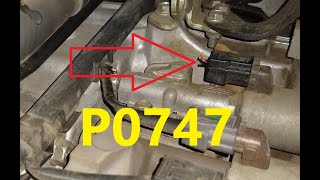
On a 2019-2021 Buick Encore, P0747 indicates the Pressure Control Solenoid 'A' is stuck on. This can be a serious issue, potentially preventing the vehicle from moving. While it can be a faulty solenoid, GM TSBs specifically point to unusual electrical issues with the Body Control Module (BCM) or internal valve body failures as more likely culprits than the solenoid itself.
- P0747 on a 2019-2021 Encore is a critical code that can indicate a severe transmission problem, including the inability to move.
- Do not immediately assume the solenoid is the only problem. GM has identified specific electrical issues with the BCM that can falsely trigger this code.
- Diagnosis is key. Note when the code appears (during driving vs. at startup/shutdown) as this is a crucial clue.
- Due to the potential for serious transmission damage and the complexity of the diagnosis, this code should be addressed by a professional technician immediately.
- Driving with this code is not advised and may lead to being stranded.
What's Unique About the 2019-2021 Buick ENCORE
For the 2019-2021 Encore, which uses a GM 6T40 series transmission, this code is more complex than just a bad solenoid. General Motors has issued several Technical Service Bulletins (TSBs) that highlight unusual causes. Specifically, TSBs #PIP5697C and #PIP5697B note that a faulty Body Control Module (BCM) or an issue in a specific electrical circuit (5985) can trigger P0747. This happens because the BCM fails to supply voltage to the TCM for the required 15 seconds after the ignition is turned off, preventing the TCM from completing its solenoid power-down test. On the next startup, the TCM incorrectly flags a fault. Other bulletins (#PIE0720A) link this code to severe internal mechanical failures that can leave the vehicle unable to move.
Diagnostic Flowchart
Tap your situation to follow the diagnostic path that matches what you're seeing on this vehicle.
Symptoms You May Notice
- Vehicle will not move when placed in Drive, Neutral, or Reverse.
- Harsh or jerky shifting, especially during low RPM upshifts.
- Transmission slipping or failing to engage gears.
- Check Engine Light is illuminated.
- Transmission overheating.
- Vehicle enters 'limp mode,' potentially locking it in a single gear like 5th.
- Delayed engagement when shifting from Park.
- Replacing the pressure control solenoid without checking for the electrical issues mentioned in GM's TSBs. If the code sets at startup and is caused by the BCM's improper power-down sequence, a new solenoid will not fix the problem.
- Replacing the high-pressure transmission pump when the fault is more often related to the solenoid, wiring, or valve body.
Most Likely Causes
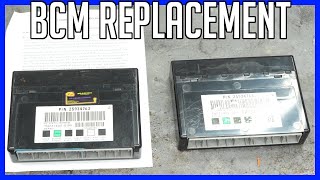
- Body Control Module (BCM) or Circuit Issue 🔴 High Probability → Shop Body Control Module GM TSBs #PIP5697B and #PIP5697C specifically identify this as a primary cause on this platform, especially if the code sets during engine cranking or shutdown. The BCM fails to provide a necessary voltage supply to the TCM for at least 15 seconds post-shutdown, causing a false solenoid fault on the next startup.
How to confirm: A technician must probe the BCM connector (e.g., X4, terminal 22) with a voltmeter. After turning the ignition off, battery voltage should remain present for at least 15 seconds. If it drops immediately, the BCM or its circuit is faulty.
Typical fix: Repair the faulty circuit (e.g., circuit 5985) or replace the Body Control Module. BCM replacement requires programming to the vehicle's VIN.
Est. part cost: $300-$700 - Faulty Transmission Valve Body 🟡 Medium Probability → Shop Transmission Valve Body Wear in the valve body bores can cause valves, such as the solenoid regulator valve, to stick. This prevents the valve from returning to its closed position even when the solenoid deactivates, mimicking a 'stuck on' solenoid. GM has acknowledged this with TSB 24-NA-088 for similar transmissions, recommending valve body replacement.
How to confirm: This is often a diagnosis by elimination. If the BCM, wiring, and fluid are confirmed good, and the solenoid tests okay electrically, the issue is likely hydraulic/mechanical within the valve body. Inspecting the transmission fluid for clutch material can also point to related damage.
Typical fix: Replace the entire transmission control valve body assembly, which often includes the solenoids and TCM. The new assembly must be programmed.
Est. part cost: $600-$1200 - Low or Contaminated Transmission Fluid 🟡 Medium Probability → Shop Transmission Assembly
How to confirm: Check the transmission fluid level and condition. The 6T40 transmission in the Encore is sealed and lacks a dipstick, requiring a technician to perform a level check via a plug on the side of the case. Dark, burnt-smelling fluid, or fluid with metal shavings indicates a problem.
Typical fix: Perform a transmission fluid and filter change using the correct fluid type. If the fluid is heavily contaminated, it often signals a more severe internal issue requiring further inspection.
Est. part cost: $75-$200 - Faulty Pressure Control Solenoid 'A' ⚪ Low Probability → Shop Transmission Valve Body While the code directly names the solenoid, on many modern GM vehicles it is rarely the root cause. It can fail electrically (short/open) or mechanically (stuck plunger), but the BCM and valve body issues are more common for this specific code.
How to confirm: A technician can command the solenoid on and off with a diagnostic scan tool while monitoring transmission pressure. The solenoid's electrical resistance can also be tested (should be 3-5 ohms for a 6T40 pressure control solenoid).
Typical fix: Replace the faulty pressure control solenoid. This is located inside the transmission as part of the valve body assembly (TEHCM).
Est. part cost: $50-$150 - Internal Mechanical Transmission Failure ⚪ Low Probability → Shop Transmission Assembly TSB #PIE0720A links P0747 to a no-move condition, which can be caused by broken internal components like a clutch piston return spring or burnt clutch packs from prolonged incorrect pressure.
How to confirm: If fluid and electronics check out, the transmission must be disassembled for internal inspection. The presence of significant metal debris or clutch material in the transmission pan is a strong indicator.
Typical fix: Rebuild or replace the entire transmission assembly.
Est. part cost: $2500-$5000+
Rare But Worth Checking
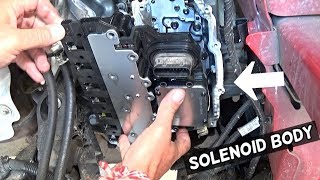
- Faulty Transmission Control Module (TCM): → Shop Transmission Assembly While less common than a solenoid or BCM failure, the TCM itself can malfunction. A faulty driver transistor within the TCM can keep the solenoid energized even when commanded off. In the 6T40, the TCM is integrated with the valve body (called a TEHCM), so it is typically replaced as a single unit. 🎬 Watch: Step-by-step 6T40 TEHCM removal and replacement guide
Diagnosis Steps
- Check the transmission fluid level and condition. Note if it's low, dirty, or smells burnt. This requires a shop procedure as there is no dipstick.
- Use a professional scan tool to check for other DTCs, paying close attention to any codes from the Body Control Module (BCM).
- Review the freeze-frame data to see when P0747 was set. If it occurred during engine cranking or shutdown, immediately suspect a BCM or wiring issue as per TSBs #PIP5697B/C.
- Perform the BCM power-down test: With a voltmeter on the correct BCM terminal, turn the ignition off and verify voltage is supplied to the TCM for at least 15 seconds.
- If the BCM test passes and the vehicle will not move, follow diagnostic paths outlined in TSB #PIE0720A, which may lead to an internal transmission inspection.
- Test the electrical circuit for Pressure Control Solenoid 'A', including the wiring and connectors between the TCM and the solenoid.
- If wiring is intact, use a scan tool to command the solenoid and monitor pressure readings to confirm if it is mechanically stuck.
- If the solenoid, fluid, and external electronics are good, the problem most likely lies with the transmission valve body or a more severe internal mechanical failure.
Parts You'll Likely Need
- Body Control Module (BCM)
(OEM #13521148)— A documented, vehicle-specific cause for this code on the Encore, as cited in GM TSBs #PIP5697B and #PIP5697C.
Trusted brands: ACDelco
OEM price range: $400-$700
Aftermarket price range: $250-$500 - Transmission Control Valve Body with TCM (TEHCM)
(OEM #24287424)— This assembly contains the valve body, solenoids, and TCM. It is often replaced as a unit to fix internal hydraulic sticking issues or TCM faults.
Trusted brands: ACDelco
OEM price range: $650-$900
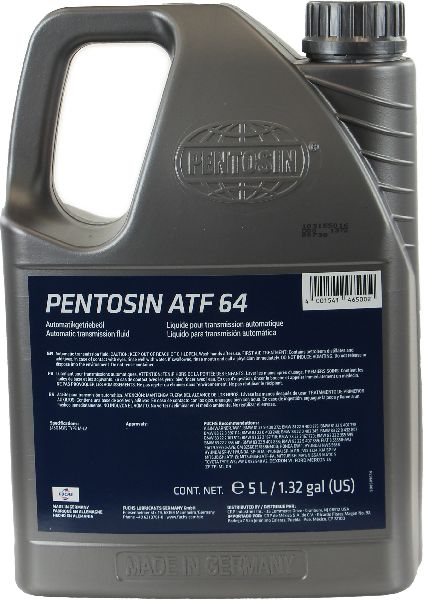
Aftermarket price range: $400-$600 - Transmission Fluid and Filter Kit — Low or dirty fluid is a common cause of solenoid issues and should be addressed as part of any transmission repair.
Trusted brands: ACDelco
OEM price range: $100-$180
Aftermarket price range: $60-$120
Related Codes That Often Appear With This One
- P0746 — This code is for 'Pressure Control Solenoid 'A' Performance/Stuck Off.' TSBs #PIE0720 and #PIE0720A explicitly group P0746 and P0747 together for a 'vehicle will not move' condition, suggesting they point to a related set of serious transmission faults.
- P0700 — P0700 is a generic code indicating the Transmission Control Module (TCM) has requested the Check Engine Light to be turned on. It will almost always be present alongside a specific transmission code like P0747.
Technical Service Bulletins (TSBs) & Recalls
- PIE0720A: Ends an engineering investigation into a 'Vehicle Will Not Move' condition with DTCs P0746/P0747 set.
- PIP5697C: Points to a possible BCM or circuit 5985 concern if P0747 sets during engine shutdown with no other transmission issues present.
- PIE0720: Predecessor to PIE0720A, initiating an investigation into the no-move condition with P0746/P0747.
- PIP5697B: Points to a possible BCM concern if P0747 sets during engine cranking.
- 24-NA-088: A more recent bulletin for similar GM transmissions that identifies a faulty valve body as a likely cause for P0747, often requiring replacement of the valve body assembly.
Platform-Specific Known Issues
- A known issue, documented in TSB #PIP5697C, where a faulty Body Control Module (BCM) or a problem in circuit 5985 can cause DTC P0747 to set. This occurs because the BCM fails to maintain power to the TCM for at least 15 seconds after the ignition is turned off, preventing the TCM from completing its power-down self-test and falsely triggering the code on the next startup.
Mechanic-Grade Diagnostic Values
- Pressure Control Solenoid (PCS) Resistance — expected: 3 to 5 ohms. Failure: A reading outside this range (open or shorted) indicates a failed solenoid.
- Shift Solenoid Resistance — expected: 16 to 20 ohms. Failure: A reading outside this range indicates a failed shift solenoid. Note this is different from the pressure control solenoids.
- BCM Power-Down Voltage to TCM/ECM — expected: Battery voltage (within 4.0V of B+) should be present for at least 15 seconds after the ignition is turned off.. Failure: If voltage drops out immediately after key-off, it indicates a fault in the BCM or circuit 5985.
- Circuit 5985 Load Test — expected: At least 11 volts measured across a 194-style light bulb connected between the circuit and ground.. Failure: If the bulb does not light, or the voltage across it is less than 11V, it indicates high resistance or an open in circuit 5985.
Scan Tool Commands That Help
- GDS2 (or equivalent professional scan tool): Solenoid Cleaning Process — This automated function cycles the solenoids with the system pressurized to dislodge debris that may be causing a valve to stick. It should be performed before major disassembly.
- GDS2 (with tool DT-48616): Solenoid ON/OFF Command — This is used to test the TEHCM (valve body with TCM) outside of the transmission. The scan tool commands a solenoid while a technician monitors an air pressure gauge connected to the corresponding port to see if the valve actuates correctly.
Wiring & Ground Locations
- BCM Connector X4, Pin 22 — At the Body Control Module (BCM). The BCM is typically located behind the driver's side of the dashboard.. This is the specific pin identified in TSB #PIP5697C that supplies keep-alive ignition voltage to the TCM. It must be probed to perform the critical 15-second power-down voltage test.
- Circuit 5985 — This wire runs from the BCM to the TCM and ECM. A known chafe point and area of high resistance is in the harness located under the driver's side door sill plate.. This is the 'accessory wakeup' circuit. An open or high resistance in this wire will prevent the BCM from keeping the TCM powered during its self-test, causing a false P0747 at the next startup.
OEM Part Supersession History
24287424→24041960— Part has been updated or replaced by the manufacturer.
Helpful Videos


Used OEM Parts in Stock
New Aftermarket Parts Available



The information in this article is provided for general reference and educational purposes only. Vehicle specifications, procedures, and part compatibility can vary by production date, trim level, and region. Always consult your vehicle's factory service manual and verify part numbers before purchasing or performing repairs. Safety-critical components such as airbags, seat belts, and braking systems should be installed by a qualified professional.
- Buick ENCORE:
- 🧭 Diagnostic Flowchart
- 🎬 Helpful Videos
- 🛍️ Shop This Part
- What's Unique About the 2019-2021 Buick ENCORE
- Symptoms You May Notice
- Most Likely Causes
- Rare But Worth Checking
- Diagnosis Steps
- Parts You'll Likely Need
- Related Codes That Often Appear With This One
- Technical Service Bulletins (TSBs) & Recalls
- Platform-Specific Known Issues
- Mechanic-Grade Diagnostic Values
- Scan Tool Commands That Help
- Wiring & Ground Locations
- OEM Part Supersession History
- 🎟️ Get 5% Off