

P0747 on 2019-2024 Cadillac XT4: Pressure Control Solenoid 'A' Stuck On Causes and Fixes
On a 2019-2024 Cadillac XT4, code P0747 usually indicates a serious internal transmission problem, not just a bad solenoid. Manufacturer bulletins point to issues like faulty snap rings or clutch retaining rings within the 9T50 transmission. This requires professional diagnosis involving potential transmission disassembly and is not a simple DIY fix.
- P0747 on a Cadillac XT4 is a critical code that should be addressed immediately.
- The cause is often a significant internal mechanical failure specific to this transmission, as documented in multiple GM service bulletins.
- Do not assume the solenoid is the problem; a thorough diagnosis is required to differentiate between an internal failure, a solenoid/valve body issue, or a rare electrical fault.
- This is not a DIY-friendly repair. Professional service is strongly recommended to prevent further damage and ensure the correct fix.
What's Unique About the 2019-2024 Cadillac XT4
The 2019-2024 Cadillac XT4 uses a GM 9-speed 9T50 automatic transmission (RPO code M3H). While P0747 can be a simple solenoid failure on many vehicles, on this specific platform, General Motors has issued multiple Technical Service Bulletins (TSBs) linking this code to known internal mechanical weaknesses. These include out-of-round snap rings and improperly seated clutch spring retaining rings, which are more severe issues than a simple electronic fault. This issue is common enough that GM has actively gathered field data on vehicles that exhibit a no-move condition 🎬 See how internal mechanical failures cause a no-move condition. along with this code. [PIE0720A]
Diagnostic Flowchart
Tap your situation to follow the diagnostic path that matches what you're seeing on this vehicle.
Symptoms You May Notice
- Vehicle will not move when put in Drive or Reverse. [PIE0720A, 3]
- Extremely harsh or slamming shifts, especially when moving from Park into gear.
- Delayed engagement when shifting into Drive or Reverse.
- Check Engine Light or Malfunction Indicator Lamp (MIL) is illuminated. [N202321843 01]
- Transmission may feel like it's slipping, where engine RPMs rise without a corresponding increase in vehicle speed.
- Vehicle may enter a "limp mode" with limited gear availability, sometimes defaulting to 5th gear.
- A complete loss of forward gears, with only Reverse working, or vice-versa.
- A buzzing or clicking noise from the transmission area after the engine is shut off, which can be a normal characteristic of the TCM's power-down solenoid 'dither' test but is worth noting.
- Replacing only the pressure control solenoid when the actual fault is a worn valve bore within the valve body, requiring full valve body replacement.
- Replacing the transmission high-pressure pump when the actual fault is a less expensive solenoid, wiring issue, or internal ring failure.
- Performing a costly transmission rebuild for an internal fault when the root cause is the electrical issue described in TSB #PIP5697E related to the BCM.
Most Likely Causes
- Internal Mechanical Failure (Snap or Retaining Rings) 🔴 High Probability Multiple manufacturer TSBs (#PIP5974E, #N202321843 01) identify faulty/out-of-round snap rings and improperly seated clutch spring retaining rings as a specific cause for this code on this transmission family. TSB PIP5974E specifically notes this issue for transmissions built between October 2023 and April 2024.
How to confirm: Requires professional diagnosis, likely involving transmission disassembly and inspection after ruling out other causes. The technician will inspect the 1-2-3-4-5-6 clutch assembly for broken or out-of-place rings.
Typical fix: Requires internal transmission repair to replace the failed components. This may involve a full rebuild kit. In some cases, a full transmission replacement may be more cost-effective or recommended by the dealer.
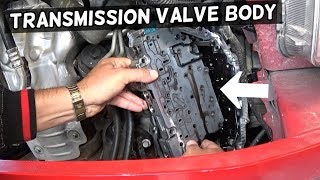
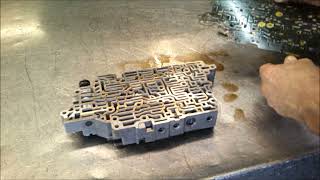
Est. part cost: $50-$250 for internal components/rebuild kits, but labor is very high. - Failed Pressure Control Solenoid 'A' / Valve Body 🟡 Medium Probability → Shop Transmission Valve Body While less common than the mechanical faults on this platform, solenoids are electro-mechanical parts that can fail from heat and wear. Contaminated fluid can cause the internal plunger to stick. However, experts note that on GM's 9 and 10-speed transmissions, the solenoids themselves are robust and rarely fail; the issue is more often in the valve body bores or related hydraulics.
How to confirm: A technician can use a bi-directional scan tool to command the solenoid on and off while monitoring transmission pressure data. The solenoid's electrical resistance can also be tested. If the solenoid tests okay, the issue may be a stuck valve within the valve body itself.
Typical fix: Replacement of the entire solenoid body (valve body assembly) is the standard repair. This assembly contains all the solenoids and valves as a single unit.
Est. part cost: $290-$600 for a valve body/solenoid assembly. - Low or Contaminated Transmission Fluid 🟡 Medium Probability → Shop Transmission Assembly Low fluid levels can cause pressure issues, while old, dirty fluid can cause solenoids and valves to stick or clog hydraulic passages. The fluid level must be checked at a specific temperature (85–95°C / 185–203°F) to be accurate.
How to confirm: Check the transmission fluid level and condition according to the manufacturer's procedure, which requires the vehicle to be level and at a specific operating temperature. The fluid should be red and translucent, not dark brown, black, or burnt-smelling.
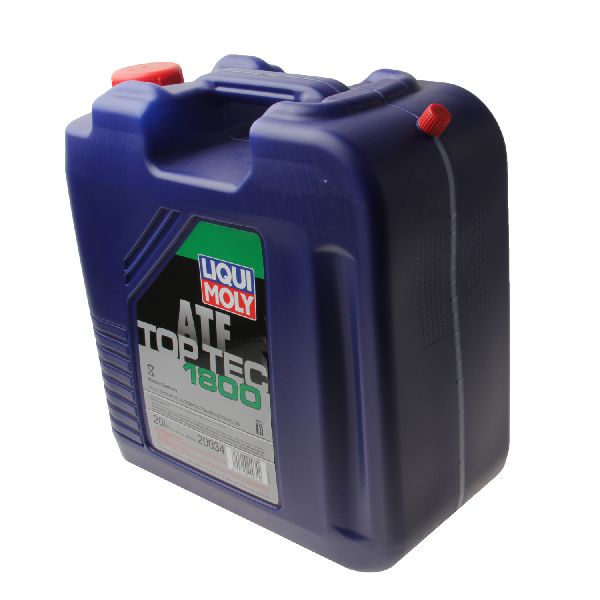
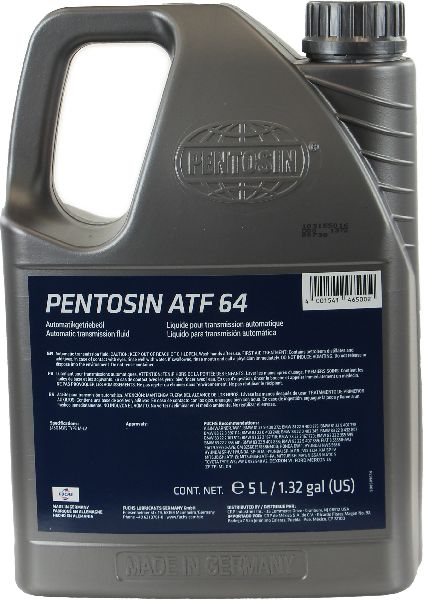
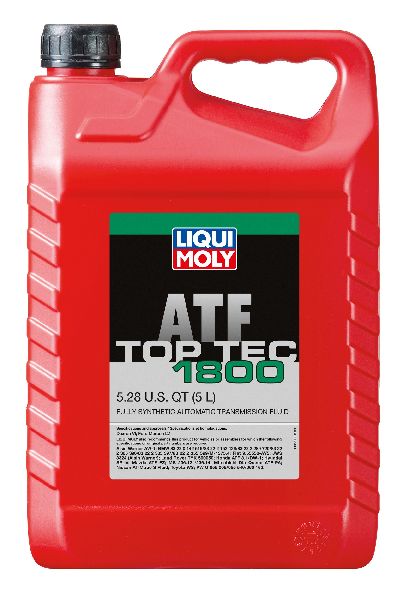
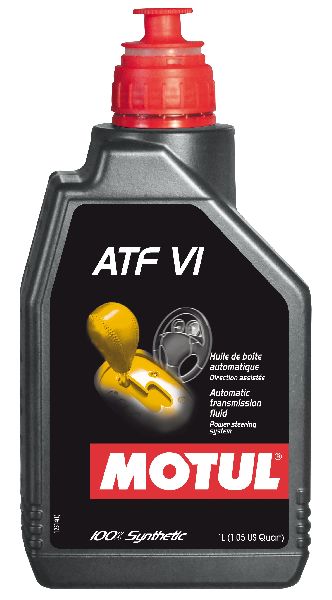
Typical fix: Perform a transmission fluid and filter change. If the fluid is heavily contaminated, it may be a symptom of a larger internal failure (like a failing clutch pack).
Est. part cost: $100-$250 for fluid and filter. - Body Control Module (BCM) or Wiring Issue ⚪ Low Probability → Shop Body Control Module TSB #PIP5697E specifically notes that if the code sets during engine shutdown *without* any hydraulic or mechanical symptoms, the cause could be the BCM or its related circuit (5985). The BCM may fail to provide voltage to the TCM for the required 15 seconds after key-off, preventing the TCM from completing its solenoid power-down test and falsely setting a P0747 on the next startup.
How to confirm: This requires advanced electrical diagnosis. A technician would check for voltage on circuit 5985 at the BCM (connector X4, pin 22 in some applications) for at least 15 seconds after the ignition is turned off. If voltage is not present, the circuit and BCM are inspected. A known chafe point for this circuit is under the driver's sill plate.
Typical fix: Repair of the affected wiring circuit or, in rare cases, replacement and reprogramming of the BCM.
Est. part cost: $50-$800 depending on whether it's a wire repair or BCM replacement.
Diagnosis Steps
- Verify the transmission fluid level and condition. This must be done when the fluid temperature is between 85–95°C (185–203°F) for an accurate reading. If the fluid is low, black, or has a burnt smell, suspect internal damage.
- Use a professional-grade scan tool to read all codes from the TCM. Note if P0747 is accompanied by other codes like P0746.
- Note the exact conditions when the code sets. If it only occurs during engine shutdown with no drivability issues, investigate the BCM and its power supply to the TCM per TSB #PIP5697E.
- If drivability symptoms are present, use the scan tool to monitor live transmission data, including line pressure, solenoid command status, and input/output speed sensors.
- Perform a bi-directional test to command Solenoid 'A' on and off. If the pressure does not respond correctly, the issue is likely in the solenoid, its circuit, or the hydraulics.
- Inspect the transmission wiring harness and connectors for any signs of damage, corrosion, or loose connections. The internal transmission wiring harness is a possible point of failure.
- If electrical tests pass and the fluid is clean, the cause is highly likely to be an internal mechanical or hydraulic issue, such as the snap rings mentioned in TSBs or a faulty valve body. This step requires professional intervention and likely transmission disassembly.
Parts You'll Likely Need
- Transmission Solenoid Body / Valve Body
(OEM #24045659 (replaces 24043757, 24293253))— This assembly contains the pressure control solenoids. If a solenoid is confirmed to be faulty or a valve is stuck in the bore, the entire assembly is often replaced.
Trusted brands: ACDelco, GM Genuine Parts
OEM price range: $400-$800
Aftermarket price range: $250-$500 - Transmission Internal Snap/Retaining Rings — As cited in TSBs #PIP5974E and #N202321843 01, these specific internal mechanical parts are a known failure point leading to code P0747. Replacement requires transmission disassembly and may be part of a larger rebuild kit.
Trusted brands: ACDelco, GM Genuine Parts
OEM price range: $50-$200
Aftermarket price range: $30-$100 - Transmission Internal Wiring Harness
(OEM #24046896 (replaces 24298758))— The internal harness that connects the solenoids to the main transmission connector can fail due to heat and fluid exposure, causing intermittent electrical faults.
Trusted brands: ACDelco, GM Genuine Parts
OEM price range: $100-$200
Aftermarket price range: $70-$150
Related Codes That Often Appear With This One
- P0746 — This code is for 'Pressure Control Solenoid 'A' Performance or Stuck Off'. It's the counterpart to P0747 and is often listed in the same TSBs, indicating a general failure in the control of that specific hydraulic circuit. [PIE0720A, PIP5974E, 26]
- P0700 — P0700 is a generic code indicating that the Transmission Control Module (TCM) has stored a fault. It acts as a 'gateway' code, telling you to check the TCM for more specific codes like P0747.
Technical Service Bulletins (TSBs) & Recalls
- PIP5974E: Addresses out-of-round transmission snap rings causing P0747, with a specific date range for affected transmissions.
- N202321843 01: Points to an improperly seated clutch spring retaining ring as a cause for P0747 at low mileage.
- PIP5697E: Describes a potential BCM or wiring issue if the code sets at engine shutdown without mechanical symptoms.
- PIE0720A / PIE0720: Engineering investigations into a no-move condition associated with P0746 and P0747.
- 21-NA-169: A diagnostic aid bulletin for various DTCs on the 9TXX transmission family, including P0747.
Platform-Specific Known Issues
- A known issue involves the 1-2-3-4-5-6 snap rings being out of round, directly causing codes P0746 or P0747. This is particularly noted for transmissions built between 10/1/2023 and 4/2/2024. (Bulletin #PIP5974E)
- The clutch spring retaining ring may not be fully seated from the factory, which can trigger P0747, typically at low vehicle mileage. (Bulletin #N202321843 01)
- A potential electrical fault with the Body Control Module (BCM) or circuit 5985 can falsely set a P0747 code during engine shutdown when no actual transmission problem exists. (Bulletin #PIP5697E)
- This code is associated with severe complaints of the vehicle not moving at all, prompting GM to gather field data for investigation via Engineering Information (EI) bulletins. (Bulletins #PIE0720A, #PIE0720)
Mechanic-Grade Diagnostic Values
- Pressure Control Solenoid Coil Resistance — expected: Generally 5 to 30 Ohms. GM solenoids often fall in the 20-25 Ohm range.. Failure: A reading of infinite resistance (OL) indicates an open circuit (broken coil). A reading near zero Ohms indicates a short circuit.
- Solenoid Activation Test — expected: A distinct 'click' sound when 12V is briefly applied to the solenoid's terminals.. Failure: No click indicates the solenoid's internal valve is mechanically stuck.
- BCM Accessory Wakeup Signal (Circuit 5985) Voltage — expected: Approximately 12V (battery voltage) should be present at the TCM connector for at least 15 seconds after the ignition is turned off.. Failure: No or low voltage during the 15-second window after key-off indicates a fault in the BCM or the circuit wiring.
Hidden / Shadow Codes Worth Checking
- DTC P0747 Set Conditions: The TCM will set P0747 if other related DTCs are not present, high-side drivers 1 and 2 are on, and the calculated gear ratio indicates the 1-2-3-4-5-6 clutch is applied when it is commanded to be released. (see via This is the internal logic the TCM uses to set the code, visible through understanding the diagnostic criteria in service manuals rather than a separate code itself.)
Scan Tool Commands That Help
- GM GDS2: Solenoid Valve Diagnosis / Active Test — This function allows a technician to command each pressure control solenoid on and off individually while monitoring the system's response. It is critical for determining if a solenoid is electrically functional and mechanically responding before condemning internal parts.
- GM GDS2: Transmission Service Fast Learn — This procedure must be performed after replacing the valve body, transmission assembly, or TCM. It resets and relearns the adaptive pressure values in a controlled service bay environment, which is necessary for proper shift quality.
Wiring & Ground Locations
- Circuit 5985 — This is the accessory wakeup signal circuit running from the Body Control Module (BCM) to the Transmission Control Module (TCM). A known point of high resistance or an open circuit is in the harness located under the driver's side sill plate.. If this circuit fails to provide 12V to the TCM for ~15 seconds after key-off, the TCM cannot perform its solenoid self-test ('dither' test) and may falsely set a P0747 on the next startup. This is a purely electrical fault outside the transmission.
- TCM (K71) Ground — The TCM provides the ground for the solenoid control circuits internally. The main ground for the TCM module itself is via its chassis connection and wiring harness. The TCM is often located under the instrument panel on the driver's side or on the valve body side cover.. A poor ground connection to the TCM itself can cause a host of erratic electronic faults, including false solenoid codes. The solenoid circuit itself is grounded *by* the TCM, so testing involves checking continuity back to the TCM connector, not to chassis ground.
"I Checked Everything" — The Actual Cause
- A common scenario for P0747 on this platform is when all standard transmission tests (pressure checks, fluid inspection, solenoid resistance) pass, but the code persists. The root cause, as documented in GM TSB #PIP5697E, can be the Body Control Module (BCM) failing to send a 12V 'wakeup' signal to the Transmission Control Module (TCM) for the required 15 seconds after the engine is shut down. The TCM needs this power to run a self-test on the solenoids. Without the power, the test fails, and the TCM logs P0747 on the next ignition cycle, despite there being no actual hydraulic or mechanical fault in the transmission. The fix is to diagnose and repair the BCM's output circuit (Circuit 5985) or the BCM itself.
OEM Part Supersession History
24293253, 24043757→24045659— Revisions to address performance issues and improve reliability of the valve body and solenoid assembly.
Heads up: There are variations based on whether the vehicle has Electronic Transmission Range Select (ETRS / shift-by-wire). Ordering parts by VIN is critical to ensure compatibility.
Model Year Variations Within This Range
- 2023-2024: Transmissions with Julian Dates between 274 of 2023 and 113 of 2024 are specifically identified in GM communications as being susceptible to the 1-2-3-4-5-6 clutch snap ring popping out of its groove, which directly causes codes P0746 and P0747.
Helpful Videos
We Have This Part in Stock

The information in this article is provided for general reference and educational purposes only. Vehicle specifications, procedures, and part compatibility can vary by production date, trim level, and region. Always consult your vehicle's factory service manual and verify part numbers before purchasing or performing repairs. Safety-critical components such as airbags, seat belts, and braking systems should be installed by a qualified professional.
- Cadillac XT4:
- 🧭 Diagnostic Flowchart
- 🎬 Helpful Videos
- 🛍️ Shop This Part
- What's Unique About the 2019-2024 Cadillac XT4
- Symptoms You May Notice
- Most Likely Causes
- Diagnosis Steps
- Parts You'll Likely Need
- Related Codes That Often Appear With This One
- Technical Service Bulletins (TSBs) & Recalls
- Platform-Specific Known Issues
- Mechanic-Grade Diagnostic Values
- Hidden / Shadow Codes Worth Checking
- Scan Tool Commands That Help
- Wiring & Ground Locations
- "I Checked Everything" — The Actual Cause
- OEM Part Supersession History
- Model Year Variations Within This Range
- 🎟️ Get 5% Off