

P0747 on 2019-2024 Chevrolet Blazer: Pressure Control Solenoid 'A' Stuck On Causes & Fixes
On a 2019-2024 Chevrolet Blazer, code P0747 is a critical transmission fault often caused by internal mechanical failures like a dislodged snap ring or retaining ring, as cited in multiple GM Technical Service Bulletins. This is a serious issue that can leave the vehicle unable to move and requires professional diagnosis and repair, which can be costly. The issue is common across other GM vehicles using the 9TXX series transmission.
- P0747 on a 2019-2024 Blazer is a critical fault that requires immediate attention to prevent catastrophic transmission failure.
- Before authorizing repairs, ensure your mechanic consults the specific GM Technical Service Bulletins (TSBs) for this code, as the cause is often an internal mechanical part, not just the solenoid.
- Symptoms can be severe, including the vehicle being unable to move.
- This is not a DIY repair. It requires a transmission specialist with the correct tools and diagnostic equipment.
- Simply replacing the Pressure Control Solenoid is often not the correct fix for this vehicle and may lead to wasted time and money.
What's Unique About the 2019-2024 Chevrolet BLAZER
For the 2019-2024 Chevrolet Blazer, which uses a GM 9T50, 9T60, or 9T65 9-speed automatic transmission depending on the engine, the P0747 code is frequently linked to specific, documented internal mechanical failures rather than just a simple solenoid issue. Multiple GM Technical Service Bulletins (TSBs) point to problems like out-of-round 1-2-3-4-5-6 snap rings (TSB #PIP5974E) or improperly seated 3-5-R clutch spring retaining rings (TSB #N202321840) as the root cause. This makes diagnosis more complex, as a mechanic might mistakenly replace the solenoid when the actual problem lies deeper within the transmission's mechanical components, specifically the clutch assemblies.
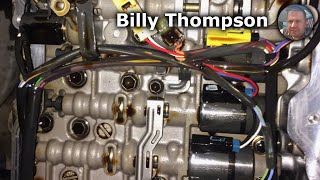
🎬 Watch: How GM's new valve design addresses these valve body issues.Diagnostic Flowchart
Tap your situation to follow the diagnostic path that matches what you're seeing on this vehicle.
Symptoms You May Notice
- Malfunction Indicator Lamp (Check Engine Light) is on.
- Vehicle will not move when placed in Drive or Reverse.
- Harsh, jerky, or delayed gear shifts, especially into Drive.
- Transmission slipping, where engine RPMs increase without a corresponding increase in speed.
- Transmission overheating or a 'Transmission HOT, Idle Vehicle' message.
- Vehicle enters 'limp mode,' limiting engine power and available gears.
- A hard jerk or clunk when shifting into Reverse.
- Replacing the Pressure Control Solenoid 'A' without first checking for TSBs related to internal mechanical failures. On this platform, a bad snap ring or retaining ring is a very common cause and replacing the solenoid alone will not fix the issue.
- Replacing the high-pressure fluid pump when the actual fault lies with the solenoid, wiring, or valve body.
Most Likely Causes
- Internal Transmission Mechanical Failure 🔴 High Probability → Shop Transmission Assembly Multiple GM Technical Service Bulletins (#PIP5974E, #N202321840) for this specific vehicle and its platform mates directly cite issues with '1-2-3-4-5-6 snap rings out of round' and 'clutch spring retaining ring may not be fully seated' as the cause for P0747. These failures are known weak points in the early versions of the GM 9TXX transmission family.
How to confirm: This requires diagnosis by a transmission specialist, likely involving the removal of the transmission pan and valve body to physically inspect for dislodged or damaged internal components like snap rings or clutch debris.
Typical fix: The transmission must be partially or fully disassembled to replace the failed snap ring, retaining ring, or other damaged clutch components. This is a labor-intensive repair often requiring a full transmission rebuild or replacement.
Est. part cost: $50-$200 for ring kits, but labor is the primary cost. - Faulty Pressure Control Solenoid 'A' 🟡 Medium Probability → Shop Transmission Valve Body While less common than the mechanical failures on this platform, the solenoid itself can fail electrically or mechanically (stuck plunger). However, it is often misdiagnosed as the root cause when it is actually a symptom of a deeper issue.
How to confirm: A technician can command the solenoid on and off using a bidirectional scan tool while monitoring pressure readings. The solenoid's resistance can also be tested with a multimeter after removing the valve body; a reading between 3 and 10 ohms is generally considered good.
Typical fix: Replace the Pressure Control Solenoid. This is located inside the transmission, attached to the valve body. It is sold as part of a 10-piece solenoid kit for the 9TXX transmissions.
Est. part cost: $50-$150 for a single solenoid, or $200-$400 for a full kit. - Low or Contaminated Transmission Fluid ⚪ Low Probability → Shop Transmission Assembly
How to confirm: Check the transmission fluid level and condition. The fluid should be at the correct level, red in color, and free of metallic debris or a burnt smell. Significant debris points towards the more common mechanical failures.
Typical fix: Perform a transmission fluid and filter change. If the fluid is heavily contaminated with clutch material or metal, it is a strong indicator of a severe internal failure requiring a rebuild.
Est. part cost: $100-$300 for fluid and filter service.
Rare But Worth Checking
- Body Control Module (BCM) or Wiring Issue: → Shop Body Control Module TSB #PIP5697E specifically mentions that if the code sets during engine shutdown with no other symptoms, the cause could be the BCM failing to supply ignition voltage to the TCM for at least 15 seconds to complete its power-down self-test. The fault may be in the BCM or the 'Accessory Wake up' circuit 5985.
- Faulty Transmission Valve Body: → Shop Transmission Valve Body The valve body contains the solenoids and intricate passages for hydraulic fluid. A blockage, a worn solenoid bore, or a cracked valve body can cause pressure issues that trigger P0747. In some cases, the entire valve body assembly needs to be replaced.
- Faulty Transmission Control Module (TCM): → Shop Transmission Assembly In rare cases, the TCM itself may fail and incorrectly report a solenoid issue. This is less likely than a BCM or wiring fault.
Diagnosis Steps
- Check and verify the transmission fluid level and condition. Look for excessive metal or clutch material.
- Use a professional-grade OBD-II scanner to confirm the P0747 code and check for any other related transmission codes, such as P0746 or P0700.
- Research all Technical Service Bulletins (TSBs) for the vehicle's specific VIN. Pay close attention to #PIP5974E, #N202321840, and #PIP5697E.
- If symptoms match TSB #PIP5697E (code sets at shutdown, no drivability issues), investigate the BCM and circuit 5985 for faults, checking for proper voltage at BCM connector X4, terminal 22 for at least 15 seconds after key-off.
- For drivability symptoms, a transmission specialist should perform hydraulic pressure tests to see if the pressure in the 1-2-3-4-5-6 clutch circuit is out of specification. Line pressure at idle should be greater than 50 psi (345 kPa).
- If pressure is incorrect, the next step is to remove the transmission pan to inspect for debris, which is a strong indicator of mechanical failure.
- Remove the valve body to inspect and test the Pressure Control Solenoid 'A' and its related valves. A technician can also check for collapsed solenoid retaining clips.
- If no valve body faults are found, the transmission must be disassembled to inspect for the known mechanical failures, such as a dislodged/broken snap ring or retaining ring.
Parts You'll Likely Need
- Transmission Snap Ring / Retaining Ring — Cited in multiple manufacturer TSBs (#PIP5974E, #N202321840) as a primary cause of this code on the Blazer and its platform mates. Specifically the 1-2-3-4-5-6 clutch snap ring.
Trusted brands: ACDelco
OEM price range: $20-$50
Aftermarket price range: $10-$30 - Transmission Pressure Control Solenoid
(OEM #24248892 (Example, confirm for specific application))— This is the component directly named by the code. It can fail, though on this vehicle it's often a symptom of a mechanical issue. It is part of a larger solenoid assembly.
Trusted brands: ACDelco, Bosch
OEM price range: $80-$150
Aftermarket price range: $50-$100 - Transmission Valve Body — If the solenoid bore or hydraulic passages are worn or damaged, the entire valve body may need replacement. Debris from a mechanical failure can score the valve bores, making a valve body replacement necessary.
Trusted brands: ACDelco
OEM price range: $400-$800
Aftermarket price range: $300-$600
Related Codes That Often Appear With This One
- P0746 — This code is for 'Pressure Control Solenoid 'A' Performance or Stuck Off.' Both P0746 and P0747 are frequently mentioned together in the same GM service bulletins (#PIP5974E, #PIE0720A) as they relate to the same component (Solenoid 1), the same clutch pack (1-2-3-4-5-6), and the same underlying mechanical issues.
- P0700 — This is a general transmission fault code requested by the TCM. It means the TCM has stored a specific fault code (like P0747) and has illuminated the Malfunction Indicator Lamp (MIL). It will almost always be present alongside P0747.
Technical Service Bulletins (TSBs) & Recalls
- PIP5974E: Addresses out-of-round 1-2-3-4-5-6 snap rings causing P0746 or P0747.
- N202321840: Special Coverage program pointing to an improperly seated clutch spring retaining ring.
- PIE0720A / PIE0720: Information request for vehicles that won't move with P0747 set.
- PIP5697E: Suggests a possible BCM or circuit fault if no mechanical issues are found, specifically related to the TCM power-down sequence.
Platform-Specific Known Issues
- TSB #PIP5974E notes that out-of-round 1-2-3-4-5-6 snap rings can cause P0747 in the GM 9TXX series transmissions.
- TSB #N202321840 is a Special Coverage program that warns that the clutch spring retaining ring may not be fully seated, leading to this code, typically at low mileage.
- TSBs #PIE0720A and #PIE0720 were issued to gather field data on vehicles that would not move and had set code P0747, indicating the severity and prevalence of the potential failure across multiple GM models.
- TSB #PIP5697E identifies a potential electrical fault with the BCM or circuit 5985 as a cause for P0747 when no mechanical transmission concern is present.
Mechanic-Grade Diagnostic Values
- Pressure Control Solenoid 'A' (Solenoid 1) Resistance — expected: 3.0 to 10.0 Ohms is a common range, though some sources state up to 13.4 Ohms can be acceptable.. Failure: A reading of infinite resistance (open circuit) or 0 Ohms (short circuit).
- Transmission Line Pressure at Idle — expected: Greater than 50 psi (345 kPa).. Failure: Pressure below 50 psi indicates a potential issue with the pump, valve body, or major internal leak.
- Transmission Fluid Temperature (TFT) for Level Check — expected: 85–95°C (185–203°F).. Failure: Checking the fluid level outside this temperature range will result in an inaccurate reading (either under or over-filled).
Scan Tool Commands That Help
- GDS2 (or equivalent professional scan tool): Transmission Service Fast Learn — This procedure is required after replacing the transmission, valve body, solenoids, or performing any major internal repair. It allows the TCM to learn the hydraulic characteristics and clutch apply pressures of the new or repaired components to ensure smooth shifting.
- GDS2 (or equivalent professional scan tool): Solenoid Valve Control — A technician can use this bidirectional command to manually activate and deactivate individual solenoids while monitoring transmission data PIDs (like pressure) to verify if the solenoid is responding electrically and mechanically. This helps isolate a faulty solenoid from a wiring or TCM driver issue.
- GDS2 (or equivalent professional scan tool): Clear Transmission Adaptive Pressures — Used to reset the learned shift adaptations. This can be performed after minor repairs or fluid changes to encourage the TCM to relearn shift points. It is less comprehensive than the 'Fast Learn' procedure.
Wiring & Ground Locations
- TCM (K71) — The Transmission Control Module for the 9TXX series is typically mounted externally on the transmission case to reduce complexity and heat exposure.. The TCM is the computer that commands the pressure control solenoid. All diagnostic tests for wiring and voltage originate or terminate at the TCM connector.
- BCM (K9) — On a 2020 Blazer, the Body Control Module is typically located in the passenger compartment, under the driver's side of the instrument panel.. TSB #PIP5697E identifies a rare cause where the BCM fails to provide proper power-down voltage to the TCM via circuit 5985, causing P0747 to set on the next startup.
- Transmission Case Connector (X2) — This is the main 23-way electrical connector on the outside of the transmission case where the vehicle harness connects to the internal transmission wiring and solenoids.. This is the primary access point for testing the resistance of the pressure control solenoid and checking for continuity in its circuit without having to remove the transmission pan.
Model Year Variations Within This Range
- 2023-2024: TSB #PIP5974E identifies a specific batch of transmissions built between October 1, 2023 (Julian date 23 274) and April 2, 2024 (Julian date 24 093) as being particularly susceptible to having an out-of-round 1-2-3-4-5-6 clutch snap ring, which directly causes codes P0746 and P0747.
Helpful Videos
We Have This Part in Stock



The information in this article is provided for general reference and educational purposes only. Vehicle specifications, procedures, and part compatibility can vary by production date, trim level, and region. Always consult your vehicle's factory service manual and verify part numbers before purchasing or performing repairs. Safety-critical components such as airbags, seat belts, and braking systems should be installed by a qualified professional.
- Chevrolet BLAZER:
- 🧭 Diagnostic Flowchart
- 🎬 Helpful Videos
- 🛍️ Shop This Part
- What's Unique About the 2019-2024 Chevrolet BLAZER
- Symptoms You May Notice
- Most Likely Causes
- Rare But Worth Checking
- Diagnosis Steps
- Parts You'll Likely Need
- Related Codes That Often Appear With This One
- Technical Service Bulletins (TSBs) & Recalls
- Platform-Specific Known Issues
- Mechanic-Grade Diagnostic Values
- Scan Tool Commands That Help
- Wiring & Ground Locations
- Model Year Variations Within This Range
- 🎟️ Get 5% Off