

P0747 on 2017-2019 Chevrolet Cruze: Pressure Control Solenoid 'A' Stuck On Causes and Fixes
On a 2017-2019 Cruze, P0747 is often not a transmission failure. Before replacing expensive parts, investigate GM TSB PIP5697E, which points to a faulty Body Control Module (BCM) or its circuit causing a false code. If the BCM is fine, the next most likely cause is a faulty transmission valve body.
- For a 2017-2019 Cruze, P0747 does not automatically mean you need a new transmission.
- The most important first step is to have a mechanic investigate the possibility of an electrical fault related to the Body Control Module (BCM), as outlined in GM TSB PIP5697E.
- If the BCM is ruled out, the most likely mechanical culprit is the transmission valve body, not just a single solenoid.
What's Unique About the 2017-2019 Chevrolet Cruze
For the 2017-2019 Cruze, this code has a significant and well-documented electrical issue that can be mistaken for a major transmission failure. General Motors issued Technical Service Bulletin (TSB) PIP5697E, which explains that a faulty Body Control Module (BCM) or an issue with its power-down sequence can erroneously trigger a P0747 code at the next engine start-up. This means the primary cause is often electrical and external to the transmission, a critical distinction that can save you from an unnecessary and expensive transmission repair.
Symptoms You May Notice
- Harsh, jerky, or delayed gear shifts
- Transmission slipping, where engine RPMs rise without an increase in speed
- Vehicle enters 'limp mode' (stuck in one gear, often 5th)
- Check Engine Light or Transmission Warning Lamp is illuminated
- Failure to shift gears properly
- Increased fuel consumption
- Replacing only the Pressure Control Solenoid 'A' without inspecting the entire valve body.
- Condemning the entire transmission for replacement before thoroughly investigating the BCM electrical issue outlined in TSB PIP5697E.
Most Likely Causes
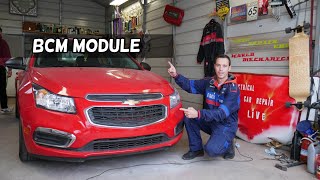
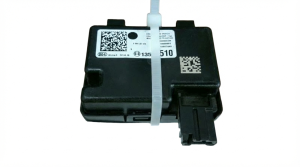
- Body Control Module (BCM) or Circuit Fault 🔴 High Probability → Shop Body Control Module As documented in GM TSB PIP5697E, the BCM may fail to supply the necessary voltage (must remain within 4.0 volts of battery voltage) to the TCM/ECM for their power-down self-test after the engine is shut off. This causes the module to see unexpected data on the next startup, falsely setting code P0747. Additionally, TSB Bulletin #PIP5697B notes that a BCM concern can cause the code to set specifically during engine cranking when the transmission is in park.
How to confirm: A technician must follow the diagnostic procedure in TSB PIP5697E. This involves checking for voltage at BCM connector X4, terminal 22, for a minimum of 15 seconds after the ignition is turned off. The integrity of circuit 5985 between the BCM, ECM, and TCM must also be inspected for opens or poor terminal connections.
Typical fix: If the circuit is intact and connectors are good, the BCM needs to be replaced and reprogrammed.
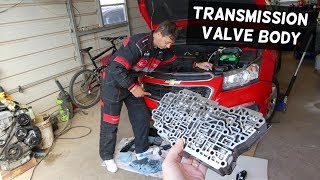
Est. part cost: $250-$500 - Faulty Transmission Control Valve Body 🟡 Medium Probability → Shop Transmission Valve Body Wear in the valve body bores can cause solenoids to bind or hydraulic pressure to leak. GM has acknowledged that valve body failure is a likely cause for P0747, leading to a default to 5th gear. It is more common for the entire valve body assembly to fail than a single, individual solenoid.
How to confirm: After ruling out the BCM issue, a technician will perform a pressure test on the transmission. If pressures are incorrect, the transmission pan is dropped to inspect for debris and access the valve body for further inspection or testing. The fluid should not have a burnt odor or excessive clutch debris.
Typical fix: Replacement of the entire transmission valve body assembly.
Est. part cost: $400-$800 - Low or Dirty Transmission Fluid ⚪ Low Probability → Shop Transmission Assembly
How to confirm: Check the transmission fluid level and condition. The fluid should be at the correct level, red in color, and not smell burnt or contain excessive metal particles.
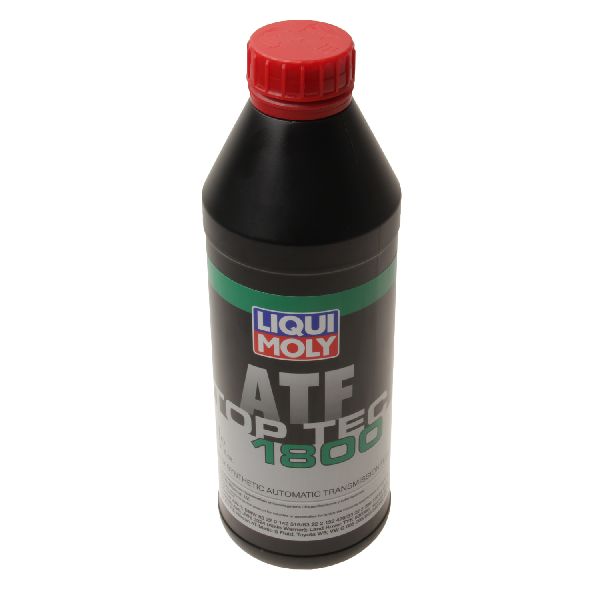
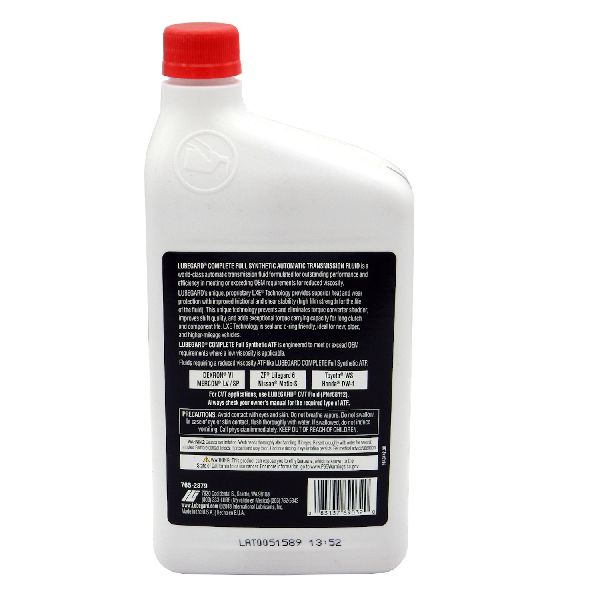
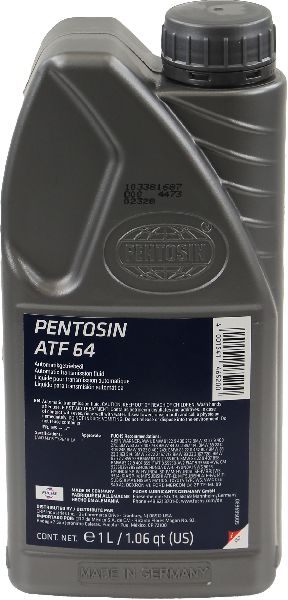
Typical fix: Perform a transmission fluid drain-and-fill or a complete fluid flush and replace the filter.
Est. part cost: $50-$150
Rare But Worth Checking
- Faulty Pressure Control Solenoid 'A': → Shop Transmission Valve Body While the code directly names the solenoid, it's more common for the valve body that houses it to be the root cause. However, an individual solenoid can fail due to an internal short or mechanical binding.
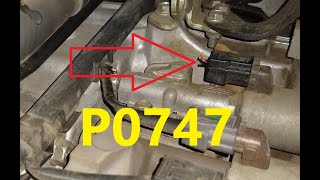
- Damaged Wiring Harness or Connectors: An open or short in the wiring to the pressure control solenoid can mimic a failed component. 🎬 Watch: Causes and fixes for code P0747 This should be checked before replacing hard parts.
Diagnosis Steps
- Scan the vehicle's computer for P0747 and any other stored codes, especially P0700.
- CRITICAL: Check for GM Technical Service Bulletin PIP5697E. This TSB outlines a known issue with the Body Control Module (BCM) causing a false P0747.
- Follow the diagnostic steps in the TSB, which involve checking voltage on circuit 5985 at the BCM connector X4, terminal 22 after engine shutdown.
- If the BCM and its circuit are found to be at fault, replace and reprogram the BCM.
- If the BCM diagnostics pass, proceed with transmission diagnosis.
- Check the level and condition of the transmission fluid. If it is low, dirty, or smells burnt, service the fluid and filter.
- Inspect the transmission wiring harness and connectors for any signs of damage, corrosion, or loose connections.
- If the fluid and wiring are okay, perform a transmission pressure test to verify hydraulic pressures.
- If pressures are incorrect, the next step is to remove the transmission pan, inspect for excessive clutch material, and inspect the valve body and solenoids.
- Based on inspection and testing, replace the faulty component, which is most commonly the valve body assembly.
Parts You'll Likely Need
- Body Control Module (BCM)
(OEM #13534187, 13594614, 13534188)— A known issue documented in a GM TSB makes the BCM a high-probability cause for falsely setting this code on this specific vehicle.
Trusted brands: ACDelco
OEM price range: $300-$500
Aftermarket price range: $200-$400 - Transmission Valve Body
(OEM #24244062 (Remanufactured), 24288570 (New))— If the BCM is not the cause, the issue is likely internal to the transmission, with the valve body being the most common mechanical failure point for this code.
Trusted brands: ACDelco
OEM price range: $500-$800
Aftermarket price range: $350-$600
Related Codes That Often Appear With This One
- P0700 — P0700 is a generic code indicating the Transmission Control Module (TCM) has requested the Check Engine Light to be turned on. It is almost always present alongside more specific transmission codes like P0747.
Technical Service Bulletins (TSBs) & Recalls
- PIP5697E: Describes a condition where DTC P0747 may set during engine shut-down due to the BCM not correctly performing its power-down sequence, leading to a false code on the next start-up without any actual transmission fault.
- TSB Bulletin #PIP5697B: Communicates a possible BCM concern if DTC P0747 sets during engine cranking when the transmission is in park.
Platform-Specific Known Issues
- A video from HOWSTUFFINMYCARWORKS on YouTube specifically calls out the BCM malfunction on the 2017-2019 Cruze as a cause for P0747. It explains that when the BCM fails, it doesn't supply ignition voltage to the TCM and ECM after shutdown, preventing them from performing their power-down self-test and leading to the false code.
Mechanic-Grade Diagnostic Values
- BCM Circuit 5985 Voltage After Shutdown — expected: Must remain within 4.0 volts of battery voltage (B+). For example, if battery voltage is 12.6V, the circuit voltage should not drop below 8.6V.. Failure: Voltage dropping more than 4.0V below B+ for a minimum of 15 seconds after the ignition is turned off.
- Pressure Control Solenoid (PCS) Resistance — expected: 3-5 ohms at 70°F (21°C). Failure: Resistance reading outside of the 3-5 ohm range indicates a faulty solenoid coil.
- Shift Solenoid Resistance — expected: 16-20 ohms at 70°F (21°C). Failure: Resistance reading outside of the 16-20 ohm range. Note: This is for the on/off shift solenoid, not the variable force pressure control solenoids.
Scan Tool Commands That Help
- GM GDS2 (Global Diagnostic System 2): Solenoid Valve Diagnosis / Active Test — After ruling out the BCM issue, this function allows a technician to command individual pressure control solenoids on and off to verify mechanical and electrical operation without removing the valve body. This can help confirm if Solenoid 'A' is truly stuck.
- GM GDS2 (Global Diagnostic System 2): Transmission Service Fast Learn — This procedure is required after replacing the valve body or the entire transmission. It allows the TCM to learn the hydraulic characteristics and apply volumes of the new components to ensure proper shift quality.
Wiring & Ground Locations
- K9 Body Control Module (BCM) — Located on the passenger side, behind/above the glove box area.. The BCM is the source of the potential electrical fault described in TSB PIP5697E. Access is required to test its connectors.
- BCM Connector X4 — This is one of the seven connectors on the BCM. The specific terminal to test is Pin 22.. Terminal 22 on connector X4 is the specific pin for circuit 5985, the 'Accessory Wakeup' or 'High Speed GMLAN Communication Enable' circuit. TSB PIP5697E requires a voltage check at this exact pin to diagnose the fault.
- G103 / G105 — G103 is located on the cowl, above the brake booster. G105 is at the left front of the engine compartment behind cooling fan relays.. These are key ground points for the BCM and other modules in the engine compartment. A poor ground at these locations can cause erratic module behavior, including the power-down issue that falsely sets P0747.
OEM Part Supersession History
13594614→13534187— Standard part revision by the manufacturer for improvements or supplier changes.
Heads up: The new part number (13534187) is the correct service replacement for the original. Both require programming upon installation.24244062 (Reman)→24288570 (New)— Transition from offering remanufactured units to new service parts.
Heads up: 24288570 is the current replacement part. It may also supersede other numbers like 24055583 and 24292281. A service fast learn procedure is required after installation.
Diagnostic Flowchart
Other Known Issues on This Vehicle
Issues unrelated to this code that are worth knowing about as an owner of this generation:
- Cracked Engine Pistons (1.4L Turbo LE2) 🔴 High — Commonly reported on 2017 and some 2018 models. Can occur at various mileages, often leading to misfire code P0300 and low compression. (Ref: TSB PIP5490D / 18-NA-171)
- PCV System Failure 🟠 Medium — The PCV system, including a check valve in the intake manifold and a diaphragm in the valve cover, is a known weak point that can fail, causing oil leaks, rough idle, and other engine codes like P1101. (Ref: TSB 20-NA-047)
- Coolant Leaks (Water Pump/Thermostat Housing) 🟠 Medium — Leaks from the water pump and thermostat housing are frequently reported, leading to coolant loss and potential overheating.
- Premature Turbocharger Failure 🔴 High — Failures of the turbocharger, often indicated by a P0299 (underboost) code, are a known issue that can be costly to repair.
- Start-Stop Accumulator Missing Bolts 🔴 High — A recall was issued for some 2018-2019 models due to missing bolts on the start-stop accumulator end cap, which could cause a transmission fluid leak and loss of propulsion. (Ref: Recall N182180310)
Used vs. New Parts: Buying Guide for This Vehicle
When a used part is the smart pick: For the Transmission Valve Body, a low-mileage used part can be a cost-effective option if the BCM has been definitively ruled out as the cause. For the BCM, a used part is only viable if you have access to GM programming tools, as it will not function without being programmed to the vehicle's VIN.
Donor-vehicle mileage cap: roughly under 60000 miles for the part to have meaningful remaining life.
What to inspect on the donor part:
- For a valve body, ask for the donor vehicle's VIN to check its service history.
- Ensure the donor vehicle was not involved in a severe front-end collision that could have damaged the transmission.
- Inspect the electrical connector pins on either part for any signs of corrosion or damage.
- For a BCM, verify the part number exactly matches the superseded part number for your vehicle.
OEM-only on this vehicle (don't cheap out):
- Body Control Module (BCM) - While used OEM parts are an option, aftermarket BCMs are not recommended due to potential software and programming incompatibilities. The replacement MUST be programmed by a dealer or a qualified shop with a GM subscription.
Brands owners have reported issues with on this vehicle:
- Unbranded or 'white-box' valve bodies from online marketplaces, as they often use inferior quality solenoids and may not have been properly tested.
Real Owner Stories
Aggregated from forums and TSBs cited above. Mileages and costs reflect what owners reported in those sources.
2017 Chevrolet Cruze 1.4L Turbo
Symptoms: Owner reported a cracked piston leading to engine durability concerns and filed an NHTSA complaint; mentioned awareness of GM bulletin PIP5490 regarding engine issues.
What fixed it: The source discusses filing formal complaints and referencing TSB PIP5490 for engine durability problems rather than a specific transmission fix.
Source hint: Reddit r/cruze - 'Gen II 2017 Cracked Piston NHTSB Complaint'
2017-2019 Chevrolet Cruze
Symptoms: The BCM fails to supply ignition voltage to the TCM and ECM after shutdown, preventing the power-down self-test and causing a false P0747 code on startup.
What fixed it: Replacing and reprogramming the Body Control Module (BCM).
Source hint: YouTube video from HOWSTUFFINMYCARWORKS
Related OBD-II Codes
Frequently Asked Questions
Does GM TSB PIP5697E apply to my 2017-2019 Chevrolet Cruze?
My 2017 Cruze is stuck in 5th gear; is this related to P0747?
Can I use a used Body Control Module (BCM) to fix the P0747 code on my Cruze?
Is there a recall for transmission fluid leaks on the 2018-2019 Cruze?
How can a technician confirm if my P0747 code is a 'false' code caused by the BCM?
Besides the transmission, what other major issues should I look for on a 2017 Cruze?
Helpful Videos

Used OEM Parts in Stock
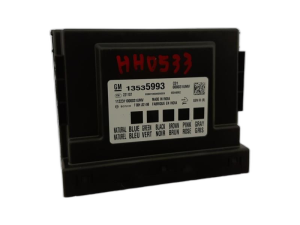
New Aftermarket Parts Available

The information in this article is provided for general reference and educational purposes only. Vehicle specifications, procedures, and part compatibility can vary by production date, trim level, and region. Always consult your vehicle's factory service manual and verify part numbers before purchasing or performing repairs. Safety-critical components such as airbags, seat belts, and braking systems should be installed by a qualified professional.
- Chevrolet Cruze:
- 🧭 Diagnostic Flowchart
- 🎬 Helpful Videos
- 🛍️ Shop This Part
- What's Unique About the 2017-2019 Chevrolet Cruze
- Symptoms You May Notice
- Most Likely Causes
- Rare But Worth Checking
- Diagnosis Steps
- Parts You'll Likely Need
- Related Codes That Often Appear With This One
- Technical Service Bulletins (TSBs) & Recalls
- Platform-Specific Known Issues
- Mechanic-Grade Diagnostic Values
- Scan Tool Commands That Help
- Wiring & Ground Locations
- OEM Part Supersession History
- Other Known Issues on This Vehicle
- Used vs. New Parts: Buying Guide for This Vehicle
- Real Owner Stories
- 2017 Chevrolet Cruze 1.4L Turbo
- 2017-2019 Chevrolet Cruze
- Related OBD-II Codes
- Frequently Asked Questions
- 🎟️ Get 5% Off