

P0747 on 2017-2020 Chevrolet Malibu: BCM Fault vs. Transmission Solenoid
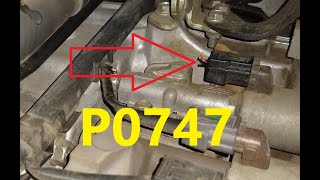
On 2017-2020 Malibus, P0747 is often an electrical fault, not a bad transmission solenoid. A faulty Body Control Module (BCM) can trigger the code at startup. If you have no shifting problems, suspect the BCM before transmission parts.
- For a 2017-2020 Malibu, P0747 does not automatically mean you need a new transmission solenoid.
- If the Check Engine Light comes on at startup but the car drives and shifts normally, the problem is very likely an electrical issue with the Body Control Module (BCM).
- Do not replace transmission parts without first ruling out the BCM and wiring issues described in GM Technical Service Bulletin PIP5697D.
- If you are experiencing harsh shifting along with the code, then a faulty solenoid, low fluid, or wiring issue becomes more probable.
- This is not a simple DIY fix; accurate diagnosis requires professional tools and knowledge of the specific TSBs for this vehicle.
What's Unique About the 2017-2020 Chevrolet MALIBU
Unlike many vehicles where P0747 points directly to a bad solenoid or valve body, the ninth-generation Malibu has a well-documented issue where the Body Control Module (BCM) is the real culprit. Manufacturer Technical Service Bulletins (TSBs) explain that if the BCM fails to supply proper voltage to the transmission (TCM) and engine (ECM) computers during their power-down self-test sequence, it can trigger a false P0747 code on the next engine start. This means owners might replace expensive transmission components unnecessarily when the problem is purely electrical and external to the transmission. This specific issue is common enough that it is a known pattern for technicians working on GM's 9-speed transmissions.
Diagnostic Flowchart
Tap your situation to follow the diagnostic path that matches what you're seeing on this vehicle.
Symptoms You May Notice
- Check Engine Light is on
- Code appears during or immediately after engine cranking
- Code may clear itself after several drive cycles, only to return later
- No noticeable shifting problems or drivability issues (very common for the BCM fault)
- Harsh or jerky gear shifts
- Transmission 'slams' into gear from Park or Neutral
- Delayed gear engagement
- Transmission slipping (engine RPMs rise without an increase in speed)
- Vehicle enters 'limp mode'
- Replacing the pressure control solenoid or the entire transmission valve body when the true cause is the Body Control Module (BCM) or its wiring, especially when no shifting symptoms are present.
Most Likely Causes
- Faulty Body Control Module (BCM) 🔴 High Probability → Shop Body Control Module A known issue documented in GM TSBs PIP5697B, PIP5697C, and PIP5697E. The BCM may not maintain voltage for the TCM/ECM power-down self-test, causing the code on the next startup.
How to confirm: A technician must follow TSB diagnostic procedures. The key step is to probe BCM connector X4 at terminal 22 after turning the ignition off. Battery voltage should be present for at least 15 seconds. If it drops out immediately, the BCM or its circuit is faulty. This is the primary suspect if no drivability symptoms are present.
Typical fix: Replace and reprogram the Body Control Module.
Est. part cost: $250-$450 - Wiring Issue in Circuit 5985 🟡 Medium Probability This specific circuit provides ignition voltage from the BCM to the TCM and ECM. The TSBs identify it as a potential point of failure if the BCM itself tests good.
How to confirm: Perform a continuity and resistance check on circuit 5985 between the BCM, ECM, and TCM connectors. Check for opens, shorts to ground, or high resistance. A known chafe point for this circuit is under the driver's sill plate.
Typical fix: Repair the open or high-resistance section of the wire. Check for corrosion or poor terminal tension at the BCM, ECM, and TCM connectors.
Est. part cost: $5-$50 - Faulty Pressure Control Solenoid 'A' (Valve 1) ⚪ Low Probability → Shop Transmission Valve Body This is the standard cause for this code on most vehicles. It is less likely on the Malibu if no shifting problems are felt. In the 9T45/9T50, this is often referred to as Shift Solenoid Valve 1. Failure could be a stuck solenoid or a fatigued retaining clip allowing the solenoid to back out of its bore.
How to confirm: A technician can command the solenoid on and off with a bi-directional scan tool to check its operation. The solenoid's resistance can also be measured. This requires dropping the transmission pan for access.
Typical fix: Replace the pressure control solenoid, which is located inside the transmission on the valve body.
Est. part cost: $50-$150 - Low or Dirty Transmission Fluid ⚪ Low Probability → Shop Transmission Assembly
How to confirm: Check the transmission fluid level and condition. On these models, this must be done by a technician as there is no dipstick. Dirty or burnt-smelling fluid indicates a problem.
Typical fix: Perform a transmission fluid and filter change.
Est. part cost: $100-$200
Rare But Worth Checking
- Faulty Transmission Control Module (TCM): → Shop Transmission Assembly While the BCM is the more likely module to fail in this specific scenario, a faulty TCM can also cause this code, though it's less common.
- Internal Transmission Failure: → Shop Transmission Assembly A clogged hydraulic passage, a failing transmission pump, or a worn valve body can cause pressure issues, but this is rare and would typically be accompanied by severe shifting problems and other trouble codes.
Diagnosis Steps
- Scan the vehicle for any other DTCs to see if other module or sensor codes are present.
- Note the exact conditions when the Check Engine Light appears. If it's only at startup and the transmission shifts perfectly, immediately suspect the BCM issue described in TSB PIP5697.
- If no drivability issues are present, proceed with the TSB-specific diagnosis: With the Key On Engine Off, probe BCM connector X4, terminal 22. Cycle the ignition off and verify battery voltage remains for at least 15 seconds.
- If voltage at terminal 22 drops out immediately, inspect circuit 5985 for shorts or opens. If the wiring is good, the BCM is faulty and needs replacement and reprogramming.
- If shifting problems ARE present, begin with traditional transmission diagnostics.
- Have a technician check the transmission fluid level and condition.
- Inspect the transmission wiring harness and connectors for any visible damage, corrosion, or loose pins.
- Using a professional scan tool, command the Pressure Control Solenoid 'A' (Valve 1) on and off to verify its mechanical operation.
- If the solenoid or wiring is confirmed to be faulty, replace the necessary component. This requires removing the transmission pan.
- If all wiring and solenoids test good, but the TSB electrical checks also pass, further diagnosis of the TCM or internal transmission components (like the valve body) may be needed.
Parts You'll Likely Need
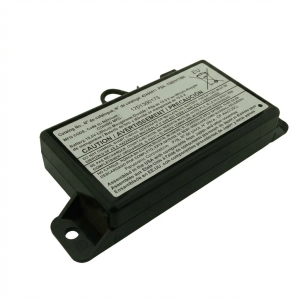
- Body Control Module (BCM)
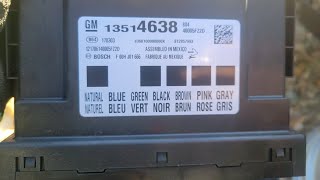
(OEM #13534187)— This is the most likely cause on a 2017-2020 Malibu that sets P0747 at startup without any actual shifting problems, as documented in GM TSBs. This part number supersedes previous versions like 13594614.
Trusted brands: ACDelco (Genuine GM)
OEM price range: $300-$450
Aftermarket price range: $200-$350 - Pressure Control Solenoid (PCS) / Shift Solenoid Valve 1 — This is the component to replace if traditional diagnosis confirms the solenoid itself has failed, which is more likely if the car is experiencing harsh shifting. It is located on the valve body inside the transmission.
Trusted brands: ACDelco, Bosch
OEM price range: $80-$150
Aftermarket price range: $50-$100
Technical Service Bulletins (TSBs) & Recalls
- PIP5697B: Preliminary information on a possible BCM concern if DTC P0747 sets during engine cranking.
- PIP5697C: Updated bulletin that expands the model list and provides a concrete diagnostic step: check for sustained voltage at BCM connector X4, terminal 22, for at least 15 seconds after key-off. If voltage is not present, inspect circuit 5985 or replace the BCM.
- PIP5697E: Preliminary information on a possible BCM and/or circuit 5985 concern if DTC P0747 sets during engine shut down with no other transmission issues.
Platform-Specific Known Issues
- A series of Technical Service Bulletins (most notably PIP5697C and PIP5697E) were issued by GM for this code on 2017-2020 Malibus and other models with 9-speed transmissions. They state that P0747 can be set during engine cranking due to the BCM not properly maintaining voltage for the TCM/ECM self-test sequence. The fix is to diagnose the BCM and its wiring, not the transmission internals.
Mechanic-Grade Diagnostic Values
- Voltage at BCM Connector X4, Terminal 22 (Circuit 5985) after ignition is turned OFF — expected: Battery voltage should be present for at least 15 seconds. Failure: Voltage drops out immediately after key-off
- Load test of Circuit 5985 — expected: A 194 bulb connected between the circuit and ground should illuminate when the BCM is awake. Voltage across the bulb should be at least 11V.. Failure: Bulb does not light, or voltage is below 11V, indicating high resistance or an open in the circuit.
- Resistance of 9T45/9T50 Shift Solenoids — expected: 5.0 - 6.0 Ohms at 68°F (20°C). Failure: Resistance is outside of the specified range
Scan Tool Commands That Help
- GDS2 (Global Diagnostic System 2): BCM Programming and Setup — This function is required after replacing the Body Control Module (BCM) to program the new module to the vehicle's VIN, configure its settings, and learn the security keys.
- GDS2 (Global Diagnostic System 2): Solenoid Valve State and Pressure Control — Used to command individual solenoids on and off to test their mechanical function when drivability issues (harsh shifting, slipping) are present, helping to isolate a faulty solenoid from a wiring or module issue.
Wiring & Ground Locations
- Body Control Module (BCM) — Located on the floor, under the dash, on the passenger side of the center console. The carpet must be pulled back for access.. The BCM is the source of the keep-alive voltage on circuit 5985. A faulty BCM is the primary cause of a false P0747 when no shifting symptoms are present.
- Transmission Control Module (TCM) — Mounted externally on the transmission case, under the battery tray in the engine compartment.. The TCM sets the P0747 code. It requires sustained voltage from the BCM after key-off to perform its solenoid self-test. It is also the destination for circuit 5985.
- Circuit 5985 Chafe Point — A known area for high resistance or an open circuit is in the wiring harness that runs under the driver's side sill plate.. This specific circuit provides the accessory wakeup signal from the BCM to the TCM. A break or short in this wire will mimic a faulty BCM, causing the P0747 to set on startup.
- BCM Connector X4, Terminal 22 — This is one of the multi-pin connectors plugged into the Body Control Module.. This is the specific pin and connector where the voltage for circuit 5985 must be tested to diagnose the common BCM-related fault, per GM's TSB.
- Underhood Fuse Block Fuses (BCM) — In the fuse box on the right side of the engine bay. Fuses F8, F10, F21, and F41 (interior fuse box) are related to the BCM.. A loss of power to the BCM on any of its circuits could cause erratic behavior, although a blown fuse is less likely to cause the specific timed power-down issue.
- Underhood Fuse Block Fuses (TCM) — In the fuse box on the right side of the engine bay. Fuses F15 (5A) and F26 (15A) are for the Transmission Control Module.. Loss of power to the TCM would cause no-communication issues and multiple codes, not typically just an isolated P0747.
Real Owner Repair Stories
- Codeman's Auto YouTube Channel (GMC Acadia (platform mate with similar wiring)) — Lost communication with TCM, traction control light on, door locks jumping up and down, harsh downshifts when hitting bumps.
❌ Tried (didn't work) Initial checks of fuses and relays were all good.
✅ What actually fixed it Found chafed and corroded wires in the harness near the TCM connector. The wires were rubbing against a plastic component, wearing through the insulation and causing intermittent shorts and opens. Repairing the damaged wires resolved the communication issues.
OEM Part Supersession History
13594614→13534187— Standard part revision and update by the manufacturer.
Heads up: The new part number (13534187) is the correct service replacement for the older number and is backward compatible for the specified vehicles.
Helpful Videos





We Have This Part in Stock
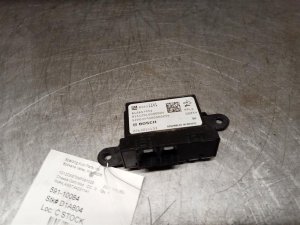
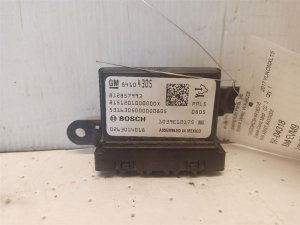

The information in this article is provided for general reference and educational purposes only. Vehicle specifications, procedures, and part compatibility can vary by production date, trim level, and region. Always consult your vehicle's factory service manual and verify part numbers before purchasing or performing repairs. Safety-critical components such as airbags, seat belts, and braking systems should be installed by a qualified professional.
- Chevrolet MALIBU:
- 🧭 Diagnostic Flowchart
- 🎬 Helpful Videos
- 🛍️ Shop This Part
- What's Unique About the 2017-2020 Chevrolet MALIBU
- Symptoms You May Notice
- Most Likely Causes
- Rare But Worth Checking
- Diagnosis Steps
- Parts You'll Likely Need
- Technical Service Bulletins (TSBs) & Recalls
- Platform-Specific Known Issues
- Mechanic-Grade Diagnostic Values
- Scan Tool Commands That Help
- Wiring & Ground Locations
- Real Owner Repair Stories
- OEM Part Supersession History
- 🎟️ Get 5% Off