

P0747 on 2011-2021 Ford F-150: Pressure Control Solenoid 'A' Stuck On Causes and Fixes
P0747 on a Ford F-150 usually means harsh shifting caused by a stuck pressure control solenoid. On 6-speed (6R80) models, this is often due to a faulty molded lead frame inside the transmission. On 10-speed (10R80) models, it's more likely a worn valve body. This is a complex repair best left to a professional.
- P0747 on a 2011-2021 F-150 is a serious code that should be addressed immediately to prevent catastrophic transmission damage.
- The most likely cause depends on your transmission: for the 6-speed 6R80 (common pre-2018), suspect the molded lead frame; for the 10-speed 10R80 (common 2017+), suspect the valve body.
- This is not a simple DIY fix. It requires dropping the transmission pan, working with complex internal components, and likely requires dealer-level software to program the new parts.
- Do not simply replace the 'A' solenoid, as it is usually a symptom of a larger mechanical or electronic issue within the transmission.
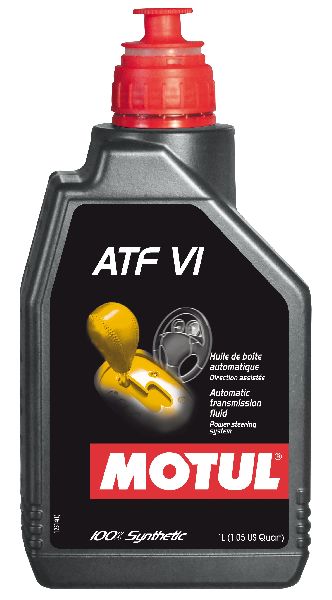
- Always use the exact specification of Motorcraft transmission fluid (MERCON LV or ULV) required for your specific transmission.
What's Unique About the 2011-2021 Ford F-150
The 2011-2021 F-150 spans two different primary automatic transmissions, and the cause of P0747 differs between them. Models from 2011-2017 are typically equipped with the 6-speed 6R80 transmission, where this code is often linked to a well-documented issue with the internal molded lead frame, which houses sensors and electrical connections. For F-150s from 2017-2021 with the 10-speed 10R80 transmission, the code more commonly points to a mechanical failure within the transmission valve body itself, such as worn bores causing valves to stick.
Generation note: This range covers the end of the 12th generation (2011-2014), the entire 13th generation (2015-2020), and the first year of the 14th generation (2021). The key difference is the transmission used. The 6-speed 6R80 was common through 2017, while the 10-speed 10R80 was introduced in 2017 and became standard on most models thereafter. The cause of P0747 is highly dependent on which transmission the truck has.
Symptoms You May Notice
- Harsh, violent, or jerky gear shifts
- Transmission getting stuck in one gear (limp mode)
- Delayed engagement when shifting into Drive or Reverse
- Illuminated Check Engine Light or Wrench Light
- Transmission overheating
- Torque converter clutch failing to engage or disengage properly
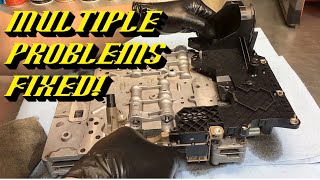
- Sudden, unexpected downshift to a low gear (typically 1st) while driving (6R80 lead frame issue) 🎬 Watch: Why F-150s suddenly downshift and how to fix it
- Replacing only the Pressure Control Solenoid 'A' without addressing the underlying cause, which is often a faulty lead frame (on 6R80 models) or a worn valve body (on 10R80 models).
Most Likely Causes
- Faulty Molded Lead Frame (6R80 Transmission) 🔴 High Probability → Shop Transmission Valve Body The 6R80 transmission has a known issue where the internal lead frame, which contains the output speed sensor and other electronics, can fail, causing various solenoid and sensor codes. Ford issued TSBs and extended warranty programs for this part.
How to confirm: A professional will diagnose this by checking for specific TSBs (like 19N01) and other related codes (P0720, P0722) that point to a lead frame failure. The failure often causes an intermittent loss of the output speed sensor (OSS) signal.
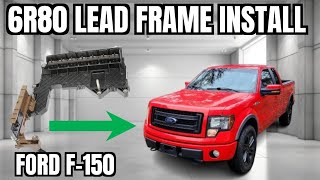
Typical fix: Replacement of the entire molded lead frame assembly inside the transmission oil pan. 🎬 Watch: Step-by-step 6R80 lead frame replacement tutorial The PCM may also require reprogramming.
Est. part cost: $200-$400 - Worn or Sticking Transmission Valve Body (10R80 Transmission) 🔴 High Probability → Shop Transmission Valve Body The 10R80 transmission, co-developed with GM, has known issues with premature wear in the aluminum bores of the valve body. This wear can cause valves to stick, leading to pressure control solenoid codes like P0747.
How to confirm: Diagnosis requires removing and inspecting the valve body for sticking valves or scored bores. This is a job for a transmission specialist. Vacuum testing the valve body circuits can pinpoint the location of the hydraulic leak.
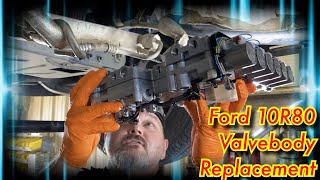
Typical fix: Replacement of the complete valve body assembly. Aftermarket kits from brands like Sonnax are also available to repair worn bores without replacing the entire unit. The TCM must be reprogrammed with the new valve body's strategy ID after installation.
Est. part cost: $800-$1500 - Low, Degraded, or Incorrect Transmission Fluid 🟡 Medium Probability → Shop Transmission Assembly Fluid that is low, burnt, or contaminated with debris can cause the fine mechanical parts in the solenoids and valve body to stick or operate poorly. The 10R80 is particularly sensitive to fluid type and condition, requiring MERCON ULV.
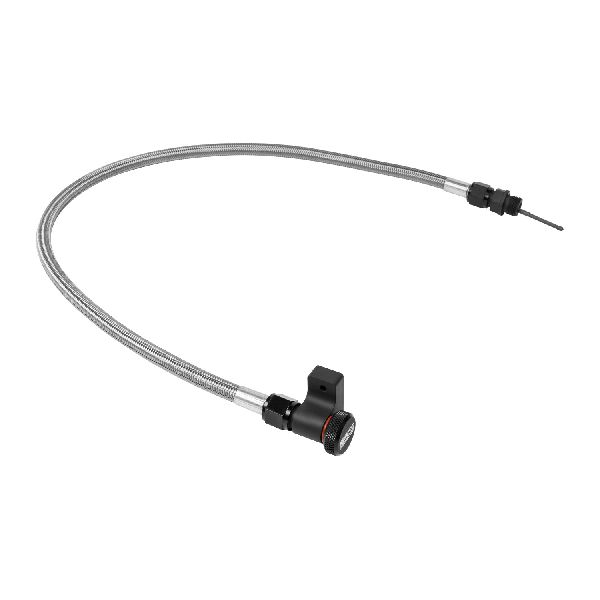
How to confirm: Check the transmission fluid level and condition. On many newer F-150s, this requires a specific procedure as there is no traditional dipstick. The fluid level must be checked at a specific operating temperature (typically 195-215°F for the 10R80).
Typical fix: Perform a transmission fluid and filter change using the correct Motorcraft fluid (MERCON LV for 6R80, MERCON ULV for 10R80).
Est. part cost: $100-$250 - Faulty Pressure Control Solenoid 'A' ⚪ Low Probability → Shop Transmission Valve Body While the code points directly to the solenoid, it's more often a symptom of a larger problem (lead frame or valve body) rather than an isolated solenoid failure on these specific transmissions.
How to confirm: A technician can test the solenoid's resistance with a multimeter or command it on and off with a bi-directional scan tool to listen for a click.
Typical fix: Replace the individual solenoid. However, this is often misdiagnosed, and the problem may persist if the root cause is the valve body or lead frame.
Est. part cost: $50-$150
Rare But Worth Checking
- Wiring Harness Damage: Damage to the wiring harness leading to or inside the transmission can cause an electrical fault, triggering the code. This is less common than internal component failure.
- Faulty Powertrain Control Module (PCM) or Transmission Control Module (TCM): → Shop Engine Control Module (ECM) In very rare cases, the control module itself can fail, sending an incorrect signal. This should only be considered after all other possibilities have been exhausted.
Diagnosis Steps
- Check and verify the transmission fluid level and condition. Ensure the correct type of fluid is being used.
- Use a professional scan tool to check for other transmission-related trouble codes, especially speed sensor codes on 6R80 models.
- Research any applicable Technical Service Bulletins (TSBs) or recalls for your specific year and transmission (e.g., lead frame issues for 6R80).
- Inspect the external transmission wiring harness and connectors for any visible damage or corrosion.
- If a lead frame issue is suspected (6R80), the next step is to drop the transmission pan and replace the lead frame assembly.
- If a valve body issue is suspected (10R80), the valve body must be removed for inspection or replacement by a qualified technician.
- After any internal repairs, clear the transmission adaptive tables and perform a relearn procedure with a capable scan tool.
Parts You'll Likely Need
- Transmission Molded Lead Frame Assembly (6R80)
(OEM #AL3Z-7G276-D)— This is the most common failure point for solenoid and sensor codes on the 6R80 transmission used in 2011-2017 F-150s.
Trusted brands: Motorcraft
OEM price range: $200-$400
Aftermarket price range: $150-$300 - Transmission Valve Body Assembly (10R80)
(OEM #HL3Z-7A100-B)— The most common cause of P0747 on the 10R80 transmission (2017-2021) due to known issues with valve bore wear.
Trusted brands: Motorcraft
OEM price range: $800-$1500
Aftermarket price range: $600-$1200 - Motorcraft MERCON ULV Automatic Transmission Fluid (10R80)
(OEM #XT-12-QULV)— This is the specific, required fluid for the 10-speed transmission. Using any other type can cause damage.
Trusted brands: Motorcraft
OEM price range: $8-$12 per quart
Aftermarket price range: N/A - Motorcraft MERCON LV Automatic Transmission Fluid (6R80)
(OEM #XT-10-QLVC)— This is the required fluid for the 6-speed transmission. Using other fluid types can lead to shifting problems and damage.
Trusted brands: Motorcraft
OEM price range: $7-$10 per quart
Aftermarket price range: N/A
Related Codes That Often Appear With This One
- P0720 — Output Speed Sensor Circuit Malfunction. This code often appears with P0747 on 6R80 transmissions as the sensor is part of the failure-prone molded lead frame.
- P0722 — Output Speed Sensor Circuit No Signal. Similar to P0720, this points directly to a failure in the molded lead frame on 6R80 models.
- P0746 — Pressure Control Solenoid 'A' Performance or Stuck Off. This is the opposite of P0747 and indicates the solenoid is stuck closed, causing low pressure and slipping.
- P0731 — Gear 1 Incorrect Ratio. This can be triggered by the OSS sensor failure on the 6R80 lead frame, leading to an unexpected downshift.
Technical Service Bulletins (TSBs) & Recalls
- 19N01 - Customer Satisfaction Program extending warranty coverage for the 6R80 molded lead frame to 10 years/150,000 miles for certain 2011-2013 F-150s.
- TSB 21-2315 - For 10R80 transmissions, this TSB addresses harsh/delayed shifts and a host of DTCs (including P0751, P0756, etc., which are related to solenoid function) by overhauling the main control valve body due to wear and software incompatibility with that wear.
Platform-Specific Known Issues
- For 2011-2013 F-150s with the 6R80, Ford issued Customer Satisfaction Program 19N01, which extended the warranty coverage for the molded lead frame to 10 years or 150,000 miles. While this program has likely expired for most vehicles, it highlights the prevalence of the issue.
- A recall was issued for some 2015-2017 F-150s with the 6R80 transmission for sudden, unexpected downshifts, which was also related to signal loss from the lead frame assembly.
Mechanic-Grade Diagnostic Values
- 10R80 Shift Solenoid (A-F) Coil Resistance — expected: 5.0 - 5.4 Ohms at 68°F (20°C).. Failure: A reading outside this range, or an open (infinite) reading, indicates a faulty solenoid coil.
- 6R80 Variable Bleed Solenoid (VBS/Shift Solenoid) Resistance — expected: 5.0 - 6.0 Ohms at 68°F (20°C).. Failure: A significant deviation from this range suggests a faulty solenoid. These are typically the brown, orange, blue, or yellow capped solenoids.
- 6R80 On/Off Solenoid (e.g., SSE) Resistance — expected: ~18 - 19 Ohms.. Failure: A reading far outside this range indicates a failure of the on/off solenoid (typically gray barrel).
Scan Tool Commands That Help
- FORScan, Ford IDS: TCM - Clear Transmission Adaptive Tables — This function should be performed after any transmission repair, fluid change, or as a first step in diagnosing poor shift quality. It erases the learned shift strategy, forcing the TCM to relearn clutch fill times and pressures, which can resolve harsh shifting.
- Ford IDS, high-end J2534 tools: PCM/TCM - Transmission Strategy Download / Solenoid Body Strategy Programming — This is MANDATORY after replacing the valve body (Main Control) on a 10R80 transmission. The technician must input the 13-digit Solenoid Body Strategy number, which is etched onto the new valve body and also provided on a tag. Failure to program this unique number will result in severe shifting problems and potential transmission damage.
- FORScan: TCM - Halt Transmission Adaptive Learning — Some users choose to halt the adaptive learning process after a reset if they are satisfied with the baseline shift performance. This prevents the system from potentially learning bad habits over time, though it's not a standard repair procedure.
Wiring & Ground Locations
- C175T — The main 16-pin electrical connector on the outside of the transmission case.. This is the primary connection point between the vehicle's main wiring harness and the internal transmission components like the lead frame and solenoids. Technicians test for voltage and resistance at the pins of this connector to diagnose electrical faults without first dropping the pan. For example, on a 2012 F-150, the circuit for Shift Solenoid A (SSA) is at pin 45.
Real Owner Repair Stories
- Reddit user on r/f150 (2016 F-150 3.5 EcoBoost with 6R80 transmission, 90k miles) — Wrench light came on for a few seconds, then turned off. The truck was stuck in 3rd, 4th, and 5th gears. After pulling over and restarting the truck, the light was off and it drove normally. No codes were stored.
❌ Tried (didn't work) Restarting the vehicle provided a temporary fix but did not address the root cause.
✅ What actually fixed it The symptoms described are a textbook case of a failing molded lead frame. The user was planning to service the transmission fluid and decided to replace the lead frame at the same time to prevent a future failure, which is the correct and final repair for this intermittent issue. - F150Forum.com user (2019 F-150 with 10R80 transmission) — From a cold start, the transmission is slow to shift from first gear, causing the engine to rev up with no drive, followed by an abrupt, banging engagement into the next gear. This happened intermittently.
❌ Tried (didn't work) The issue was too intermittent to be easily reproduced for a dealership diagnosis.
✅ What actually fixed it The owner had the dealer perform the software update outlined in TSB 21-2315. This reflash of the PCM resulted in a great improvement in shift quality and resolved the harsh/delayed engagement issue.
OEM Part Supersession History
AL3Z-7G276-A, AL3Z-7G276-B→AL3Z-7G276-D— The original molded lead frame for the 6R80 transmission was prone to failures of the integrated speed sensors and shorting from debris. The 'D' revision is the updated, more reliable part.
Heads up: The 'D' revision is the correct service part and should be used in place of all previous versions.HL3Z-7A100-A→HL3Z-7A100-B— Revision to the 10R80 transmission valve body assembly, likely to address the known issues with premature valve bore wear.
Heads up: HL3Z-7A100-B is the current replacement part for affected 2017+ F-150s.
Model Year Variations Within This Range
- 2011-2017: Starting in 2011, Ford separated the Transmission Control Module (TCM) from the valve body assembly and integrated it with the main PCM. This left the sensors and internal wiring on a separate component called the molded lead frame, which became the primary failure point for these codes on the 6R80 transmission. Pre-2011 models had a combined Mechatronic unit that was less prone to this specific failure mode.
- 2017-2021: The introduction of the 10-speed 10R80 transmission in 2017 shifted the common cause of solenoid codes from an electronic lead frame failure to a mechanical valve body wear issue. Furthermore, servicing the 10R80 requires programming a unique 13-digit solenoid strategy code into the PCM, a step not required on the 6R80.
Diagnostic Flowchart
Other Known Issues on This Vehicle
Issues unrelated to this code that are worth knowing about as an owner of this generation:
- 3.5L EcoBoost Timing Chain Rattle / VCT Phaser Failure 🔴 High — Common on 2011-2020 models, especially first-generation EcoBoosts. Noise is most prominent on cold starts and can last for a few seconds. (Ref: TSB 18-2305, TSB 23-2143)
- Warping Dashboard (XL/XLT Trims) 🟠 Medium — Very common on 2015-2020 XL and XLT trim levels. The dash material lifts and separates around the defroster vents. (Ref: TSB 19-2041)
- Frozen Door Latches 🟠 Medium — Widespread on 2015-2019 models, causing doors to not open or not latch closed in freezing temperatures. (Ref: Recall 17S33, TSB 16-0155, CSP 19N06)
- Electronic Throttle Body Failure 🟠 Medium — Can affect various engines across the 2011-2021 range, leading to sudden limp mode, stalling, and reduced engine power.
- 5.0L V8 Engine Oil Consumption / Knock 🟠 Medium — Some 2018-2020 F-150s with the 5.0L V8 engine can experience excessive oil consumption or develop knocking/ticking noises. (Ref: TSB 19-2365)
- Brake Master Cylinder Failure 🔴 High — A recall was issued for some 2013-2014 F-150s with the 3.5L EcoBoost engine for brake fluid leaking from the master cylinder into the brake booster, causing a loss of braking power. (Ref: Recall 16S24, 20N05)
Used vs. New Parts: Buying Guide for This Vehicle
When a used part is the smart pick: For this specific code, using used parts is highly discouraged. The primary failure components (molded lead frame and valve body) fail due to inherent design flaws or wear, meaning a used part is likely to have the same problem or fail soon. A complete, low-mileage used transmission assembly from a reputable salvage yard with a warranty can be a cost-effective alternative to a full rebuild, but individual used electronic or hydraulic components are a major gamble.
Donor-vehicle mileage cap: roughly under 50000 miles for the part to have meaningful remaining life.
What to inspect on the donor part:
- For a complete transmission assembly, verify the donor vehicle's VIN to confirm mileage and model year.
- Check the color and smell of the transmission fluid from the donor unit; dark, burnt-smelling fluid is a red flag for internal damage.
- Inspect the external transmission case for any signs of impact, cracks, or severe corrosion.
- Ensure the main electrical connector (C175T) is intact with no broken pins or cracked housing.
OEM-only on this vehicle (don't cheap out):
- Transmission Fluid (Motorcraft MERCON LV or ULV)
- Transmission Valve Body (10R80) - While aftermarket repair kits exist, a complete OEM replacement is the most reliable fix and ensures compatibility with PCM programming.
Aftermarket brands forum-validated for this vehicle:
- Sonnax (for valve body repair kits and individual components, for professional use)
- Dorman (offers aftermarket molded lead frames)
Brands owners have reported issues with on this vehicle:
- Unbranded, no-name electronic parts from online marketplaces. The quality control for internal transmission electronics is critical, and failures can cause significant damage.
Real Owner Stories
Aggregated from forums and TSBs cited above. Mileages and costs reflect what owners reported in those sources.
2011-2013 Ford F-150 — ~150000 miles
Symptoms: Intermittent loss of the output speed sensor (OSS) signal and various solenoid and sensor codes related to the internal lead frame failure.
What fixed it: Replacement of the entire molded lead frame assembly inside the transmission oil pan and PCM reprogramming.
Source hint: Ford F150 Forum thread titled 'Lead Frame Problem - Ford F150 Forum'
2011-2013 Ford F-150
Symptoms: Transmission failure requiring full replacement; owner initially paid out-of-pocket before learning of the 19N01 program.
What fixed it: Full transmission replacement with reimbursement provided by Ford under Field Service Action 19N01.
Source hint: Reddit r/f150 discussion 'Field Service Action Number: 19N01'
Related OBD-II Codes
Frequently Asked Questions
Does Ford's Customer Satisfaction Program 19N01 apply to my 2012 F-150 with the 6R80 transmission?
I have a 2017 F-150 that suddenly downshifted to 1st gear while on the highway. Is this related to P0747?
My 10-speed (10R80) F-150 is shifting harshly and showing P0747. Does TSB 21-2315 apply?
What specific transmission fluid should I use for my 2019 F-150 to avoid solenoid sticking?
Can I just replace the Pressure Control Solenoid 'A' to fix P0747 on my 6R80 transmission?
Do I need to do anything special after replacing the valve body on my 10R80 transmission?
Helpful Videos
We Have This Part in Stock

The information in this article is provided for general reference and educational purposes only. Vehicle specifications, procedures, and part compatibility can vary by production date, trim level, and region. Always consult your vehicle's factory service manual and verify part numbers before purchasing or performing repairs. Safety-critical components such as airbags, seat belts, and braking systems should be installed by a qualified professional.
- Ford F-150:
- 🧭 Diagnostic Flowchart
- 🎬 Helpful Videos
- 🛍️ Shop This Part
- What's Unique About the 2011-2021 Ford F-150
- Symptoms You May Notice
- Most Likely Causes
- Rare But Worth Checking
- Diagnosis Steps
- Parts You'll Likely Need
- Related Codes That Often Appear With This One
- Technical Service Bulletins (TSBs) & Recalls
- Platform-Specific Known Issues
- Mechanic-Grade Diagnostic Values
- Scan Tool Commands That Help
- Wiring & Ground Locations
- Real Owner Repair Stories
- OEM Part Supersession History
- Model Year Variations Within This Range
- Other Known Issues on This Vehicle
- Used vs. New Parts: Buying Guide for This Vehicle
- Real Owner Stories
- 2011-2013 Ford F-150 — ~150000 miles
- 2011-2013 Ford F-150
- Related OBD-II Codes
- Frequently Asked Questions
- 🎟️ Get 5% Off