

P0747 on 2017-2023 GMC Sierra 1500: Causes and Fixes for Pressure Control Solenoid 'A' Stuck On
On a 2017-2023 GMC Sierra 1500, code P0747 almost always indicates a known issue with the transmission control valve body, specifically wear in the feed limit valve bore. The most common fix is replacing or repairing the valve body, a costly repair addressed by several GM Technical Service Bulletins (TSBs) and a special coverage program (N242454441) that extends the warranty to 15 years or 150,000 miles for this specific issue.
- P0747 on a 2017-2023 Sierra is a serious code that points directly to a known problem with the transmission control valve body.
- Do not continue driving. The vehicle can enter a 'limp mode' at any time, creating a dangerous situation.
- Before authorizing any repairs, check if your vehicle's VIN is covered by GM's Special Coverage program (N242454441), which could cover the cost of replacement for up to 15 years/150,000 miles.
- The fix is not a DIY job. It involves replacing an internal transmission component and requires special tools and software programming.
- Simply replacing the solenoid or changing the fluid is not likely to fix the problem; the entire valve body assembly is typically the root cause.
What's Unique About the 2017-2023 Gmc SIERRA 1500

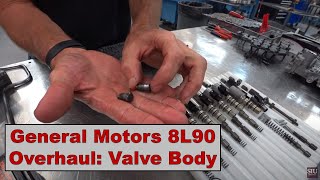
The 2017-2023 GMC Sierra 1500, particularly those with 8-speed (8L90) and 10-speed (10L80/10L90) automatic transmissions, has a well-documented history of valve body issues. The problem is so prevalent that General Motors has issued multiple Technical Service Bulletins (TSBs) and a special coverage program to address it. The root cause is rarely the solenoid itself, but rather mechanical wear in the aluminum valve body bores, specifically the feed limit valve bore. This wear allows hydraulic pressure to leak, preventing proper pressure regulation and causing the conditions that set a P0747 code.
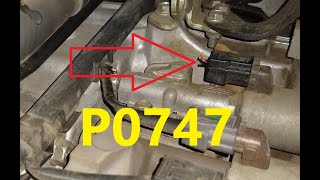
🎬 Watch: Understanding the causes and fixes for the P0747 code.Diagnostic Flowchart

Tap your situation to follow the diagnostic path that matches what you're seeing on this vehicle.
Generation note: This issue affects both the end of the third generation (2017-2018, K2XX platform with 8L90 transmission) and the fourth generation (2019-2023, T1XX platform with 8L90 and 10L80/10L90 transmissions). TSBs, owner complaints, and special coverage programs confirm the problem exists across these model years and extends to their platform mates like the Chevrolet Silverado.
Symptoms You May Notice

- Check Engine Light (Malfunction Indicator Lamp) is on.
- Transmission defaults to a single gear (e.g., 5th gear) and will not shift.
- "Service Transmission" or "Reduced Speed" message on the dashboard.
- Harsh, jerky, or delayed shifting, especially during 8->2 downshifts.
- Vehicle enters "Limp Mode".
- Engine revs without moving forward, followed by a slam into gear.
- Replacing only the Pressure Control Solenoid 'A' without addressing the known wear issues in the valve body assembly. The problem is extremely likely to return as the root cause is mechanical wear, not an electrical solenoid failure.
- Performing a simple fluid flush without inspecting the valve body. While clean fluid is essential, it will not fix a mechanically worn valve bore.
Most Likely Causes

- Faulty Transmission Control Valve Body 🔴 High Probability → Shop Transmission Valve Body Multiple GM TSBs (#24-NA-088, #N242454441-03) and a special coverage program specifically identify a worn control valve body as the primary cause for P0747. Aftermarket analysis confirms wear in the feed limit valve and solenoid regulator valve bores leads to a loss of pressure control, which is the true root cause.
How to confirm: A technician will follow GM's diagnostic procedures outlined in the service bulletins. If DTC P0747 is present and the fluid is not full of clutch debris, the valve body is the indicated point of failure. Technicians may also perform vacuum tests on the valve body bores to confirm wear.
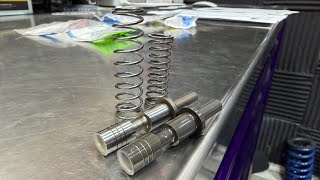
Typical fix: Replace the entire control valve body assembly. More recently, TSB #25-NA-255 directs technicians to repair the existing valve body by installing an updated steel feed limit valve, a higher tension spring, and a new spacer plate. This newer procedure validates aftermarket repair kits (e.g., from Sonnax) that have been available for some time.
Est. part cost: $600-$1500 - Low or Contaminated Transmission Fluid ⚪ Low Probability → Shop Transmission Assembly
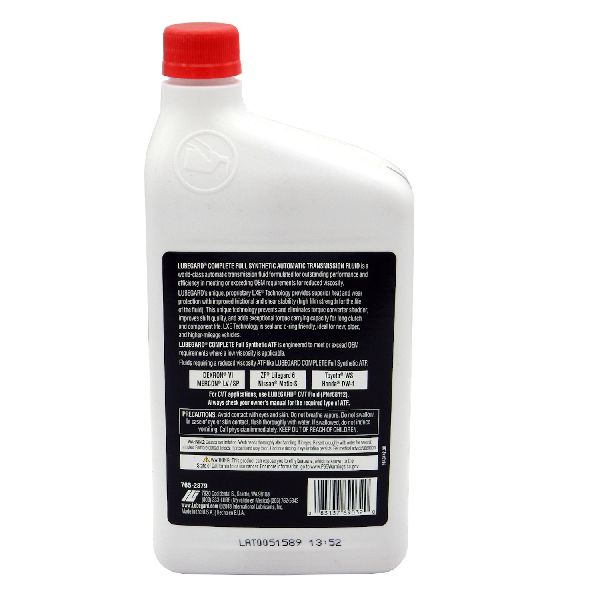
How to confirm: Check the transmission fluid level and condition. Fluid should be at the correct level and reddish, not dark brown, black, or smelling burnt. Note that many of these transmissions have no dipstick, requiring a technician to check. TSB 24-NA-088 provides visual guides: dark fluid without debris may still warrant only a valve body replacement, but fluid with excessive clutch material indicates a need for a full transmission inspection or rebuild.
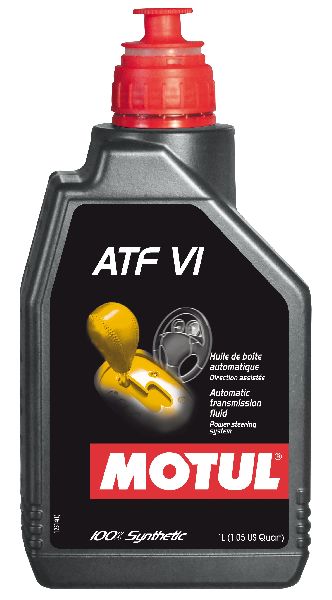
Typical fix: Perform a transmission fluid and filter change. However, if the fluid is very dark or contains clutch material, it indicates a more severe internal failure, and this fix alone is highly unlikely to solve the P0747 code.
Est. part cost: $150-$300 - Failed Pressure Control Solenoid 'A' ⚪ Low Probability → Shop Transmission Valve Body While the code directly names the solenoid, on this platform the failure is almost always in the valve body that houses it. Aftermarket and technical experts note that the solenoids themselves are overbuilt and rarely fail; the issue is the hydraulic pressure loss from bore wear that prevents the solenoid from functioning correctly.
How to confirm: The solenoid can be tested for proper electrical resistance and function, but this requires removing the transmission pan and often the valve body itself. This step is often skipped in favor of addressing the known valve body issue.
Typical fix: Replace the specific solenoid. This is often done as part of a complete valve body replacement to prevent a recurring issue.
Est. part cost: $50-$150
Rare But Worth Checking
- Wiring Harness Damage: Damage to the wiring leading to the transmission or within the internal harness can cause erratic signals, but this is far less common than the mechanical valve body failure.
- Faulty Transmission Control Module (TCM): → Shop Transmission Assembly In very rare cases, the TCM itself can fail. An early TSB from 2016 suggested a TCM reprogram for P0747 on some 2017 models, but this has been superseded by bulletins pointing to the mechanical valve body failure. A TCM failure should only be considered after all other possibilities have been ruled out.
Diagnosis Steps
- Verify the code with a professional OBD-II scanner capable of reading transmission-specific codes.
- Check for any applicable Technical Service Bulletins (TSBs) or Special Coverage programs for the vehicle's VIN. GM has issued several for this exact problem, most notably Special Coverage N242454441 and TSB 24-NA-088.
- Inspect the transmission fluid level and condition. Per TSB 24-NA-088, dark fluid without a burnt smell or significant debris may still point to a valve body replacement, while fluid with clutch material requires a full transmission teardown.
- If fluid is okay, follow the diagnostic procedure outlined in the relevant GM service bulletin. This will almost always lead to replacement or repair of the transmission control valve body.
- If replacing the valve body, the new unit's solenoids must be programmed to the TCM using a process called Solenoid Valve Characterization Programming. If repairing per TSB 25-NA-255, this reprogramming is not required.
- If the vehicle has less than 7,000 miles, GM recommends following standard diagnostics instead of immediately replacing parts per the TSB.
Parts You'll Likely Need
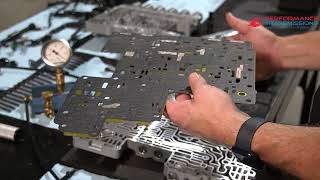
- Automatic Transmission Control Valve Body
(OEM #24065353 (10-speed, reported by owner), 24049465 (10L80), 24251431 (8L90, lower body))— This is the overwhelmingly common failure point for code P0747 on these trucks, as confirmed by multiple GM service bulletins and owner complaints.
Trusted brands: ACDelco, GM Genuine Parts, Sonnax (for repair kits), Next Gen Drivetrain (remanufactured/upgraded)
OEM price range: $800-$1700
Aftermarket price range: $600-$1200 - Feed Limit Low Valve Kit
(OEM #Included in TSB 25-NA-255 repair)— For the newer repair procedure, GM provides an updated steel valve and higher-tension spring to fix the root cause of the pressure leak without replacing the entire valve body.
Trusted brands: GM Genuine Parts, Sonnax (105740-54K)
OEM price range: $50-$100 (estimated for kit parts)
Aftermarket price range: $50-$100
Related Codes That Often Appear With This One
- P0700 — This is a generic Transmission Control System Malfunction code. It acts as a general alert that the TCM has stored a more specific fault, in this case, P0747.
- P0796 — This code indicates an issue with Pressure Control Solenoid 'C'. An early bulletin (#PIP5425A) noted that P0747 and P0796 could appear together, suggesting a systemic issue within the valve body affecting multiple solenoid circuits.
- P0777, P0797, P2715, P2724 — These are codes for other pressure control solenoids being stuck on. An early TSB for 2017 models grouped P0747 with these codes, suggesting a potential TCM calibration issue at the time, though this has since been superseded by mechanical failure bulletins.
Technical Service Bulletins (TSBs) & Recalls

- 24-NA-088: Corrects P0747 by replacing the transmission control valve body.
- N242454441-03: Details a special coverage program to replace the control valve body for P0747 and other symptoms, extending warranty to 15 years/150,000 miles.
- PIP5425A: An early bulletin from 2016 noting an investigation into codes P0747 and P0796.
- 25-NA-255: A newer bulletin detailing an in-vehicle repair of the valve body using an updated steel feed limit valve instead of full replacement.
Platform-Specific Known Issues
- Special Coverage N242454441: GM issued this program for certain models, extending coverage for this specific valve body condition to 15 years or 150,000 miles. It covers replacement of the control valve body at no charge if DTC P0747 is found.
- TSB #24-NA-088: This bulletin explicitly directs technicians to replace the transmission control valve body to fix customer concerns of a ch
Mechanic-Grade Diagnostic Values
- Pressure Control Solenoid 'A' (S1) Resistance — expected: 4.5–5.5 Ohms. Failure: A reading outside this range indicates a faulty solenoid coil.
- Valve Body Bore Vacuum Test — expected: Holds a minimum of 18 in-Hg. Failure: A vacuum reading below 18 in-Hg at the specified test ports indicates excessive wear in the valve or bore, confirming a hydraulic leak.
Scan Tool Commands That Help
- GDS2 (GM Global Diagnostic System 2): Solenoid Valve Characterization Reprogramming — This is mandatory after replacing the entire transmission, the valve body assembly, or the Transmission Control Module (TCM). It downloads the unique performance data for the new solenoids from GM's server and programs it into the TCM to ensure proper shift quality.
- GDS2 (GM Global Diagnostic System 2): Transmission Service Fast Learn — This procedure must be performed after any major repair, including valve body or solenoid replacement, and after performing the Solenoid Valve Characterization. It allows the TCM to learn the apply pressures for individual clutches.
- GDS2 (GM Global Diagnostic System 2): Control Functions (Bidirectional Control) — Allows a technician to command individual solenoids on and off to test their electrical circuit and mechanical response, helping to isolate a faulty solenoid from a wiring or TCM driver issue.
Wiring & Ground Locations
- G110 / G114 — G110 is located on the right rear of the engine, mounted to the back of the cylinder head. G114 is also a body ground connection in the engine bay area.. GM issued an Engineering Information bulletin (PIE0548) regarding loose connections at these grounds on 2019-2020 models causing various electrical issues. A poor ground for the TCM or transmission harness could cause erratic voltage and unpredictable solenoid behavior, potentially triggering a P0747 code as a secondary fault.
- Transmission Harness Connector (X1) — The main 16-pin electrical connector on the side of the transmission case.. This is the primary interface between the external TCM and the internal transmission components, including all solenoids. Technicians test for continuity and voltage at the pins corresponding to Pressure Control Solenoid 'A' to rule out wiring issues between the module and the transmission.
Real Owner Repair Stories
- Next Gen Drivetrain Technical Article (General Motors 10-Speed Transmissions (10L80/10L90)) — Active or pending P0747 DTC, often with the 'E' clutch being applied when it should be off, detected by the input shaft speed sensor.
❌ Tried (didn't work) Replacing the Pressure Control Solenoid 'A' alone, as the solenoids are overbuilt and rarely the true point of failure.
✅ What actually fixed it The root cause was identified as mechanical wear in the valve body. Specifically, either the solenoid regulator valve bore wears, preventing the valve from closing, or the feed limit valve wears at its spring pedestal, causing a critical pressure leak. The fix is to repair these worn bores, often with aftermarket kits containing improved valves with better sealing, or to replace the entire valve body with an updated unit.
"I Checked Everything" — The Actual Cause
- A common pattern with P0747 is that the Pressure Control Solenoid 'A' will pass all electrical tests (resistance check, bidirectional command), leading a technician to believe it is functioning correctly. However, the code persists because the true failure is not electrical but hydraulic. Severe wear in the aluminum valve body bore where the solenoid's corresponding regulator valve or feed limit valve sits allows fluid pressure to leak internally. This pressure loss prevents the solenoid's action from having the correct hydraulic effect, causing the TCM to flag the solenoid as 'stuck on' even though the solenoid itself is not faulty.
OEM Part Supersession History
24043767, 24048696, 24299093→24049465— Standard part evolution and updates for the 10L80 valve body assembly.Original Valve Body Assembly→Repair Kit (Steel Feed Limit Valve, Spring, Spacer Plate)— GM issued TSB 25-NA-255 to move from full valve body replacement to an on-bench repair for the specific bore wear causing P0747. This is more cost-effective and addresses the root cause with more durable (steel vs. aluminum) parts.
Heads up: This repair procedure applies specifically to certain 2021-2024 models with 10-speed transmissions and should not be performed if excessive clutch material is found in the pan.
Model Year Variations Within This Range
- 2017-2023: The TCM on the 8L90 and 10L80/90 transmissions is an external module, unlike the internal TEHCM found on the older 6L80. This simplifies some diagnostic steps as the module is not exposed to the heat and fluid of the transmission interior.
- 2021-2024 (10-speed only): For these model years, TSB #25-NA-255 introduced a new repair procedure. Instead of replacing the entire valve body for P0747, technicians are directed to disassemble the valve body and install an updated steel feed limit valve, a higher tension spring, and a new spacer plate. This repair does NOT require the Solenoid Valve Characterization reprogramming that a full replacement does.
- 2025+ (for service parts): GM has introduced a 'Gen-3' 10-speed valve body for service replacements. This new design consolidates the auxiliary valve body, relocates several solenoids, and uses a different bolt pattern, requiring a new bolt kit (P/N 24073070) for installation.
Helpful Videos
We Have This Part in Stock

The information in this article is provided for general reference and educational purposes only. Vehicle specifications, procedures, and part compatibility can vary by production date, trim level, and region. Always consult your vehicle's factory service manual and verify part numbers before purchasing or performing repairs. Safety-critical components such as airbags, seat belts, and braking systems should be installed by a qualified professional.
- Gmc SIERRA 1500:
- 🧭 Diagnostic Flowchart
- 🎬 Helpful Videos
- 🛍️ Shop This Part
- What's Unique About the 2017-2023 Gmc SIERRA 1500
- Symptoms You May Notice
- Most Likely Causes
- Rare But Worth Checking
- Diagnosis Steps
- Parts You'll Likely Need
- Related Codes That Often Appear With This One
- Technical Service Bulletins (TSBs) & Recalls
- Platform-Specific Known Issues
- Mechanic-Grade Diagnostic Values
- Scan Tool Commands That Help
- Wiring & Ground Locations
- Real Owner Repair Stories
- "I Checked Everything" — The Actual Cause
- OEM Part Supersession History
- Model Year Variations Within This Range
- 🎟️ Get 5% Off