

P0747 on 2018-2024 GMC Terrain: Pressure Control Solenoid 'A' Stuck On Causes & Fixes
On a 2018-2024 GMC Terrain, code P0747 almost always indicates a serious internal transmission problem, not just a bad solenoid. Manufacturer bulletins point to faulty snap rings or retaining rings requiring transmission disassembly. This is not a DIY fix, and professional diagnosis is critical. Owner reports confirm this often leads to a complete transmission rebuild or replacement after initial repair attempts fail.
- P0747 on a 2018-2024 GMC Terrain is a critical code that should be addressed immediately.
- The root cause is very likely a significant internal mechanical failure, as documented in multiple manufacturer TSBs, not just a simple solenoid failure.
- Do not drive the vehicle, as this can lead to complete transmission failure and leave you stranded.
- Diagnosis and repair require a professional technician with experience in modern GM transmissions; this is not a suitable DIY project.
- The most common, reliable fix is often a complete transmission rebuild or replacement.
What's Unique About the 2018-2024 Gmc TERRAIN
The GMC Terrain in this year range, often equipped with a 9-speed (9T45/M3U) automatic transmission, has specific, documented mechanical failures that lead to code P0747. Unlike many vehicles where a faulty solenoid is the primary culprit, on this platform, the cause is frequently a mechanical part failure inside the transmission. GMC has issued multiple Technical Service Bulletins (TSBs) identifying issues like out-of-round 1-2-3-4-5-6 clutch snap rings (TSB PIP5974E) and improperly seated clutch spring retaining rings (TSB N202321840) as the root cause, particularly at low mileage.
Diagnostic Flowchart
Tap your situation to follow the diagnostic path that matches what you're seeing on this vehicle.
Symptoms You May Notice
- Malfunction Indicator Light (MIL) is illuminated
- Extremely harsh or violent shifts, sometimes described as "slamming" into gear
- Vehicle may not move when put into Drive or Reverse
- Transmission may be stuck in one gear (limp mode)
- Delayed engagement when shifting from Park
- Transmission slipping, where engine RPMs increase without a corresponding increase in vehicle speed
- A complete loss of forward gears, with only Reverse working, or vice-versa
- Replacing the pressure control solenoid or the entire valve body without first inspecting for the known internal mechanical failures (snap rings/retaining rings). This is a costly mistake as the new parts will not solve the underlying problem and is explicitly warned against in manufacturer service bulletins.
Most Likely Causes
- Internal Mechanical Failure (Snap/Retaining Ring) 🔴 High Probability Multiple TSBs (PIP5974E, N202321840) confirm this is a known issue. The 1-2-3-4-5-6 clutch backing plate retaining ring can be out of round or the clutch spring retaining ring may not be fully seated, causing pressure control problems that trigger P0747. TSB PIP5974E specifically targets transmissions built between Oct 2023 and April 2024 for this defect.
How to confirm: Diagnosis requires dropping the transmission pan and inspecting for excessive clutch debris or metal shavings. Confirmation requires transmission disassembly to visually inspect the specific internal components mentioned in the TSBs.
Typical fix: The transmission must be removed and disassembled to replace the faulty rings and any collateral damage. TSB PIP5974E specifies replacing the entire 1-2-3-4-5-6 clutch piston housing, piston, seals, spring, plates, and both retaining rings. In many cases, a complete transmission rebuild or replacement is the most reliable repair, as evidenced by owner experiences where initial repairs failed.
Est. part cost: $100-$4000 - Low or Contaminated Transmission Fluid 🟡 Medium Probability → Shop Transmission Assembly While not the root cause of the mechanical failures, low or dirty fluid can cause shifting problems and accelerate wear. The 9T45 transmission is sensitive to fluid quality and level. Finding metal shavings in the fluid is a strong indicator of the internal snap ring failure.
How to confirm: Check the transmission fluid level and condition. The correct fluid is DEXRON VI. Fluid should be red and clear, not brown, black, or smelling burnt.
Typical fix: Perform a transmission fluid drain and fill, or a complete fluid flush if the fluid is heavily contaminated. Replace the transmission filter. This is often a first step but will not fix an underlying mechanical failure.
Est. part cost: $100-$250 - Faulty Body Control Module (BCM) or Circuit ⚪ Low Probability → Shop Body Control Module TSB #PIP5697E points to a possible BCM or circuit 5985 concern. The TCM performs a self-test on its solenoids (a 'dither' test) for about 15 seconds after the ignition is turned off. If the BCM prematurely cuts power to the TCM during this window, the test doesn't complete. On the next startup, the TCM logs P0747, assuming a fault prevented the test. This is an electrical anomaly, not a mechanical one.
How to confirm: This requires advanced electrical diagnostics. A technician would use a voltmeter on the BCM connector (e.g., X4 terminal 22) to verify it supplies battery voltage to the TCM for at least 15 seconds after key-off. This cause should only be investigated if the code sets at shutdown and no mechanical issues are found.
Typical fix: Repair of the affected circuit or replacement and reprogramming of the Body Control Module.
Est. part cost: $50-$700
Rare But Worth Checking
- Faulty Pressure Control Solenoid 'A': → Shop Transmission Valve Body While the code directly names the solenoid, on this specific platform it is more often a symptom of a mechanical issue rather than the root cause. TSB PIP5974E explicitly warns against replacing the solenoid body for this issue without confirming the mechanical components are sound: '*NOTE: Do not replace the Control valve body assembly (Valve body) or Control valve solenoid body assembly (Solenoid body) as these are not related to the concern.*'
Diagnosis Steps
- Check for and document any other stored DTCs, paying special attention to P0746 or P0700.
- Check the transmission fluid level and condition. If the fluid is low, black, smells burnt, or contains visible metal shavings, it strongly indicates a serious internal problem.
- Review the vehicle's history for any applicable TSBs, especially PIP5974E, N202321840, and PIP5697E.
- If conditions match TSB PIP5697E (code sets at shutdown in P/N), perform electrical diagnostics on the BCM and its power supply circuit to the TCM as described in technical magazines.
- For all other cases, a transmission specialist should be consulted. The next step is typically to drop the transmission pan to inspect for excessive metal or clutch material debris.
- If significant debris is found, transmission removal and disassembly is required to inspect the 1-2-3-4-5-6 clutch snap rings and other internal components as per the TSBs.
- If no debris is found, further testing of the valve body and solenoids may be warranted, but this is less likely to be the root cause on this vehicle.
Parts You'll Likely Need
- Transmission Rebuild/Replacement — Due to the high probability of a significant internal mechanical failure (snap/retaining rings), a complete rebuild or replacement is often the most effective and long-lasting repair. Owner reports show that even dealer repairs of the specific failed components can fail, leading to a full replacement.
Trusted brands: ACDelco (OEM)
OEM price range: $3000-$5000
Aftermarket price range: $2500-$4000 - 1-2-3-4-5-6 Clutch Piston Housing Assembly — If a full replacement is not performed, TSB PIP5974E recommends replacing the entire clutch piston housing assembly, which includes the problematic snap rings and other related components.
Trusted brands: ACDelco (OEM)
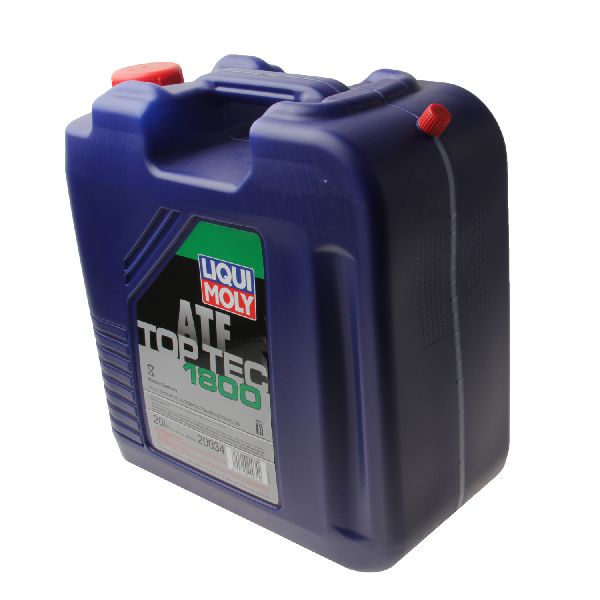
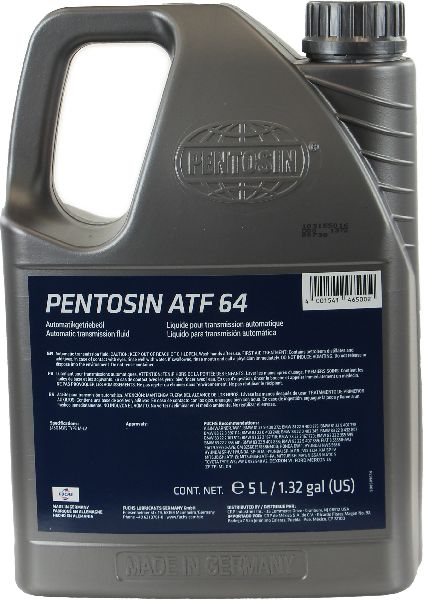
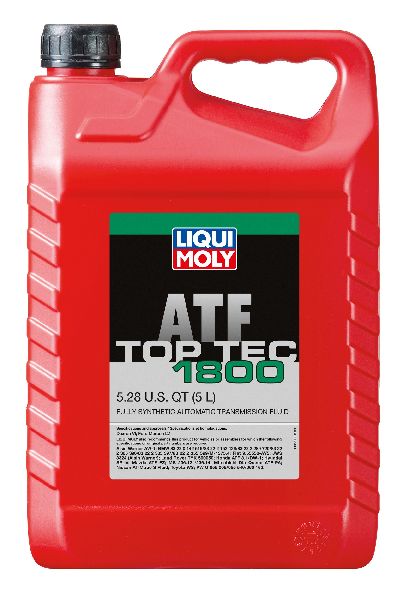
OEM price range: $200-$400 - Transmission Fluid DEXRON VI
(OEM #19418067 (ACDelco))— Required for any transmission service, from a simple fluid change to a full rebuild.
Trusted brands: ACDelco
OEM price range: $10-$15 per quart
Aftermarket price range: $8-$12 per quart
Related Codes That Often Appear With This One
- P0746 — P0746 is for 'Pressure Control Solenoid 'A' Performance or Stuck Off'. Both codes relate to the same solenoid and control circuit, and TSBs like PIP5974E and PIE0720A list them together as resulting from the same internal mechanical failures.
- P0700 — P0700 is a generic code indicating the Transmission Control Module (TCM) has requested the MIL to be illuminated. It will almost always be present alongside a more specific transmission code like P0747.
Technical Service Bulletins (TSBs) & Recalls
- PIP5974E: Communicates that out-of-round 1-2-3-4-5-6 snap rings can cause P0746 or P0747.
- N202321840: Notes that an improperly seated clutch spring retaining ring can cause P0747, typically at low mileage.
- PIE0720A: A request for information from technicians regarding vehicles that will not move and have set DTC P0747.
- PIP5697E: Describes a potential BCM or circuit issue as a cause for P0747 when no mechanical faults are present.
Platform-Specific Known Issues
- A known issue with out-of-round 1-2-3-4-5-6 clutch snap rings can cause this code, as documented in TSB #PIP5974E.
- Improperly seated clutch spring retaining rings have been identified as a cause for P0747 at low mileage, per TSB #N202321840.
- Some vehicles may experience a no-move condition in Drive or Reverse when P0747 is set, as noted in TSBs #PIE0720A and #PIE0720.
- Real Owner Repair Story (NHTSA Complaint): An owner reported a P0747 code. The dealer first replaced the TCM, which did not fix it. Then, following a GM bulletin, they tore down the transmission and found the bad snap ring, along with a severely burned clutch and damaged valve bodies. After a 12-week repair, the vehicle was returned, only for the same symptoms to reappear 5 days later. The dealer then had to order a complete replacement transmission.
Mechanic-Grade Diagnostic Values
- Resistance of Pressure Control Solenoid 'A' (1-2-3-4-5-6 Clutch) — expected: 5.0 - 5.4 Ω at 68°F (20°C).. Failure: A reading of infinite resistance (open circuit) or a value significantly outside the specified range indicates a failed solenoid coil.
- Resistance of other Variable Force (VFS) / Linear Force Solenoids — expected: 5.0 - 5.4 Ω at 68°F (20°C).. Failure: Values outside this range suggest a faulty solenoid.
- Resistance of On/Off Solenoids — expected: 19.0 - 19.6 Ω at 68°F (20°C).. Failure: Values outside this range suggest a faulty solenoid.
- BCM Voltage Supply to TCM after Key-Off — expected: Battery voltage should be present for at least 15 seconds after the ignition is turned off.. Failure: If voltage is not present, it indicates a potential fault in the BCM, its ground, or the connecting circuit, which can falsely set a P0747 on the next startup.
Scan Tool Commands That Help
- GDS2 (GM Dealer Scan Tool): Solenoid Valve Diagnosis / Active Test — This function allows a technician to command each pressure control solenoid on and off individually to see if it is electrically functional and mechanically responsive. It is a critical step to differentiate between a wiring/TCM issue and a truly stuck solenoid or internal valve body problem before transmission removal.
- GDS2 (GM Dealer Scan Tool): Transmission Service Adaptation (Fast Learn) — This procedure MUST be performed after any major repair, such as replacing the valve body, solenoids, or the entire transmission. It allows the TCM to relearn clutch fill volumes and hydraulic characteristics. Skipping this step can result in harsh shifting and other performance issues even if the mechanical repair was successful.
Wiring & Ground Locations
- TCM (Transmission Control Module) — Mounted to the valve body side cover, inside the transmission itself. It is not a separately accessible module in the cabin or engine bay.. The TCM controls all solenoids and sets the P0747 code. Its location inside the transmission means any direct testing of its connectors requires removing the transmission side cover.
- BCM Connector X4, Pin 22 — The Body Control Module (BCM) is typically located in the instrument panel area. Connector X4, Pin 22 is a voltage supply circuit to the TCM.. This pin must supply battery voltage to the TCM for at least 15 seconds after key-off to allow the TCM to complete its solenoid self-test. A loss of this voltage can cause a false P0747. This is a key test point for the electrical fault described in TSB PIP5697E.
- BCM Connector X2, Pin 11 (Circuit 5985) — On the Body Control Module (BCM). This specific circuit is designated as 'Communication Enable'.. TSB #PIP5697E specifically calls out a potential concern with circuit 5985. A fault on this communication line between the BCM and TCM could contribute to the false P0747 code setting during the power-down sequence.
Model Year Variations Within This Range
- 2024: Per TSB PIP5974E, transmissions manufactured between October 2023 and April 2024 are specifically highlighted as being at risk for an out-of-round 1-2-3-4-5-6 clutch backing plate retaining ring, which directly causes codes P0746 or P0747.
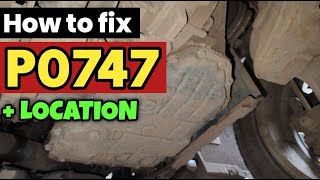
Helpful Videos
We Have This Part in Stock

The information in this article is provided for general reference and educational purposes only. Vehicle specifications, procedures, and part compatibility can vary by production date, trim level, and region. Always consult your vehicle's factory service manual and verify part numbers before purchasing or performing repairs. Safety-critical components such as airbags, seat belts, and braking systems should be installed by a qualified professional.
- Gmc TERRAIN:
- 🧭 Diagnostic Flowchart
- 🎬 Helpful Videos
- 🛍️ Shop This Part
- What's Unique About the 2018-2024 Gmc TERRAIN
- Symptoms You May Notice
- Most Likely Causes
- Rare But Worth Checking
- Diagnosis Steps
- Parts You'll Likely Need
- Related Codes That Often Appear With This One
- Technical Service Bulletins (TSBs) & Recalls
- Platform-Specific Known Issues
- Mechanic-Grade Diagnostic Values
- Scan Tool Commands That Help
- Wiring & Ground Locations
- Model Year Variations Within This Range
- 🎟️ Get 5% Off