

P0747 on 1999-2004 Oldsmobile Alero: Pressure Control Solenoid 'A' Stuck On Causes and Fixes
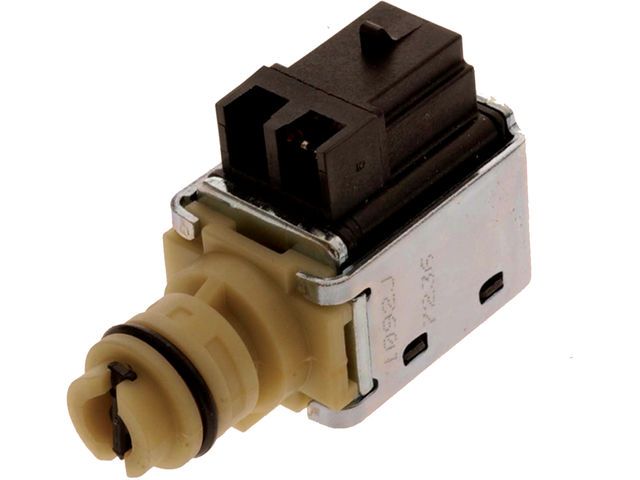
On a 1999-2004 Alero, code P0747 is almost always caused by a failed Pressure Control (PC/EPC) Solenoid inside the 4T40E or 4T45E transmission. This causes harsh, banging shifts and can put the car in 'limp mode'. The fix requires removing the transmission side cover to replace the solenoid, and it's highly recommended to replace all accessible solenoids at the same time.
- P0747 on a 1999-2004 Alero indicates a serious transmission problem, most often a failed Pressure Control (EPC) Solenoid.
- Symptoms are severe and hard to ignore, primarily consisting of harsh, banging shifts that can make the car unsafe to drive.
- Do not drive the vehicle extensively with this code. Doing so can turn a relatively inexpensive solenoid replacement into a full transmission rebuild.
- The repair is labor-intensive. Because the transmission must be opened, it is highly recommended to replace all the control solenoids (shift, TCC, and EPC) at the same time, along with the filter and fluid.
What's Unique About the 1999-2004 Oldsmobile Alero
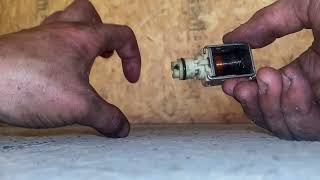
The Oldsmobile Alero uses a 4T40E or 4T45E automatic transmission, where the various control solenoids are a known common failure point leading to shifting problems. While P0747 is a generic code, on this specific platform it almost always points directly to the Pressure Control (PC) solenoid itself, which is located inside the transmission on the valve body, accessible via the side cover. 🎬 Watch: See how to access and replace the shift solenoids. Unlike some modern vehicles where complex valve body wear is the primary cause, on the Alero, the solenoid is the most frequent point of failure for this issue.
Symptoms You May Notice
- Extremely harsh, banging, or jerky gear shifts, often described as a 'slam' when changing gears.
- Transmission gets stuck in one gear (limp mode).
- Delayed engagement when shifting from Park to Drive or Reverse.
- Slipping between gears, where the engine RPMs rise without an increase in vehicle speed.
- Check Engine Light is illuminated.
- Transmission overheating due to slipping and incorrect pressure.
- "TRAC OFF" light may illuminate intermittently.
- Engine may shudder or stall when coming to a stop (if the TCC lockup solenoid is also affected).
- Throttle Position Sensor (TPS): A faulty TPS can cause harsh shifting on an Alero, but it will typically set its own specific trouble codes and should be diagnosed separately.
- Cracked Engine Vacuum Hose: A significant vacuum leak can affect shift quality. This is a simple visual inspection that should be performed to rule out engine-related causes of harsh shifting.
Most Likely Causes
- Faulty Pressure Control (EPC) Solenoid 🔴 High Probability → Shop Transmission Clutch Pressure Control Solenoid The control solenoids in the 4T40E/4T45E transmission are a well-documented, common failure point. They can fail mechanically due to a sticking internal plunger or electrically from an internal short in the coil winding. Contaminated fluid accelerates this wear.
How to confirm: A technician will use a scan tool to confirm the code and may test the solenoid's resistance. The solenoid is located inside the transmission side cover, attached to the valve body. 🎬 See this walkthrough of a 4T45 transmission solenoid installation. A healthy solenoid should typically have a resistance between 3.5-4.6 ohms for this transmission family.
Typical fix: Replace the Pressure Control (EPC) solenoid. It is highly recommended to also replace the two shift solenoids and the TCC lockup solenoid at the same time, as they are in the same location and have a similar service life. This is often sold as a 'master solenoid kit'.
Est. part cost: $40-$80 for a single solenoid, $100-$200 for a master solenoid kit. - Low, Burnt, or Dirty Transmission Fluid 🟡 Medium Probability → Shop Transmission Assembly Over time, fluid breaks down and collects clutch material and other debris. This contaminated fluid can cause valves and solenoids to stick or clog the small passages within them. The Alero does not have an easily accessible dipstick, making fluid checks less frequent for many owners.
How to confirm: Check the transmission fluid level and condition. The Alero has a fill plug on the side of the transmission. The fluid should be red and clear, not brown, black, or smell burnt. The presence of significant metal shavings indicates a more severe internal failure.
Typical fix: Perform a transmission fluid and filter change. If the fluid is heavily contaminated, this may be a symptom of a larger internal failure, and a simple fluid change may not be enough to fix the sticking solenoid.
Est. part cost: $50-$100 for fluid and a filter kit. - Damaged Wiring or Connector ⚪ Low Probability The wiring harness leading to the transmission can become damaged over time from heat, vibration, or road debris, leading to a short circuit that keeps the solenoid energized.
How to confirm: Visually inspect the wiring harness going to the transmission. A technician can test for a short-to-power on the control wire for the PC solenoid by back-probing the connector.
Typical fix: Repair the damaged section of the wiring harness.
Est. part cost: $10-$50 for wiring repair supplies.
Rare But Worth Checking
- Failed Powertrain Control Module (PCM): → Shop Engine Control Module (ECM) While rare, the driver circuit within the PCM that controls the solenoid can fail, keeping it energized. This should only be considered after the solenoid and wiring have been confirmed to be good.
- Worn Internal Valve Body: → Shop Transmission Valve Body Debris in the fluid can score the bores within the aluminum valve body, causing valves to stick. This is a more serious issue that may require valve body replacement or reconditioning by a specialist.
Diagnosis Steps
- Check the transmission fluid level and condition. The fluid should be at the correct level and not appear dark, burnt, or contain debris.
- Use a scan tool to confirm P0747 and check for any other related transmission or engine codes, such as P0700 or P1810.
- Visually inspect the transmission wiring harness and main connector for any obvious signs of damage, corrosion, or loose connections.
- If fluid and wiring are okay, the next step is to gain access to the solenoids by removing the transmission side cover.
- Once inside, test the resistance of the Pressure Control (EPC) solenoid. A reading outside the manufacturer's specification (typically 3.5-4.6 ohms for a 4T40E) indicates a failed solenoid.
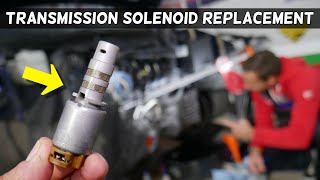
- If the solenoid tests good electrically, the plunger may be mechanically stuck. The solenoid should be removed and bench-tested for physical operation. 🎬 Watch: How to replace solenoids to fix shifting issues.
- If the solenoid and wiring are confirmed good, the problem may lie in the valve body bores or the PCM, which requires more advanced diagnostics.
Parts You'll Likely Need
- Transmission Solenoid Master Kit
(OEM #The PC Solenoid is often ACDelco 24227792 (replaces 24212690). A full kit is recommended.)— This is the most common cause of the failure. Since accessing the solenoids requires significant labor, it is best practice to replace all of them (Pressure Control, two Shift Solenoids, TCC Solenoid) at once.
Trusted brands: ACDelco, Standard Motor Products (SMP), Rostra (e.g., P/N 52-0357 for shift solenoids)
OEM price range: $200-$300
Aftermarket price range: $100-$200 - Transmission Filter and Gasket Kit
(OEM #ACDelco 24203590 (for pan gasket))— This must be replaced whenever the transmission is opened for service. A new side cover gasket is also required.
Trusted brands: ACDelco, Wix, ATP
OEM price range: $30-$50
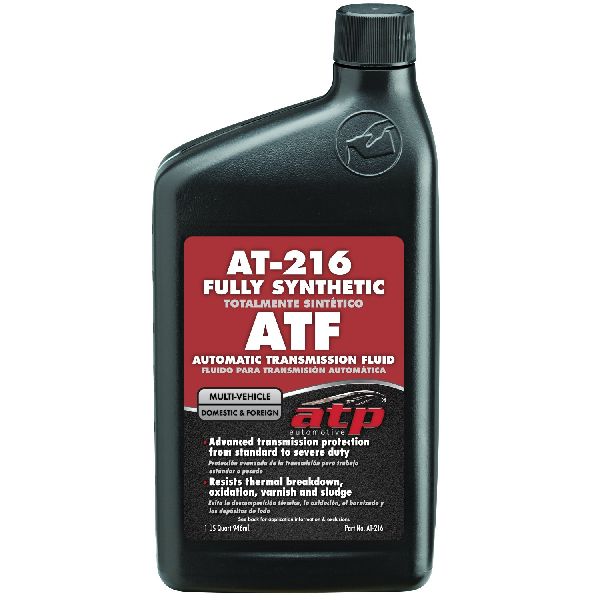
Aftermarket price range: $15-$30 - DEXRON-VI Automatic Transmission Fluid
(OEM #ACDelco 10-9395 (in the US))— The transmission must be refilled with the correct type of fluid after the repair. DEXRON-VI is the modern, backward-compatible fluid for the original DEXRON-III specification.
Trusted brands: ACDelco, Valvoline, Castrol
OEM price range: $8-$12 per quart
Aftermarket price range: $6-$10 per quart
Related Codes That Often Appear With This One
- P0700 — P0700 is a generic code that simply means the Transmission Control Module (TCM) has stored a fault code. It acts as a 'check engine light' for the transmission and will almost always be present with P0747.
- P1810 — This GM-specific code for 'Transmission Fluid Pressure (TFP) Valve Position Switch Circuit' often indicates long shift times, which can be caused by the same failing pressure control solenoid that triggers P0747. TSB #03-07-30-021A directly links P1810 to a faulty PC solenoid.
- P0751 — Code P0751 (Shift Solenoid 'A' Performance/Stuck Off) can appear alongside P0747, indicating a wider problem with the solenoid pack or valve body, as the system is detecting faults with multiple components.
Technical Service Bulletins (TSBs) & Recalls
- TSB #03-07-30-021A: While not for P0747 specifically, this GM bulletin addresses harsh shifting and code P1810 on Alero and other GM models with the 4T40E/4T45E. It notes that the cause is often a failing pressure control solenoid—the same part implicated in P0747—and recommends its replacement to resolve the harsh shift condition.
Platform-Specific Known Issues
- Owner Experience on AleroAvenue.com: A user on the AleroAvenue forums with a 2002 Alero reported classic P0747 symptoms of 'banging' into gear. After replacing the PC solenoid, both shift solenoids, and the TCC solenoid with a master kit, along with a fluid/filter change, the problem was completely resolved. The owner noted the most difficult part was accessing the transmission side cover.
Mechanic-Grade Diagnostic Values
- Pressure Control (EPC/PC) Solenoid Resistance — expected: 3.5 - 4.6 Ohms at room temperature.. Failure: A reading of 0 Ohms indicates a short circuit. An infinite or very high reading (kOhms/MOhms) indicates an open circuit. Readings outside the specified range suggest a failing coil.
- Transmission Line Pressure vs. PC Solenoid Current — expected: Pressure should decrease as current increases. At 0.10 amps, pressure should be ~149-151 PSI. At 0.90 amps, pressure should be ~64-67 PSI.. Failure: If a scan tool shows the PCM is commanding current changes but a pressure gauge shows no corresponding change in line pressure, it points to a stuck solenoid or valve body issue.
Scan Tool Commands That Help
- GM Tech 2 or equivalent professional scan tool: Solenoid Control / Output Control for PC Solenoid — After confirming the P0747 code, a technician can use this bidirectional command to manually cycle the PC solenoid. While monitoring transmission line pressure with a gauge, commanding the solenoid ON and OFF should produce a corresponding change in pressure. If the pressure does not change, it confirms the solenoid is stuck or there is a hydraulic blockage, isolating the fault from the PCM or wiring.
Wiring & Ground Locations
- PCM Connector C1, Pin 65 (2.2L Engine) — The Powertrain Control Module (PCM) is located below the left side of the dash. Pin 65 on the C1 connector is the 'PC Sol Lo' (Pressure Control Solenoid Low) control wire.. This is the specific wire that the PCM uses to ground-side control the PC solenoid. A technician can test for continuity and shorts on this wire between the PCM and the transmission connector to rule out wiring faults.
- PCM Connector C1, Pin 75 (3.4L Engine) — On models with the 3.4L V6, the Pressure Control Solenoid Valve is controlled by Pin 75 on the C1 connector at the PCM, located under the left side of the dash.. This is the control circuit pin for V6 models. Diagnosing an electrical fault requires testing this specific wire for continuity from the PCM to the transmission harness connector.
- G102 Ground — Located on the lower front of the engine.. This is a primary engine and PCM ground. While not directly for the solenoid circuit, a poor ground at G102 can cause erratic behavior in the PCM and other sensors, potentially leading to incorrect transmission commands or false codes. It should be inspected for corrosion and tightness.
Real Owner Repair Stories
- Aleromod.com forum user (1999 Oldsmobile Alero 3.4L V6) — Transmission died, converter was damaged, and clutch plates were burned. This was preceded by engine temperature and RPM problems.
❌ Tried (didn't work) New radiator, New water pump, New thermostat, New belt and tensioner
✅ What actually fixed it The user identified the root cause as a failed torque converter which led to widespread transmission failure. The plan was to rebuild the original 4T45E transmission with a new converter and clutch plates. A temporary swap with a 4T40E was considered.
OEM Part Supersession History
24212690→24227792— The original part number for the Pressure Control / TCC PWM solenoid was updated by GM to a new number. This is a common practice for design revisions or supplier changes.
Heads up: The new part number 24227792 is the correct service replacement for the original. No incompatibility is noted; it is a direct replacement.
Model Year Variations Within This Range
- 1999-2004: Aleros came with two different but related transmissions. The 4-cylinder models (2.2L Ecotec, 2.4L Quad 4) were typically equipped with the 4T40E (RPO code MN4). The V6 models (3.4L LA1) used the slightly more robust 4T45E (RPO code MN5), which was designed for higher torque. While the solenoids and general repair procedure for P0747 are identical, the bellhousing bolt patterns are different, meaning the transmissions are not directly interchangeable between 4-cylinder and V6 cars.
Diagnostic Flowchart
Other Known Issues on This Vehicle
Issues unrelated to this code that are worth knowing about as an owner of this generation:
- Intake Manifold Gasket Failure (3.4L V6) 🔴 High — Very common, often occurs between 80,000 and 120,000 miles. Can cause coolant to mix with engine oil, leading to catastrophic engine damage if not addressed. (Ref: No recall, but a known class-action lawsuit was filed against GM for issues with Dex-Cool coolant allegedly contributing to gasket degradation.)
- Passlock II Anti-Theft System Failure 🟠 Medium — Extremely common. The system fails to recognize the key, causing a crank-no-start condition or engine stalling immediately after starting. The security light will flash. (Ref: No recall. The common fix is a '10-minute relearn procedure' or a permanent bypass by installing a resistor in the ignition switch wiring.)
- Premature Front Wheel Bearing / Hub Assembly Failure 🟠 Medium — Common failure item. Symptoms include a loud roaring or grinding noise from the front wheels that increases with speed. Often requires replacement of the entire hub assembly.
- Turn Signal / Hazard Flasher Switch Failure 🟡 Low — Common. The multifunction switch in the steering column fails, causing turn signals to not work or the hazard lights to click intermittently on their own.
Used vs. New Parts: Buying Guide for This Vehicle
When a used part is the smart pick: For this repair, a used part is almost never a smart choice. The key failure component is the electronic solenoid pack, which is a wear item. The labor to access and replace the solenoids is significant, so installing a used solenoid with unknown life remaining is a major risk. A complete used transmission assembly from a low-mileage donor is only a viable option if the original transmission has suffered catastrophic mechanical damage (e.g., cracked case, destroyed clutch packs) making a rebuild uneconomical.
Donor-vehicle mileage cap: roughly under 70000 miles for the part to have meaningful remaining life.
What to inspect on the donor part:
- Check the fluid from the donor transmission. It should be bright red and clear, not dark brown, black, or smell burnt.
- Ask for a vehicle history report of the donor car to check for reported accidents or maintenance issues.
- Inspect the transmission case for any cracks, deep gouges, or signs of extreme overheating (discoloration).
OEM-only on this vehicle (don't cheap out):
- While not strictly 'OEM-only', using a reputable brand for the transmission solenoids is critical. Cheap, unbranded solenoid kits have a very high failure rate. Stick with OEM (ACDelco) or top-tier aftermarket brands.
Aftermarket brands forum-validated for this vehicle:
- ACDelco (OEM)
- Rostra
- Sonnax (for problem-solving valve body parts and upgraded components)
- Standard Motor Products (SMP)
Brands owners have reported issues with on this vehicle:
- Unbranded, no-name 'master solenoid kits' from online marketplaces are frequently cited in forums as failing shortly after installation.
Real Owner Stories
Aggregated from forums and TSBs cited above. Mileages and costs reflect what owners reported in those sources.
2002 Oldsmobile Alero
Symptoms: The vehicle was 'banging' into gear.
What fixed it: The problem was completely resolved by replacing the PC solenoid, both shift solenoids, and the TCC solenoid with a master kit, along with a transmission fluid and filter change.
Source hint: Owner Experience on AleroAvenue.com
Related OBD-II Codes
Frequently Asked Questions
I have a P0747 code and harsh shifting on my Alero. Is there a specific GM Technical Service Bulletin for this?
My mechanic wants to replace only the Pressure Control (PC) solenoid. Is this the best approach for a 1999-2004 Alero?
How do I check the transmission fluid on my Oldsmobile Alero? I can't find a dipstick.
What is the correct electrical resistance for the Pressure Control (EPC) solenoid on my Alero's 4T40E transmission?
My Alero has a P0747 code. Could this be related to the common Passlock anti-theft system issue?
Does this P0747 information for the Alero also apply to my 2002 Pontiac Grand Am?
Besides the Check Engine Light, what other warning lights might appear with code P0747 on my Alero?
Helpful Videos
We Have This Part in Stock

The information in this article is provided for general reference and educational purposes only. Vehicle specifications, procedures, and part compatibility can vary by production date, trim level, and region. Always consult your vehicle's factory service manual and verify part numbers before purchasing or performing repairs. Safety-critical components such as airbags, seat belts, and braking systems should be installed by a qualified professional.
- Oldsmobile Alero:
- 🧭 Diagnostic Flowchart
- 🎬 Helpful Videos
- 🛍️ Shop This Part
- What's Unique About the 1999-2004 Oldsmobile Alero
- Symptoms You May Notice
- Most Likely Causes
- Rare But Worth Checking
- Diagnosis Steps
- Parts You'll Likely Need
- Related Codes That Often Appear With This One
- Technical Service Bulletins (TSBs) & Recalls
- Platform-Specific Known Issues
- Mechanic-Grade Diagnostic Values
- Scan Tool Commands That Help
- Wiring & Ground Locations
- Real Owner Repair Stories
- OEM Part Supersession History
- Model Year Variations Within This Range
- Other Known Issues on This Vehicle
- Used vs. New Parts: Buying Guide for This Vehicle
- Real Owner Stories
- 2002 Oldsmobile Alero
- Related OBD-II Codes
- Frequently Asked Questions
- 🎟️ Get 5% Off