

P0750 on 2007-2013 Toyota Tundra 5.7L V8: Shift Solenoid 'A' Causes and Fixes
P0750 on a 2007-2013 Tundra usually means the Shift Solenoid 'A' (also known as SL1) has failed or its circuit is compromised. The most common fix is to replace the solenoid inside the transmission pan, which is a moderately difficult DIY job. This requires dropping the pan, testing the solenoid, and replacing it if faulty.
- P0750 on your Tundra points to a problem with Shift Solenoid 'A' (SL1).
- The most likely cause is the solenoid itself failing, which is located inside the transmission pan.
- Before replacing parts, always check the transmission fluid level and condition, as low or dirty fluid can cause this code.
- This repair is moderately difficult for a DIYer and requires care to avoid contaminating the transmission.
- Do not drive the vehicle extensively with this code, as it can lead to more severe transmission damage.
What's Unique About the 2007-2013 Toyota Tundra
The 2007-2013 Tundra with the 5.7L V8 uses the robust Aisin-built AB60F 6-speed automatic transmission, designed for heavy-duty use. While the 3UR-FE engine is known for its durability, the transmission is not immune to issues. Code P0750 is a fairly straightforward electrical or mechanical fault within this transmission. Unlike some other platforms that have widespread, known issues with this specific code due to ECM failures, on the Tundra it most often points directly to the solenoid itself or related wiring inside the transmission. The AB60F's electrical components are known to be sensitive to the condition of the transmission fluid.
Symptoms You May Notice
- Check Engine Light is on
- Harsh, jerky, or delayed shifting
- Transmission fails to shift into certain gears, or gets stuck in one gear (often 2nd or 3rd)
- Vehicle enters "limp mode," limiting speed
- Noticeable decrease in fuel economy
- Inability to use manual/sport shifting modes
- Replacing the entire transmission without diagnosing the specific solenoid or wiring issue. The P0750 code often points to a relatively inexpensive component failure.
- Replacing the solenoid without checking the wiring harness for continuity and damage, leading to a repeat failure.
- Assuming a bad ECM before thoroughly testing all transmission components and wiring.
Most Likely Causes
- Failed Shift Solenoid 'A' (SL1) 🔴 High Probability → Shop Transmission Valve Body Solenoids are electro-mechanical parts with internal copper windings and moving pintles that can wear out, short-circuit, or fail mechanically over time due to heat and vibration.
How to confirm: After dropping the transmission pan, test the solenoid's resistance with a multimeter. An open circuit (infinite resistance) or a reading outside the manufacturer's specification (typically 11-15 ohms for this type) indicates failure. You can also test it by applying 12V to see if it clicks audibly.
Typical fix: Replace the faulty shift solenoid. The solenoid is located on the valve body inside the transmission and is typically secured by a single bolt and an electrical connector.
Est. part cost: $50-$150 - Low or Dirty Transmission Fluid 🟡 Medium Probability → Shop Transmission Assembly The AB60F transmission is sensitive to fluid condition. Low fluid levels affect hydraulic pressure needed to actuate shifts, while old, contaminated fluid can cause solenoids to stick, passages to clog, or lead to premature wear of the valve body.
How to confirm: Check the transmission fluid level and condition. On these Tundras, this is done via a check plug on the pan, which is more complex than a dipstick. The procedure requires the transmission to be at a specific temperature (typically 99-111°F). The fluid should be bright red and clear, not dark brown, black, or smelling burnt.
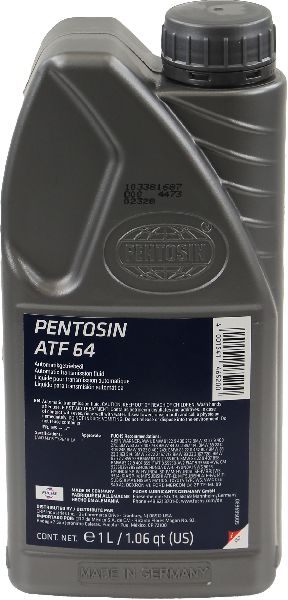
Typical fix: Perform a transmission fluid drain-and-fill or a full fluid exchange. If the fluid is very dirty, a filter change is mandatory. Use only Toyota WS (World Standard) or a compatible equivalent fluid.
Est. part cost: $80-$200 for fluid and filter - Damaged Internal Wiring Harness ⚪ Low Probability → Shop Transmission Wiring Harness The wiring inside the transmission is constantly submerged in hot fluid, which can make insulation brittle over time, leading to shorts or open circuits. Rodent damage to the external harness is also a known, though less common, issue on trucks.
How to confirm: With the transmission pan removed, visually inspect the wiring harness leading to the solenoids for any signs of cracking, brittleness, or broken wires. Check for continuity with a multimeter from the solenoid connector to the main transmission plug. A user on YouTube documented a similar issue on a 2005 Tundra where corroded pins in the main harness connector caused an open circuit.
Typical fix: Replace the internal transmission wiring harness. In cases of external damage, the affected wires must be carefully repaired or the harness section replaced.
Est. part cost: $100-$250 - Failing Transmission Valve Body ⚪ Low Probability → Shop Transmission Valve Body Debris from normal wear or contaminated fluid can score the bores within the aluminum valve body, causing valves to stick and hydraulic pressure to be misdirected. This can prevent the solenoid from functioning correctly even if the solenoid itself is good.
How to confirm: This is difficult to confirm without specialized tools and expertise. It's typically diagnosed after solenoids and wiring have been ruled out. Sometimes visible scoring can be seen on the valves when the valve body is disassembled by a transmission specialist.
Typical fix: Replace the entire valve body assembly or have it rebuilt by a specialist. This is a significantly more complex and expensive repair.
Est. part cost: $500-$1200+
Rare But Worth Checking
- Faulty Engine Control Module (ECM): → Shop Engine Control Module (ECM) This is very rare for this specific code on the Tundra. The ECM is robust, but it can fail, sometimes due to shorts in external wiring. This should only be considered after all other possibilities, including the wiring harness between the transmission and ECM, have been exhaustively checked.
Diagnosis Steps
- Verify the code with an OBD-II scanner. Note if the code is listed as 'Permanent', which may require a specific drive cycle to clear after repair.
- Check the transmission fluid level and condition. This requires raising the vehicle so it is perfectly level, getting it to a specific temperature (99-111°F), and opening a check plug. Follow the factory service procedure carefully.
- If the fluid is low, top it off with Toyota WS fluid and check for leaks. If it's dark, burnt, or contains excessive metal, a fluid and filter change is the next step.
- If the fluid is okay, the next step is to inspect the components inside the transmission pan.
- Drain the fluid and remove the transmission pan. Inspect the pan magnets for excessive metal shavings (a small amount of fine, grey paste is normal; large flakes are a bad sign).
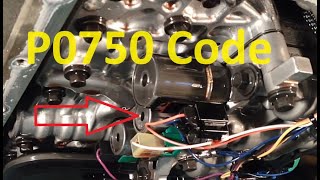
- Locate Shift Solenoid 'A' (SL1) on the valve body. It is one of several similar-looking solenoids.
- Visually inspect the internal wiring harness for any damage, brittleness, or loose connections.
- Test the resistance of the SL1 solenoid with a multimeter. It should be within the factory spec (typically 11-15 ohms at 68°F). A reading of 0 ohms (short) or infinite ohms (open) indicates a failed solenoid.
- If the solenoid tests good, test its mechanical function by applying 12V power and ground to its terminals. You should hear a distinct 'click'. No click means it's mechanically stuck.
- If the solenoid tests good, check the wiring for continuity from the solenoid connector back to the main harness plug on the outside of the transmission case.
- If wiring and the solenoid are good, the issue may lie within the valve body or, in very rare cases, the ECM.
Parts You'll Likely Need
- Shift Solenoid 'A' (SL1)
(OEM #35210-50010)— This is the most common point of failure for a P0750 code, either due to electrical failure or mechanical sticking. This part is also described as 'Solenoid Assembly, Clutch Control, NO.1'.
Trusted brands: Toyota (Genuine), Aisin, Rostra, Standard Motor Products, Beck/Arnley
OEM price range: $220-$320
Aftermarket price range: $40-$90 - Automatic Transmission Fluid (Toyota WS)
(OEM #00289-ATFWS)— Required for any service that involves dropping the pan. Using the correct fluid is critical for the health and performance of the AB60F transmission. A drain and fill requires approximately 4-5 quarts.
Trusted brands: Toyota (Genuine), Aisin, Idemitsu, Valvoline MaxLife ATF (often cited by owners as a compatible alternative)
OEM price range: $10-$15/quart
Aftermarket price range: $8-$12/quart - Transmission Filter and Pan Gasket Kit — Always replace the filter and pan gasket when the transmission pan is removed to ensure proper fluid flow and prevent leaks.
Trusted brands: Toyota (Genuine), Wix, Fram, ATP
OEM price range: $50-$70
Aftermarket price range: $20-$40
Related Codes That Often Appear With This One
- P0755 — This code is for Shift Solenoid 'B'. If there is a widespread electrical issue (like a harness problem), fluid contamination, or a valve body problem, multiple solenoid codes can appear together.
- P2714 — This code points to 'Pressure Control Solenoid D Performance/Stuck Off'. A Tundra owner on a forum reported this code along with P0894 (Transmission Component Slipping), indicating a more complex internal issue that could be related to solenoid performance or hydraulic blockages.
- P0700 — This is a generic code indicating a transmission control system malfunction. It's an informational code that tells you to look for more specific 'P07xx' codes stored in the Transmission Control Module (TCM).
Technical Service Bulletins (TSBs) & Recalls
- TC002-06 / T-TC10-002a (Superseded): While for older RAV4s, this TSB addresses harsh shifting with P0750 and other codes, pointing to potential ECM issues on other Toyota platforms, though this is less common on the Tundra. NHTSA ODI #10261612 and NHTSA ODI #10285963 both confirm that improvements were made to the Engine Control Module (ECM) to address these specific codes and harsh shifting conditions.
- T-SB-0160-11: While not for P0750, this TSB addresses moisture getting into the secondary air injection pumps, a common issue on this Tundra generation. It's relevant as it shows Toyota has acknowledged wiring and component vulnerability in the engine bay area.
Mechanic-Grade Diagnostic Values
- Shift Solenoid 'A' (SL1) Resistance — expected: 5.0 - 5.6 Ohms at 20°C (68°F). Failure: A reading of 0 ohms (short circuit), infinite ohms (open circuit), or a value significantly outside the specified range indicates a failed solenoid. Some technicians note that a reading slightly over this range (e.g., 5.7-5.9 ohms) may still be acceptable, but large deviations point to a fault.
- Solenoid Circuit Fault Detection (ECM Logic) — expected: When a solenoid is commanded OFF, the ECM expects high resistance. When commanded ON, it expects low resistance.. Failure: As an example of Toyota's logic (for solenoid S3), the ECM will flag an open circuit if resistance is 100 kOhms or more when OFF, and a short circuit if resistance is 8 Ohms or less when ON. This demonstrates how the ECM monitors the circuit integrity beyond just the component's resting resistance.
Hidden / Shadow Codes Worth Checking
- Permanent DTC (P-DTC): P0750 may be stored as a 'Permanent' trouble code, which cannot be cleared by simply disconnecting the battery or using a generic scanner's 'Clear Codes' function. The ECM must first verify that the fault has been repaired. (see via This status is visible on professional scan tools and some higher-end consumer models. To clear it, the fault must be fixed, and then the vehicle must be driven through a specific sequence called a 'universal trip' or 'confirmation drive cycle' to allow the ECM to re-run the monitor and confirm the repair.)
- 2-Trip Detection Logic: For non-continuous monitors like solenoid performance, the ECM requires the fault to be detected on two consecutive drive cycles before it will illuminate the Check Engine Light and store a confirmed code. A single detected fault may be stored as a 'pending' code. (see via Pending codes can be viewed with most OBD-II scanners.)
Scan Tool Commands That Help
- Toyota Techstream: Active Test: 'SHIFT' — This bidirectional command allows a technician to manually operate the shift solenoids (including SL1) with the engine on and vehicle stationary (or at very low speeds). By pressing the up/down arrows in the software, you can command shifts and listen for the corresponding 'click' from the solenoid inside the transmission. This is the definitive non-invasive test to confirm if the solenoid is electrically receiving the command and mechanically actuating, helping to isolate a bad solenoid from a wiring or ECM issue before dropping the pan.
Wiring & Ground Locations
- Engine/Transmission Main Grounds — The main engine grounds are located on the rear of each cylinder head, near where the engine mates to the transmission.. A poor engine-to-chassis ground can cause floating voltages and erratic behavior in all engine and transmission sensors and actuators, including the shift solenoids. These should be checked for corrosion and tightness if electrical issues are suspected.
- Transmission Case Ground Strap — There is a smaller ground strap bolted directly to the transmission case.. This provides a direct ground path for the transmission assembly. A loose or corroded strap can cause intermittent electrical faults within the transmission's internal components.
- Interior Ground Points — Common interior ground points are located under the driver and passenger kick panels, bolted to the chassis.. These ground points are relevant for the ECM and other control modules located inside the cabin. While less likely to be the sole cause for P0750, they are part of the overall electrical system health.
Real Owner Repair Stories
- Reddit user in r/ToyotaTundra (2007 Toyota Tundra 4x4) — Total transmission failure requiring replacement.
❌ Tried (didn't work) Sourcing a correct-year (2007) used transmission proved difficult.
✅ What actually fixed it A used transmission from a much newer 2016 Tundra was installed. The swap was successful and did not require any special programming or modifications, indicating a high degree of mechanical and electrical compatibility across many years of the 2nd generation Tundra. - Ford F150 Forum (Illustrative Example) (2011 Ford F-150) — Code P0750, stuck in limp mode, would not shift through gears 1-4.
❌ Tried (didn't work) Initial diagnosis pointed to a bad solenoid or internal transmission failure.
✅ What actually fixed it The owner tested for continuity between the PCM and transmission harness connectors and found an open circuit. After removing the harness, a tiny chafe mark was discovered where a wire had rubbed through. Repairing the single wire with a solder connector for $0.50 completely fixed the problem. This highlights the critical importance of testing the wiring harness continuity from end-to-end before replacing expensive internal components.
Documented NHTSA Reports
- An owner reported in NHTSA ODI #10513658 that they were advised if codes such as P0750, P0753, or P0755 appear, the ECM module should be replaced first, as a faulty module could be the root cause.
- NHTSA ODI #10323638 describes a vehicle diagnostics report indicating a P0750 failure where the owner noted a TSB existed for the issue, yet the dealer had not replaced the ECM.
- In NHTSA ODI #10336404, an owner experienced a hard time accelerating from a stop; a service center found code P0750 and advised that a transmission replacement or rebuild costing approximately $3000 was necessary to fix the problem.
OEM Part Supersession History
35210-50010→35210-50010— No supersession found.
Heads up: This part number appears to be stable and has been used by Toyota for many years across multiple models including the Tundra, 4Runner, and Land Cruiser, indicating it is a consistent design.
Model Year Variations Within This Range
- 2007-2021: While official Toyota parts catalogs often list different transmission assembly part numbers for each model year, real-world experience from owners suggests a high degree of interchangeability. For example, a 2016 transmission has been successfully installed in a 2007 model without issue. However, the valve body itself has a critical variation: US-market Tundras use a two-sensor design, and installing a single-sensor version from another application will cause compatibility problems.
Diagnostic Flowchart
Other Known Issues on This Vehicle
Issues unrelated to this code that are worth knowing about as an owner of this generation:
- Cam Tower Oil Leak 🔴 High — Common on engines over 75,000-100,000 miles. The sealant used at the factory between the cylinder head and cam tower housing fails, causing oil to leak onto the exhaust manifold.
- Secondary Air Injection System Failure 🟠 Medium — Very common on 2007-2013 models. The air pumps or switching valves fail, often due to moisture intrusion, triggering a Check Engine Light and putting the truck into 'limp mode'. (Ref: Warranty Extension (CSP ZHA) for 2007-2010 models; LSC DOE for 2012-2013 models.)
- Water Pump Failure 🟠 Medium — The water pump bearing can fail, leading to a coolant leak from the weep hole. This is a common maintenance item, with failures often reported between 60,000 and 140,000 miles.
- Cracked Exhaust Manifolds 🟡 Low — More common on trucks in the rust belt, the manifolds can develop cracks that cause an exhaust tick noise, especially when cold.
Used vs. New Parts: Buying Guide for This Vehicle
When a used part is the smart pick: A complete, low-mileage used transmission assembly from a reputable salvage yard can be a cost-effective choice, especially since swaps from newer model years (e.g., up to 2016) into older trucks have been proven to work. However, buying individual used electronic components like solenoids or the valve body is very risky.
Donor-vehicle mileage cap: roughly under 120000 miles for the part to have meaningful remaining life.
What to inspect on the donor part:
- Verify the donor vehicle's mileage and check its history for accidents or flood damage.
- When buying a complete transmission, ensure it is the correct AB60F (4x4) or AB60E (2WD) for the 5.7L V8.
- If buying a valve body, demand clear photos confirming it has two temperature sensor ports for US-spec Tundra compatibility.
- Ask for a warranty, even if it's only 30-90 days, to protect against a dead-on-arrival part.
OEM-only on this vehicle (don't cheap out):
- Valve Body: Due to the high risk of receiving an incorrect and incompatible single-sensor version from online sellers, it is strongly recommended to buy a new OEM valve body or a professionally remanufactured unit from a transmission specialist like IPT, not from a random eBay or Amazon seller.
Aftermarket brands forum-validated for this vehicle:
- Solenoids: Rostra is a well-regarded aftermarket brand, often cited as an OEM manufacturer for some models.
- Fluid: Aisin (the transmission manufacturer), Idemitsu, and Valvoline MaxLife Full Synthetic ATF are widely reported by owners to be reliable alternatives to the more expensive Toyota WS fluid.
Brands owners have reported issues with on this vehicle:
- Unbranded or 'white-box' solenoid kits from Amazon or eBay. The failure rate of these cheap parts is notoriously high, often leading to doing the job twice.
Real Owner Stories
Aggregated from forums and TSBs cited above. Mileages and costs reflect what owners reported in those sources.
2008 Toyota Tundra 5.7L V8
Symptoms: Experienced multiple solenoid-related codes including P0894 and P2714; received quotes for a full transmission rebuild after the truck exhibited shifting woes.
What fixed it: The owner investigated solenoid-specific issues rather than a full rebuild, as solenoid faults are often mistaken for catastrophic internal failure.
Source hint: TundraTalk.net thread titled '2008 solenoid woes'
2005 Toyota Tundra
Symptoms: Open circuit fault in the transmission system.
What fixed it: Identified and repaired corroded pins in the main harness connector that were causing the electrical break.
Source hint: YouTube documentation cited in 'Damaged Internal Wiring Harness' section
2008 Toyota Tundra 5.7L V8
Symptoms: Complete loss of gears after attempting to shift the 4WD system.
What fixed it: Replaced a faulty 4WD actuator which was causing the electronic control issue.
Source hint: Edmunds Forums discussion on Toyota Tundra transmission problems
Related OBD-II Codes
Frequently Asked Questions
Does TSB TC002-06 apply to my 2007-2013 Tundra with code P0750?
Can I use any transmission fluid to fix the P0750 code on my 5.7L Tundra?
Is there a specific temperature required to check the transmission fluid on this vehicle?
Could my P0750 code be related to the secondary air injection system issues common on 2007-2013 models?
What is the typical resistance for Shift Solenoid 'A' (SL1) on the 3UR-FE Tundra?
Is it possible for a 4WD issue to look like a transmission failure on my 2008 Tundra?
Helpful Videos

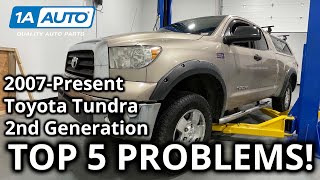
We Have This Part in Stock


The information in this article is provided for general reference and educational purposes only. Vehicle specifications, procedures, and part compatibility can vary by production date, trim level, and region. Always consult your vehicle's factory service manual and verify part numbers before purchasing or performing repairs. Safety-critical components such as airbags, seat belts, and braking systems should be installed by a qualified professional.
- Toyota Tundra:
- 🧭 Diagnostic Flowchart
- 🎬 Helpful Videos
- 🛍️ Shop This Part
- What's Unique About the 2007-2013 Toyota Tundra
- Symptoms You May Notice
- Most Likely Causes
- Rare But Worth Checking
- Diagnosis Steps
- Parts You'll Likely Need
- Related Codes That Often Appear With This One
- Technical Service Bulletins (TSBs) & Recalls
- Mechanic-Grade Diagnostic Values
- Hidden / Shadow Codes Worth Checking
- Scan Tool Commands That Help
- Wiring & Ground Locations
- Real Owner Repair Stories
- Documented NHTSA Reports
- OEM Part Supersession History
- Model Year Variations Within This Range
- Other Known Issues on This Vehicle
- Used vs. New Parts: Buying Guide for This Vehicle
- Real Owner Stories
- 2008 Toyota Tundra 5.7L V8
- 2005 Toyota Tundra
- 2008 Toyota Tundra 5.7L V8
- Related OBD-II Codes
- Frequently Asked Questions
- 🎟️ Get 5% Off