

P0751 on 2010-2015 Cadillac Escalade: Shift Solenoid 'A' Stuck Off Causes and Fixes
On a 2010-2015 Escalade with the 6L80 transmission, code P0751 is most often caused by a sticking 'Clutch Select Solenoid Valve 2' inside the transmission valve body, a known issue documented in GM Technical Service Bulletins. This results in the vehicle feeling like it's stuck in 4th gear from a stop. The fix typically involves replacing the lower valve body or the entire valve body assembly (TEHCM), a job for a professional that requires programming.
- P0751 on a 2010-2015 Escalade is not a generic solenoid failure; it's a specific, documented issue with a valve in the 6L80 transmission's valve body.
- Symptoms are distinct: poor acceleration and a feeling of slipping or starting in the wrong gear.
- The most likely fix is replacing the lower valve body, as recommended by GM's own service bulletins.
- This is not a simple DIY repair; it requires internal transmission work and should be handled by a professional.
- Always start diagnosis by checking the transmission fluid level and condition, as this is the simplest potential cause to rule out.
What's Unique About the 2010-2015 Cadillac ESCALADE
The 2010-2015 Escalade uses the GM 6L80 automatic transmission, which is known to have specific issues related to this code. General Motors has issued multiple Technical Service Bulletins (TSBs) acknowledging that a particular valve, the Clutch Select Solenoid Valve 2, can stick in its bore, leading directly to code P0751 and causing symptoms like poor acceleration from a stop. The TSBs note that the valve itself can develop scratches, causing it to bind. This makes the problem more specific than just a generic 'bad solenoid' and points directly to a known design or wear issue within the valve body that affects a wide range of GM trucks and SUVs with this transmission. Some remanufacturers have even developed updated valve body spacer plate gaskets with a notch to provide a higher volume of oil to the solenoid to prevent this code on early-style 6L80s.
🎬 Watch: Expert breakdown of the P0751 code and valve issues.Diagnostic Flowchart
Tap your situation to follow the diagnostic path that matches what you're seeing on this vehicle.
Generation note: This range covers the end of the third generation (2010-2014, GMT900 platform) and the first year of the fourth generation (2015, K2XX platform). Both generations used the 6L80 transmission, and the relevant Technical Service Bulletins apply to the entire 2010-2015 model year range, indicating the issue is consistent across these years. However, there is a key parts difference: 2010-2014 valve bodies use 7 check balls, while 2015 models use 8, and the separator plates are not the same.
Symptoms You May Notice
- Reduced acceleration at low speed, especially from a stop.
- Transmission slipping when launching from a standstill.
- Vehicle feels like it's starting in a higher gear (e.g., 4th gear).
- Harsh or abrupt shifts.
- Check Engine Light is illuminated.
- Transmission may enter "limp mode," limiting vehicle speed.
- Delayed engagement when shifting from Park to Drive.
- Replacing only the single Shift Solenoid 'A' without addressing the underlying valve body issue. The TSBs point to a sticking valve, and if the bore is damaged, a new solenoid won't fix the problem. Furthermore, the solenoids are integrated into the non-serviceable TEHCM.
Most Likely Causes
- Sticking Clutch Select Solenoid Valve 2 🔴 High Probability → Shop Transmission Valve Body This is a well-documented issue for the 6L80 transmission, as cited in GM's own Technical Service Bulletins (PI1344C/B). The valve can develop scratches or stick in its bore, preventing proper hydraulic flow. Debris in the fluid can exacerbate this issue, and some analyses suggest a design that can starve the solenoid of sufficient oil on early models.
How to confirm: A technician will follow the diagnostic procedure in the TSB, which involves removing the valve body, inspecting the valve for scratches or binding, and performing a solenoid performance test using a scan tool to command PC Solenoid 2.
Typical fix: If the valve is found to be stuck or scratched, GM recommends replacing the entire lower valve body assembly. Some aftermarket kits from companies like TransGo and Sonnax provide replacement valves and springs to address this specific problem if the valve body bore is not damaged.
Est. part cost: $300-$600 - Low or Dirty Transmission Fluid 🟡 Medium Probability → Shop Transmission Assembly Fluid is the lifeblood of the transmission. If it's low, it can't create the necessary pressure to operate solenoids. If it's dirty or degraded, debris can cause solenoids and valves to stick, which is a known trigger for this code.
How to confirm: Check the transmission fluid level and condition according to the owner's manual procedure. This requires the vehicle to be at a specific temperature as there is no dipstick. The fluid should be red and clear (DEXRON-VI), not brown, black, or burnt-smelling.
Typical fix: Perform a transmission fluid and filter change using the correct fluid (ACDelco DEXRON-VI). In some cases, if no hard part damage has occurred, this may resolve the issue.
Est. part cost: $100-$200 - Faulty Transmission Control Module (TCM/TEHCM) ⚪ Low Probability → Shop Transmission Assembly The TCM (also called TEHCM in this transmission) is integrated with the valve body. While less common than a mechanical valve issue, electronic failure of the module or its internal solenoids can occur, triggering P0751. The solenoids can be tested for resistance to confirm electrical failure.
How to confirm: Requires advanced diagnostics with a scan tool to check for communication errors and test solenoid circuits. A technician can also perform a bench test on the TEHCM, checking solenoid resistance values to confirm an electrical fault within the sealed unit.
Typical fix: Replace the entire TEHCM/valve body assembly. The new module must be programmed to the vehicle's VIN. A common OEM part number for the TEHCM is 24254908.
Est. part cost: $500-$900
Rare But Worth Checking
- Wiring Harness or Connector Issues: The main wiring harness leading to the transmission or the internal wiring on the valve body can become damaged from heat or vibration, causing an open or short in the solenoid circuit.
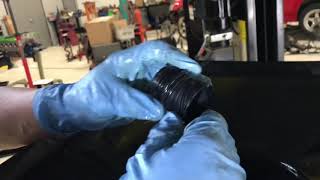
- Cracked or Leaking Transmission Filter Seal: → Shop Transmission Assembly A faulty or improperly seated seal on the transmission filter can allow air to be drawn into the pump, causing pressure drops and erratic solenoid operation, as noted in some GM service bulletins and forum discussions for this code.
- Worn Valve Body Bores or Leaking Bore Plugs: → Shop Transmission Valve Body Beyond just the valve sticking, the aluminum bores in the valve body can wear out, or bore plugs can leak. GM service documents specifically mention a leaking Clutch Select Valve 2 bore plug as a potential cause for P0751. This would require valve body replacement or specialized reaming/re-sleeving.
Diagnosis Steps
- Verify the code with a quality OBD-II scanner.
- Check the transmission fluid level and condition. Correct if low or dirty. This is the first step recommended by GM TSBs.
- Using an advanced scan tool (like a GM MDI2 with GDS2 software), attempt to command Shift Solenoid 1 on and off to check for a response.
- Inspect the external transmission wiring harness and connector for any visible damage, corrosion, or loose connections.
- If the fluid and wiring are good, the next step is to remove the transmission oil pan.
- Inspect the pan for excessive metal debris, which would indicate a more severe internal mechanical failure.
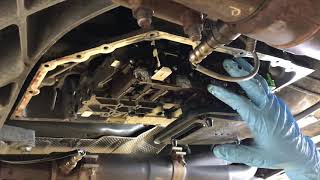
- Remove the valve body assembly (TEHCM) and follow the inspection procedure outlined in TSB PI1344C. 🎬 Watch: Step-by-step guide to removing the 6L80 valve body.
- Inspect the Clutch Select Solenoid Valve 2 for scoring, scratches, or sticking in its bore. The TSB notes that loosening the valve body bolts may free a stuck valve, so inspection for scratches is critical.
- If the valve or its bore is damaged, replace the lower valve body as recommended by GM.
- If no mechanical fault is found, test the TEHCM solenoids for correct resistance. On/Off solenoids should be 20-40 ohms, while PWM solenoids should be 3-8 ohms. If a solenoid is out of spec, the entire TEHCM must be replaced.
Parts You'll Likely Need
- Transmission Valve Body (with TEHCM)
(OEM #24254908)— This is the most common fix according to GM's own service bulletins, as it contains the Clutch Select Solenoid Valve 2 that is prone to sticking. Replacing the complete assembly with the integrated TEHCM is the standard repair strategy. 🎬 See how professionals address common 6L80 transmission failures.
Trusted brands: ACDelco
OEM price range: $600-$900
Aftermarket price range: $450-$700 - Transmission Control Module (TEHCM)
(OEM #24256861)— In cases where the valve body is mechanically sound, the integrated electronic control module may have failed. It is often replaced as an assembly with the valve body but can sometimes be sourced separately. Requires programming.
Trusted brands: ACDelco
OEM price range: $600-$900
Aftermarket price range: $450-$700 - Automatic Transmission Fluid and Filter Kit — This is required for any repair that involves opening the transmission pan. Fresh fluid and a new filter are critical for transmission health and are the first step in diagnosis.
Trusted brands: ACDelco
OEM price range: $100-$150
Aftermarket price range: $60-$100
Related Codes That Often Appear With This One
- P0700 (Transmission Control System Malfunction): This is a general code indicating the TCM has stored a fault, such as P0751, and has requested the check engine light.
Technical Service Bulletins (TSBs) & Recalls
- PI1344C: Diagnostic tips and repair information to correct a customer concern of reduced acceleration at low speed and/or transmission slipping from a launch, DTC P0751 set. This TSB supersedes PI1344B.
- PI1344B: Notes that the condition may be caused by the Clutch Select Solenoid Valve 2 sticking in the lower valve body.
Platform-Specific Known Issues
- TSB #PI1344C and #PI1344B directly address DTC P0751 on these vehicles. They state that customers may experience reduced acceleration or slipping from a launch, and the cause may be the 'Clutch Select Solenoid Valve 2...sticking in its bore resulting in a 4th gear start.' The bulletins recommend inspecting the valve for scratches and replacing the lower valve body if damage is found.
Mechanic-Grade Diagnostic Values
- Shift Solenoid (On/Off type) resistance — expected: 20 - 40 Ohms. Failure: Reading is open (infinite resistance) or outside of this range.
- Pressure Control Solenoid (PWM type) resistance — expected: 3 - 8 Ohms. Failure: Reading is open (infinite resistance) or outside of this range.
- Shift Solenoid (On/Off type) current draw — expected: 0.3 - 0.7 Amps at 12V. Failure: Current draw is outside this range, indicating a short or open.
- TCM solenoid supply voltage — expected: 8.3 - 9.3 Volts. Failure: Voltage outside this range indicates a potential TCM fault.
Hidden / Shadow Codes Worth Checking
- Failure Record Data: While not a separate code, dealer-level scan tools can see the specific failure condition that set P0751. For this DTC, the trigger is the TCM commanding 1st gear but detecting a gear ratio matching 4th gear, with a slip of 400 RPM or more for 5 seconds. (see via GM GDS2 or equivalent professional scan tool by viewing Freeze Frame/Failure Records for the DTC.)
Scan Tool Commands That Help
- GM GDS2 / Tech2Win: Service Fast Learn Adapts — This procedure is mandatory after replacing the TEHCM/valve body, TCM, or performing any major internal transmission service. It allows the TCM to learn the hydraulic characteristics of the clutches to ensure proper shift quality.
- GM GDS2 / Tech2Win: Solenoid Cleaning Procedure — If a solenoid performance DTC is suspected to be caused by debris, this function can be run before replacing parts. The scan tool commands the TEHCM to cycle all solenoids in a specific sequence to flush contaminants.
Wiring & Ground Locations
- Transmission Harness Connector (X1) — The main 16-pin circular connector on the passenger side of the transmission case.. This is the sole external electrical connection to the TEHCM. All power, ground, and data bus communications for the solenoids pass through this connector. Corrosion or damage here can cause P0751 and other transmission codes. Detailed pinout diagrams are available in factory service manuals.
Real Owner Repair Stories
- Jasper Engines & Transmissions Technical Bulletin (Early model GM vehicles with 6L80/6L90 transmissions) — DTC P0751, hard shifts.
❌ Tried (didn't work) Not specified, but implies standard diagnostics might not reveal the root cause.
✅ What actually fixed it Installing an updated valve body spacer plate gasket that has a notch cut into it. This provides a higher volume of oil to the Clutch Pressure Control Solenoid 2 (CPCS2), preventing a delay in its operation that was causing the TCM to trigger the code. - YouTube user 'DAVE G' (Vehicle with a 6L80/6L90 transmission) — Late 1st gear engagement, transmission would go to neutral and then slam into gear, feeling like being rear-ended.
❌ Tried (didn't work) Not specified, but the diagnosis was focused on finding an intermittent electrical issue.
✅ What actually fixed it The problem was traced to a faulty TEHCM. A bench test showed the #2 solenoid had intermittent and incorrect resistance readings. When commanded open, it read 12,030 ohms, but when let off, the resistance fluctuated wildly (e.g., 50 ohms, then 17 ohms), indicating an internal failure of the solenoid coil or connection. The entire TEHCM was replaced.
OEM Part Supersession History
24239647, 24275871, 24275872→24254908— Part consolidation and design updates for the TEHCM/Valve Body assembly.
Heads up: TEHCMs have many versions identified by Tag IDs. Installing the wrong year or ID can cause a no-start, limp mode, or communication failure. VIN-matching is critical when ordering.
Model Year Variations Within This Range
- 2010-2014 vs. 2015: The valve body design changed with the platform update. Models from 2014 and earlier use a valve body with 7 check balls. The 2015 model year uses a different design with 8 check balls. The separator plates are also different and not interchangeable.
- Early (pre-2014) vs. Late (2014+): The TEHCM hardware and software were revised multiple times. Later models (approx. 2014+) have integrated calibration changes and are not backward compatible with earlier transmissions. They also feature improved solenoids and better thermal tolerance.
Helpful Videos

We Have This Part in Stock


The information in this article is provided for general reference and educational purposes only. Vehicle specifications, procedures, and part compatibility can vary by production date, trim level, and region. Always consult your vehicle's factory service manual and verify part numbers before purchasing or performing repairs. Safety-critical components such as airbags, seat belts, and braking systems should be installed by a qualified professional.
- Cadillac ESCALADE:
- 🧭 Diagnostic Flowchart
- 🎬 Helpful Videos
- 🛍️ Shop This Part
- What's Unique About the 2010-2015 Cadillac ESCALADE
- Symptoms You May Notice
- Most Likely Causes
- Rare But Worth Checking
- Diagnosis Steps
- Parts You'll Likely Need
- Related Codes That Often Appear With This One
- Technical Service Bulletins (TSBs) & Recalls
- Platform-Specific Known Issues
- Mechanic-Grade Diagnostic Values
- Hidden / Shadow Codes Worth Checking
- Scan Tool Commands That Help
- Wiring & Ground Locations
- Real Owner Repair Stories
- OEM Part Supersession History
- Model Year Variations Within This Range
- 🎟️ Get 5% Off