

P0751 on 2010-2013 Cadillac Escalade EXT: Causes and Fixes for Shift Solenoid 'A' Issues
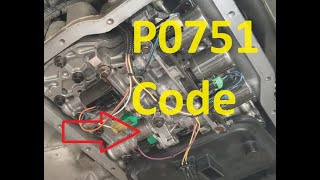
On a 2010-2013 Escalade EXT, code P0751 is almost always caused by a sticking solenoid valve inside the transmission valve body, a known issue covered by GM Technical Service Bulletins. The fix typically involves replacing the lower valve body or the entire valve body assembly. The vehicle may feel like it's starting in 4th gear.
- P0751 on this truck is very likely due to a known mechanical issue with a sticking valve in the transmission's valve body, not just a bad solenoid.
- Symptoms include poor acceleration from a stop, making the truck feel sluggish or like it's starting in the wrong gear.
- The official GM-recommended fix is often to replace the entire lower valve body, not just a single part.
- This is not a simple DIY job; it requires internal transmission work and is best left to a professional.
- Always start diagnosis by checking the transmission fluid level and condition, as this is the simplest potential cause.
What's Unique About the 2010-2013 Cadillac ESCALADE EXT
The 2010-2013 Escalade EXT uses a GM 6L80 (RPO code 'MYC') transmission. This specific platform has a well-documented issue where the 'Clutch Select Solenoid Valve 2' is prone to sticking in its bore within the valve body due to scoring or debris. This mechanical problem, rather than a simple electrical failure, is so common that GM issued multiple Technical Service Bulletins (TSBs) to address it. The result is often a sensation of starting in a higher gear, like 4th, causing poor acceleration from a stop. The TSBs explicitly state that this condition can be intermittent and difficult to reproduce.
Diagnostic Flowchart
Tap your situation to follow the diagnostic path that matches what you're seeing on this vehicle.
Symptoms You May Notice
- Reduced or sluggish acceleration from a stop.
- Transmission feels like it's slipping during launch.
- Vehicle feels like it is starting in a higher gear (e.g., 4th gear).
- Harsh or delayed shifting between gears.
- Transmission gets stuck in one gear (limp mode).
- Illuminated Check Engine Light.
- Transmission may refuse to engage a gear, feeling like it's in neutral.
- Replacing only the shift solenoid when the actual problem is a mechanically stuck valve in the valve body bore. The TSBs point specifically to the valve sticking, not necessarily an electrical failure of the solenoid itself.
Most Likely Causes
- Sticking Clutch Select Solenoid Valve 2 🔴 High Probability → Shop Transmission Valve Body This is a known issue documented in GM Technical Service Bulletins PI1344B and PI1344C for the 6L80 transmission family. The valve can develop scratches or stick in its bore, preventing proper hydraulic fluid flow.
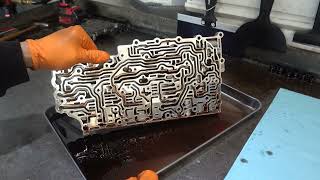
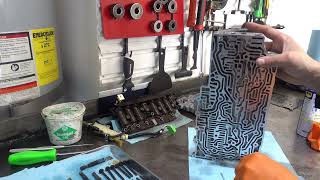
How to confirm: A technician will drop the transmission pan, remove the valve body, and physically inspect the 'Clutch Select Solenoid Valve 2' for scoring, scratches, or restricted movement in its bore. The TSB notes that the valve may free itself once the valve body bolts are loosened, so inspection for scratches is critical even if it's not stuck upon removal.
Typical fix: If the valve is found to be sticking or scratched, the official GM recommendation is to replace the entire lower valve body assembly. Some aftermarket kits exist to replace just the valve itself.
Est. part cost: $300-$600 - Low or Contaminated Transmission Fluid 🟡 Medium Probability → Shop Transmission Assembly
How to confirm: Check the transmission fluid level and condition. The fluid should be at the correct level, red in color, and free of debris or a burnt smell. The TSBs for this code list checking fluid level and condition as the very first diagnostic step.
Typical fix: Perform a transmission fluid and filter change using the correct fluid type (ACDelco DEXRON-VI). If the fluid is heavily contaminated with clutch material or metal, this indicates a more severe internal failure may be imminent.
Est. part cost: $100-$200 - Failed Shift Solenoid (Electrical) ⚪ Low Probability → Shop Transmission Valve Body
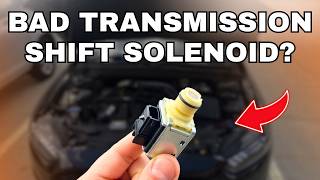
How to confirm: A technician can use a scan tool to command the solenoid on and off. They can also test the solenoid's internal resistance with a multimeter to see if it's within the manufacturer's specification. However, this is less common than the mechanical sticking valve issue.
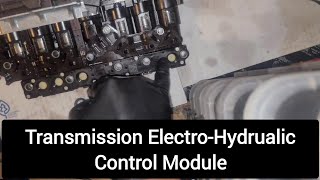
Typical fix: Replace the individual failed solenoid. On 6L80 transmissions, solenoids are part of a larger solenoid pack or TEHCM (Transmission Electro-Hydraulic Control Module) which may need to be replaced as a unit. This is often misdiagnosed when the valve is the real issue.
Est. part cost: $50-$250
Rare But Worth Checking
- Faulty Wiring or Connector: Damage to the internal transmission wiring harness or the main connector can cause an open or short, mimicking a solenoid failure. This should be inspected when the transmission pan is off.
- Faulty Transmission Control Module (TCM): → Shop Transmission Assembly While rare, the TCM itself can fail to send the correct signal to the solenoid. This is typically diagnosed only after all other possibilities (solenoid, valve body, wiring) have been ruled out.
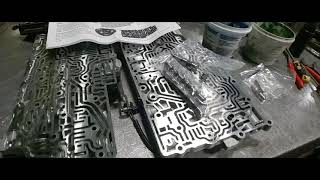
- Aftermarket Solutions / Design Improvements: Some transmission rebuilders, like Jasper, have identified that a lack of oil to the solenoid can cause this code. Their solution involves installing a notched valve body spacer plate gasket to increase oil volume to the solenoid, suggesting a potential design flaw in some earlier models.
Diagnosis Steps
- Check for other stored Diagnostic Trouble Codes (DTCs) with an OBD-II scanner.
- Check the transmission fluid level and condition. Ensure the fluid is clean, at the proper level, and doesn't have a burnt smell. This is the first step recommended in TSB PI1344C.
- Review Technical Service Bulletins (TSBs) for this specific code and vehicle. TSBs PI1344B and PI1344C are directly relevant.
- Drop the transmission oil pan and inspect for excessive metal debris, which would indicate a more severe internal failure.
- Remove the transmission valve body.
- Following the procedure in TSB PI1344C, locate and remove the Clutch Select Solenoid Valve 2.
- Inspect the valve for any scratches, scoring, or signs of it sticking in the valve body bore. The TSB warns that loosening the valve body may free a stuck valve, so visual inspection for scratches is key.
- If the valve shows damage or was stuck, replace the lower valve body assembly as recommended by GM.
- If the valve appears fine, perform electrical tests on the solenoid and wiring harness for continuity and resistance.
- Reassemble with a new filter, gasket, and fresh, correct-spec transmission fluid (DEXRON-VI).
- After repair, a transmission adaptive pressure relearn procedure may be required using a capable scan tool.
Parts You'll Likely Need
- Transmission Lower Valve Body
(OEM #24251431)— This is the most common fix according to GM's own service bulletins, as the bore for the Clutch Select Solenoid Valve 2 can become damaged, causing the valve to stick. This part number fits the specified vehicle range.
Trusted brands: ACDelco (GM Genuine)
OEM price range: $300-$400
Aftermarket price range: $250-$350 - Transmission Fluid and Filter Kit — This is required for any repair that involves dropping the transmission pan. Fresh fluid and a new filter are essential for transmission health. The required fluid is DEXRON-VI.
Trusted brands: ACDelco
OEM price range: $100-$150
Aftermarket price range: $70-$120
Related Codes That Often Appear With This One
- P0700 — P0700 is a generic transmission fault code. It simply means the TCM has detected a problem and has requested the Check Engine Light to be turned on. It will almost always be present alongside a more specific transmission code like P0751.
Technical Service Bulletins (TSBs) & Recalls
- PI1344C: Diagnostic tips and repair information to correct a customer concern of reduced acceleration at low speed and/or transmission slipping from a launch, DTC P0751 set.
- PI1344B: Identifies the cause as a sticking Clutch Select Solenoid Valve 2 in the lower valve body, resulting in a 4th gear start.
Platform-Specific Known Issues
- GM Technical Service Bulletin PI1344C specifically addresses DTC P0751 on the 2010-2013 Escalade EXT, noting symptoms of reduced acceleration and slipping from a launch.
- GM Technical Service Bulletin PI1344B identifies the cause as a sticking 'Clutch Select Solenoid Valve 2' located in the lower valve body, which can result in the vehicle starting in 4th gear.
Mechanic-Grade Diagnostic Values
- Shift Solenoid (On/Off type) Resistance — expected: 20 - 40 Ohms. Failure: A reading outside this range indicates a failed solenoid coil.
- Pressure Control Solenoid (PWM type) Resistance — expected: 3 - 8 Ohms. Failure: A reading outside this range indicates a failed solenoid coil.
- Voltage at Shift Solenoid 'A' Connector (Key On) — expected: ~12.6 V (Battery Voltage). Failure: Voltage deviation greater than 0.5V suggests a wiring or ground issue.
Scan Tool Commands That Help
- GDS2 / Tech2 or equivalent professional scan tool: Service Fast Learn Adapts — This procedure is mandatory after replacing the valve body, TEHCM, or the entire transmission. It allows the TCM to learn the hydraulic characteristics and clutch fill volumes to ensure proper shift quality.
- GDS2 / Tech2 with J47825-1 Test Plate: Solenoid ON/OFF Command — With the valve body on a test plate, this command cycles individual solenoids. A technician watches a pressure gauge to see if the solenoid correctly applies and exhausts air pressure, confirming mechanical and electrical function outside the transmission.
Wiring & Ground Locations
- G103 — On the front of the right-side (passenger side) cylinder head.. This is a primary engine and control module ground point. A poor connection here can cause erratic behavior in multiple systems, including the TCM.
- G110 — On the left rear of the engine block/cylinder head area.. This ground is critical for the engine control module and transmission control module. A loose or corroded G110 is a known cause for various intermittent electronic issues.
- Transmission Main Connector — The main 16-pin round connector on the passenger side of the transmission case.. This is the sole interface between the vehicle's main wiring harness and the internal TEHCM. Corrosion or pushed-back pins in this connector can cause a loss of signal to any solenoid, including Shift Solenoid A.
Real Owner Repair Stories
- life with Derrick on YouTube (2007 GMC Yukon Denali with 6L80) — Harsh shifting, solenoid codes, quoted $4300 for a full rebuild.
❌ Tried (didn't work) Getting quotes from shops for a full transmission rebuild.
✅ What actually fixed it The owner diagnosed a faulty TEHCM/valve body assembly and replaced it with a remanufactured unit from Street Smart Transmission, which resolved the shifting issues and codes.
OEM Part Supersession History
Varies by year (e.g., associated with casting #9581 for pre-2010)→24251431 (for 2010+ models with lower casting #0945)— GM updated the valve body design for 2010 and later models to address wear and performance issues.
Heads up: The early (pre-2010) and late (2010+) style valve bodies are not directly interchangeable due to differences in casting and separator plates. The Escalade EXT in this range requires the later style.
Model Year Variations Within This Range
- 2010-2013: These models use the 'late-style' 6L80 valve body, identified by upper casting number 0955 and lower casting number 0945. This is distinct from the pre-2010 'early-style' valve body. The 'C' boss on the upper casting identifies it for a 6L80 (MYC) application.
Helpful Videos

We Have This Part in Stock


The information in this article is provided for general reference and educational purposes only. Vehicle specifications, procedures, and part compatibility can vary by production date, trim level, and region. Always consult your vehicle's factory service manual and verify part numbers before purchasing or performing repairs. Safety-critical components such as airbags, seat belts, and braking systems should be installed by a qualified professional.
- Cadillac ESCALADE EXT:
- 🧭 Diagnostic Flowchart
- 🎬 Helpful Videos
- 🛍️ Shop This Part
- What's Unique About the 2010-2013 Cadillac ESCALADE EXT
- Symptoms You May Notice
- Most Likely Causes
- Rare But Worth Checking
- Diagnosis Steps
- Parts You'll Likely Need
- Related Codes That Often Appear With This One
- Technical Service Bulletins (TSBs) & Recalls
- Platform-Specific Known Issues
- Mechanic-Grade Diagnostic Values
- Scan Tool Commands That Help
- Wiring & Ground Locations
- Real Owner Repair Stories
- OEM Part Supersession History
- Model Year Variations Within This Range
- 🎟️ Get 5% Off