

P0751 on 2006-2009 Cadillac STS-V: Shift Solenoid 'A' Causes and Fixes
On a 2006-2009 Cadillac STS-V, P0751 is almost always caused by a sticking 'Clutch Select Solenoid Valve 2' inside the 6L80 transmission, making the car feel like it's starting in 4th gear. The official fix, per GM bulletins, is often to replace the entire lower valve body, costing between $700 and $1,500 at a shop.
- P0751 on the STS-V is a known issue with the 6L80 transmission, specifically a mechanically sticking valve, not usually an electrical problem.
- The main symptom is severe lack of power from a stop, as the transmission defaults to a higher gear.
- Do not drive the vehicle extensively with this code, as it can lead to more severe transmission damage.
- The most reliable fix is to replace the lower valve body or the entire TEHCM assembly, a job best left to a professional transmission shop.
- Always check the transmission fluid level and condition first, but be prepared for a more involved mechanical repair inside the transmission.
What's Unique About the 2006-2009 Cadillac STS-V
The 2006-2009 Cadillac STS-V uses the GM 6L80 6-speed automatic transmission (RPO code MYC). This P0751 code is a widely documented problem on this specific transmission platform, affecting many GM trucks and performance cars. GM has issued multiple Technical Service Bulletins (TSBs) that directly address this fault. The issue is rarely an electrical failure of the solenoid itself; instead, it's a mechanical problem of the valve sticking in its bore within the valve body, a nuance that can lead to misdiagnosis if a technician only checks for electrical faults. Some early 6L80s also had issues with a valve body spacer plate gasket that could degrade and cause oil starvation to the solenoid, a problem addressed by an updated notched gasket.
Symptoms You May Notice
- Check Engine Light is on
- Extremely poor, sluggish acceleration from a complete stop.
- A feeling of the transmission slipping when starting from a stop (actually starting in a higher gear, like 4th).
- Harsh or clunking shifts.
- Transmission may be stuck in a single gear (limp mode).
- Transmission may refuse to engage a gear, feeling like it's in neutral.
- Replacing only the Shift Solenoid 'A' without inspecting the valve bore. If the bore in the valve body is scored or worn, a new solenoid will eventually stick as well, and the code will return.
- Assuming the problem is purely electrical. Technicians may test the solenoid's resistance (should be 20-40 ohms) and find it's within spec, leading them to look elsewhere, when the problem is the mechanical movement of the valve.
- Replacing the TEHCM without addressing the root cause. One owner on GM-Trucks.com reported a dealer replaced the TEHCM for $1300, only to find the problem persisted, ultimately leading to a full transmission replacement for $3775.
Most Likely Causes
- Sticking Clutch Select Solenoid Valve 2 🔴 High Probability → Shop Transmission Valve Body This is a well-documented failure on the GM 6L80 transmission. The valve can develop scratches or get stuck by debris in the fluid, preventing movement. This is confirmed in TSBs like PI1344C.
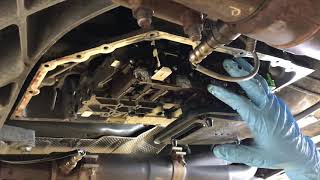
How to confirm: A technician must drop the transmission pan and remove the lower valve body 🎬 See this walkthrough on how to remove the valve body. to physically inspect the valve (GM part #352 in diagrams) for free movement and scoring, as detailed in TSB #07-07-30-031D. A bidirectional scan tool can also be used to command the solenoid on/off to test its response.
Typical fix: If the valve is scored or stuck, GM's recommended procedure is to replace the entire lower valve body assembly. Aftermarket companies like Sonnax also offer zip kits and remanufactured valve bodies to address this specific issue.
Est. part cost: $250-$450 - Low or Contaminated Transmission Fluid 🟡 Medium Probability → Shop Transmission Assembly Dirty fluid contains debris that can cause valves to stick. Low fluid causes pressure drops and erratic operation. Debris from a failing torque converter is a known issue that can contaminate the fluid and damage the valve body.
How to confirm: The fluid level and condition must be checked. This transmission has no dipstick; the check is performed via a fill plug with the engine running at a specific temperature (typically between 86°F and 122°F). The fluid should be bright red (DEXRON-VI) and not smell burnt.
Typical fix: Perform a transmission fluid and filter change. If the fluid is heavily contaminated, a full flush may be needed, but this can sometimes dislodge more debris and worsen the problem. If torque converter debris is found, the converter and cooler lines must also be addressed.
Est. part cost: $100-$200 - Cracked Transmission Filter Seal ⚪ Low Probability → Shop Transmission Assembly The filter seal can become hard or get damaged during installation, allowing the pump to suck in air instead of fluid, causing pressure loss and delayed oil feed to components.
How to confirm: During a pan-off inspection, the filter should be checked for cracks, and its seal should be inspected for proper fitment and pliability, as noted in TSB #07-07-30-031D.
Typical fix: Replace the transmission filter and its seal.
Est. part cost: $30-$60
Rare But Worth Checking
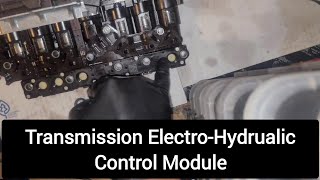
- Faulty Transmission Control Module (TCM/TEHCM): → Shop Transmission Assembly The TCM is integrated with the valve body and solenoids in a single unit called a TEHCM. While an internal electronic failure is less common than the mechanical valve issue, it can happen. A full TEHCM replacement is often done as a preventative measure since it includes all new solenoids. 🎬 Watch: How to rebuild and test the TEHCM circuits. In one documented case, a Corvette owner replaced the TEHCM but the code returned, indicating the problem was mechanical elsewhere.
- Worn Valve Body Bore Plugs: → Shop Transmission Valve Body TSB #07-07-30-031D specifically calls out measuring the valve body bore plugs for wear. The specification is 11.502 mm +/- 0.004 mm. If they are out of specification, they can cause internal pressure leaks that trigger the code.
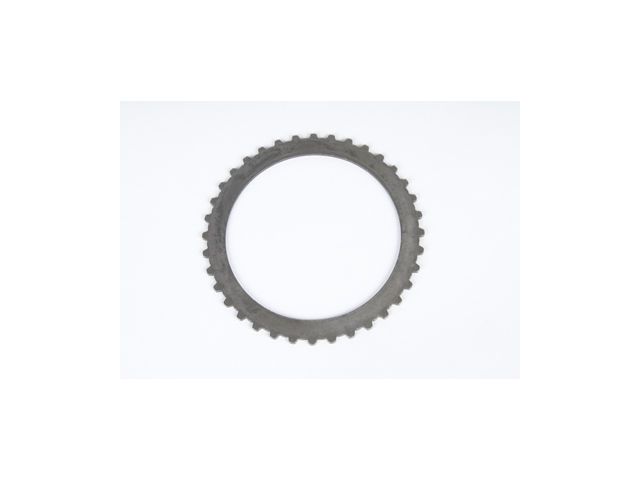
- Cracked 1-2-3-4 Clutch Wave Plate: In some cases, the P0751 code can be a symptom of a deeper mechanical failure. A forum user with a 2015 Silverado reported that after a fluid change and TEHCM replacement failed to fix the code, a full teardown revealed a cracked 1-2-3-4 clutch wave plate. The hydraulic pressure commanded by the solenoid couldn't be applied due to the mechanical break.
Diagnosis Steps
- Verify the code with a professional OBD-II scanner capable of reading transmission control module data.
- Check the transmission fluid level and condition. This must be done at a specific operating temperature (86-122°F) via the fill plug. Note any burnt smell or excessive metal debris.
- If fluid is low or dirty, perform a fluid and filter change, clear the code, and test drive to see if the issue persists.
- If the code returns, the transmission pan must be removed for further inspection.
- Following TSB #07-07-30-031D, inspect the transmission filter for cracks or a bad seal.
- Remove the lower valve body assembly.
- Inspect the Clutch Select Solenoid Valve 2 for freedom of movement in its bore. Check the valve itself for any scoring or scratches.
- If scoring or sticking is found, replace the lower valve body assembly (GM P/N 24250384) as recommended by GM service bulletins.
- While the valve body is out, inspect other components mentioned in the TSB, such as check balls and bore plugs (spec: 11.502 mm +/- 0.004 mm).
- Consider installing an updated notched valve body spacer plate gasket to improve oil flow to the solenoid, a solution noted by Jasper Transmissions. 🎬 Watch: Jasper's technical breakdown of the P0751 code causes.
- Reassemble with a new pan gasket, refill with the correct amount of DEXRON-VI fluid, and clear all codes. A new TEHCM/valve body may require programming by a dealer or specialized shop using a tool like a Tech2 or GDS2.
Parts You'll Likely Need
- Control Valve Lower Body
(OEM #24250384)— This is the most common failure point. The bore for the Clutch Select Solenoid Valve 2 becomes scored, causing the valve to stick. GM recommends replacing the entire lower body rather than just the valve.
Trusted brands: ACDelco, GM Genuine Parts
OEM price range: $250-$450
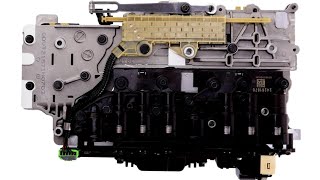
Aftermarket price range: $200-$350 - Transmission Electro-Hydraulic Control Module (TEHCM)
(OEM #24256861)— This unit contains the TCM, valve body, and all solenoids. It is often replaced as a complete assembly to ensure all related components are new and to prevent contamination issues. This part requires programming. Note: Part number 24256861 has been noted as on restriction by GM for quality control and may be superseded.
Trusted brands: ACDelco
OEM price range: $400-$700
Aftermarket price range: $350-$600 - Transmission Filter Kit (Filter and Gasket) — Must be replaced any time the transmission pan is removed.
Trusted brands: ACDelco
OEM price range: $40-$70
Aftermarket price range: $25-$50 - DEXRON-VI Automatic Transmission Fluid — Required to refill the transmission after service. A pan drop requires approximately 6-8 quarts.
Trusted brands: ACDelco
OEM price range: $10-$15 per quart
Aftermarket price range: $8-$12 per quart
Related Codes That Often Appear With This One
- P0700 — P0700 is a generic code indicating the Transmission Control Module (TCM) has stored a fault. It serves as a 'check engine light' for the transmission and will almost always accompany a specific code like P0751.
Technical Service Bulletins (TSBs) & Recalls
- #07-07-30-031D: Malfunction Indicator Lamp (MIL) On - Check Engine Light, DTC P0751. This is the primary TSB for the 2006 STS-V, detailing a pan-off inspection of the valve body, bore plugs, and Clutch Select Solenoid Valve 2.
- #PI1344C: Reduced Acceleration From a Stop, Transmission Slip, SES Lamp, DTC P0751. This bulletin also points to the Clutch Select Solenoid Valve 2 sticking in its bore, resulting in a 4th gear start.
- #PIP4379K: No Reverse, Slips In Reverse, No 3rd or 4th, DTCs P0751 P0776 P0777. This bulletin links P0751 to a broader set of potential hydraulic pressure issues.
Platform-Specific Known Issues
- GM issued Technical Service Bulletin #07-07-30-031D specifically for the 2006 Cadillac STS-V (among other models) to address DTC P0751. It provides a detailed diagnostic flowchart focusing on mechanical and hydraulic issues within the valve body rather than simple electrical faults.
- Remanufacturer JASPER Engines & Transmissions identified that a primary cause for the oil starvation leading to P0751 on early 6L80s is the spacer plate gasket. Their solution is to install an updated, notched gasket to provide a higher volume of oil to the solenoid.
Mechanic-Grade Diagnostic Values
- Shift Solenoid (On/Off Type) Coil Resistance — expected: 20 - 40 Ohms (some sources specify 20-24 Ohms).. Failure: A reading of infinite resistance (open circuit) or near-zero Ohms (short circuit).
- Pressure Control (PWM) Solenoid Coil Resistance — expected: 3 - 8 Ohms (some sources specify 5-6 Ohms).. Failure: A reading outside the specified range indicates a failed solenoid coil.
- Shift Solenoid (On/Off Type) Current Draw — expected: 0.3 - 0.7 amps at 12 volts.. Failure: Incorrect amperage suggests a failed solenoid.
- Transmission Line Pressure — expected: 45-80 psi at idle; up to 300 psi in gear at wide-open throttle.. Failure: Low line pressure can indicate pump issues, leaks, or a clogged filter, contributing to solenoid performance codes.
- TEHCM Solenoid Supply Voltage — expected: 8.3 - 9.3 volts.. Failure: Voltage outside this range could indicate a problem with the TEHCM's internal power regulation.
Scan Tool Commands That Help
- GDS2 / Tech2: Solenoid Performance Test / Automated Solenoid Cleaning — This function cycles all solenoids to help flush debris from the valves and circuits. It can be used as a diagnostic step to see if the code returns after cleaning, potentially avoiding unnecessary parts replacement.
- GDS2 / Tech2 / J2534 Pass-thru: Transmission Service Fast Learn Adapts — This procedure is mandatory after replacing the TEHCM, valve body, or entire transmission. It allows the TCM to learn the hydraulic characteristics and clutch fill volumes of the new components to ensure proper shift quality and prevent damage.
- GDS2 / Tech2 / J2534 Pass-thru: TEHCM Programming (Flashing) — When a new TEHCM is installed, it is unprogrammed and must be flashed with the correct VIN-specific calibration file from GM's service website (TIS2Web). Without this, the vehicle will not start or shift correctly.
Wiring & Ground Locations
- TEHCM Connector — Internal to the transmission, on the valve body assembly. The main vehicle harness connects at the case exterior.. While the solenoid itself is the common failure, damage to the main external connector or the internal harness during service can cause communication errors or erratic solenoid behavior.
- G201 — In the passenger compartment, behind the right kick panel.. This is a major interior ground point. While not directly tied to the transmission in diagrams, a poor ground here can cause unpredictable behavior in various control modules that communicate with the TCM.
- G101 — Near the left front strut tower, at the bottom of the inside fender well.. This is a key engine bay ground. A corroded or loose ground here could affect the Engine Control Module (ECM), which communicates critical data to the Transmission Control Module (TCM).
- ECM (Engine Control Module) — Below the driver's side headlight on the 4.6L engine (the 4.4L LC3 is based on the Northstar architecture, so location is similar).. The ECM and TCM work in constant communication. A fault in the ECM or its wiring/grounding could, in rare cases, lead to transmission-related codes.
Real Owner Repair Stories
- GM-Trucks.com forum user 'Mike940d' (2010 Chevrolet Silverado with 6L80) — Check engine light with code P0751. Truck would jerk hard into first gear, then after several occurrences, would default to starting in 2nd gear.
❌ Tried (didn't work) Dealer replaced the TEHCM (Transmission Electro-Hydraulic Control Module) at a cost of $1300.
✅ What actually fixed it The TEHCM replacement did not fix the problem. The dealer then stated the transmission needed a full replacement for $3775, admitting the initial diagnosis was wrong. This story highlights the common misdiagnosis of assuming the TEHCM is at fault when the root cause is a deeper mechanical or hydraulic issue. - Chevy Tahoe Forum user 'denalilex' (2007 Yukon Denali with Gen 1 6L80) — Persistent P0700 and P0751 codes, harsh shifts.
❌ Tried (didn't work) Replaced valve body spacer plate., Replaced check balls., Fluid and filter change.
✅ What actually fixed it The user's journey was ongoing but pointed toward a deeper issue than the common parts replacement. Another user suggested the root cause was likely worn clutch select valves or valve springs within the valve body itself, requiring either a valve body overhaul with a correction kit (e.g., from Sonnax) or a complete OEM valve body replacement. The story illustrates that simply replacing gaskets and check balls may not be enough if the valve bores are worn.
When the Usual Fixes Don't Work
- While the vast majority of P0751 codes on the 6L80 are caused by a sticking valve in the lower valve body, there are documented cases where this is a symptom of a larger problem. In one instance involving a 2015 Silverado, both a fluid change and a complete TEHCM/valve body assembly replacement failed to fix the code. A full transmission teardown ultimately revealed a cracked 1-2-3-4 clutch wave plate. This demonstrates that if the standard, high-probability fixes fail, the code may be indicating that the hydraulic pressure commanded by the solenoid cannot be properly applied due to a downstream mechanical failure inside a clutch drum.
OEM Part Supersession History
24232240→24250384— Updated design/revision for the Control Valve Lower Body.Multiple (e.g., 24257038, 24257092, 25978353)→24256861 (common service part number)— Consolidation of part numbers for the TEHCM. Note: This part number is used across multiple GM applications, including Allison transmissions.
Heads up: Part number 24256861 was placed on restriction by GM for quality control purposes, requiring dealers to contact TAC before ordering. TEHCMs are NOT interchangeable between model years or platforms due to different internal calibrations, even if they physically fit. Always program a new TEHCM to the vehicle's VIN.
Model Year Variations Within This Range
- Approx. 2006-2010 ('Early' 6L80): Early models are more prone to broken clutch select valve springs. They also used a 7-ball check ball design in the valve body. The separator plates are different from later models and are not interchangeable. Some early designs also had an issue with oil starvation to the solenoid, which can be fixed with an updated 'notched' spacer plate gasket.
- Approx. 2010-onward ('Late' 6L80): Later models use an 8-ball check ball design in the valve body with different orifice sizing in the separator plate. The valve body castings and speed sensor locations can also differ from early models, making part identification by casting number critical when sourcing used parts.
Diagnostic Flowchart
Used vs. New Parts: Buying Guide for This Vehicle
When a used part is the smart pick: For this specific repair, buying used major components is highly discouraged. The failure rate of the TEHCM and valve body components is high, and wear is not always visible. A used lower valve body from a very low-mileage, late-model donor is a possibility but carries significant risk of worn bores.
Donor-vehicle mileage cap: roughly under 50000 miles for the part to have meaningful remaining life.
What to inspect on the donor part:
- Verify the donor vehicle's model year to ensure valve body compatibility (early vs. late design).
- Ask for the VIN to check for a history of transmission problems.
- If possible, inspect the fluid from the donor transmission; it should be bright red and free of metal shavings or a burnt smell.
- Physically inspect the valve bores on a lower valve body for any visible scoring or scratches before purchase.
OEM-only on this vehicle (don't cheap out):
- Transmission Electro-Hydraulic Control Module (TEHCM)
- Control Valve Lower Body
Aftermarket brands forum-validated for this vehicle:
- Sonnax (For valve body repair kits, such as their Zip Kits or replacement clutch select valve springs).
- Jasper Engines & Transmissions (For remanufactured transmissions or valve bodies that incorporate updates like the notched spacer plate gasket).
Brands owners have reported issues with on this vehicle:
- Unbranded, no-name TEHCMs or valve bodies from online marketplaces. These often have a high failure rate and may be improperly remanufactured without necessary updates.
Real Owner Stories
Aggregated from forums and TSBs cited above. Mileages and costs reflect what owners reported in those sources.
2010 Silverado w/ 6L80
Symptoms: Owner experienced a P0751 transmission problem. An initial repair attempt failed.
What fixed it: A full transmission replacement was required after a TEHCM replacement did not fix the issue.
Cost: $3775-$3775
Source hint: gm-trucks.com - '2010 Silverado P0751 Transmission problem'
2008 Corvette w/ 6L80
Symptoms: The owner had a P0751 code return after an attempted repair.
What fixed it: This is a cautionary story; replacing the TEHCM (P/N 24275872) and changing the fluid did NOT fix the problem, suggesting the issue was mechanical (sticking valve/bore) as the code returned.
Source hint: corvetteforum.com - 'Code error P0751'
2009 Silverado 1500 w/ 6L80
Symptoms: The owner successfully fixed a P0751 code.
What fixed it: The issue was resolved by replacing the entire TEHCM and installing a new valve body spacer plate.
Source hint: silveradosierra.com - Real Owner Repair Story
Related OBD-II Codes
Frequently Asked Questions
I have a 2006 STS-V with code P0751. Is there a specific GM Technical Service Bulletin for this issue?
My transmission feels like it's slipping or starting in the wrong gear. What does the TSB say is causing this with a P0751 code?
If the Clutch Select Solenoid Valve 2 is found to be sticking, what is the official GM repair?
My mechanic wants to replace the whole Transmission Control Module (TEHCM). Is this the usual fix for P0751?
Is there any aftermarket part or update that can help prevent P0751 from happening again?
How do I check the transmission fluid on my STS-V since it doesn't have a dipstick?
Helpful Videos

We Have This Part in Stock


The information in this article is provided for general reference and educational purposes only. Vehicle specifications, procedures, and part compatibility can vary by production date, trim level, and region. Always consult your vehicle's factory service manual and verify part numbers before purchasing or performing repairs. Safety-critical components such as airbags, seat belts, and braking systems should be installed by a qualified professional.
- Cadillac STS-V:
- 🧭 Diagnostic Flowchart
- 🎬 Helpful Videos
- 🛍️ Shop This Part
- What's Unique About the 2006-2009 Cadillac STS-V
- Symptoms You May Notice
- Most Likely Causes
- Rare But Worth Checking
- Diagnosis Steps
- Parts You'll Likely Need
- Related Codes That Often Appear With This One
- Technical Service Bulletins (TSBs) & Recalls
- Platform-Specific Known Issues
- Mechanic-Grade Diagnostic Values
- Scan Tool Commands That Help
- Wiring & Ground Locations
- Real Owner Repair Stories
- When the Usual Fixes Don't Work
- OEM Part Supersession History
- Model Year Variations Within This Range
- Used vs. New Parts: Buying Guide for This Vehicle
- Real Owner Stories
- 2010 Silverado w/ 6L80
- 2008 Corvette w/ 6L80
- 2009 Silverado 1500 w/ 6L80
- Related OBD-II Codes
- Frequently Asked Questions
- 🎟️ Get 5% Off