

P0751 on 2010-2013 Chevrolet Avalanche: Shift Solenoid 'A' Causes and Fixes
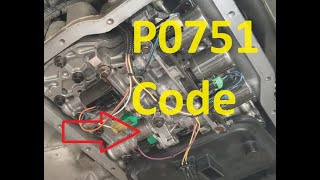
On a 2010-2013 Avalanche, P0751 almost always indicates a sticking Shift Solenoid 'A' (also called Clutch Select Solenoid Valve 2) inside the 6L80 transmission. This often causes the truck to feel like it's starting in a high gear (like 3rd or 4th). The fix requires dropping the transmission pan to replace the solenoid, or more commonly, the entire TEHCM (control module). This is a job for a professional or an experienced DIYer as the new TEHCM requires programming.
- P0751 on a 2010-2013 Avalanche is a very specific code that almost always points to a sticking shift solenoid inside the transmission.
- The primary symptoms are poor acceleration from a stop and a feeling of transmission slippage, as noted in official GM service bulletins.
- While checking the transmission fluid is a good first step, the most probable fix is replacing the shift solenoid assembly (TEHCM) inside the transmission.
- This is not a simple DIY job for beginners; it requires dropping the transmission pan and working with sensitive components. Professional service is highly recommended.
What's Unique About the 2010-2013 Chevrolet AVALANCHE
The 2010-2013 Avalanche uses the GM 6L80 6-speed automatic transmission. A known issue with this transmission, documented in manufacturer Technical Service Bulletins, is the tendency for the Clutch Select Solenoid Valve 2 to stick in its bore within the valve body. This specific, well-documented failure is the most common reason for a P0751 code on this platform, often causing a sensation of severe slipping or starting in a higher gear.
Diagnostic Flowchart
Tap your situation to follow the diagnostic path that matches what you're seeing on this vehicle.
Symptoms You May Notice
- Reduced acceleration at low speed, especially from a stop.
- Transmission slipping from a launch.
- Transmission feels like it's stuck in a higher gear (e.g., 3rd or 4th).
- Harsh or abrupt shifting.
- Check Engine Light is on. 🎬 Watch: Understanding how P0751 causes these performance issues.
- Delayed or failed gear engagement.
- Replacing the entire transmission when only a solenoid, TEHCM, or valve body service is required. Proper diagnosis is key to avoiding this expensive mistake.
- Replacing only the shift solenoid when the actual cause is a worn valve body bore or a broken clutch select valve spring, causing the code to return.
Most Likely Causes
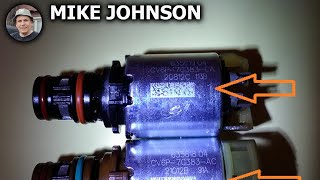
- Sticking Shift Solenoid 'A' (Clutch Select Solenoid Valve 2) 🔴 High Probability → Shop Transmission Valve Body This is a well-documented issue on GM 6L80 transmissions, as confirmed by Technical Service Bulletins PI1344B and PI1344C, which state the solenoid can stick in the valve body bore, sometimes due to scratches on the valve itself.
How to confirm: A professional technician can use a bi-directional scan tool to command the solenoid on and off to check for response. TSBs suggest a physical inspection of the valve for scratches after removal. Ultimate confirmation is by dropping the pan for inspection.
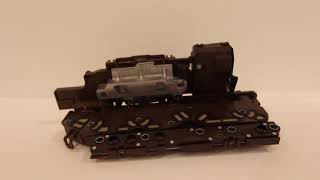
Typical fix: Replace the faulty shift solenoid. Since all solenoids are of the same age and have been exposed to the same conditions, many shops recommend replacing the entire solenoid pack or the complete TEHCM (Transmission Electro-Hydraulic Control Module) assembly. A new TEHCM must be programmed. 🎬 Watch: What you need to know about TEHCM replacements.
Est. part cost: $50-$150 for a single solenoid, $300-$700 for a complete TEHCM assembly. - Low or Dirty Transmission Fluid 🟡 Medium Probability → Shop Transmission Assembly Fluid is the lifeblood of the transmission. If it's low, it can't create the necessary hydraulic pressure. If it's dirty or degraded, debris can cause solenoids and valves to stick.
How to confirm: Check the transmission fluid level and condition via the dipstick (if equipped) or the fill plug procedure. The fluid should be bright red and not smell burnt. Dark, brown, or gritty fluid indicates a problem and should be addressed before replacing parts.
Typical fix: Perform a transmission fluid and filter change using the correct fluid type (DEXRON-VI). If the fluid is very dirty, a full fluid flush may be recommended by a professional.
Est. part cost: $75-$150 for fluid and a filter kit. - Broken Clutch Select Valve Spring ⚪ Low Probability → Shop Engine Valve Spring For earlier models of the 6L80 (around 2010), the original clutch select valve springs could be faulty, causing the valve to stick. This was corrected in later production.
How to confirm: This is typically diagnosed after a solenoid replacement fails to fix the issue. The valve body must be disassembled to inspect the springs.
Typical fix: An aftermarket solution from Sonnax (Part No. 104740-02K) provides updated springs with the correct lower load to prevent the P0751 code without replacing the entire valve body.
Est. part cost: $10-$20 for the spring kit. - Faulty Transmission Valve Body ⚪ Low Probability → Shop Transmission Valve Body While the solenoid itself is the most common failure point, the bore within the valve body where the solenoid sits can become worn or scored, causing even a new solenoid to stick. TSB PI1344C specifically advises inspecting the valve for scratches and replacing the lower valve body if found.
How to confirm: This is diagnosed after replacing the solenoid and the problem persists. The valve body must be removed and inspected for wear, scoring, or blocked passages.
Typical fix: Replace the lower valve body assembly. This is often done as a complete unit with solenoids (as part of the TEHCM).
Est. part cost: $200-$600 for a remanufactured valve body.
Rare But Worth Checking
- Wiring or Connector Issues: The internal transmission wiring harness or the main external connector can become damaged, corroded, or loose, causing an intermittent signal to the solenoid. This is worth checking before condemning internal hard parts.
- Faulty Transmission Control Module (TCM): → Shop Transmission Assembly In the 6L80 transmission, the TCM is integrated into the TEHCM inside the transmission pan. While less common than a mechanical solenoid failure, the driver circuit within the module can fail, preventing it from properly controlling the solenoid.
Diagnosis Steps
- Check the transmission fluid level and condition. Ensure it is full and clean.
- Use an OBD-II scanner to confirm P0751 and check for any other transmission-related codes, especially P0700.
- With an advanced scan tool, monitor the commanded versus actual gear state and command Shift Solenoid 'A' (PC Solenoid 2) on and off to test its function.
- Inspect the main transmission electrical connector for damage, corrosion, or loose pins.
- Drop the transmission oil pan and inspect for excessive metal debris, which would indicate a more severe internal failure.
- Visually inspect the wiring inside the transmission going to the solenoids.
- Per TSB PI1344C, if a solenoid performance test is done with shop air, use 90-100 psi. Remove and inspect Clutch Select Solenoid Valve 2 for scratches or scoring. If damage is found, the lower valve body should be replaced.
- If tests point to the solenoid, replace it. It is highly recommended to replace the entire TEHCM assembly due to the known failure patterns and integrated nature of the components. The new TEHCM must be programmed.
Parts You'll Likely Need
- Transmission Electro-Hydraulic Control Module (TEHCM)
(OEM #24254908 (ACDelco))— This assembly contains all the shift solenoids and the TCM. Given the high likelihood of a solenoid failure and the labor involved, replacing the entire unit is often the most reliable repair. A new TEHCM must be programmed to the vehicle.
Trusted brands: ACDelco (OEM), Sonnax
OEM price range: $400-$700
Aftermarket price range: $300-$500 - Automatic Transmission Fluid (DEXRON-VI) — The transmission fluid must be drained to access the internal components and should be replaced with new, clean fluid during the repair.
Trusted brands: ACDelco, Valvoline, Castrol
OEM price range: $10-$15 per quart
Aftermarket price range: $8-$12 per quart - Transmission Oil Pan Gasket — The pan gasket is a one-time-use seal and must be replaced anytime the transmission pan is removed to prevent leaks.
Trusted brands: ACDelco, Fel-Pro
OEM price range: $25-$50
Aftermarket price range: $15-$30
Related Codes That Often Appear With This One
- P0700 (Transmission Control System Malfunction): This is a general code indicating the TCM has stored a fault and requested the check engine light. It will almost always be present with P0751.
Technical Service Bulletins (TSBs) & Recalls
- PI1344C: Diagnostic tips for reduced acceleration and/or transmission slipping with DTC P0751 set. Advises to inspect Clutch Select Solenoid Valve 2 for scratches and replace the lower valve body if damaged.
- PI1344B: Identifies the cause of P0751 as a sticking Clutch Select Solenoid Valve 2 in the lower valve body, resulting in a 4th gear start.
Platform-Specific Known Issues
- GM has issued Technical Service Bulletins #PI1344C and #PI1344B regarding this issue on 2010-2013 models. The bulletins specifically mention that customers may complain of reduced acceleration or slipping from a stop, which may be intermittent. The cause is identified as the Clutch Select Solenoid Valve 2 (Shift Solenoid 'A') sticking inside the lower valve body, which can result in the transmission starting in 4th gear. TSB PI1344C recommends inspecting the valve for scratches and replacing the lower valve body if any are found.
Mechanic-Grade Diagnostic Values
- Shift Solenoid 'A' (On/Off Type) Coil Resistance — expected: 20 - 40 Ohms. Failure: A reading of infinite resistance (open circuit) or near-zero Ohms (short circuit) indicates a failed coil. Note that a solenoid can pass this electrical test but still be mechanically stuck.
- Shift Solenoid 'A' (On/Off Type) Current Draw — expected: 0.3 - 0.7 Amps at 12V. Failure: Readings outside this range when the solenoid is energized indicate a failure.
- TCM Solenoid Supply Voltage — expected: 8.3 - 9.3 Volts. Failure: The TCM provides a regulated voltage to the solenoids; incorrect voltage could indicate a TCM issue.
- Solenoid Air Test Pressure — expected: 90 - 100 PSI. Failure: This pressure is applied to a test plate (e.g., J 47825-1) on the bench to check if the solenoid physically actuates and holds pressure when commanded by a scan tool. A failure to change state indicates a stuck valve.
- External Transmission Connector Voltage Drop — expected: < 0.5 Ohms. Failure: When testing for resistance across a specific pin at the main 16-pin connector, any reading above 0.5 Ohms suggests excessive resistance from corrosion or a damaged wire.
Hidden / Shadow Codes Worth Checking
- P0751 (Type B DTC): The TCM sets this code when 1st gear is commanded, but the calculated gear ratio is incorrect (e.g., <= 1.20) and a slip of >= 400 RPM is detected. As a Type B DTC, the fault must occur on two consecutive drive cycles to illuminate the Check Engine Light. (see via Standard OBD-II scanner. The underlying criteria are visible in manufacturer diagnostic literature.)
Scan Tool Commands That Help
- GDS2 / Tech2 (or equivalent professional scanner): Solenoid Performance Test / Output Controls — Used to command Shift Solenoid 'A' on and off to test its electrical and mechanical response. This is often done on a bench with an air test plate to see if the valve physically moves and seals.
- GDS2 / Tech2 (or equivalent professional scanner): Solenoid Automated Cleaning Process — This function automatically cycles all solenoids in a sequence designed to dislodge debris that may be causing a valve to stick. This can be attempted before deciding to replace the TEHCM.
Wiring & Ground Locations
- Transmission Pass-Through Connector — External 16-pin connector on the side of the 6L80 transmission case.. This is the main electrical interface between the vehicle harness and the internal TEHCM. Corrosion or damage here can interrupt power, ground, or data signals to the entire module, causing various codes including P0751. Pin 5 is the main ground, and Pin 4 is battery positive voltage.
- G102 / G103 — G102 is at the lower left front of the engine; G103 is at the front of the right cylinder head.. These are major engine block ground points. While not exclusive to the transmission, a poor engine ground can cause voltage differentials and electrical noise that may affect the TCM's operation and sensor readings.
- Underhood Fuse Block — Located on the left side of the engine compartment.. Contains fuses and relays critical for the ECM and TCM power supply, such as 'ECM-BATT' and 'ECM-IGN'. A fault here can cause a loss of power to the control modules.
Real Owner Repair Stories
- Go-Parts.com forum user report compilation (Early 2000s GMT800 Truck (similar electrical architecture)) — Intermittent transmission codes, including P0751, and erratic shifting.
❌ Tried (didn't work) Fluid and filter change, Solenoid replacement
✅ What actually fixed it A faulty ignition switch was causing intermittent voltage drops to the TCM. The control module interpreted this unstable power as a solenoid performance fault. Replacing the worn ignition switch stabilized the voltage and resolved all transmission codes.
OEM Part Supersession History
24254908→Unknown, possibly 24255209— Standard part evolution for reliability or manufacturing changes.
Heads up: Part number 24254908 is widely listed for 2010+ 6L80 transmissions. However, part number 24255209 is also listed specifically for 2010-2013 models. This indicates a possible mid-cycle change or multiple compatible parts. It is critical to verify the correct TEHCM part number using the vehicle's VIN before ordering.
Helpful Videos
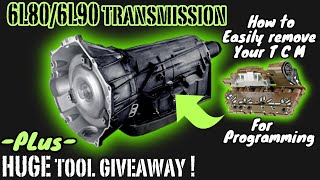
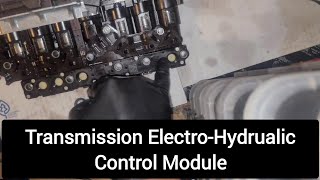

We Have This Part in Stock
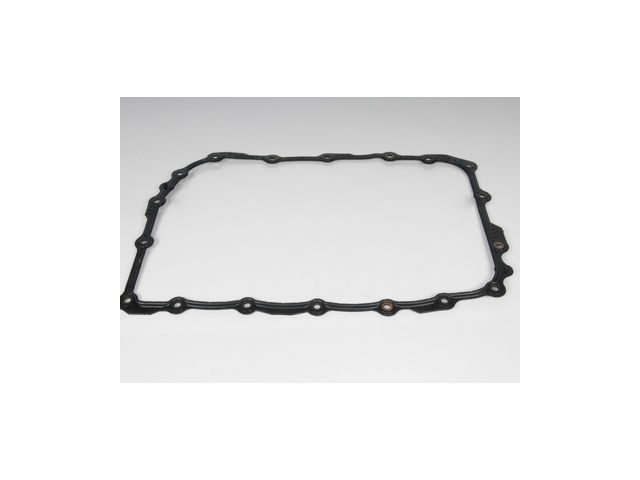
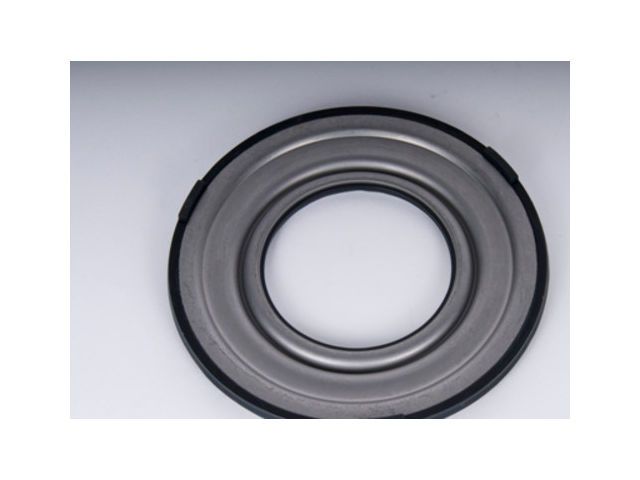


The information in this article is provided for general reference and educational purposes only. Vehicle specifications, procedures, and part compatibility can vary by production date, trim level, and region. Always consult your vehicle's factory service manual and verify part numbers before purchasing or performing repairs. Safety-critical components such as airbags, seat belts, and braking systems should be installed by a qualified professional.
- Chevrolet AVALANCHE:
- 🧭 Diagnostic Flowchart
- 🎬 Helpful Videos
- 🛍️ Shop This Part
- What's Unique About the 2010-2013 Chevrolet AVALANCHE
- Symptoms You May Notice
- Most Likely Causes
- Rare But Worth Checking
- Diagnosis Steps
- Parts You'll Likely Need
- Related Codes That Often Appear With This One
- Technical Service Bulletins (TSBs) & Recalls
- Platform-Specific Known Issues
- Mechanic-Grade Diagnostic Values
- Hidden / Shadow Codes Worth Checking
- Scan Tool Commands That Help
- Wiring & Ground Locations
- Real Owner Repair Stories
- OEM Part Supersession History
- 🎟️ Get 5% Off