

P0751 on 2014-2016 Chevrolet SS: Causes and Fixes for a Stuck Shift Solenoid
On a 2014-2016 Chevy SS, code P0751 is almost always caused by a sticking 'Clutch Select Solenoid Valve 2' inside the 6L80 transmission. This is a known issue confirmed by GM TSBs PI1344B and PI1344C. The fix requires dropping the transmission pan to replace the solenoid. However, if the solenoid's bore in the valve body is scratched or damaged, the entire lower valve body must be replaced to prevent a recurring failure. This job is best left to a professional.
- P0751 on a 2014-2016 Chevy SS points directly to a known issue with a specific transmission solenoid.
- The most common symptoms are poor acceleration and a feeling of slipping from a stop, caused by the transmission starting in a higher gear.
- The most likely fix is replacing the 'Clutch Select Solenoid Valve 2' inside the transmission oil pan.
- This is not a simple DIY fix for beginners; professional service is strongly recommended due to the complexity.
- Do not ignore this code, as continued driving can lead to more severe and expensive transmission damage.
What's Unique About the 2014-2016 Chevrolet CHEVEROLET SS
The Chevrolet SS uses the 6L80 transmission, which is prone to this specific issue across many GM platforms. GM has issued multiple Technical Service Bulletins (TSBs), including PI1344C, acknowledging that the Clutch Select Solenoid Valve 2 can stick in its bore within the valve body. [Bulletin #PI1344C] This isn't just a random failure; it's a documented pattern where the valve itself develops scratches or debris causes it to bind. [Bulletin #PI1344B] This often causes the car to feel like it's starting in 4th gear, a symptom explicitly mentioned in the TSBs. [Bulletin #PI1344B]
Diagnostic Flowchart
Tap your situation to follow the diagnostic path that matches what you're seeing on this vehicle.
Symptoms You May Notice
- Reduced acceleration from a stop. [Bulletin #PI1344C]
- Transmission slipping when launching from a stop. [Bulletin #PI1344B]
- Feeling like the vehicle is starting in a higher gear (e.g., 3rd or 4th).
- Harsh, abrupt, or delayed shifts.
- Transmission may be stuck in a single gear (limp mode).
- Illuminated Check Engine Light.
- Transmission overheating.
- Cruise control may be disabled.
- Replacing the entire transmission when only a single solenoid or the lower valve body is at fault.
- Replacing the wrong shift solenoid. The TSBs specifically point to Clutch Select Solenoid Valve 2 (PC Solenoid 2) as the culprit for P0751.
- Replacing only the solenoid when the valve body bore is scored. This will lead to the new solenoid failing and the code returning. [Bulletin #PI1344C]
Most Likely Causes
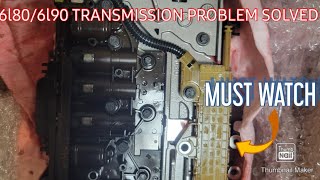
- Sticking Clutch Select Solenoid Valve 2 (Shift Solenoid 'A') 🔴 High Probability → Shop Transmission Valve Body This is a well-documented issue for the 6L80 transmission, confirmed by GM Technical Service Bulletins PI1344B and PI1344C. The solenoid can physically stick or get scratched in its bore within the valve body. [Bulletin #PI1344B, Bulletin #PI1344C] This can be due to debris in the fluid or a flaw in the valve/bore design, sometimes related to insufficient oil flow.
How to confirm: A technician will use a high-end scan tool to perform a solenoid performance test, specifically on 'PC Solenoid 2'. If the test fails or is inconclusive, the transmission pan must be dropped. The TSB recommends removing the solenoid and inspecting it and its bore for any scratches or scoring. [Bulletin #PI1344C] Resistance should be tested; PWM solenoids like this one should measure between 3-8 ohms.
Typical fix: Replace the faulty Clutch Select Solenoid Valve 2. If inspection reveals scoring or damage to the valve body bore, the entire lower valve body must be replaced as per GM TSB PI1344C. [Bulletin #PI1344C] Some specialists also recommend installing an updated, notched valve body spacer plate gasket to improve oil flow to the solenoid and prevent recurrence.
Est. part cost: $50-$150 - Low or Dirty Transmission Fluid 🟡 Medium Probability → Shop Transmission Assembly Degraded or contaminated fluid can cause sludge and debris to build up, preventing solenoids from moving freely. On the 6L80, debris from a failing torque converter is a known issue 🎬 Watch: How internal debris leads to total transmission failure. that can contaminate the fluid and damage the valve body and solenoids.
How to confirm: The Chevy SS does not have a traditional dipstick. The fluid level must be checked via a fill plug on the side of the transmission when the fluid is at a specific temperature. The fluid should be red (DEXRON-VI) and not have a burnt smell or contain visible debris.
Typical fix: Perform a transmission fluid and filter change using DEXRON-VI fluid. If the fluid is very dirty or contains metallic particles, it may signal a more serious issue like torque converter failure, which would require further diagnosis.
Est. part cost: $75-$200 - Faulty Wiring or Connector ⚪ Low Probability The internal transmission harness is constantly submerged in hot fluid, which can make wiring brittle over time. The main external transmission harness connector can also be improperly seated or damaged. However, most wiring for the solenoids is contained within the TEHCM assembly, making a single wire failure less common than a module failure.
How to confirm: Visually inspect the external transmission electrical connector and harness for damage. A multimeter can be used to check for continuity and proper voltage at the solenoid connector, though this often requires dropping the pan to access the internal wiring.
Typical fix: Repair the damaged wiring or clean/replace the connector. If the internal harness is faulty, it is replaced as part of the TEHCM/valve body service.
Est. part cost: $20-$100
Rare But Worth Checking
- Faulty Transmission Control Module (TCM): → Shop Transmission Assembly While rare, a failing TCM can fail to command the solenoid correctly. On the 6L80, the TCM is integrated with the valve body into a single unit called the TEHCM (Transmission Electro-Hydraulic Control Module), so this is often replaced as an assembly.
- Worn Valve Body Bores or Checkballs: → Shop Transmission Valve Body Even if the solenoid is new, wear in the valve body itself can cause hydraulic leaks, leading to the same symptoms and codes. This is why the TSBs recommend replacing the lower valve body if any scoring is found. [Bulletin #PI1344C]
Diagnosis Steps
- Verify the code with a reliable OBD-II scanner. Note any other codes, especially P0700.
- Check the transmission fluid level and condition. This requires raising the vehicle and checking the fill plug at the correct operating temperature.
- Inspect the transmission external wiring harness and connector for any visible damage, corrosion, or loose connections.
- Using a professional scan tool, perform a solenoid performance test to command Shift Solenoid 'A' (Clutch Select Solenoid 2) on and off, monitoring its response.
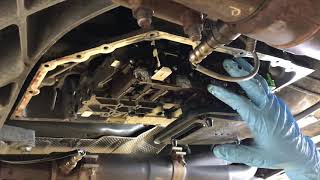
- If the solenoid test fails or is inconclusive, drop the transmission oil pan to gain access to the valve body.
- Visually inspect the solenoid and its wiring inside the transmission.
- Remove the suspect solenoid (Clutch Select Solenoid Valve 2) and inspect it and its bore for scoring, scratches, or debris, as detailed in TSB PI1344C. [Bulletin #PI1344C]
- Test the solenoid's resistance with a multimeter. A healthy PWM solenoid should read between 3-8 ohms.
- If the solenoid is faulty and there is NO damage to the bore, replace the solenoid.
- If the valve body bore is damaged, the entire lower valve body must be replaced. [Bulletin #PI1344C]
- Install a new transmission filter and pan gasket, and refill with the correct amount of DEXRON-VI fluid.
Parts You'll Likely Need
- Automatic Transmission Shift Solenoid 'A' (Clutch Select Solenoid Valve 2)
(OEM #24230298)— This is the component identified by GM's own service bulletins as the most common cause of failure for this code on this transmission. [Bulletin #PI1344B, Bulletin #PI1344C]
Trusted brands: ACDelco
OEM price range: $60-$100
Aftermarket price range: $40-$80 - Automatic Transmission Fluid and Filter Kit
(OEM #24236799 (Filter Kit))— The fluid and filter must be replaced whenever the transmission pan is removed for service. Only DEXRON-VI fluid should be used.
Trusted brands: ACDelco
OEM price range: $100-$150
Aftermarket price range: $60-$100 - Lower Valve Body — Required if the bore for the Clutch Select Solenoid Valve 2 is found to be scratched or damaged, per GM TSB PI1344C. This prevents a repeat failure. [Bulletin #PI1344C]
Trusted brands: ACDelco (GM Genuine)
OEM price range: $250-$400
Related Codes That Often Appear With This One
- P0700: This is a generic code indicating the Transmission Control Module (TCM) has stored a fault code. It will almost always be present alongside a specific transmission code like P0751.
Technical Service Bulletins (TSBs) & Recalls
- PI1344C: Diagnostic tips for reduced acceleration, transmission slipping, and DTC P0751. Recommends replacing the lower valve body if the solenoid bore is scratched. Supersedes PI1344B.
- PI1344B: Identifies a sticking Clutch Select Solenoid Valve 2 as the cause and is superseded by PI1344C.
Platform-Specific Known Issues
- GM Technical Service Bulletin PI1344C notes that for P0751 with symptoms of reduced acceleration or slipping from a launch, the cause may be the Clutch Select Solenoid Valve 2 sticking in its bore. [Bulletin #PI1344C]
- GM Technical Service Bulletin PI1344B explicitly identifies the cause as 'the Clutch Select Solenoid Valve 2 (359), located in the lower valve body, sticking in...' which can result in a 4th gear start. [Bulletin #PI1344B]
- A known aftermarket solution involves installing a notched valve body spacer plate gasket, which is claimed to provide a higher volume of oil to the solenoid to prevent the operational delay that triggers the code.
Mechanic-Grade Diagnostic Values
- Pressure Control (PWM) Solenoid Resistance — expected: 3.0 - 8.0 Ohms. Failure: A reading outside this range (e.g., open circuit or short) indicates a failed solenoid.
- On/Off Shift Solenoid Resistance — expected: 20 - 40 Ohms. Failure: A reading outside this range indicates a failed solenoid.
- TCM Solenoid Operating Voltage — expected: 8.3 - 9.3 Volts. Failure: Voltage significantly lower than this range at the TEHCM could indicate a problem with the module's power supply.
- PWM Solenoid Current Draw — expected: 1.5 - 4.0 Amps at 12V. Failure: Incorrect amperage draw when the solenoid is manually energized indicates an internal failure.
Scan Tool Commands That Help
- GM GDS2 / Tech 2: Solenoid Performance Test / Output Controls — This is a primary diagnostic step to electronically command each solenoid on and off to check for response without removing the pan. It can quickly confirm if the solenoid is electrically non-responsive.
- GM GDS2 / Tech 2: Solenoid Cleaning Procedure — This function can be used as a first step if debris is suspected. The scan tool will cycle all solenoids to attempt to dislodge any debris causing a valve to stick. If the code returns, mechanical repair is necessary.
- GM GDS2 / Tech 2: Reset Transmission Adapts / Fast Learn — This is a mandatory step after replacing the TEHCM, valve body, or performing major internal repairs. The procedure allows the new TEHCM to learn the clutch fill volumes, ensuring proper shift quality. Failure to perform this step will result in poor shifting.
Wiring & Ground Locations
- TEHCM (Transmission Electro-Hydraulic Control Module) — Inside the transmission, bolted directly to the valve body. It is accessible after removing the transmission oil pan.. The TEHCM contains the TCM, all shift solenoids (including Shift Solenoid 'A'), and pressure switches in a single assembly. The 'wiring' for the solenoid is internal to this module. Diagnosis focuses on the main connector to the TEHCM rather than individual solenoid wires.
- Transmission Case Connector — The main 20-pin electrical connector on the outside of the transmission case that provides power, ground, and data communication to the internal TEHCM.. This is the primary point to test for power and ground to the entire transmission control system. A bad connection here will cause multiple codes, including P0751. A solid ground (≈0V) and battery voltage should be present with the key on.
Real Owner Repair Stories
- JASPER Engines & Transmissions Technical Update (Early-style GM 6L80/90E transmissions) — DTC P0751, hard shifts due to increased line pressure.
❌ Tried (didn't work) The source implies that simply replacing the solenoid may not be a permanent fix.
✅ What actually fixed it The root cause was identified as a delay in Clutch Pressure Control Solenoid 2's operation due to a lack of oil. The definitive fix is to update the transmission by installing a notched valve body spacer plate gasket, which provides a higher volume of oil to the solenoid, preventing the operational delay.
OEM Part Supersession History
24256524→24041956— Part has been updated or replaced by a newer version from the manufacturer.
Heads up: This part number is for the entire Control Solenoid Valve Assembly (TEHCM).Varies by year (e.g., 24256861 for 2010-2013)→24274046 / 24285393 (Typical for 2014-2016)— Hardware and software revisions for different model years.
Heads up: TEHCM units are not interchangeable between year groups. Installing a TEHCM from a different year range (e.g., a 2012 unit into a 2015 car) can result in a no-start condition, limp mode, or communication failures. The correct part must be matched by VIN and Tag ID.
Model Year Variations Within This Range
- 2014-2016: While the core 6L80 transmission is the same, the TEHCM (control module) has specific part numbers and software for this year range (e.g., 24274046 / 24285393). These are not backward or forward compatible with TEHCMs from earlier or later vehicles. The 2015 model year introduced Magnetic Ride Control, but this did not affect the transmission's internal operation or the cause of P0751.
Helpful Videos

We Have This Part in Stock



The information in this article is provided for general reference and educational purposes only. Vehicle specifications, procedures, and part compatibility can vary by production date, trim level, and region. Always consult your vehicle's factory service manual and verify part numbers before purchasing or performing repairs. Safety-critical components such as airbags, seat belts, and braking systems should be installed by a qualified professional.
- Chevrolet CHEVEROLET SS:
- 🧭 Diagnostic Flowchart
- 🎬 Helpful Videos
- 🛍️ Shop This Part
- What's Unique About the 2014-2016 Chevrolet CHEVEROLET SS
- Symptoms You May Notice
- Most Likely Causes
- Rare But Worth Checking
- Diagnosis Steps
- Parts You'll Likely Need
- Related Codes That Often Appear With This One
- Technical Service Bulletins (TSBs) & Recalls
- Platform-Specific Known Issues
- Mechanic-Grade Diagnostic Values
- Scan Tool Commands That Help
- Wiring & Ground Locations
- Real Owner Repair Stories
- OEM Part Supersession History
- Model Year Variations Within This Range
- 🎟️ Get 5% Off