

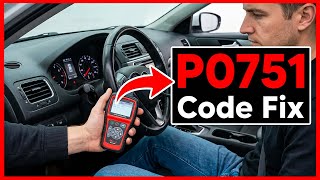
P0751 on 2006-2010 Chevrolet Cobalt: Shift Solenoid 'A' Performance/Stuck Off Explained
On a 2006-2010 Cobalt, code P0751 is most often caused by a failed 1-2 shift solenoid inside the 4T45-E automatic transmission. This is a common failure item. Replacing the solenoid is a moderately difficult DIY job, with the part costing between $25 and $60.
- P0751 on a 2006-2010 Cobalt almost always points to a problem with the 1-2 Shift Solenoid 'A' inside the transmission.
- The most likely fix is replacing the faulty shift solenoid. It is best practice to replace both the 'A' (1-2) and 'B' (2-3) solenoids at the same time.
- Before replacing parts, always check the transmission fluid level and condition first, as low or dirty fluid can cause shifting problems.
- Driving with this code can cause the transmission to get stuck in one gear ('limp mode'), potentially leading to overheating and more severe damage.
What's Unique About the 2006-2010 Chevrolet Cobalt
The 2006-2010 Chevrolet Cobalt uses the 4T45-E automatic transmission. Shift solenoid failure is a widely documented and common issue on this specific transmission. While low or dirty fluid can cause this code on any vehicle, the Cobalt is particularly known for the solenoids themselves failing electrically or mechanically over time. The repair is common enough that many owners with some mechanical skill choose to perform it themselves, as access is possible through the driver's side wheel well without removing the entire transmission.
Symptoms You May Notice
- Check Engine Light is on
- Transmission is stuck in one gear (limp mode)
- Harsh, delayed, or erratic shifting
- Vehicle won't shift into the highest gear, causing high RPMs at highway speeds
- Transmission slipping
- Increased fuel consumption
- Sluggish acceleration, as if starting in a higher gear
- Transmission overheating
- Replacing the entire transmission when only a solenoid has failed. Due to the commonality of this specific solenoid failure, it should be the primary suspect before condemning the entire unit.
Most Likely Causes
- Failed 1-2 Shift Solenoid 'A' 🔴 High Probability → Shop Transmission Valve Body The solenoids in the 4T45-E transmission are a known, extremely common failure point due to heat, vibration, and internal wear over many cycles.
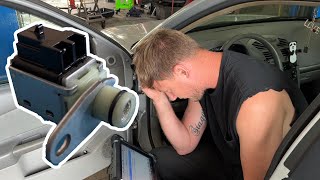
How to confirm: Test the solenoid's resistance with a multimeter; it should be within manufacturer specifications (typically 20-30 ohms for this application). A reading that is open (infinite) or shorted (zero) confirms failure. A scan tool can also be used to command 🎬 See how to diagnose a shift solenoid performance code the solenoid on and off to check its response.
Typical fix: Replace the 1-2 shift solenoid. It is highly recommended to replace the 2-3 shift solenoid ('B') at the same time, as it is located next to solenoid 'A' and is prone to similar failure.
Est. part cost: $25-$60 for an aftermarket solenoid - Low or Dirty Transmission Fluid 🟡 Medium Probability → Shop Transmission Assembly
How to confirm: Check the transmission fluid level and condition. The fluid should be at the correct level, pinkish-red, and not smell burnt. Dark, burnt, or sludgy fluid indicates a problem. This should always be the first check.
Typical fix: Perform a transmission fluid and filter change using DEXRON-VI fluid. If the fluid is very contaminated, it may indicate a more serious internal issue.
Est. part cost: $50-$100 for fluid and a filter kit - Clogged Transmission Fluid Passages or Filter ⚪ Low Probability → Shop Transmission Assembly
How to confirm: This is usually found during the process of changing the fluid and filter. Debris in the transmission pan is a key indicator. This can be caused by normal wear or a failing torque converter shedding material.
Typical fix: A transmission fluid and filter change is the first step. If significant debris is found, further internal inspection of the transmission and valve body may be required.
Est. part cost: $50-$100 for fluid and a filter kit
Rare But Worth Checking
- Damaged Wiring or Connectors: The wiring harness leading to the transmission can become damaged from heat or road debris, causing a short or open circuit. The internal harness connecting to the solenoids can also become brittle. Inspect the external wiring to the transmission case connector before performing internal work.
- Faulty Transmission Control Module (TCM): → Shop Transmission Assembly While rare, the TCM itself can fail and stop sending the correct signal to the solenoid. This should be considered only after the solenoid and wiring have been confirmed to be good. Some owners have reported needing to replace the TCM to resolve shifting issues.
Diagnosis Steps
- Check the transmission fluid level and condition. Top off or change the fluid and filter if it is low, dark, or smells burnt. This is the crucial first step.
- Use a scan tool to check for other transmission-related codes. Note if P0700 or codes for other solenoids are present.
- Clear the codes and test drive the vehicle to see if the P0751 code returns immediately. This confirms a persistent fault.
- Inspect the transmission wiring harness and connectors for any visible damage, corrosion, or loose connections.
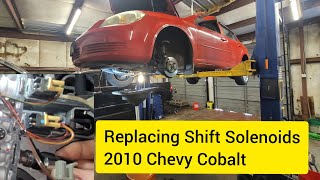
- If the fluid and wiring are okay, the next step is to access the solenoids by removing the transmission side cover. This requires 🎬 Watch: Step-by-step shift solenoid replacement walkthrough removing the driver's side wheel, axle, and potentially jacking the engine/transmission assembly for clearance.
- Test the resistance of the 1-2 shift solenoid ('A') with a multimeter. Compare the reading to the manufacturer's specification (20-30 ohms is typical). An out-of-spec reading confirms a bad solenoid.
- While the side cover is off, inspect for broken fluid tubes inside the transmission, which are another known failure point.
- If the solenoid tests good, the issue may be a blockage in the valve body or, rarely, a faulty TCM.
Parts You'll Likely Need
- 1-2 / 2-3 Shift Solenoid
(OEM #24227792)— This is the most common cause of P0751 on the 4T45-E transmission. Solenoid 'A' and 'B' are often the same part number and should be replaced in pairs.
Trusted brands: ACDelco, Rostra, ATP, Dorman
OEM price range: $50-$80
Aftermarket price range: $25-$60 - Automatic Transmission Filter Kit — Should be replaced whenever the transmission pan or side cover is removed. A new filter is critical for transmission health.
Trusted brands: ACDelco, Wix, ATP
OEM price range: $20-$40
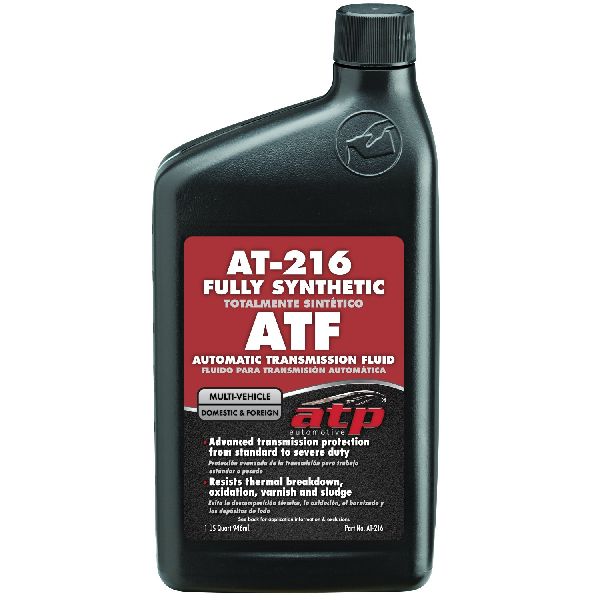
Aftermarket price range: $15-$30 - DEXRON-VI Automatic Transmission Fluid — The system must be refilled with the correct specification fluid after the repair. A typical drain and refill for this job requires approximately 7-8 quarts.
Trusted brands: ACDelco, Valvoline, Castrol
OEM price range: $8-$12 per quart
Aftermarket price range: $6-$9 per quart
Related Codes That Often Appear With This One
- P0700 — P0700 is a generic code that simply means the Transmission Control Module (TCM) has stored a fault. It acts as a 'check engine light' for the transmission and will almost always appear with a more specific transmission code like P0751.
- P0756 — This code is for Shift Solenoid 'B' (the 2-3 shift solenoid). Since both solenoids are identical, located next to each other, and subject to the same conditions, it's common for them to fail around the same time. This can be caused by the same root issues, like contaminated fluid.
- P0752 — This code is for Shift Solenoid 'A' Stuck On. It's the counterpart to P0751. Seeing both codes may indicate an intermittent electrical problem or a solenoid that is mechanically binding.
Technical Service Bulletins (TSBs) & Recalls
- GM TSB #070730025: While not for the Cobalt specifically, this TSB was issued for vehicles with the same 4T45-E transmission. It addresses harsh shifts, slips, and DTCs including P0751 and P0756, pointing to potential solenoid and valve body issues.
- GM Preliminary Information Bulletin #PI1161: Addresses DTC P0751 on some 6-speed automatic transmissions, caused by a sticking Clutch Select Solenoid Valve 2. While for a different transmission, it shows a pattern of GM solenoid performance issues causing this code.
Mechanic-Grade Diagnostic Values
- Shift Solenoid 'A' (1-2) and 'B' (2-3) Resistance — expected: 20-30 ohms at 68°F (20°C). Failure: A reading of infinite resistance (Open Loop) or near-zero ohms (short circuit) indicates a failed solenoid coil.
- Voltage at Solenoid Connector (Power Pin) — expected: Approximately 12V (Battery Voltage) with Key On, Engine Off.. Failure: A voltage drop greater than 0.5V suggests high resistance in the power supply circuit from the TCM.
- Voltage at Solenoid Connector (Ground Pin) — expected: Approximately 0V with Key On, Engine Off.. Failure: A reading above 0.2V indicates a poor ground connection, which can cause erratic solenoid operation.
Scan Tool Commands That Help
- GM Tech2 / GDS2: Transmission Output Controls > Shift Solenoid 1 (SS1) — This bidirectional command allows a technician to manually command the 1-2 Shift Solenoid 'A' on and off while the vehicle is stationary (Key On, Engine Off). A distinct 'click' should be heard from the transmission side cover with each command. The absence of a click, despite having power and ground, points to a mechanically stuck or failed solenoid, confirming the diagnosis before disassembly.
Wiring & Ground Locations
- Transmission Harness Connector — The main 20-pin connector is located on the top of the transmission, near the driver's side of the engine bay.. This is the primary point for testing the entire solenoid circuit from outside the transmission. Pins for Shift Solenoid 'A' can be tested here for resistance back to the solenoid and for voltage from the TCM.
- Splice #107 (Circuit 439, PINK wire) — Inside the plastic conduit for the transmission breakout harness, located directly above the transmission oil cooler lines.. This splice provides power to multiple transmission components. The conduit can face upwards, trapping water and causing corrosion at this specific splice, leading to intermittent power loss for the solenoids and multiple codes, including P0751.
- Engine Block Ground — A primary ground wire for the engine and transmission harness is bolted to the engine block, often near the alternator or starter.. A loose or corroded main ground can cause a variety of electrical issues, including erratic voltage to the TCM and solenoids, potentially triggering performance codes like P0751.
Real Owner Repair Stories
- YouTube Commenter on 'TIPS Chevy Cobalt Transmission Shift Solenoid Replacement' (Chevrolet Cobalt (year not specified, but within range)) — After replacing the shift solenoids, the vehicle had no gears at all.
❌ Tried (didn't work) Replacing the 1-2 and 2-3 shift solenoids.
✅ What actually fixed it The manual valve linkage rod, located above the solenoids, was accidentally knocked loose during the solenoid replacement. After re-securing the linkage, the transmission functioned normally. This is a critical mechanical step easily missed during an electrical repair.
OEM Part Supersession History
24212690→24227792— Part number consolidation and potential minor design updates by the manufacturer.
Heads up: The new part number (24227792) is a direct replacement for the original and is used for multiple solenoid functions within the transmission, including the TCC solenoid.
Diagnostic Flowchart
Other Known Issues on This Vehicle
Issues unrelated to this code that are worth knowing about as an owner of this generation:
- Defective Ignition Switch 🔴 High — Extremely widespread, subject of a massive recall. The switch can move out of the 'Run' position while driving, disabling the engine, power steering, power brakes, and airbags. (Ref: NHTSA Campaign ID: 14V047000)
- Sudden Loss of Electric Power Steering 🔴 High — Very common across all model years, leading to a major recall. The electric power steering motor can fail suddenly, making the vehicle very difficult to steer at low speeds. (Ref: NHTSA Campaign ID: 10V073000)
- Corroded Fuel Lines 🟠 Medium — Common on 2008-2010 models, especially in 'salt belt' regions. Fuel lines can rust and leak near the left rear wheel well, causing a strong fuel odor and fire risk. (Ref: NHTSA Investigation PE20-008 (Closed))
- Key Can Be Removed When Not in Park 🟠 Medium — A widespread issue that led to a recall. This defect could allow the vehicle to roll away unexpectedly if the driver removes the key without the transmission being in Park. (Ref: NHTSA Campaign ID: 14V171000)
- Faulty Transmission Shift Cable Clip 🟡 Low → Shop Transmission Assembly — Affected 2009 models as part of a recall. The shift cable clip may not be fully engaged, causing a mismatch between the gear selector position and the actual transmission gear. (Ref: NHTSA Campaign ID: 09V073000)
Used vs. New Parts: Buying Guide for This Vehicle
When a used part is the smart pick: For this specific repair, using a used part is strongly discouraged. The primary failure part is a low-cost electronic solenoid which is a known high-failure item. The risk of a used solenoid failing shortly after installation is high and not worth the minor cost savings over a new aftermarket part.
Donor-vehicle mileage cap: roughly under 60000 miles for the part to have meaningful remaining life.
What to inspect on the donor part:
- If forced to use a used part, source from a vehicle with the lowest possible mileage.
- Ensure the donor vehicle was not involved in a front-end collision that could have damaged the transmission case or wiring.
- Check the fluid condition of the donor transmission if possible; avoid any with dark, burnt, or glittery fluid.
OEM-only on this vehicle (don't cheap out):
- Transmission Control Module (TCM) - Used TCMs may have incompatible software or require dealer programming, making a new or professionally remanufactured unit a safer choice.
Aftermarket brands forum-validated for this vehicle:
- ACDelco (Professional/GM Genuine)
- Rostra
- ATP (Automatic Transmission Parts)
- Standard Motor Products (SMP)
Brands owners have reported issues with on this vehicle:
- No-name, unbranded solenoid kits from online marketplaces often have high failure rates and should be avoided.
Real Owner Stories
Aggregated from forums and TSBs cited above. Mileages and costs reflect what owners reported in those sources.
2010 Chevy Cobalt
Symptoms: The vehicle was setting a P0752 1-2 shift solenoid valve performance code and the symptoms were hard shifting.
What fixed it: Replacement of the 1-2 shift solenoid.
Source hint: youtube_comment from 'Auto Repair Guys'
2006 Chevrolet HHR 2.4L
Symptoms: The owner experienced shifting problems and a P0751 code. They expressed frustration that the solenoid is accessed via the side cover instead of the bottom pan.
What fixed it: A failed solenoid was confirmed as the cause and replaced.
Source hint: batauto.com - '2006 Chevrolet HHR 2.4 auto trans code P0751'
2006 Chevrolet HHR
Symptoms: The car would not shift into high gear and shifted hard into lower gears; high RPMs were noted at highway speeds.
What fixed it: The discussion suggested a solenoid or valve body issue, though some users also pointed toward the TCM.
Source hint: chevyhhr.net - 'P0700 and P0751, wont shift into high gear, shifts hard into lower ones'
Related OBD-II Codes
Frequently Asked Questions
Does GM TSB #070730025 apply to my Chevrolet Cobalt's 4T45-E transmission?
I have a P0751 and a P0700 code on my 2006 Cobalt; what does this mean?
Is there a specific fluid I should use if I'm trying to fix a P0751 performance code?
How difficult is it to replace the 1-2 shift solenoid on this car?
Should I replace both solenoids even if only P0751 is present?
Could my P0751 code be related to the massive ignition switch recall?
Helpful Videos
We Have This Part in Stock


The information in this article is provided for general reference and educational purposes only. Vehicle specifications, procedures, and part compatibility can vary by production date, trim level, and region. Always consult your vehicle's factory service manual and verify part numbers before purchasing or performing repairs. Safety-critical components such as airbags, seat belts, and braking systems should be installed by a qualified professional.
- Chevrolet Cobalt:
- 🧭 Diagnostic Flowchart
- 🎬 Helpful Videos
- 🛍️ Shop This Part
- What's Unique About the 2006-2010 Chevrolet Cobalt
- Symptoms You May Notice
- Most Likely Causes
- Rare But Worth Checking
- Diagnosis Steps
- Parts You'll Likely Need
- Related Codes That Often Appear With This One
- Technical Service Bulletins (TSBs) & Recalls
- Mechanic-Grade Diagnostic Values
- Scan Tool Commands That Help
- Wiring & Ground Locations
- Real Owner Repair Stories
- OEM Part Supersession History
- Other Known Issues on This Vehicle
- Used vs. New Parts: Buying Guide for This Vehicle
- Real Owner Stories
- 2010 Chevy Cobalt
- 2006 Chevrolet HHR 2.4L
- 2006 Chevrolet HHR
- Related OBD-II Codes
- Frequently Asked Questions
- 🎟️ Get 5% Off