

P0751 on 2015-2019 Chevrolet Express: Causes and Fixes for Shift Solenoid 'A' Performance
On a 2015-2019 Chevrolet Express, code P0751 is almost always caused by a sticking 'Clutch Select Solenoid Valve 2' inside the transmission, a known issue confirmed by GM Technical Service Bulletins. The fix involves dropping the transmission pan to replace the solenoid or, more reliably, the entire lower valve body. This repair typically costs between $400 and $950 at a professional shop.
- P0751 on a 2015-2019 Express is a well-known issue, not a random failure.
- The most likely culprit is the 'Clutch Select Solenoid Valve 2' sticking inside the transmission valve body.
- Symptoms are distinct: very poor acceleration from a stop and a feeling of slipping.
- The official GM-recommended repair is often to replace the entire lower valve body, not just the single solenoid.
- Do not ignore this code; driving can cause further, more expensive transmission damage.
What's Unique About the 2015-2019 Chevrolet EXPRESS
The Chevrolet Express vans in this year range, often equipped with the 6L80 or 6L90 transmission, are highly susceptible to this specific code due to a known design issue. GM has issued multiple Technical Service Bulletins (TSBs), including PI1344C, acknowledging that the Clutch Select Solenoid Valve 2 is prone to sticking or scoring within its bore in the valve body. This isn't just a random failure; it's a documented pattern on this powertrain and its platform mates, often causing the vehicle to feel like it's starting in a higher gear, leading to poor acceleration.
Diagnostic Flowchart
Tap your situation to follow the diagnostic path that matches what you're seeing on this vehicle.
Symptoms You May Notice
- Reduced acceleration at low speed.
- Transmission slipping from a launch.
- Feeling like the vehicle is starting in a higher gear (e.g., 4th gear).
- Harsh or delayed gear shifts.
- Check Engine Light is on.
- Transmission gets stuck in one gear ('limp mode').
- Transmission overheating.
- Replacing only the single solenoid without inspecting the valve body bore. If the bore is scored, a new solenoid will likely fail again quickly. GM's TSB specifically advises replacing the entire lower valve body if scratches are found.
- Assuming the entire transmission needs to be rebuilt. While possible if driven for a long time with the issue, the problem is very often isolated to the valve body and its solenoids.
Most Likely Causes
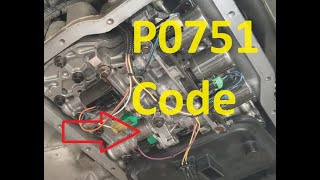
- Sticking Clutch Select Solenoid Valve 2 (Shift Solenoid 'A') 🔴 High Probability → Shop Transmission Valve Body This is a well-documented failure point confirmed by GM TSBs #PI1344C and #PI1344B. 🎬 Watch: Expert breakdown of the P0751 code and TSB details. The valve can stick in its bore within the lower valve body due to debris or scoring from normal wear. This is the most common cause for P0751 on this platform.
How to confirm: A technician can perform a solenoid performance test with a scan tool (specifically testing PC Solenoid 2). A physical inspection of the valve after removing the valve body will show scratches or scoring if it is the cause. GM's TSB explicitly shows an example of a scored valve.
Typical fix: Replace the lower valve body assembly. If the valve is found to be stuck or shows any signs of scratching, the entire lower valve body should be replaced as per GM's official recommendation to prevent a repeat failure.
Est. part cost: $150-$350 - Low or Dirty Transmission Fluid 🟡 Medium Probability → Shop Transmission Assembly Contaminated fluid can cause debris to build up in the narrow passages of the solenoid and valve body, leading to sticking. Low fluid levels can cause a lack of hydraulic pressure needed to operate the solenoids correctly. While a common cause on many vehicles, for the Express, it's often a secondary check after suspecting the solenoid itself.
How to confirm: Check the transmission fluid level and condition. The fluid should be pinkish-red (DEXRON-VI) and not smell burnt. The level must be checked at the correct operating temperature per the manufacturer's procedure, which is the first step recommended in the GM service bulletin.
Typical fix: Perform a transmission fluid and filter change. If the fluid is very dark or contains metal shavings, it points to a more severe internal issue, such as torque converter or clutch failure.
Est. part cost: $75-$150 - Faulty Wiring or Connectors ⚪ Low Probability While less common than the solenoid itself, the internal transmission wiring harness is exposed to heat and fluid, which can cause it to become brittle or damaged over time. TSB #18-NA-102 also notes potential for chafed wiring harnesses on Express vans causing various electrical issues, including transmission performance concerns.
How to confirm: Visually inspect the wiring harness and connectors for damage, corrosion, or loose pins, both at the external transmission connector and the internal harness if the pan is removed.
Typical fix: Repair or replace the damaged section of the wiring harness or the connector.
Est. part cost: $50-$200
Rare But Worth Checking
- Faulty Transmission Control Module (TCM): → Shop Transmission Assembly This is rare. The TCM is integrated into the valve body assembly (called a TEHCM) on these 6L80/6L90 transmissions. It should only be considered after all other possibilities, especially the solenoid valve and fluid, have been ruled out.
- Clogged Transmission Filter: → Shop Transmission Assembly A clogged filter can starve the solenoids of the hydraulic pressure they need to function, but this is usually a symptom of a larger problem, like deteriorating internal components (e.g., torque converter) shedding debris.
- Cracked 1-2-3-4 Clutch Wave Plate: In some cases, an internal mechanical failure like a cracked clutch wave plate can prevent the hydraulic circuit from building pressure, even with a functional solenoid. This can trigger a P0751 code but requires a full transmission teardown to diagnose and fix.
Diagnosis Steps
- Verify the transmission fluid level and condition. Ensure the fluid is clean, at the correct level, and of the proper type (DEXRON-VI). This is the first step in the official GM diagnostic procedure.
- Use a professional scan tool to confirm P0751 is present and check for any other transmission-related codes.
- Clear the codes and perform a road test to see if the code and symptoms return. The condition can be intermittent and difficult to duplicate.
- Inspect the external transmission wiring harness and connectors for any obvious damage, corrosion, or looseness.
- If possible, use a scan tool to command Shift Solenoid 'A' (PC Solenoid 2) on and off to test its electronic function.
- If the tests point to an internal issue, drop the transmission pan and oil filter.
- Inspect the pan for excessive metal debris, which would indicate a more serious internal failure.
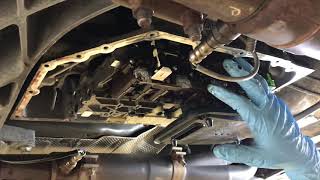
- Remove the lower valve body and inspect 🎬 See this walkthrough on how to safely remove the valve body. the Clutch Select Solenoid Valve 2 for scoring, scratches, or being stuck in its bore.
- If the valve is damaged or scored, replace the lower valve body assembly as recommended by GM. Do not just replace the solenoid.
Parts You'll Likely Need
- Transmission Lower Valve Body — Per GM TSBs, if the Clutch Select Solenoid Valve 2 is found to be sticking or its bore is scored, the entire lower valve body should be replaced to ensure a lasting repair. This part contains the problematic valve and bore.
Trusted brands: ACDelco
OEM price range: $200-$350
Aftermarket price range: $150-$250 - Transmission Valve Body Separator Plate
(OEM #24272467)— This plate with bonded gaskets sits between the valve body sections and is often replaced during a valve body service to ensure proper sealing. It is a critical component for preventing cross-leaks.
Trusted brands: ACDelco
OEM price range: $35-$60
Aftermarket price range: $25-$45 - Transmission Fluid and Filter Kit — This is required for any repair that involves dropping the transmission pan. Using fresh, correct-spec fluid (DEXRON-VI) and a new filter is critical.
Trusted brands: ACDelco
OEM price range: $80-$120
Aftermarket price range: $50-$90
Related Codes That Often Appear With This One
- P0700 — P0700 is a generic code indicating that the Transmission Control Module (TCM) has stored a fault code. It will almost always appear alongside a specific transmission code like P0751.
Technical Service Bulletins (TSBs) & Recalls
- PI1344C: Diagnostic tips for reduced acceleration at low speed and/or transmission slipping from a launch, DTC P0751 set. Recommends replacing the lower valve body if the Clutch Select Solenoid Valve 2 is scored.
- PI1344B: An earlier version of the TSB that also identifies the cause as the Clut
Platform-Specific Known Issues
- TSB #PI1344C and #PI1344B directly address DTC P0751 on these vehicles. They identify the cause as the Clutch Select Solenoid Valve 2 sticking in its bore, resulting in a 4th gear start, reduced acceleration, and slipping from a launch. The recommended fix is to inspect the valve and replace the lower valve body if it is stuck or scored.
- Owners on forums frequently discuss this exact issue, confirming that replacing the valve body assembly is the common and effective fix. DIY-ers caution that the job is messy and requires careful attention to cleanliness and torque specs.
Mechanic-Grade Diagnostic Values
- Shift Solenoid (On/Off type) Resistance — expected: 20 - 40 Ohms. Failure: A reading outside this range indicates a failed solenoid coil.
- Pressure Control (PWM type) Solenoid Resistance — expected: 3 - 8 Ohms. Failure: A reading outside this range indicates a failed solenoid coil. Note: Some sources state 5-6 Ohms.
- Shift Solenoid (On/Off type) Current Draw at 12V — expected: 0.3 - 0.7 Amps. Failure: Incorrect amperage indicates a failed solenoid.
- TEHCM Solenoid/Sensor Operating Voltage — expected: 8.3 - 9.3 Volts. Failure: This is the regulated voltage supplied by the TEHCM; incorrect voltage could indicate a TEHCM fault.
- Voltage at Solenoid Connector (harness side) — expected: ~12.6 V (Battery Voltage). Failure: Voltage deviation greater than 0.5V suggests a wiring or power supply issue upstream of the solenoid.
Scan Tool Commands That Help
- GDS2 (or equivalent professional scan tool): Solenoid Automated Cleaning Process — After dropping the pan but before replacing parts, this function can be used to cycle all solenoids in an attempt to flush debris and potentially clear a sticking valve.
- GDS2 (or equivalent professional scan tool): Transmission Service Fast Learn — This procedure is required after replacing the valve body or TEHCM to reset and relearn the transmission adaptive pressure values. It is performed in the service bay and does not require driving.
- GDS2 / J2534 Pass-thru device: TEHCM Programming — When a new TEHCM is installed, it must be programmed with the vehicle's specific VIN and calibration file from GM's service website. A new TEHCM is 'blank' and cannot be used until programmed.
Wiring & Ground Locations
- External Transmission Connector (16-pin) — On the passenger side of the transmission case.. This is the main communication link between the vehicle harness and the internal TEHCM. It is a twist-lock connector that is often not fully seated, leading to no-communication errors or intermittent faults that can trigger various codes, including P0751.
- TEHCM (Transmission Electro-Hydraulic Control Module) — Inside the transmission oil pan, bolted directly to the valve body.. The TEHCM contains the TCM, all shift solenoids, and pressure switches. P0751 is triggered by this module when it detects a fault with the integrated Shift Solenoid 'A' (Clutch Select Solenoid Valve 2). Physical access requires removing the transmission pan and filter.
- Engine/Chassis Grounds — Multiple points connecting the battery negative cable to the engine block and vehicle frame.. The TEHCM is highly sensitive to voltage and requires a stable ground. A poor ground connection can cause erratic behavior, communication issues, and incorrect fault codes. Verifying all main grounds are clean and secure is a critical step in diagnosing any electronic transmission issue.
Real Owner Repair Stories
- Jasper Engines & Transmissions Tech Update (Early-style GM 6L80/90E transmissions) — DTC P0751 is set, Check Engine Light is on, driver may notice a hard shift due to the TCM increasing line pressure as a protective measure.
❌ Tried (didn't work) The source directly presents the solution, implying that simply clearing the code or checking fluid may not be a permanent fix.
✅ What actually fixed it The definitive fix is to update the transmission by installing a 'notched' valve body spacer plate gasket. This updated gasket design provides a higher volume of oil to the Clutch Pressure Control Solenoid 2 (Shift Solenoid 'A'), preventing the operational delay that triggers the P0751 code.
"I Checked Everything" — The Actual Cause
- In cases where electrical tests of the solenoids and wiring pass, the root cause can be a purely mechanical failure that prevents hydraulic pressure from building correctly, thus fooling the TCM into setting a solenoid performance code. A known example is a cracked 1-2-3-4 clutch piston. The TCM commands the shift, the solenoid actuates, but the cracked piston causes a pressure loss, so the expected gear ratio change doesn't occur, and the P0751 code is set. This requires a transmission teardown to find.
When the Usual Fixes Don't Work
- While the most common cause of P0751 is a sticking solenoid valve as documented in TSB PI1344C, simply replacing the valve body assembly may not be a guaranteed fix. Evidence points to deeper mechanical issues that can present with the same code. For example, a cracked 1-2-3-4 clutch piston can cause a loss of hydraulic pressure for that circuit. The TEHCM will see that the gear failed to engage despite commanding the solenoid and will set P0751, but the root cause is not the solenoid or its bore. In this scenario, replacing the valve body would be an expensive misdiagnosis, and the code would likely return.
OEM Part Supersession History
24240950, 24245439, 24245721, 24261077→24272467— Design updates to improve sealing and fluid flow. Some updated plates include additional check ball locations or modified passages to address known issues.
Heads up: Using an older plate design may lead to repeat failures. A Jasper Engines tech update specifically mentions that installing an updated 'notched' spacer plate gasket is a permanent fix for the oil starvation issue that causes P0751 on early 6L80/90s.
Model Year Variations Within This Range
- 2015-2017 (Early models in range): Earlier production 6L80 transmissions were more prone to mechanical hard part failures like cracked 1-2-3-4 clutch pistons and cracked drum welds. GM later introduced updated parts to resolve these issues. A technician working on an earlier model in this year range should be aware that a P0751 code could potentially stem from one of these underlying mechanical failures, not just the more common valve body issue.
Helpful Videos

We Have This Part in Stock



The information in this article is provided for general reference and educational purposes only. Vehicle specifications, procedures, and part compatibility can vary by production date, trim level, and region. Always consult your vehicle's factory service manual and verify part numbers before purchasing or performing repairs. Safety-critical components such as airbags, seat belts, and braking systems should be installed by a qualified professional.
- Chevrolet EXPRESS:
- 🧭 Diagnostic Flowchart
- 🎬 Helpful Videos
- 🛍️ Shop This Part
- What's Unique About the 2015-2019 Chevrolet EXPRESS
- Symptoms You May Notice
- Most Likely Causes
- Rare But Worth Checking
- Diagnosis Steps
- Parts You'll Likely Need
- Related Codes That Often Appear With This One
- Technical Service Bulletins (TSBs) & Recalls
- Platform-Specific Known Issues
- Mechanic-Grade Diagnostic Values
- Scan Tool Commands That Help
- Wiring & Ground Locations
- Real Owner Repair Stories
- "I Checked Everything" — The Actual Cause
- When the Usual Fixes Don't Work
- OEM Part Supersession History
- Model Year Variations Within This Range
- 🎟️ Get 5% Off