

P0751 on 2009-2020 Dodge Journey: Shift Solenoid 'A' Causes and Fixes
On a Dodge Journey, especially V6 models with the 62TE transmission, P0751 is most often caused by a failed transmission solenoid pack. The typical fix involves replacing the entire solenoid pack, transmission filter, and fluid, costing between $400 and $800 at a shop. This is a very common failure point for this transmission across many Chrysler, Dodge, and Ram vehicles.
- Do not ignore this code. Driving in 'limp mode' can cause severe, expensive transmission damage.
- The first and easiest check is the transmission fluid. Ensure it's at the correct level and in good condition. Use only Mopar ATF+4 fluid.
- For the V6 Dodge Journey, the problem is almost always the solenoid pack if the fluid is okay.
- This repair is best left to a professional or a very experienced DIYer due to its complexity and the risk of damaging the transmission.
What's Unique About the 2009-2020 Dodge Journey
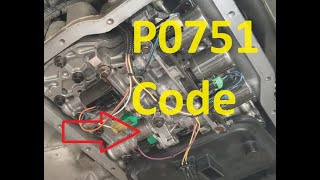
The Dodge Journey was offered with two main automatic transmissions: a 4-speed with the 2.4L 4-cylinder engine and the more common 6-speed 62TE with the 3.5L and 3.6L V6 engines. This P0751 code is a widely documented issue on the 62TE transmission across many Chrysler, Dodge, and Ram vehicles. For this transmission, 'Shift Solenoid A' is not a single, easily replaced part but is integrated into a larger component called the solenoid pack or block, which is bolted to the front of the transmission valve body. This pack is a known weak point, with failures of the internal solenoids or electrical connections being common.
Symptoms You May Notice
- Check Engine Light is on
- Transmission is stuck in one gear (limp mode), often 3rd gear
- Harsh, erratic, or delayed shifting
- Vehicle has difficulty accelerating
- Transmission slipping between gears
- Transmission overheating
- Engine may stall when shifting into Drive
- Replacing only a single solenoid when the entire pack is the issue (and sold as one unit).
- Condemning the entire transmission for a rebuild when only the external solenoid pack is faulty.
- Overlooking a corroded main transmission connector or damaged wire that mimics a failed solenoid pack.
Most Likely Causes
- Failed Transmission Solenoid Pack 🔴 High Probability → Shop Transmission Assembly The solenoid pack on the 62TE transmission is a well-documented, high-failure-rate component due to internal electrical faults or mechanical sticking of the individual solenoid valves.
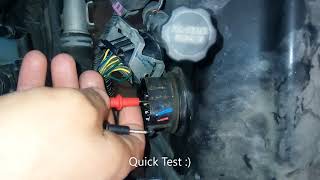
How to confirm: A mechanic can use a diagnostic scan tool to monitor the solenoid's commanded state versus its actual state. They can also perform resistance tests on the solenoid circuits at the main connector to confirm an electrical fault within the pack. 🎬 Watch: How to test the solenoid pack without removing the pan. This is the most likely cause if the fluid level and condition are good.
Typical fix: Replace the entire solenoid pack assembly. This is typically done along with a new transmission filter and pan gasket.
Est. part cost: $150-$300 - Low or Dirty Transmission Fluid 🔴 High Probability → Shop Transmission Assembly Fluid can break down over time or leak, and the 62TE can be sensitive to fluid condition. Dirty fluid can clog the tiny passages within the solenoid pack and valve body, causing solenoids to stick. Many models lack an easily accessible dipstick, discouraging owner checks.
How to confirm: Check the transmission fluid level and condition. The fluid should be bright red and not smell burnt. If it's dark brown/black or has metal particles, it's a sign of a problem. This may require a special service tool (dipstick) as many Journeys do not have one from the factory.
Typical fix: Perform a transmission fluid and filter change. Use only the specified Mopar ATF+4 fluid.
Est. part cost: $50-$100 - Wiring or Connector Issues 🟡 Medium Probability The wiring harness leading to the transmission is exposed to heat, vibration, and road debris, which can cause corrosion at the main connector pins or chafing of the wires.
How to confirm: Visually inspect the wiring harness and the main connector at the front of the transmission for any signs of damage, corrosion, or loose pins. A multimeter can be used to check for continuity and shorts in the solenoid 'A' circuit between the TCM and the transmission connector.
Typical fix: Repair the damaged section of wiring or clean/replace the connector. Applying dielectric grease can prevent future corrosion.
Est. part cost: $20-$100
Rare But Worth Checking
- Faulty Valve Body: → Shop Transmission Valve Body While less common than a solenoid pack failure, debris can score the valve body bores or cause valves to stick, mimicking a solenoid issue. This is usually considered after a new solenoid pack fails to fix the problem. Some forum users have reported needing a valve body replacement to resolve shifting issues.
- Faulty Powertrain Control Module (PCM) or Transmission Control Module (TCM): → Shop Transmission Assembly It is rare for the control module itself to be the cause. This should only be considered after all other possibilities, including wiring and all mechanical transmission components, have been thoroughly tested and ruled out. Sometimes a software update (flash) is required to fix logic errors.
Diagnosis Steps
- Verify the code with a reliable OBD-II scanner.
- Check the transmission fluid level and condition. If low, top it off with ATF+4 and check for leaks. If dirty or burnt, a fluid and filter change is the first step. Note: A special dipstick tool may be required.
- Inspect the transmission wiring harness and main connector for any visible damage, corrosion, or loose connections. Pay close attention to the pins inside the connector.
- Using an advanced scan tool, monitor the live data for solenoid 'A' command and status while driving.
- If possible, command the solenoid on and off with the scan tool to check its response.
- If fluid and wiring are good, the most likely culprit is the solenoid pack. Test the resistance of the solenoid circuit at the connector to confirm an electrical fault within the pack.
- If the solenoid pack is confirmed to be faulty, replace it along with the transmission filter and pan gasket.
- After replacement, clear all codes. Some owners report needing to perform a battery disconnect/reconnect cycle to force a hard reset of the TCM. If harsh shifting persists, a 'Quick Learn' procedure at a dealership may be necessary.
Parts You'll Likely Need
- Transmission Solenoid Pack (Block)
(OEM #68376696AA)— This is the most common hardware failure for code P0751 on the 62TE transmission. It contains the electro-hydraulic valves that control shifting. Note: This part may be superseded by Mopar part number 68371508AB.
Trusted brands: Mopar, Dorman, Rostra
OEM price range: $250-$400
Aftermarket price range: $120-$250 - Transmission Filter Kit (Filter and Pan Gasket)
(OEM #5078555AA)— Must be replaced whenever the transmission pan is removed to service the solenoid pack.
Trusted brands: Mopar, Wix, ATP
OEM price range: $30-$50
Aftermarket price range: $15-$30 - Mopar ATF+4 Automatic Transmission Fluid
(OEM #68218057AC (quart), 68218058AC (gallon))— This is the required fluid type for the 62TE transmission. A drain and fill will require 5-6 quarts.
Trusted brands: Mopar, Valvoline (licensed), Castrol (licensed)
OEM price range: $10-$15 per quart
Aftermarket price range: $8-$12 per quart
Related Codes That Often Appear With This One
- P0756 — This code relates to Shift Solenoid 'B'. Since the solenoids are housed in the same pack, a failure of the pack or a widespread electrical/hydraulic issue can cause multiple solenoid codes to appear together.
- P0761 — This code relates to Shift Solenoid 'C'. Similar to P0756, it can be triggered alongside P0751 due to a failing solenoid pack or related wiring/fluid issues.
- P1745 — This code for Transmission Line Pressure can appear alongside solenoid codes, indicating a broader hydraulic circuit failure which could be caused by a faulty solenoid pack, bad fluid, or a failing pump.
Technical Service Bulletins (TSBs) & Recalls
- TSB 21-004-14: This Technical Service Bulletin involves reprogramming the Transmission Control Module (TCM) for shift quality improvements on some 2014 Chrysler vehicles. While not directly for P0751, it shows that software updates were issued to address shifting complaints.
- TSB 21-013-13 / 21-032-14: These bulletins describe the 'Adaptation Learn Procedure' required for some Chrysler transmissions after repairs like a valve body or TCM replacement. It warns against using the 'Quick Learn' function unnecessarily, as it can erase factory settings. This is relevant if a solenoid/valve body job leads to poor shift quality.
Platform-Specific Known Issues
- Post-Repair Harsh Shifting: A user on Reddit with a 2016 Dodge Journey reported that after a mechanic replaced the solenoid pack, the transmission shifted up normally but would shift down very harshly. A reprogramming at the dealership did not fix the issue, indicating potential underlying valve body issues or the need for a specific 'quick learn' procedure.
- Engine Stall After Solenoid Replacement: A YouTube video by a transmission specialist demonstrated a case on a 2013 Journey where, even after a solenoid pack swap, the engine would stall when put into Drive. The root cause was determined to be an internal hydraulic issue within the valve body related to check ball locations, not the solenoid itself.
- Limp Mode Persists After Fix: Some owners on various forums have noted that even after replacing the solenoid pack, the vehicle may remain in limp mode. A common solution is performing a 'Quick Learn' procedure with a capable scan tool to reset the transmission's adaptive memory.
Mechanic-Grade Diagnostic Values
- Resistance of Shift Solenoid 'A' (Low/Reverse Solenoid) — expected: 1.6 - 1.8 Ohms. Failure: A reading of 0 Ohms (short), OL (open circuit), or a value significantly outside the expected range indicates a failed solenoid coil.
- Resistance of other shift solenoids (Underdrive, 2/4, OD, DC, LC) — expected: 1.6 - 1.8 Ohms. Failure: Similar to Solenoid 'A', any reading outside this range points to a fault within the solenoid pack. Comparing readings between solenoids is a good diagnostic technique.
- Resistance of Line Pressure Control Solenoid — expected: 4.8 - 5.1 Ohms. Failure: A reading outside this specific range indicates a fault with the line pressure solenoid within the pack.
- Resistance of Pressure Switches (OD, 2/4, DC, L/R, LC) — expected: ~300 Ohms. Failure: A significant deviation from this value suggests a problem with the pressure switch circuit inside the solenoid pack.
Scan Tool Commands That Help
- wiTECH or equivalent professional scan tool: Quick Learn 62TE — This procedure is mandatory after replacing the solenoid pack, valve body, or entire transmission. It is also required if the battery has been disconnected or adaptive values have been cleared. Failure to perform the Quick Learn often results in harsh shifting, persistent limp mode, or other shifting complaints even with new parts installed.
- wiTECH or equivalent professional scan tool: Reset Adaptive Values — This function should be used before performing a Quick Learn. It clears the old clutch fill time and pressure data from the TCM's memory, allowing the new Quick Learn procedure to establish fresh baseline values for the new or serviced components.
Wiring & Ground Locations
- Main Transmission Connector — Located on the front side of the transmission, on the side of the metal pan. This is the main interface for testing the solenoid pack without removing the pan.. This is the primary test point for verifying the electrical integrity of the solenoid pack. All resistance tests for the solenoids and pressure switches are performed at the pins of this connector.
- G903 (3.6L Engine) — A ground point located on the top of the transmission.. A poor ground at this location can cause a wide range of electrical issues for the transmission and engine, potentially leading to incorrect sensor readings or erratic solenoid behavior. Ensuring it is clean and tight is a crucial diagnostic step.
- TCM (Transmission Control Module) — Located inside the vehicle, under the dashboard behind the steering column.. While rarely the cause, knowing its location is important for advanced diagnostics, such as checking for power and ground at the module itself or testing continuity of the wiring harness between the TCM and the main transmission connector.
- Engine/Chassis Grounds — The main battery ground connects to a stud on the driver's side strut tower, which then connects to the engine block. Additional ground straps connect the engine to the chassis.. Corroded or loose grounds are a common source of bizarre electrical problems on the Journey. A weak ground path can cause voltage drops and signal integrity issues for the entire powertrain control system, potentially mimicking a component failure.
Real Owner Repair Stories
- Curmudgeon Transmission YouTube Channel / Forum post (2010 Chrysler Town & Country (uses same 62TE transmission)) — No reverse gear, occasional shuddering in reverse prior to failure.
❌ Tried (didn't work) The owner did not report trying other fixes first; the diagnosis went straight to the mechanical failure.
✅ What actually fixed it The root cause was a failed low compounder drum. The inside of the drum was 'gnawed on' and pieces of it were found in the transmission pan. The fix was to replace the drum assembly. This is a mechanical failure that can present with codes related to the low/reverse solenoid.
When the Usual Fixes Don't Work
- While the solenoid pack is the most common cause of P0751, it is critical to inspect the transmission pan for metal debris upon removal. In a notable case on a similar vehicle with the 62TE transmission, a 'no reverse' condition was caused by a physically disintegrated low compounder drum. Metal pieces were found in the pan. Replacing only the solenoid pack in such a scenario would be a complete waste of time and money, as the transmission has suffered a major internal mechanical failure that the code only hints at indirectly.
OEM Part Supersession History
68376696AA→68371508AB— Standard part revision and improvement by the manufacturer.
Heads up: None found. 68371508AB is the current direct replacement for 68376696AA and other previous numbers like 5078709aa and 5078709ab.
Model Year Variations Within This Range
- 2009-2020: The primary variation affecting this code is not by model year, but by the transmission installed. Journeys with the 2.4L I4 engine were often equipped with a 4-speed automatic (40TES/41TES), which does not have this specific P0751 issue. The problem is almost exclusively related to the 6-speed 62TE transmission found with the V6 engines.
Diagnostic Flowchart
Other Known Issues on This Vehicle
Issues unrelated to this code that are worth knowing about as an owner of this generation:
- Premature Brake and Rotor Wear 🔴 High — Extremely common on 2009-2012 models, with some owners replacing pads and rotors as early as 12,000-20,000 miles. The braking system was reportedly undersized for the vehicle's weight. (Ref: Warranty was extended to 3 years/36,000 miles for early model years, but no formal recall was issued.)
- 3.6L Pentastar V6 Left Cylinder Head Failure 🔴 High — Primarily affects 2011-2013 models. Causes misfires (P0300, P0302, P0304, P0306) and requires cylinder head replacement. (Ref: Chrysler issued an extended warranty (X56) for the left cylinder head for 10 years or 150,000 miles.)
- 3.6L Pentastar V6 Rocker Arm/Lifter Tick 🟠 Medium — Common across all years of the 3.6L engine. A distinct ticking noise develops due to failing rocker arm bearings, which can lead to misfires and camshaft damage if ignored.
- Uconnect Infotainment System Glitches 🟡 Low — Widespread reports of the screen freezing, Bluetooth connectivity failing, or the system getting stuck on a "loading" screen. Often requires a battery disconnect to reset. (Ref: Software updates were released, but many owners report persistent issues.)
- Electrical and Wiring Problems 🟠 Medium — Common in earlier models (2009-2012). Issues include faulty TIPM (Totally Integrated Power Module), broken wires in door and liftgate harnesses, and random electrical failures. (Ref: Multiple recalls for issues like the ignition switch and airbag control unit power supply.)
- Throttle Body Failure (2.4L Engine) 🟠 Medium — The throttle body on the 4-cylinder engine is known to fail, causing stalling, erratic idle, and codes like P2110, P2111, and P2112.
Used vs. New Parts: Buying Guide for This Vehicle
When a used part is the smart pick: For this specific repair, a used part is almost never a smart choice. The only scenario might be sourcing a complete, low-mileage transmission assembly from a known-good donor vehicle if a total transmission replacement is needed.
Donor-vehicle mileage cap: roughly under 50000 miles for the part to have meaningful remaining life.
What to inspect on the donor part:
- Verify the donor vehicle's VIN to confirm transmission compatibility.
- Check the color and smell of the transmission fluid from the donor unit; it should be bright red and not smell burnt.
- Obtain vehicle history to check for prior transmission issues or accidents.
OEM-only on this vehicle (don't cheap out):
- Transmission Solenoid Pack
Aftermarket brands forum-validated for this vehicle:
- While Mopar (OEM) is most recommended, Rostra is a known aftermarket manufacturer of transmission components.
Brands owners have reported issues with on this vehicle:
- Be cautious with remanufactured Dorman solenoid packs. While they are a major supplier, some owner reviews report persistent issues or new codes appearing after installation, suggesting potential quality control variability.
Real Owner Stories
Aggregated from forums and TSBs cited above. Mileages and costs reflect what owners reported in those sources.
2016 Dodge Journey
Symptoms: After the solenoid pack was replaced, the transmission shifted up normally but would shift down very harshly. Reprogramming at the dealership did not resolve the issue.
What fixed it: The source suggests potential underlying valve body issues or the need for a specific 'quick learn' procedure/dealer reprogramming.
Source hint: reddit.com/r/MechanicAdvice thread titled 'Replaced my 2016 Dodge Journey Transmission Solenoid Pack, now gears dont shift down properly'
2013 Dodge Journey
Symptoms: Even after a solenoid pack swap, the engine would stall whenever the vehicle was put into Drive.
What fixed it: The root cause was determined to be an internal hydraulic issue within the valve body related to check ball locations.
Source hint: YouTube video by a transmission specialist
2009-2020 Dodge Journey
Symptoms: Vehicle remains in limp mode even after the solenoid pack has been replaced.
What fixed it: Performing a 'Quick Learn' procedure with a capable scan tool to reset the transmission's adaptive memory.
Source hint: dodgejourneyforum.com
Related OBD-II Codes
Frequently Asked Questions
Does TSB 21-004-14 apply to my Dodge Journey's shifting issues?
Why is my 2009-2020 Dodge Journey stuck in 3rd gear?
Can I check the transmission fluid level myself on my Journey?
What is a 'Quick Learn' procedure and do I need it after replacing the solenoid pack?
Is it true that the 62TE transmission in my Journey is shared with other vehicles?
Why does my Journey stall when I shift into Drive after fixing the solenoid?
Helpful Videos
![How to Perform Transmission Quicklearn on Chrysler, Dodge, Jeep, Ram [May Fix Hard Shifts!]](https://img.youtube.com/vi/BV-kVYyX-7M/mqdefault.jpg)
We Have This Part in Stock


The information in this article is provided for general reference and educational purposes only. Vehicle specifications, procedures, and part compatibility can vary by production date, trim level, and region. Always consult your vehicle's factory service manual and verify part numbers before purchasing or performing repairs. Safety-critical components such as airbags, seat belts, and braking systems should be installed by a qualified professional.
- Dodge Journey:
- 🧭 Diagnostic Flowchart
- 🎬 Helpful Videos
- 🛍️ Shop This Part
- What's Unique About the 2009-2020 Dodge Journey
- Symptoms You May Notice
- Most Likely Causes
- Rare But Worth Checking
- Diagnosis Steps
- Parts You'll Likely Need
- Related Codes That Often Appear With This One
- Technical Service Bulletins (TSBs) & Recalls
- Platform-Specific Known Issues
- Mechanic-Grade Diagnostic Values
- Scan Tool Commands That Help
- Wiring & Ground Locations
- Real Owner Repair Stories
- When the Usual Fixes Don't Work
- OEM Part Supersession History
- Model Year Variations Within This Range
- Other Known Issues on This Vehicle
- Used vs. New Parts: Buying Guide for This Vehicle
- Real Owner Stories
- 2016 Dodge Journey
- 2013 Dodge Journey
- 2009-2020 Dodge Journey
- Related OBD-II Codes
- Frequently Asked Questions
- 🎟️ Get 5% Off