

P0751 on 2008-2011 Ford Focus 2.0L: Shift Solenoid 'A' Causes and Fixes
This code usually means Shift Solenoid 'A' inside the 4F27E automatic transmission has failed or is stuck. Start by checking your transmission fluid level and condition, as low or dirty fluid is a common cause. If the fluid is fine, the solenoid itself is the next likely culprit, though worn valve body passages are also a known issue on this platform.
- P0751 on a 2008-2011 Ford Focus points to a 'Stuck Off' condition in Shift Solenoid 'A' within the 4F27E transmission.
- Always start diagnosis by checking the transmission fluid; it must be clean, at the correct level, and be the specified Motorcraft MERCON LV type for these model years.
- Replacing the solenoid (or the full solenoid pack) is the most common repair, but be aware that on higher mileage cars, the root cause could be a worn valve body.
- This is a serious code that can lead to limp mode and further transmission damage; driving is not recommended.
What's Unique About the 2008-2011 Ford Focus
The 2008-2011 Ford Focus uses a 4-speed automatic transmission known as the 4F27E. While this is generally a reliable transmission, it is known to be sensitive to fluid condition and level. Owner experiences show that simply replacing the solenoid for a P0751 code doesn't always solve the problem, pointing towards potential issues with worn valve bodies causing pressure loss or deeper internal problems if maintenance has been neglected. For the 2008+ models, it is critical to use Motorcraft MERCON LV fluid, not the older MERCON V, due to internal changes Ford made to the transmission.
Symptoms You May Notice
- Check Engine Light or Wrench Light is on
- Harsh or delayed shifting between gears
- Transmission gets stuck in one gear (limp mode)
- Vehicle hesitates or flares RPMs between shifts
- A 'thunk' or clunking noise when shifting, especially into reverse
- Reduced fuel economy
- Transmission slipping
- Transmission overheating
- Immediately replacing the entire transmission. While this code is serious, it often points to a serviceable component inside the transmission (solenoid, fluid, valve body) that does not require a full replacement.
- Replacing the shift solenoid when the actual problem is a worn valve body bore causing a pressure leak.
Most Likely Causes
- Low or Dirty Transmission Fluid 🔴 High Probability → Shop Transmission Assembly The 4F27E transmission can be sensitive to fluid level and quality. Over time, fluid breaks down and becomes contaminated with clutch material that can clog the small passages in the solenoids or valve body, causing them to stick.
How to confirm: Check the transmission fluid dipstick with the engine warm and running in Park. The fluid should be at the correct level, reddish in color, and not smell burnt. If it's dark brown/black or has particles in it, it's overdue for a change. Note that Ford removed the drain plug on many 4F27E pans, making this process messier.
Typical fix: Perform a transmission fluid drain-and-fill. Do NOT perform a high-pressure 'flush' on a high-mileage transmission where service history is unknown. Use ONLY Motorcraft MERCON LV fluid (Part No. XT-10-QLVC) for 2008 and newer models. A fluid and filter change may resolve a solenoid that is stuck due to contamination.
Est. part cost: $60-$120 - Failed Shift Solenoid 'A' 🟡 Medium Probability → Shop Transmission Valve Body Solenoids are electro-mechanical parts with internal coils and moving plungers that can wear out, fail electronically (short/open circuit), or become mechanically stuck from debris.
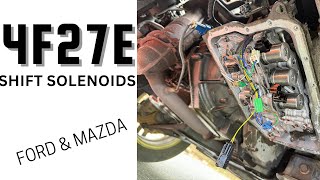
How to confirm: After dropping the transmission pan, the solenoid can be tested with a multimeter for correct resistance (typically 20-30 ohms). A professional technician can also command the solenoid 'on' with a high-end scan tool to see if it clicks. Visually, Shift Solenoids 'A' and 'B' are typically paired together and can be removed after taking off two 8mm bolts.
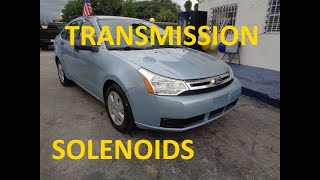
Typical fix: Drop the transmission pan, identify and replace Shift Solenoid 'A'. 🎬 Watch: Step-by-step solenoid replacement for 2008-2011 Focus models. It is often recommended to replace the entire solenoid pack (which includes all six solenoids) while the pan is off. The solenoid pack is often sold as a set.
Est. part cost: $40-$80 for a single solenoid, $100-$250 for a full pack - Worn or Clogged Valve Body ⚪ Low Probability → Shop Transmission Valve Body Debris from normal wear can accumulate in the intricate passages of the valve body, causing pressure loss or sticking valves, which mimics a failed solenoid. Forum users report that on higher mileage vehicles, this can be the true cause even after replacing the solenoids.
How to confirm: This is difficult to confirm without ruling out other causes first. If new fluid and a new solenoid do not fix the issue, the valve body is the next suspect. 🎬 Watch this walkthrough on how to remove the valve body. A technician may perform a hydraulic pressure test on the transmission's various ports.
Typical fix: Replacement of the valve body with a new or remanufactured unit. This is a more involved and expensive repair.
Est. part cost: $300-$600
Rare But Worth Checking
- Faulty Wiring or Connector: The internal transmission wiring harness can become brittle from heat cycles and fluid exposure. It's worth inspecting the connector and wiring leading to the solenoid for any damage when the transmission pan is removed.
- Faulty Transmission Control Module (TCM) / Powertrain Control Module (PCM): → Shop Transmission Assembly This is the least likely cause. The module should only be considered after all other mechanical and electrical parts have been thoroughly tested and confirmed to be working. A failure in the TCM's internal driver circuit can prevent the signal from being sent to the solenoid.
Diagnosis Steps
- Check the transmission fluid level and condition. If low, top it off with Motorcraft MERCON LV and check for leaks. If dirty or burnt, perform a drain-and-fill and replace the filter.
- Use a scan tool to check for other pending or active transmission codes, such as those for other solenoids or gear ratio errors.
- Inspect the external transmission wiring harness and connectors for any visible damage or corrosion.
- If the above steps do not reveal the issue, the next step is to drop the transmission oil pan to gain access to the internal components. This requires an 8mm socket for the pan bolts.
- Visually inspect the fluid in the pan for excessive metal shavings or clutch material, which would indicate a more severe internal failure.
- Locate Shift Solenoid 'A'. It is one of a pair of solenoids. Inspect its wiring connector for damage.
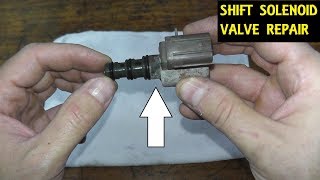
- Test the solenoid's resistance with a multimeter. Disconnect the solenoid and measure across its two pins. 🎬 See how to test shift solenoids using a multimeter. The reading should be between 20-30 ohms. A reading of infinity (open) or zero (short) indicates a failed solenoid.
- If the solenoid tests bad, replace it. It is often wise to replace the full solenoid pack and the transmission filter at the same time.
- If the solenoid tests good, the problem may lie in the valve body or the internal wiring harness. This level of diagnosis is best left to a professional.
- After any repairs, refill the transmission with Motorcraft MERCON LV fluid, clear the codes, and perform a test drive to ensure the problem is resolved.
Parts You'll Likely Need
- Transmission Shift Solenoid Set
(OEM #48420K-R (Reference for set))— This is the component directly identified by the code. Since accessing them is labor-intensive, replacing the entire set of six solenoids is a common and recommended practice.
Trusted brands: Motorcraft, ATP, Dorman, Rostra
OEM price range: $200-$300 (Set)
Aftermarket price range: $100-$200 (Set) - Automatic Transmission Fluid
(OEM #XT-10-QLVC (Motorcraft MERCON LV))— Low or dirty fluid is a primary cause, and any internal repair requires the fluid to be drained and replaced. 2008+ models specifically require MERCON LV.
Trusted brands: Motorcraft
OEM price range: $9-$15 per quart
Aftermarket price range: $7-$12 per quart - Transmission Filter
(OEM #FT105 (Motorcraft))— Should always be replaced whenever the transmission pan is removed for service.
Trusted brands: Motorcraft, Wix, Fram
OEM price range: $20-$40
Aftermarket price range: $10-$25
Related Codes That Often Appear With This One
- P0756 — This code points to a problem with Shift Solenoid 'B'. If the transmission fluid is very dirty or the valve body has issues, it can affect multiple solenoids at once.
- P0730 — Stands for 'Incorrect Gear Ratio'. This code is a direct result of P0751, as the failed solenoid prevents the transmission from achieving the correct gear, leading to a mismatch between the expected and actual gear ratios.
- P0750 — This is a related code for a general electrical circuit fault in Shift Solenoid 'A', whereas P0751 specifically points to a performance problem (stuck off). They often appear together.
Platform-Specific Known Issues
- A Reddit user with a 2011 Ford Focus SE experiencing P0751 was advised that if replacing the solenoid doesn't work, the issue is likely a worn section in the valve body causing pressure loss, a common issue on higher mileage 4F27E transmissions. Source: Reddit r/MechanicAdvice thread '2011 Ford Focus se p0751 code'.
Technical Service Bulletins (TSBs) & Recalls
- Bulletin #TSB 26-2046: While issued for other Ford models, this manufacturer service bulletin notes that P0751 can be associated with harsh engagement, delayed engagement, harsh shifts, or delayed shifts, often appearing alongside other solenoid performance codes like P0756.
Mechanic-Grade Diagnostic Values
- Shift Solenoid 'A'/'B' Resistance — expected: 10.9 - 26.2 Ohms. Failure: A reading of infinity (open circuit) or near zero (short circuit).
- Voltage at Solenoid 'A' Connector (Power Supply Wire) — expected: ~12.6 V (Battery Voltage) with key on. Failure: Voltage deviation greater than 0.5V from battery voltage indicates excessive resistance in the wiring or a poor power feed.
- Voltage at Solenoid 'A' Connector (Ground Wire) — expected: ~0 V. Failure: Voltage greater than 0.5V indicates a poor ground connection, which is a known issue on this platform.
Scan Tool Commands That Help
- Ford IDS / High-End Scan Tool (e.g., Snap-on, Autel, Innova): Output State Control / Active Test for Shift Solenoid A — This bidirectional command allows a technician to manually command the solenoid on and off to verify its mechanical operation (listening for a 'click') and to check the integrity of the control circuit without having to remove the transmission pan.
- Ford IDS / Snap-on Scanner: Transmission Characterization and Solenoid Identification — This advanced function can read the factory-calibrated band numbers directly from the TCM. While more relevant for 6-speed transmissions, it's a dealer-level tool that can verify electronic solenoid identity and communication, helping to rule out a mismatched or faulty solenoid pack.
- Innova 5610 or similar: Clear the transmission adaptive tables / Reset KAM (Keep Alive Memory) — After replacing a solenoid or the valve body, this function should be used to erase the old learned shift strategies. This forces the TCM to relearn the shift points and pressures with the new components, which is critical for proper operation.
Wiring & Ground Locations
- Transmission Internal Harness Connector (C199) — Inside the transmission, connecting the solenoid body to the main external connector.. This is the connector where resistance for Shift Solenoid A can be tested without removing the solenoid itself. A diagram indicates which pins correspond to SSA (Shift Solenoid A) for testing.
- Chassis Grounds Under Airbox — On the chassis frame rail, located underneath the engine air filter box.. The TCM relies on clean chassis grounds. On many Focus models, these grounds were attached to painted surfaces from the factory, leading to poor connections over time. A bad ground can cause a variety of erratic electronic issues, including phantom solenoid codes. Cleaning the paint from under these ground straps is a common preventative fix.
- Main Transmission Case Ground — A braided strap typically running from the chassis or battery negative terminal to a bolt on the transmission case.. Ensures the entire transmission assembly has a solid ground path. Corrosion or a loose connection here can affect all electronic components within the transmission.
Real Owner Repair Stories
- Reddit r/MechanicAdvice user (2011 Ford Focus SE) — Check engine light with code P0751.
❌ Tried (didn't work) Replaced Shift Solenoid 'A', Replaced transmission filter, Performed a transmission fluid change
✅ What actually fixed it The code returned three weeks after the initial repair. The consensus from experienced technicians was that the true cause was likely a worn valve body, causing a pressure loss that the computer interprets as a solenoid performance issue. The final fix would be to replace the valve body. - NHTSA ODI #11474436: An owner reported issues with the vehicle not engaging or shifting properly. A diagnostic report identified P0751 for SSA performance (stuck on or off) as the most likely cause within the powertrain system.
- NHTSA ODI #11694940: A manufacturer report regarding internal transmission issues noted that DTC P0751 can be associated with a clutch mechanical fault, specifically where the "A" clutch is dragging.
OEM Part Supersession History
XS4Z-7H148-AA→XS4Z-7H148-AA (current)— This part number has remained stable for the Shift Solenoid 'A' and 'B' assembly.
Heads up: This part is specific to the on/off Shift Solenoids A and B. It is not interchangeable with the PWM solenoids (C, D, E) which have a different part number (e.g., XS4Z-7G484-AA).
Model Year Variations Within This Range
- 2008-2011: Ford made hardware and calibration changes to the 4F27E transmission starting in the 2008 model year, which necessitates the use of MERCON LV fluid (XT-10-QLVC) instead of the older MERCON V used in pre-2008 models. Using the wrong fluid can cause shifting problems and premature wear.
- 2008 and early 2009: Early models in this generation did not have a coolant temperature gauge on the instrument cluster. While not directly related to the P0751 fault, it's a notable production difference within the range.
Diagnostic Flowchart
Other Known Issues on This Vehicle
Issues unrelated to this code that are worth knowing about as an owner of this generation:
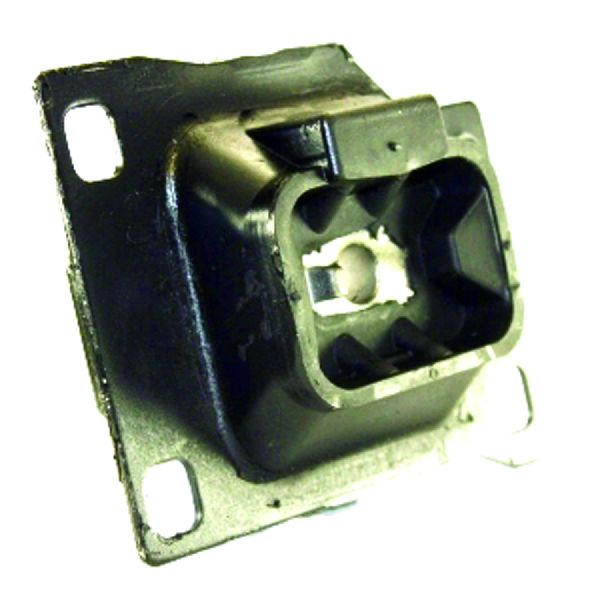
- Passenger-Side Engine Mount Failure 🔴 High — Very common, often fails every 50,000-80,000 miles. The hydraulic mount leaks and collapses, causing severe vibration at idle and while driving. (Ref: A TSB was issued for 2000-2011 models for this issue.)
- Intake Manifold Runner Control (IMRC) Failure 🟠 Medium — Common. The plastic actuator levers or internal flaps can break or get stuck, causing a rough idle, loss of power, and often a P2004 code.
- Stripped Air Filter Box Screw Housings 🟡 Low — Extremely common. The plastic threads for the airbox lid screws strip out easily, preventing a proper seal. This can allow dirty, unmetered air to enter the engine, contaminating the MAF sensor and causing lean codes (P0171) or MAF codes (P0101).
- Premature Catalytic Converter Failure 🔴 High — Common on vehicles over 100,000 miles, leading to a P0420 code. The PCM is sensitive, and aftermarket converters may not last long before the code returns.
- No Dedicated EGR Valve (2008-2011) 🟡 Low — This is a point of confusion rather than a failure. These models use Variable Cam Timing (VCT) for exhaust gas recirculation. Technicians unfamiliar with this may misdiagnose EGR-related codes like P0401 by searching for a non-existent EGR valve.
Used vs. New Parts: Buying Guide for This Vehicle
When a used part is the smart pick: A used solenoid pack from a verified low-mileage (under 80,000 miles) donor vehicle can be a cost-effective option. Since the solenoids are a common failure point, a used part is a calculated risk, but often successful if the donor history is known.
Donor-vehicle mileage cap: roughly under 80000 miles for the part to have meaningful remaining life.
What to inspect on the donor part:
- Verify the donor vehicle's mileage.
- Ask for photos of the transmission fluid from the donor car if possible; avoid parts from cars with dark, burnt fluid.
- Inspect the electrical connector pins on the used solenoid pack for any corrosion or damage.
OEM-only on this vehicle (don't cheap out):
- Valve Body: Due to the high potential for hidden wear in the solenoid bores, a used valve body is extremely risky. A remanufactured unit from a reputable supplier is a much safer investment if the valve body is condemned.
Aftermarket brands forum-validated for this vehicle:
- Rostra: Often cited in forums as a reliable aftermarket manufacturer for transmission solenoids and solenoid packs.
- ATP Automotive
Brands owners have reported issues with on this vehicle:
- Unbranded, no-name solenoid packs from online marketplaces can have high failure rates and are best avoided for a labor-intensive job like this.
Real Owner Stories
Aggregated from forums and TSBs cited above. Mileages and costs reflect what owners reported in those sources.
2011 Ford Focus SE 2.0L Duratec — ~150000 miles
Symptoms: The vehicle was throwing a P0751 code. The owner was advised that if a solenoid swap didn't work, the internal valve body was likely worn out.
What fixed it: The diagnosis pointed to a worn section in the valve body causing pressure loss, a common issue on high-mileage 4F27E units.
Source hint: Reddit r/MechanicAdvice - '2011 Ford Focus se p0751 code'
2008-2011 Ford Focus 2.0L Duratec
Symptoms: Owner required a visual guide for accessing Shift Solenoid A and B and needed to know the specific tool requirements for the 4F27E transmission pan.
What fixed it: Replacement of the shift solenoids using an 8mm socket to remove the pan and the two bolts holding the A/B solenoid pair.
Source hint: YouTube - 'HOW TO REPLACE: 2008-2011 Ford Focus Automatic Transmission Solenoids'
Related OBD-II Codes
Frequently Asked Questions
What specific transmission fluid should I use for my 2008-2011 Ford Focus to fix a P0751 code?
Is there a TSB for the vibrations I'm feeling along with the transmission issues on my 2011 Focus?
My shop says I need a whole new transmission for a P0751 code; is this common for the Focus?
Can I test the Shift Solenoid 'A' myself before buying parts?
Why did Ford make it so difficult to change the transmission fluid on the 4F27E?
If I replace the solenoid and the P0751 code returns, what is the likely culprit?
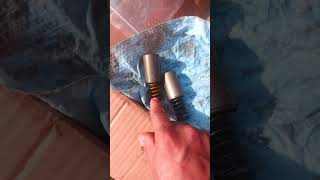
Helpful Videos
We Have This Part in Stock

The information in this article is provided for general reference and educational purposes only. Vehicle specifications, procedures, and part compatibility can vary by production date, trim level, and region. Always consult your vehicle's factory service manual and verify part numbers before purchasing or performing repairs. Safety-critical components such as airbags, seat belts, and braking systems should be installed by a qualified professional.
- Ford Focus:
- 🧭 Diagnostic Flowchart
- 🎬 Helpful Videos
- 🛍️ Shop This Part
- What's Unique About the 2008-2011 Ford Focus
- Symptoms You May Notice
- Most Likely Causes
- Rare But Worth Checking
- Diagnosis Steps
- Parts You'll Likely Need
- Related Codes That Often Appear With This One
- Platform-Specific Known Issues
- Technical Service Bulletins (TSBs) & Recalls
- Mechanic-Grade Diagnostic Values
- Scan Tool Commands That Help
- Wiring & Ground Locations
- Real Owner Repair Stories
- OEM Part Supersession History
- Model Year Variations Within This Range
- Other Known Issues on This Vehicle
- Used vs. New Parts: Buying Guide for This Vehicle
- Real Owner Stories
- 2011 Ford Focus SE 2.0L Duratec — ~150000 miles
- 2008-2011 Ford Focus 2.0L Duratec
- Related OBD-II Codes
- Frequently Asked Questions
- 🎟️ Get 5% Off