

P0751 on 2019-2023 Ford Ranger: Shift Solenoid 'A' Causes and Fixes
P0751 on a 2019-2023 Ford Ranger typically indicates an internal transmission problem, often related to a faulty valve body or a sticking shift solenoid 'A'. This is a known issue covered by multiple Ford Technical Service Bulletins (TSBs). The fix usually involves overhauling or replacing the main control valve body, which is a job for a professional. In many cases, the root cause is a more severe mechanical failure of the CDF clutch drum, which mimics a solenoid issue.
- P0751 on a 2019-2023 Ranger is a serious code that points to a known issue with the 10R80 transmission's main control valve body.
- Symptoms include harsh shifting, delayed gear engagement, and the Check Engine Light.
- This is not a simple DIY fix. The repair involves complex internal transmission work and computer reprogramming.
- The most common and effective repair is to have a professional overhaul or replace the entire valve body assembly, as recommended in Ford's Technical Service Bulletins.
- Simply clearing the code or changing the fluid is unlikely to solve the problem.
What's Unique About the 2019-2023 Ford RANGER

The 2019-2023 Ford Ranger uses the 10R80 10-speed automatic transmission, which is known to have issues with harsh or delayed shifting. Ford has released numerous Technical Service Bulletins (TSBs) acknowledging that symptoms like harsh shifts, delayed engagement, and a group of trouble codes including P0751 are common. These bulletins often point to problems within the main control valve body, where the solenoids are housed, rather than just a single faulty solenoid. More significantly, a widespread mechanical failure in the CDF clutch drum can trigger solenoid performance codes. A sleeve inside the drum can 'walk' or slide out of place, blocking fluid passages and causing a loss of hydraulic pressure. This makes the computer think the solenoid is faulty, when in reality the solenoid isn't receiving the necessary pressure to do its job.
Diagnostic Flowchart

Tap your situation to follow the diagnostic path that matches what you're seeing on this vehicle.
Symptoms You May Notice
- Harsh or delayed gear shifts. [TSB 25-2134, TSB 25-2024, TSB 23-2152]
- Harsh or delayed engagement when shifting into Drive or Reverse. [TSB 24-2046, TSB 22-2428]
- A feeling of being 'rear-ended' as the transmission slams into gear. 🎬 Watch: A guide to diagnosing harsh shifts and P0751 codes.
- Engine RPMs flare up between shifts (slip), followed by a harsh engagement.
- Transmission gets stuck in gear or enters 'limp mode'.
- Vehicle will not move, revs as if in neutral.
- Illuminated Malfunction Indicator Lamp (MIL) or Check Engine Light.
- Transmission slipping between gears.
- Reduced fuel economy.
- Replacing only Shift Solenoid 'A' when the entire valve body is faulty or the CDF drum has failed. The problem will return because the root cause (sticking valves or lack of pressure) has not been addressed.
- Performing a PCM software update or resetting the adaptive learning tables. While sometimes recommended by TSBs for minor shift quality issues, this will not fix a mechanical failure like a sticking valve or a failed CDF drum. In fact, resetting the tables can make the harsh shifting even more violent because the computer is no longer compensating for the internal pressure loss.
Most Likely Causes

- Sticking Valves in the Main Control Valve Body 🔴 High Probability → Shop Transmission Valve Body Multiple Ford TSBs for the 10R80 transmission, such as TSB 21-2315, cite sticking valves in the main control valve body as the primary cause for shift quality issues and a host of DTCs, including P0751. The aluminum valve body can warp or wear, causing valves to bind. One technician found a sticking actuator in the valve body was the cause of a P0751 code.
How to confirm: A technician will use a high-end scan tool to monitor solenoid commands vs. actual gear state. The ultimate confirmation is removing and inspecting the valve body, a procedure outlined in Ford's TSBs.
Typical fix: Overhaul or complete replacement of the main control valve body assembly. This includes the solenoids and requires reprogramming the new solenoid strategy to the vehicle's computer. A forum member with a P0751 code had their valve body replaced by the dealer to fix the issue.
Est. part cost: $500-$900 - Faulty Shift Solenoid 'A' 🟡 Medium Probability → Shop Transmission Valve Body While the entire valve body is often the root cause, an individual solenoid can fail electrically or mechanically. However, on the 10R80, replacing a single solenoid is often a temporary fix as the issue is frequently systemic to the valve body or a result of pressure loss from the CDF drum.
How to confirm: A technician can command the solenoid on and off with a scan tool. If it fails to respond, they may test the solenoid's electrical resistance with a multimeter after removing the transmission pan. The solenoids should measure between 5.0-5.4 ohms at 68°F (20°C).
Typical fix: Replace the individual shift solenoid or the entire 8-piece solenoid kit. However, due to the known valve body and CDF drum issues, many shops recommend replacing the entire valve body assembly as a more complete and reliable repair.
Est. part cost: $50-$100 for a single solenoid, $250-$350 for a full kit - Low or Dirty Transmission Fluid ⚪ Low Probability → Shop Transmission Assembly While less common as the root cause on this specific platform, low fluid can cause pressure issues, and dirty or contaminated fluid can cause valves and solenoids to stick. Some owners have noted their transmissions were underfilled from the factory.
How to confirm: Check the transmission fluid level and condition. The 10R80 transmission does not have a traditional dipstick, so this must be done by a technician from under the vehicle with the engine running at a specific temperature.
Typical fix: Perform a transmission fluid drain and fill using the correct Motorcraft MERCON ULV fluid. If the fluid is very dark or contains metal particles, it indicates a more severe internal failure, likely from the CDF drum or clutches.
Est. part cost: $150-$250 for fluid
Rare But Worth Checking
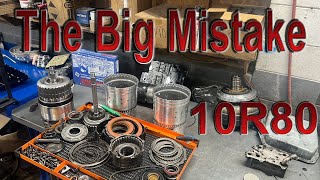
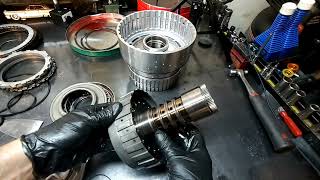
- Internal CDF Clutch Drum Failure: → Shop Transmission Clutch Pressure Plate A widespread and significant issue on 10R80 transmissions involves a sleeve inside the CDF clutch drum slipping out of place. This blocks fluid passages and causes a loss of pressure, which sets solenoid performance codes like P0751 even though the solenoids and valve body may be perfectly fine. Ford has released TSB 24-2254 and an updated part (JL3Z-7H351-B) with a physical lip to prevent the sleeve from moving. 🎬 Watch: Understanding the CDF clutch drum failure and updated parts. This is a major internal repair requiring transmission removal and teardown.
- Wiring Harness or Connector Issue: Damage to the wiring harness leading to or inside the transmission can cause a loss of signal to the solenoid. This could be from corrosion, chafing, or loose pins. It's less common than internal component failure but should be inspected.
- Faulty Powertrain Control Module (PCM): In very rare cases, the module that controls the transmission can fail and stop sending the correct signal to the solenoid. This is typically diagnosed only after all other possibilities have been eliminated.
Diagnosis Steps
- Verify the code with a professional OBD-II scanner.
- Check for any Technical Service Bulletins (TSBs) related to the code and vehicle, paying close attention to TSBs mentioning valve body overhaul (21-2315) or CDF drum failure (24-2254).
- Check the transmission fluid level and condition (requires a lift and specific procedure).
- Use a scan tool to monitor the commanded state vs. the actual state of Shift Solenoid 'A'.
- Inspect the transmission's external wiring harness and connectors for damage or corrosion.
- Drop the transmission pan to visually inspect the fluid for excessive metal debris or 'glitter', which points to internal mechanical wear.
- Inspect the internal wiring harness and the valve body.
- Test the resistance of Shift Solenoid 'A' with a multimeter. The expected value is 5.0-5.4 Ohms at 68°F (20°C).
- If solenoid tests okay, inspect the valve body for sticking valves or contamination.
- If the valve body is clean, further internal inspection of the CDF clutch drum is necessary, as this is a very common root cause.
Parts You'll Likely Need
- Main Control Valve Body Assembly
(OEM #HL3Z-7A100-B (supercedes HL3Z-7A100-A))— This is the most common fix recommended by Ford's own service bulletins to resolve the underlying cause of sticking internal valves that trigger P0751. The assembly includes all new solenoids. Part numbers can be cross-referenced for F-150 and Mustang.
Trusted brands: Motorcraft
OEM price range: $600-$900
Aftermarket price range: $500-$750 - CDF Clutch Drum Assembly (Updated Design)
(OEM #JL3Z-7H351-B)— If diagnosis points to the common CDF drum failure, this updated part is required. It features a revised design with a machined lip to prevent the internal sleeve from 'walking' out of place, which is a primary cause of hydraulic pressure loss that triggers solenoid codes.
Related Codes That Often Appear With This One
- P0756 — This code is for Shift Solenoid 'B' Performance. It is extremely common to see multiple solenoid performance codes together, as noted in Ford's TSBs (like TSB 21-2315), pointing to a systemic issue in the valve body or CDF drum rather than a single bad solenoid.
- P0729, P0731-P0735 — These are codes for incorrect gear ratios. They often accompany solenoid codes because if a solenoid fails to actuate or lacks pressure, the transmission cannot achieve the correct gear, leading to a mismatch between engine speed and output speed. [TSB 23-2152]
- P2700-P2705 — These codes relate to transmission clutch application timing. Like the gear ratio codes, they are a direct result of the hydraulic pressure issues caused by the malfunctioning solenoids, valve body, or CDF drum. [TSB 24-2046]
Technical Service Bulletins (TSBs) & Recalls
- TSB 25-2134: Mentions P0751 with harsh/delayed shifts and engagements.
- TSB 25-2024: Lists P0751 as a potential DTC for harsh/delayed transmission performance.
- TSB 23-2152: Connects P0751 with harsh/delayed shift symptoms.
- TSB 24-2046: Associates P0751 with harsh/delayed engagement and shifts.
- TSB 22-2428: Includes P0751 in a list of codes related to shift quality complaints.
- TSB 23-2123: Specifically outlines the procedure to overhaul the main control valve body on 2019-2023 Rangers to correct issues causing P0751 and other codes.
Platform-Specific Known Issues
- Sudden Failure to Engage Gear: A user on the ranger5g.com forum reported their truck suddenly failed to go into any gear, revving as if in neutral, after setting a P0751 code. The truck had low mileage and had not previously exhibited harsh shifting. The dealer diagnosed a sticking valve body and replaced it under warranty.
- Failure While Towing: Another Ranger owner on the same forum experienced the P0751 code while towing a 4,500lb trailer. The truck would struggle to re-engage a gear after a stop, causing the vehicle to roll backward slightly before lurching forward. This points to a loss of hydraulic line pressure under load, a classic symptom of the valve body or CDF drum issue.
- CDF Drum Failure Experience: A 2019 Ford Ranger owner on Reddit reported a catastrophic failure at 68k miles while driving at 75mph on the highway. The transmission violently shifted down, lost all power, and had to be towed. The dealer diagnosed that the 'CDF drum blew off and created etchings in the transmission,' requiring a major rebuild.
Mechanic-Grade Diagnostic Values
- Shift Solenoid Resistance — expected: 5.0 - 5.4 Ohms at 20°C (68°F). Failure: A reading outside this range, or infinite resistance (open circuit), indicates a failed solenoid.
- Shift Solenoid 'A' Voltage (Live Data) — expected: Should toggle between ~12V (On) and ~0V (Off) as gears are commanded.. Failure: Voltage that is erratic, stuck at 0V, or doesn't change with commanded shifts points to a wiring or control module issue.
Hidden / Shadow Codes Worth Checking
- P163E: Transmission Control Module (TCM) - Transmission Solenoid Characterization Data Not Programmed. This code can appear after replacing the main control valve body if the programming procedure is not followed correctly. (see via Ford IDS or other professional scan tools. It may be set if both the 12-digit solenoid body ID and 13-digit strategy are entered, when only the 13-digit strategy is required for some software versions.)
Scan Tool Commands That Help
- Ford IDS (Integrated Diagnostic System) or FORScan: PCM – Transmission Strategy Download / Transmission Characterization Update — This is a mandatory procedure after replacing the transmission or the main control valve body. The 13-digit solenoid body strategy number from the new part must be programmed into the PCM/TCM. Failure to do so will result in poor shifting, drivability concerns, and may trigger other DTCs.
- Ford IDS or FORScan: Clear All Adaptive Tables — This should be performed after programming the new solenoid strategy. It resets the transmission's learned shift patterns, allowing it to adapt to the new components. An Adaptive Learning Drive Cycle must be performed after clearing the tables.
Wiring & Ground Locations
- Transmission Case Connector (C168B) — External connector on the transmission housing.. Pin B7 is the ground control for Shift Solenoid 'A' (wire color BU-GN). Pin A11 is the power supply for all shift solenoids (wire color BU-GN). Testing for signal and power at these pins can diagnose wiring issues between the TCM and the solenoid.
- Driver's Side Kick Panel Ground — Behind the driver's side kick panel in the cabin.. This is a primary grounding point for various in-cabin electronics, including modules that communicate with the powertrain. A poor ground here can cause erratic electronic behavior. Ford uses this location for the OEM trailer brake controller ground.
- Chassis Ground Above Spare Tire — On a cross member that spans the frame rails, located just above the spare tire. There is one on each side.. This is a major chassis ground point for rear-body components. While not directly tied to the transmission solenoids, ensuring all major grounds are clean and secure is a critical step in diagnosing any electronic fault code.
- Engine to Firewall Ground Strap — A braided strap connecting the engine block to the vehicle's firewall.. This is the main ground path for all electronics in the cab, which rely on the engine block being grounded to the battery. A corroded or broken strap can cause widespread, intermittent electrical issues.
Real Owner Repair Stories
- Reddit user in r/fordexpedition (Ford Expedition with 10R80 Transmission) — Not specified, but implied transmission failure related to the CDF drum.
✅ What actually fixed it The user performed a full transmission rebuild themselves. The key parts replaced to resolve the common failure points were the updated CDF Drum (JL3Z-7H351-B), a new valve body assembly, and a complete clutch/piston overhaul kit. - YouTube video by "ford tech makuloco" (paraphrased from similar content) (2017 F-150 3.5L EcoBoost with 10R80) — Harsh shifting and a solenoid 'A' code.
❌ Tried (didn't work) Initial diagnostics pointed only to the solenoid.
✅ What actually fixed it After disassembling the valve body, the technician found the actuator for solenoid 'A' was sticking inside the valve body casting. The entire valve body was replaced, the new solenoid strategy was programmed, and the issue was resolved.
OEM Part Supersession History
HL3Z-7H351-A, JL3Z-7H351-A→JL3Z-7H351-B— The original CDF clutch drum design allowed an internal bushing/sleeve to slide out of position, uncovering fluid passages and causing a loss of hydraulic pressure to the clutches.
Heads up: The updated part JL3Z-7H351-B is a direct replacement and features a machined lip to physically prevent the sleeve from moving, providing a permanent fix. Using an older design for a repair will likely lead to a repeat failure.
Model Year Variations Within This Range
- 2019-early 2020: Earlier production 10R80 transmissions are more prone to the CDF clutch drum failure due to the original drum design (Part #s HL3Z-7H351-A, JL3Z-7H351-A). While the failure can occur on any year, it was more common before the widespread implementation of the updated drum (JL3Z-7H351-B).
Helpful Videos


The information in this article is provided for general reference and educational purposes only. Vehicle specifications, procedures, and part compatibility can vary by production date, trim level, and region. Always consult your vehicle's factory service manual and verify part numbers before purchasing or performing repairs. Safety-critical components such as airbags, seat belts, and braking systems should be installed by a qualified professional.
- Ford RANGER:
- 🧭 Diagnostic Flowchart
- 🎬 Helpful Videos
- What's Unique About the 2019-2023 Ford RANGER
- Symptoms You May Notice
- Most Likely Causes
- Rare But Worth Checking
- Diagnosis Steps
- Parts You'll Likely Need
- Related Codes That Often Appear With This One
- Technical Service Bulletins (TSBs) & Recalls
- Platform-Specific Known Issues
- Mechanic-Grade Diagnostic Values
- Hidden / Shadow Codes Worth Checking
- Scan Tool Commands That Help
- Wiring & Ground Locations
- Real Owner Repair Stories
- OEM Part Supersession History
- Model Year Variations Within This Range
- 🎟️ Get 5% Off