

P0751 on 2010-2019 Ford Taurus: Shift Solenoid 'A' Causes and Fixes
On a 2010-2019 Ford Taurus, code P0751 indicates a performance issue with Shift Solenoid 'A'. This is often caused by low or dirty transmission fluid, a faulty solenoid, or a specific internal transmission issue detailed in a TSB for early 2010 models. The fix can range from a fluid change to solenoid or valve body replacement.
- Code P0751 on a 2010-2019 Taurus points to a performance problem with Shift Solenoid 'A'.
- The first and easiest step is to check the transmission fluid level and condition; a fluid and filter change may solve the problem.
- For 2010 models specifically, a known issue covered by TSB 10-9-9 involves a broken internal plug that can cause this code.
- Driving with this code can lead to more severe transmission damage, so it should be addressed promptly.
- Due to the complexity of internal transmission work, professional diagnosis and repair are strongly recommended.
What's Unique About the 2010-2019 Ford Taurus
For the 2010-2019 Ford Taurus, which uses the 6F50/6F55 automatic transmission, code P0751 can have a very specific cause, especially on early 2010 models. Ford issued Technical Service Bulletin (TSB) 10-9-9 for this exact code, pointing to a broken orifice restrictor cup plug in the forward clutch circuit for transmissions built between December 11, 2009, and April 15, 2010. While common issues like fluid condition and solenoid failure are still relevant, this known mechanical failure point is a critical piece of platform-specific information for diagnosis. The 6F50/6F55 transmissions are also known to be sensitive to fluid condition, and issues can sometimes be resolved with a fluid/filter change and a PCM re-learn procedure.
Symptoms You May Notice
- Harsh, delayed, or erratic shifting.
- Transmission getting stuck in one gear (limp mode).
- Slipping in and out of gear.
- No forward engagement.
- Slipping on 1-2 shift.
- Illuminated Check Engine Light.
- Reduced fuel economy.
- Replacing only the shift solenoid when the actual issue is a clogged valve body passage or a broken internal component like the orifice plug mentioned in TSB 10-9-9.
- Blaming the solenoid when the root cause is simply low or burnt transmission fluid.
Most Likely Causes
- Low or Dirty Transmission Fluid 🔴 High Probability → Shop Transmission Assembly Fluid can become contaminated with clutch material and metallic debris over time, which can clog the small passages in the valve body and solenoids, or the level can become low due to leaks. The 6F50 is known to be sensitive to fluid condition.
How to confirm: Check the transmission fluid level and condition via the dipstick. The fluid should be at the correct level, red in color, and not smell burnt. Dark, brown, or fluid with metallic particles indicates a problem.
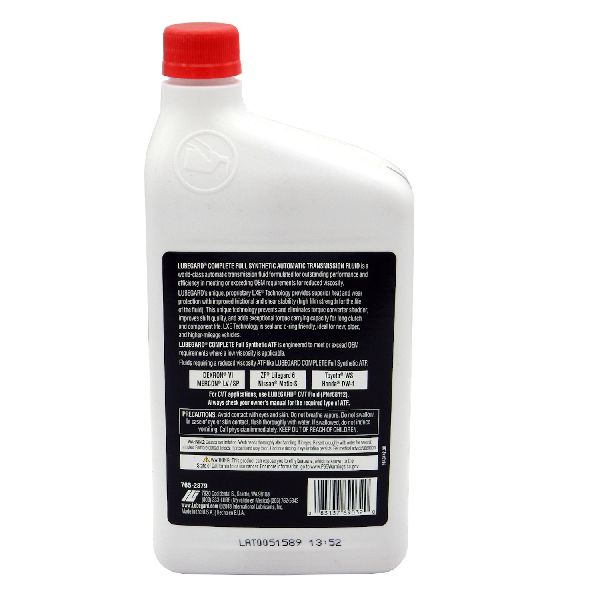
Typical fix: Perform a transmission fluid and filter change using the correct fluid (Motorcraft MERCON LV). If the fluid is severely contaminated, a full transmission flush may be needed, but this is sometimes debated as it can dislodge debris and cause more issues.
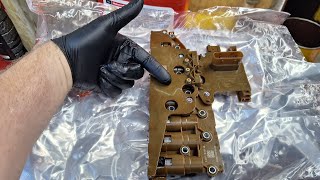
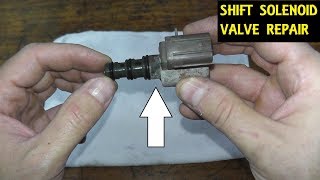
Est. part cost: $50-$150 - Faulty Shift Solenoid 'A' / Solenoid Body 🟡 Medium Probability → Shop Transmission Valve Body Solenoids are electro-mechanical parts that can fail electrically or mechanically (get stuck) over time due to wear or contamination. In the 6F50/55, individual solenoids are often not available separately, requiring replacement of the entire solenoid body assembly.
How to confirm: A technician can test the solenoid's resistance with a multimeter and command it on/off with a high-level scan tool to check its operation. This requires dropping the transmission pan. The solenoid body has calibration numbers on it that must be recorded and programmed into the PCM/TCM upon replacement.
Typical fix: Replace the entire solenoid body assembly. The OEM part number for the assembly is often AA5Z-7Z369-B or similar, 🎬 See a detailed breakdown of the 6F50/55 solenoid body assembly. depending on the year.
Est. part cost: $150-$300 - Broken Orifice Restrictor Cup Plug (Early 2010 Models) 🟡 Medium Probability Ford TSB 10-9-9 specifically identifies this part in the forward clutch circuit as a failure point on 6F50/55 transmissions built between 12/11/2009 and 04/15/2010.
How to confirm: This requires removing the main control valve body and inspecting the forward clutch feed seal area for the broken plug, as detailed in the TSB.
Typical fix: The official TSB procedure involves replacing the entire transmission case half where the plug sits, which is a major, labor-intensive repair requiring transmission removal and disassembly.
Est. part cost: $500-$1200 - Faulty Transmission Valve Body ⚪ Low Probability → Shop Transmission Valve Body The valve body contains a maze of passages and valves that can become clogged with debris or warped over time, causing pressure issues that mimic a solenoid fault. Sticking valves are a known issue on this transmission.
How to confirm: Diagnosis usually involves ruling out fluid and solenoid issues first. A pressure test can help, but often it's diagnosed after other repairs fail. Inspecting the valve body for sticking valves is key.
Typical fix: Replace the entire valve body assembly. An example OEM part number is BT4Z-7A100-B, though this can vary by year and specific configuration.
Est. part cost: $400-$1000
Rare But Worth Checking
- Damaged Wiring or Connectors: The wiring harness to the transmission can become damaged from heat or road debris, causing an electrical fault. Always inspect the external wiring for chafing or corrosion at the connectors before diving into the transmission.
- Faulty Transmission Control Module (TCM): → Shop Transmission Assembly While rare, the TCM itself can fail, sending incorrect signals or no signal at all. This is usually the last item to suspect after all other electrical and mechanical possibilities have been exhausted.
Diagnosis Steps
- Check the transmission fluid level and condition. If low, top it off. If dirty or burnt, a fluid and filter change is the first step. Ensure MERCON LV fluid is used.
- Use an OBD-II scanner to check for other transmission-related codes.
- Inspect the external transmission wiring harness and connectors for any visible damage, corrosion, or loose connections.
- If the fluid is clean and wiring is intact, the next step is to drop the transmission pan to access the internal components.
- For early 2010 models (built between 12/11/2009-04/15/2010), inspect the area under the main control for signs of the broken orifice restrictor cup plug as per TSB 10-9-9.
- If replacing the solenoid body, carefully record the calibration numbers from the old and new units for programming into the PCM/TCM with a capable scan tool. 🎬 Watch: How to program solenoid strategy and ID using Forscan.
- Test the resistance of Shift Solenoid 'A' with a multimeter if accessing it individually. Compare the reading to the manufacturer's specification.
- If the solenoid tests good, inspect the valve body for scoring, sticking valves, or clogged passages.
- If all mechanical and electrical components check out, the issue may lie with the Transmission Control Module (TCM).
Parts You'll Likely Need
- Transmission Filter and Pan Gasket Kit
(OEM #8A8Z-7A098-A (Filter))— This is required for a basic fluid service, which is the first and most common step in addressing this code.
Trusted brands: Motorcraft, ATP, Wix
OEM price range: $40-$70
Aftermarket price range: $20-$40 - Shift Solenoid Body Assembly
(OEM #AA5Z-7Z369-B (verify by VIN))— If the fluid service doesn't resolve the issue, the solenoid itself is the next most likely component to have failed. It is typically replaced as a complete assembly.
Trusted brands: Motorcraft, Rostra
OEM price range: $250-$400
Aftermarket price range: $150-$250 - Transmission Valve Body
(OEM #BT4Z-7A100-B (verify by VIN))— If solenoids and fluid are good, the issue may be sticking valves or blocked passages within the valve body itself.
Trusted brands: Motorcraft
OEM price range: $500-$1000
Aftermarket price range: $300-$700
Technical Service Bulletins (TSBs) & Recalls
- TSB 10-9-9: 6F50/6F55 TRANSMISSION—DTC P0751—HARSH OR NO FORWARD ENGAGEMENTS—PERCEIVED SLIP ON ACCELERATION—SLIP/DELAYED AND/OR HARSH DOWNSHIFTS.
- TSB 11-12-10: 6F50/6F55 TRANSMISSION - SLUGGISH ACCELERATION FROM 0-8 KMH (0-5 MPH) FOLLOWED BY A HARSH BUMP OR A SLIP ON TAKE-OFF.
- TSB 11-9-17: 6F50/6F55 TRANSMISSION - INTERMITTENT SLIPPING OR NEUTRAL-OUT - 5TH GEAR START FROM STOP.
- Bulletin #TSB 26-2046: A manufacturer service bulletin for related Ford platforms notes that P0751 can be associated with harsh or delayed engagement and shifts, often accompanied by an illuminated malfunction indicator lamp.
Platform-Specific Known Issues
- TSB 10-9-9 addresses P0751 on 2010 models with the 6F50/55 transmission, pointing to a broken orifice restrictor cup plug in the forward clutch circuit as a potential cause for harsh/no forward engagement and downshift slips.
- TSB 11-12-10 addresses sluggish acceleration and harsh bumps on take-off for some 2010-2011 models, related to valve body issues.
- TSB 11-9-17 addresses intermittent slipping, neutral-out, or 5th gear starts from a stop due to high resistance in the digital transmission range (TR) sensor on some 2009-2011 models.
Mechanic-Grade Diagnostic Values
- Shift Solenoid 'A' Coil Resistance — expected: 10 - 30 Ohms (Ω). Failure: A reading of 0 Ω (short circuit) or infinite/OL (open circuit) indicates a failed solenoid coil.
- Voltage at Transmission Harness Connector (Solenoid Power Supply Pin) — expected: Approximately 12.6V (Battery Voltage) with Key On, Engine Off.. Failure: A voltage drop greater than 0.5V from battery voltage points to excessive resistance in the power supply circuit or wiring.
- Voltage Drop on Ground Circuit — expected: Less than 0.2V. Failure: A reading above 0.2V indicates a poor ground connection or corrosion in the ground circuit for the transmission.
Scan Tool Commands That Help
- Ford IDS or FORScan: Solenoid Body Strategy Programming — This is a mandatory procedure after replacing the solenoid body assembly. The 13-digit solenoid strategy number and 7-digit solenoid body ID from the new part must be programmed into the PCM/TCM to ensure correct shift calibration. Failure to do so will result in harsh shifting and other codes.
- Ford IDS or FORScan: Clear Transmission Adaptive Tables — This should be performed after any major transmission repair, including solenoid or valve body replacement. It erases the old learned shift pressure values, allowing the TCM to relearn the shift characteristics with the new components, preventing harsh or erratic shifts.
- Professional Scan Tool (e.g., Autel, IDS): Solenoid Bidirectional Activation Test — During diagnosis, a technician can use this to command Shift Solenoid 'A' on and off while the vehicle is stationary. An audible click from the transmission pan area indicates the solenoid is mechanically actuating. Lack of a click points to a failed solenoid or an open electrical circuit.
Wiring & Ground Locations
- Main Transmission Bulkhead Connector — On the top of the transmission, accessible from the engine bay after removing the airbox assembly. It is a large, rectangular connector with a lever-lock mechanism.. This is the primary connection point for all transmission electronics, including the shift solenoids. It's a critical point to check for corrosion, pushed-out pins, or damage before assuming an internal transmission fault.
- G104 — On the left front of the engine compartment.. This is a primary chassis ground point for the engine and transmission harness. A loose or corroded connection here can cause intermittent electrical faults and erratic behavior from transmission solenoids.
- G103 — Located on the rear of the engine.. Another key engine ground point. Poor continuity at this location can lead to various electronic issues, including incorrect sensor readings and solenoid command failures.
Real Owner Repair Stories
- YouTube channel 'Big Ben's Cars & Cycles' (Ford Edge (uses same 6F50 transmission and is a common repair)) — Firm or delayed shifts, a common symptom associated with P0751 even if the code is not explicitly mentioned.
❌ Tried (didn't work) The video presents the solenoid body replacement as the direct fix, implying that simpler fixes like a fluid change were already tried or deemed insufficient for the symptoms.
✅ What actually fixed it The problem was resolved by replacing the entire shift solenoid body assembly inside the transmission side cover. The video details the process of draining the fluid, removing the side cover, disconnecting the three sensors, swapping the solenoid body, and reinstalling. Crucially, it emphasizes that the new solenoid body strategy MUST be programmed into the vehicle's computer using a tool like FORScan for the repair to be successful.
OEM Part Supersession History
AA5Z-7A100-A, BT4Z-7A100-A→BT4Z-7A100-B— Part revision and consolidation for the transmission valve body.AA5Z-7Z369-B (Transmission Control Module)→AA5Z-7G391-A (May refer to the solenoid body component within the larger module assembly)— Part revision. Note that AA5Z-7Z369-B often refers to the entire Transmission Control Module (TCM) which is physically attached to the valve body and contains the solenoids.
Heads up: Extreme caution is needed. These parts are VIN-specific and require programming. The solenoid body has a 13-digit strategy number and a 7-digit ID that must be programmed into the PCM. Using the wrong part or failing to program it will cause severe shifting problems.
Model Year Variations Within This Range
- 2010 (built 12/11/2009 - 04/15/2010): These models are subject to TSB 10-9-9, which identifies a broken orifice restrictor cup plug in the forward clutch circuit as a specific cause of P0751. The fix requires transmission removal and replacement of a case half, a much more intensive repair than on other model years.
- 2013-2019: The Ford Taurus received a facelift for the 2013 model year. While the core 6F50 transmission remained, part numbers for complete transmission assemblies and some components may differ. For example, a transmission for a 2013 AWD model may have an ID like DA8P-7000-LA, which is specific to that configuration and year range. Always verify parts by VIN.
Diagnostic Flowchart
Other Known Issues on This Vehicle
Issues unrelated to this code that are worth knowing about as an owner of this generation:
- Internal Water Pump Failure (3.5L/3.7L V6) 🔴 High — Can occur as early as 50,000 miles, but more common after 100,000 miles. Failure can cause catastrophic engine damage if coolant mixes with engine oil.
- Power Transfer Unit (PTU) Fluid Leak/Failure (AWD Models) 🔴 High — The PTU holds very little fluid and has no drain plug, leading to overheating and failure. Leaks from the seals are common. Often overlooked during service. (Ref: SSM 45823 (Not a formal TSB, but a service message))
- Broken Interior Door Handle Return Spring 🟡 Low — Widespread issue on 2010-2013 models where the handle doesn't return to its stowed position, potentially allowing the door to unlatch in a crash. (Ref: Recall 15S02)
- Rear Suspension Toe Link Fracture 🔴 High — Affects Police Interceptor and SHO Performance Pack models from 2013-2018. A fracture can cause a sudden loss of vehicle control. (Ref: Recall 20V072000)
- Transmission Cooler Line Leaks 🟠 Medium → Shop Transmission Assembly — Corrosion of the transmission cooler lines, especially in salt-belt states, can lead to significant fluid loss and transmission damage.
Used vs. New Parts: Buying Guide for This Vehicle
When a used part is the smart pick: For this repair, a used part is generally a poor choice for electronic components. A used complete transmission assembly from a low-mileage donor vehicle can be a cost-effective alternative to a rebuild, but it carries risks.
Donor-vehicle mileage cap: roughly under 80000 miles for the part to have meaningful remaining life.
What to inspect on the donor part:
- Verify the donor vehicle's mileage and check its history for accidents or flood damage.
- When buying a complete used transmission, ensure the torque converter is included and was not drained.
- Crucially, you MUST obtain the Solenoid Body ID and Strategy numbers from the donor transmission case sticker. If this sticker is missing or illegible, you will not be able to program the transmission to your vehicle, making it useless.
- Inspect the fluid from the donor transmission if possible. It should not be black, burnt-smelling, or full of metal.
OEM-only on this vehicle (don't cheap out):
- Transmission Control Module (TCM) / Solenoid Body Assembly: Due to the mandatory VIN-specific programming of the solenoid strategy, using a new OEM (Motorcraft) part is strongly recommended to avoid compatibility and performance issues.
Aftermarket brands forum-validated for this vehicle:
- Sonnax: For valve body repair kits (Zip Kit) that address common wear points like sticking valves and leaking end plugs.
- Rostra: A commonly cited aftermarket manufacturer for complete solenoid body assemblies.
Brands owners have reported issues with on this vehicle:
- Unbranded, no-name solenoid bodies from online marketplaces. These often fail quickly or cannot be programmed correctly, leading to wasted time and money.
Real Owner Stories
Aggregated from forums and TSBs cited above. Mileages and costs reflect what owners reported in those sources.
2011 Ford Taurus
Symptoms: P0751 Shift Solenoid A Performance/Stuck Off. The owner experienced shifting issues and first tried a fluid change, which did not resolve the problem.
What fixed it: Replacing the entire solenoid body assembly and reprogramming the unit with the required calibration numbers.
Source hint: TaurusClub.com thread titled 'P0751 Shift Solenoid A Performance/Stuck Off'
2008 Ford Taurus — ~175000 miles
Symptoms: The vehicle threw code P0751 at high mileage, leading to a discussion on whether the repair cost was worth the vehicle's remaining value.
What fixed it: The owner was advised to seek a proper diagnosis from a transmission shop to determine if it was a simple solenoid or a full internal failure.
Source hint: Reddit r/Transmission
2010 Ford Taurus (Built before 04/15/2010)
Symptoms: Harsh or no forward engagements, perceived slip on acceleration, and delayed or harsh downshifts.
What fixed it: Replacement of the transmission case half due to a broken orifice restrictor cup plug in the forward clutch circuit.
Source hint: TSB 10-9-9
Documented NHTSA Reports
Ford Platform Diagnostic Report
Symptoms: An owner reported receiving a fix finder report with code P0751 indicating "SSA Performance Stuck On or Off" after the vehicle had trouble engaging or shifting gears.
What fixed it: NHTSA ODI #11474436 describes the vehicle being towed to a dealership for powertrain evaluation after these symptoms occurred.
Transmission Mechanical Fault Report
Symptoms: A report notes multiple DTCs for internal transmission issues, including P0751 and P2700, indicating a clutch mechanical fault where the A clutch was dragging.
What fixed it: NHTSA ODI #11694940 details these findings during a dealership evaluation for internal transmission failure.
Related OBD-II Codes
Frequently Asked Questions
I have a 2010 Ford Taurus built in early 2010; is there a specific known issue for P0751?
Can I just replace the single failed shift solenoid on my 2011 Taurus?
What specific transmission fluid should I use for my 2010-2019 Taurus to avoid solenoid issues?
My Taurus is experiencing a harsh bump when taking off from a stop; is this related to P0751?
If I replace the solenoid body myself, is it a simple 'plug and play' repair?
Are there other major mechanical issues I should watch for while fixing the transmission on my 3.5L Taurus?
Helpful Videos


We Have This Part in Stock



The information in this article is provided for general reference and educational purposes only. Vehicle specifications, procedures, and part compatibility can vary by production date, trim level, and region. Always consult your vehicle's factory service manual and verify part numbers before purchasing or performing repairs. Safety-critical components such as airbags, seat belts, and braking systems should be installed by a qualified professional.
- Ford Taurus:
- 🧭 Diagnostic Flowchart
- 🎬 Helpful Videos
- 🛍️ Shop This Part
- What's Unique About the 2010-2019 Ford Taurus
- Symptoms You May Notice
- Most Likely Causes
- Rare But Worth Checking
- Diagnosis Steps
- Parts You'll Likely Need
- Technical Service Bulletins (TSBs) & Recalls
- Platform-Specific Known Issues
- Mechanic-Grade Diagnostic Values
- Scan Tool Commands That Help
- Wiring & Ground Locations
- Real Owner Repair Stories
- OEM Part Supersession History
- Model Year Variations Within This Range
- Other Known Issues on This Vehicle
- Used vs. New Parts: Buying Guide for This Vehicle
- Real Owner Stories
- 2011 Ford Taurus
- 2008 Ford Taurus — ~175000 miles
- 2010 Ford Taurus (Built before 04/15/2010)
- Documented NHTSA Reports
- Ford Platform Diagnostic Report
- Transmission Mechanical Fault Report
- Related OBD-II Codes
- Frequently Asked Questions
- 🎟️ Get 5% Off