

P0751 on 2020-2023 Ford Transit: Shift Solenoid 'A' Causes and Fixes
On a 2020-2023 Ford Transit with the 10R80 transmission, code P0751 almost always points to a known issue with the main control valve body, not just a single bad solenoid. This is a complex repair best left to a professional. Ford TSBs confirm this issue, often requiring a valve body replacement. Costs can range from $1,050 to over $2,000 for a valve body job, but if the related CDF drum has failed, a full transmission rebuild or replacement could cost between $3,200 and $8,500.
- For a 2020-2023 Ford Transit, P0751 is a strong indicator of a known problem with the 10R80 transmission's main control valve body.
- Consult the latest Ford Technical Service Bulletins (TSBs) for this issue, as they provide the official diagnostic path.
- Do not assume the fix is a cheap, simple solenoid swap. The evidence points to a more complex and expensive valve body replacement.
- This is not a DIY-friendly repair. It requires professional-level tools and knowledge of transmission service.
- Always use the specified Motorcraft MERCON ULV transmission fluid when servicing this transmission.
What's Unique About the 2020-2023 Ford TRANSIT
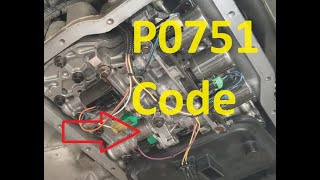
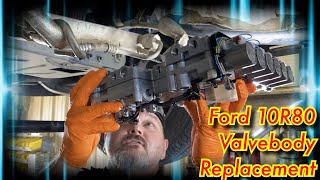
For this specific generation of Ford Transit equipped with the 10R80 10-speed automatic transmission, P0751 is a well-documented issue that typically goes beyond a simple solenoid failure. Ford has issued multiple Technical Service Bulletins (TSBs) acknowledging that this code, often accompanied by others, is a primary symptom of a faulty main control valve body due to sticking internal valves or cross-leaks. Unlike other vehicles where you might replace a single solenoid, the fix on these Transits often involves replacing the entire valve body assembly (Part # L1MZ-7A100-A or similar). 🎬 Watch: Step-by-step 10R80 valve body replacement walkthrough. In some cases, the code can also be a symptom of a more severe internal failure of the CDF clutch drum, a known weak point in early 10R80 designs.
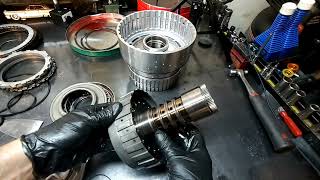
🎬 See why the CDF drum fails and how to fix it.Diagnostic Flowchart
Tap your situation to follow the diagnostic path that matches what you're seeing on this vehicle.
Symptoms You May Notice
- Harsh or abrupt shifts, sometimes described as a 'bang' or 'slam' into gear.
- Delayed gear engagement from Park or Neutral. [TSB 26-2046, TSB 24-2254]
- Transmission hesitates or flares (RPMs rise ~500 RPM) between shifts before engaging.
- Vehicle stuck in one gear (limp mode).
- Illuminated Malfunction Indicator Lamp (MIL) / Check Engine Light. [TSB 26-2046]
- Transmission overheating warning light or a burning smell.
- Decreased fuel economy due to inefficient shifting.
- A dragging or release sensation when slowing to a stop.
- Replacing only Shift Solenoid 'A' without addressing the underlying valve body issue. The problem is likely to return if the root cause is a sticking valve or internal cross-leak in the valve body assembly.
- Performing only a software update or adaptive learn reset. While this is part of the repair process after replacing parts, it will not fix a mechanical or hydraulic fault like a bad valve body or failed CDF drum.
Most Likely Causes
- Defective Main Control Valve Body 🔴 High Probability → Shop Transmission Valve Body Multiple Ford TSBs (26-2046, 24-2254, 22-2428, 24-2176, and 20-2226 for the Transit specifically) identify this as the primary cause. Sticking valves or internal cross-leaks within the valve body are common, leading to pressure loss.
How to confirm: A professional technician will follow the diagnostic procedures outlined in the relevant TSB. TSB 20-2226 for the 2020 Transit suggests a 'break-in' routine for low-mileage vehicles, but recommends replacement for vehicles over 5,000 miles.
Typical fix: Replacement of the entire main control valve body assembly with an updated part (e.g., L1MZ-7A100-A).
Est. part cost: $600-$1200 - Low or Contaminated Transmission Fluid 🟡 Medium Probability → Shop Transmission Assembly While not specific to the Transit, the complexity of the 10R80 makes it sensitive to fluid level and condition. Burnt or dirty fluid can cause valves to stick. Some owners report the fluid being black even at 60,000 miles.
How to confirm: Check the transmission fluid level and condition. The fluid should be at the correct level and reddish, not dark brown, black, or smell burnt. Finding excessive gray sludge or 'glitter' in the pan points to more severe internal wear.
Typical fix: Perform a transmission fluid and filter change using the correct OEM-specified fluid (Motorcraft MERCON ULV). This may only be a temporary fix if damage has already occurred.
Est. part cost: $150-$250 for fluid and filter. - Faulty Shift Solenoid 'A' ⚪ Low Probability → Shop Transmission Valve Body While the code points to this solenoid, on the 10R80 it's more often a symptom of the larger valve body issue. The solenoid receives the command but cannot actuate properly due to a hydraulic or mechanical problem within the valve body assembly. The shift solenoids in the 10R80 are direct-acting mechanical pins, meaning fluid does not pass through them; they physically move valves in the main control body.
How to confirm: The solenoid can be tested for resistance with a multimeter once the valve body is removed. A professional scan tool can also command the solenoid on and off to check its response, but this may not reveal the underlying hydraulic issue. All six shift solenoids should have a resistance of 5.0-5.4 ohms at 68°F (20°C).
Typical fix: Replace the individual solenoid. However, since the valve body must be removed to access it, and the valve body itself is the likely culprit, replacing the entire assembly is the recommended and more reliable repair.
Est. part cost: $60-$150 - Damaged Wiring or Connectors ⚪ Low Probability
How to confirm: Visually inspect the transmission wiring harness for any signs of damage, corrosion, or loose connections from the TCM to the transmission case connector. Pin 38 on the C175T connector at the PCM is for Shift Solenoid A.
Typical fix: Repair or replace the damaged section of the wiring harness.
Est. part cost: $20-$300
Rare But Worth Checking
- Internal CDF Drum Failure: A known issue in earlier 10R80s where a bushing/sleeve inside the CDF (Clutch 'F') drum can 'walk' or move out of position. This uncovers fluid passages, causing a catastrophic loss of hydraulic pressure to the clutch pack, leading to severe shifting problems and codes like P0751. Ford has released updated drums with a machined lip to prevent this movement. This is a transmission-out, full teardown repair.
- Powertrain/Transmission Control Module (PCM/TCM) Failure: → Shop Transmission Assembly This is very rare. The control module itself could be faulty, sending incorrect signals. This should only be considered after all other possibilities, especially the valve body and wiring, have been exhaustively ruled out.
Diagnosis Steps
- Check and verify the transmission fluid level and condition. Ensure the correct Motorcraft ULV fluid is used. Note any burnt smell or metallic particles.
- Use a professional scan tool to check for any other pending or active transmission codes. Note if multiple codes listed in TSB 26-2046 or 20-2226 are present.
- Review Freeze Frame data to see the vehicle conditions (speed, temp, gear) when the code was set.
- Inspect the transmission wiring harness and main connector for any visible damage, corrosion, or loose pins.
- Follow the diagnostic procedure outlined in the most current Ford TSB for 10R80 shift issues (e.g., TSB 26-2046). For 2020 Transits specifically, refer to TSB 20-2226.
- If diagnostics lead to an internal issue, remove the transmission pan and inspect for excessive metal debris, which could indicate CDF drum or other component failure.
- Based on TSB guidance and the high probability, the next step is often to replace the main control valve body assembly.
- If a valve body replacement does not fix the issue, or if there are signs of major internal damage, a full transmission teardown to inspect the CDF drum is likely necessary.
- After any component replacement, the transmission adaptive learning tables must be cleared and a specific relearn drive cycle must be performed with a compatible scan tool.
Parts You'll Likely Need
- Transmission Main Control Valve Body Assembly
(OEM #L1MZ-7A100-A)— This is the most common point of failure on the 10R80 transmission for this code, as identified in multiple manufacturer TSBs.
Trusted brands: Motorcraft
OEM price range: $800-$1200
Aftermarket price range: $600-$900 - Transmission Fluid (Motorcraft MERCON ULV)
(OEM #XT-12-QULV)— Required when replacing the valve body or servicing the transmission. A valve body swap requires approximately 11 quarts.
Trusted brands: Motorcraft
OEM price range: $15-$25 per quart
Aftermarket price range: $10-$20 per quart - Transmission Filter
(OEM #HL3Z-7A098-A (or superseding L1MZ-7A098-A))— Should always be replaced when the transmission pan is removed for service.
Trusted brands: Motorcraft
OEM price range: $30-$50
Aftermarket price range: $20-$40
Related Codes That Often Appear With This One
- P0756, P0761, P0766, P2700-P2705, etc. — These codes are all listed together in Ford's TSBs for the 10R80 transmission. [TSB 26-2046, TSB 24-2254] They relate to different solenoids and clutch circuits. Seeing multiple codes from this group strongly indicates a systemic failure of the main control valve body or a major hydraulic leak.
- P0729, P0731, P0732, P0733, P0734, P0735 — These codes indicate incorrect gear ratios. They often appear alongside solenoid codes when the transmission fails to achieve the commanded gear, pointing towards a major internal issue like the valve body or CDF drum failure.
Technical Service Bulletins (TSBs) & Recalls
- TSB 26-2046: Addresses harsh/delayed engagements and shifts with a long list of DTCs, including P0751, for some 2020-2023 Ford models with the 10R80 transmission.
- TSB 24-2254: Similar to the above, covering 2022 models with the 10R80, indicating an ongoing issue.
- TSB 22-2428: An earlier bulletin for 2023 models addressing harsh/delayed shifts and associated DTCs.
- TSB 24-2176: Another bulletin for 2022 models with the same symptoms and codes.
- TSB 20-2226: Specific to the 2020 Transit, this TSB addresses harsh engagement with or without codes P0772/P2704, blaming sticking valves in the main control body and recommending replacement on vehicles with over 5,000 miles.
Platform-Specific Known Issues
- Prevalence of Valve Body Failure: → Shop Transmission Valve Body The 10R80 transmission in these model years is subject to several Technical Service Bulletins for harsh or delayed shifting linked to the main control valve body. TSB 20-2226 is specific to the 2020 Transit and directly calls out sticking valves as the cause.
- CDF Drum Bushing Migration: Some earlier 10R80 models had a design flaw where a bushing in the CDF drum could slide out of place, causing a major hydraulic leak and severe shifting problems. This is a more catastrophic and expensive failure than the valve body. An owner on Reddit confirmed this failure mode on their 145k mile F-150.
Mechanic-Grade Diagnostic Values
- Shift Solenoid A-F Resistance — expected: 5.0 - 5.4 Ohms at 68°F (20°C). Failure: A reading outside of this range indicates a faulty solenoid coil.
Scan Tool Commands That Help
- Ford IDS (or equivalent like FORScan): Clear Transmission Adaptive Tables — This must be performed after replacing the valve body or entire transmission to erase old learned values that will conflict with the new hardware.
- Ford IDS: PCM – Transmission Strategy Download (Solenoid Body Strategy Programming) — This is mandatory when a new main control valve body or transmission is installed. The 13-digit strategy number from the new part must be programmed into the PCM. Failure to do so will cause erratic shifts and driveability concerns.
- Ford IDS (or equivalent): Adaptive Learning Drive Cycle — After clearing adaptive tables and programming a new valve body, a specific, multi-step drive cycle must be performed to allow the TCM to learn the characteristics of the new components.
Wiring & Ground Locations
- C175T, Pin 38 — This is one of the main connectors at the Powertrain Control Module (PCM).. Pin 38 is the circuit for Shift Solenoid 'A'. A technician can test for continuity and voltage here to diagnose wiring issues between the PCM and the transmission without first dropping the pan.
- Main Transmission Connector — On the side of the 10R80 transmission case.. This is the main electrical connection point for all internal transmission components, including the solenoids. It's a lever-type connector that must be disengaged carefully when removing the valve body.
Real Owner Repair Stories
- F150 Tremor Forum user (Ford F-150 with 10R80 (specific year not mentioned, but thread is from 2023)) — Getting slips for the first few shifts. After removing a tune, the problem got worse: skipping gears (1 to 4), a two-second delay followed by a hard shift (1 to 2, 2 to 3), and harsh downshifts when stopping.
❌ Tried (didn't work) One dealer tried to just reprogram the transmission, which did not solve the issue for others with similar problems.
✅ What actually fixed it The user's vehicle was at the dealer for a main control valve body replacement, which is the fix prescribed by the relevant Ford TSB for these symptoms.
OEM Part Supersession History
L1MZ-7A100-A, L1MZ-7A100-E→L1MZ-7A100-K— Part revision to address performance and reliability issues like sticking valves.
Heads up: The newest part number should always be used for repairs. When replacing, the new 13-digit solenoid body strategy number must be programmed into the vehicle's computer.L1MZ-7A100-B→L1MZ-7A100-F— Part revision to address performance and reliability issues.
Heads up: This appears to be another part number chain for the same component, likely for different vehicle applications or production runs. Always verify the correct part for the specific VIN.
Model Year Variations Within This Range
- Pre-2023: Vehicles built before approximately August 16, 2022, are more susceptible to the CDF drum internal sleeve failure. Later models, particularly 2023 and newer, are more likely to have an updated CDF drum from the factory with a machined lip that prevents the sleeve from walking out of position.
Helpful Videos


We Have This Part in Stock


The information in this article is provided for general reference and educational purposes only. Vehicle specifications, procedures, and part compatibility can vary by production date, trim level, and region. Always consult your vehicle's factory service manual and verify part numbers before purchasing or performing repairs. Safety-critical components such as airbags, seat belts, and braking systems should be installed by a qualified professional.
- Ford TRANSIT:
- 🧭 Diagnostic Flowchart
- 🎬 Helpful Videos
- 🛍️ Shop This Part
- What's Unique About the 2020-2023 Ford TRANSIT
- Symptoms You May Notice
- Most Likely Causes
- Rare But Worth Checking
- Diagnosis Steps
- Parts You'll Likely Need
- Related Codes That Often Appear With This One
- Technical Service Bulletins (TSBs) & Recalls
- Platform-Specific Known Issues
- Mechanic-Grade Diagnostic Values
- Scan Tool Commands That Help
- Wiring & Ground Locations
- Real Owner Repair Stories
- OEM Part Supersession History
- Model Year Variations Within This Range
- 🎟️ Get 5% Off