

P0751 on 2017-2018 Genesis G90: Shift Solenoid 'A' Performance Causes and Fixes
P0751 on a 2017-2018 Genesis G90 indicates a problem with Shift Solenoid 'A', causing poor shifting, often on the 1-2 upshift. The most likely causes are low or dirty transmission fluid or a failed solenoid. A fluid level and condition check is the first step; if that doesn't resolve the issue, expect to replace the solenoid for $350-$750 at a shop.
- P0751 means the transmission failed to shift correctly as commanded by the computer.
- Always check the transmission fluid level and condition first; this is the most common and cheapest fix.
- If fluid is not the issue, the problem is likely the Shift Solenoid 'A' itself or its wiring.
- On AWD models, be aware that a faulty transfer case can cause similar symptoms and lead to a misdiagnosis.
- This is a complex repair best left to a professional; DIY is not recommended due to the risk of causing further transmission damage.
What's Unique About the 2017-2018 Genesis G90
The 2017-2018 Genesis G90 uses a sophisticated, Hyundai-developed 8-speed automatic transmission (A8LR1 for the 3.3L V6, A8TR1 for the 5.0L V8) that is generally robust but highly sensitive to fluid condition. While P0751 is a generic code, Hyundai/Genesis has issued technical service bulletins (TSBs) for solenoid-related DTCs and shift quality issues on this platform, providing specific diagnostic paths. It's critical to note that on all-wheel-drive (AWD) models, symptoms like shuddering or juddering during low-speed acceleration can be caused by a failing transfer case or old transfer case fluid, which can be misdiagnosed as an internal transmission issue like a bad solenoid.
Symptoms You May Notice
- Check Engine Light is on
- Harsh, delayed, or erratic shifting, especially the 1-2 shift
- Transmission slipping or failing to engage gears
- Vehicle gets stuck in one gear (limp mode)
- Reduced fuel economy
- Grinding or odd noises during gear changes
- A burning smell from overheating transmission fluid
- Vehicle feels like it loses power during shifts
- On AWD models, a faulty transfer case can cause shuddering, bucking, or grinding during acceleration that feels like a transmission shifting problem. One owner of a related G80 reported this exact issue, and the fix was changing the transfer case fluid, not internal transmission work. A video documented a 2017 G90 with a shuttering feeling, like driving over cobblestones, that was resolved by replacing the transfer case.
Most Likely Causes
- Low or Dirty Transmission Fluid 🔴 High Probability → Shop Transmission Assembly Fluid is the lifeblood of the transmission. Over time, it breaks down or can become contaminated with clutch material. This degraded fluid can cause solenoids to stick or fail to actuate properly, as the transmission is very sensitive to fluid quality.
How to confirm: Check the transmission fluid level and condition. The G90 does not have a traditional dipstick; the level must be checked via a fill plug with the vehicle level and the fluid at a specific temperature (122-140°F / 50-60°C) per TSB 17-AT-002 or 19-AT-011HG. Look for fluid that is dark, has a burnt smell, or contains metallic particles.
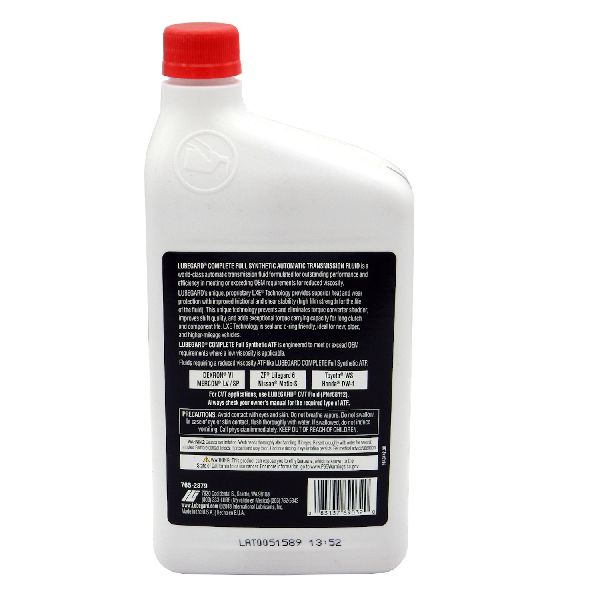
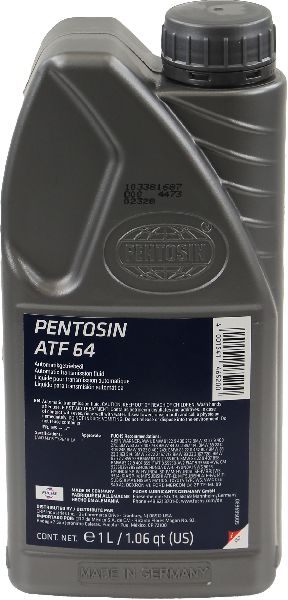
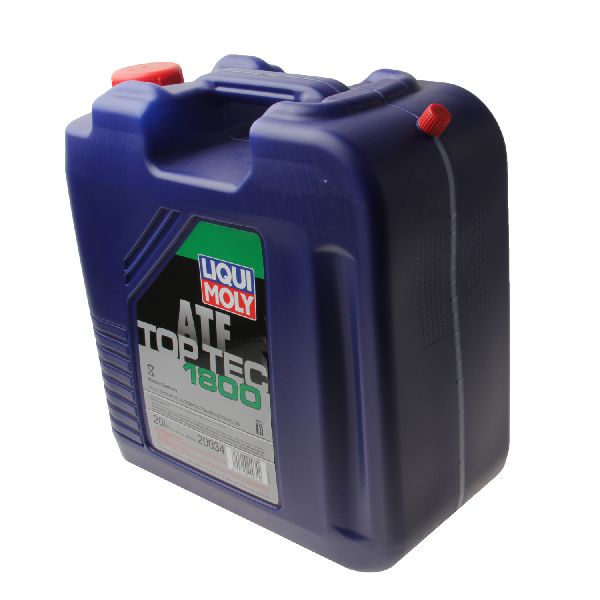
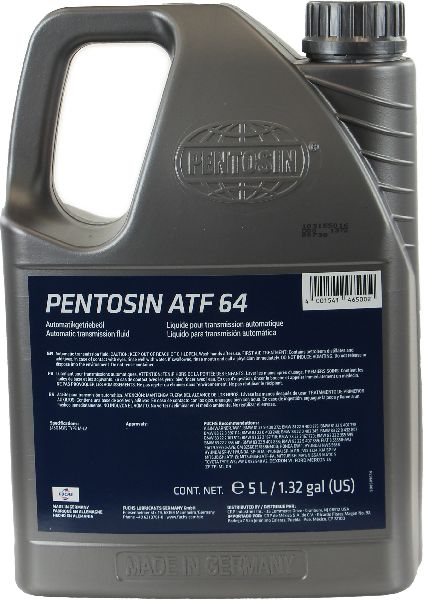
Typical fix: Perform a transmission fluid drain and fill. A full fluid flush may be needed if the fluid is heavily contaminated. Use only the specified Hyundai/Genesis SPH-IV-RR fluid (P/N 00232-19052) to ensure proper shift quality.
Est. part cost: $150-$250 for fluid - Failed Shift Solenoid 'A' 🟡 Medium Probability → Shop Transmission Valve Body Solenoids are electro-mechanical valves that cycle constantly. They can fail electrically (open/short in the coil) or, more commonly for this code, mechanically (sticking plunger from debris or wear). The likely candidate for Solenoid 'A' is the Underdrive Direct Clutch (UD/C) control solenoid, which is critical for gears 1-4.
How to confirm: After confirming the fluid is good, a technician uses a scan tool to command the solenoid on and off to check for response. They would also test the solenoid's internal resistance with a multimeter (typically 10-40 ohms for this type) to check for electrical failure. This requires accessing the solenoid by removing the transmission pan.
Typical fix: Replace the faulty shift solenoid. Since the transmission pan is removed, it is best practice to also replace the transmission filter and pan gasket.
Est. part cost: $60-$100 for an OEM solenoid - Wiring or Connector Issue ⚪ Low Probability The wiring harness leading to the transmission is exposed to heat and road debris. Corrosion at the main connector or damage to the internal harness can cause an open or short circuit, though this is less common than fluid or solenoid failure.
How to confirm: Visually inspect the external transmission harness connector for damage or corrosion. A technician would then perform a continuity test on the wires from the TCM to the transmission connector. TSBs for shift quality issues often start with checking for DTCs and then inspecting connections.
Typical fix: Repair the damaged section of the wiring harness or clean/replace the corroded connector.
Est. part cost: $20-$60 for repair materials
Rare But Worth Checking
- Faulty Transmission Control Module (TCM): → Shop Transmission Assembly This is very rare. The TCM should only be considered after all other possibilities (fluid, solenoid, wiring) have been exhaustively ruled out. TSBs often suggest swapping a TCM from a known-good vehicle for testing before ordering a replacement.
- Clogged Transmission Filter or Blocked Valve Body Passage: → Shop Transmission Assembly If the transmission fluid is very old and full of debris, it can clog the filter or the small hydraulic passages in the valve body, restricting fluid flow to the solenoid and mimicking a solenoid failure. This usually points to a larger lack of maintenance and may require a valve body cleaning or replacement.
Diagnosis Steps
- Scan for all DTCs in the TCM and ECM to look for related codes (e.g., other solenoids, gear ratios).
- Check the transmission fluid level and condition according to the specific procedure in TSB 17-AT-002 or 19-AT-011HG (vehicle level, fluid at 122-140°F). This is the most common cause.
- If the fluid is low, top it off with SPH-IV-RR fluid and check for leaks. If the fluid is dark, burnt, or contains debris, perform a fluid and filter change.
- If the fluid is fine, inspect the external transmission wiring harness and main connector for any visible damage, corrosion, or loose connections. The main connector is on the passenger side of the transmission.
- Using an advanced scan tool (like the Hyundai GDS), monitor the commanded vs. actual gear state and check for 'continuous and changing output' from the solenoids in the Data Analysis function.
- If the external wiring is okay and the solenoid is unresponsive, the next step is to test the solenoid directly. This requires removing the transmission pan.
- Once the pan is removed, test the resistance of Shift Solenoid 'A'. Compare the reading to the manufacturer's specification. While the exact spec for the A8LR1/A8TR1 is not publicly documented, a similar Hyundai transmission specifies 11-16 Ω at 68°F (20°C) as a reference.
- If resistance is out of spec, replace the solenoid. If it's in spec, the issue could be a mechanical blockage in the solenoid or valve body, or a faulty TCM.
- After replacing the solenoid or valve body, use a GDS scan tool to perform the 'Resetting Auto T/A values' or 'Init Of TCU Learning' function, then perform the adaptive learning drive cycle.
- If the solenoid is replaced and the problem persists, further diagnosis of the valve body and TCM is required.
Parts You'll Likely Need
- Automatic Transmission Control Solenoid (UD/C Control)
(OEM #46313-4J100)— This is the solenoid identified as controlling the Underdrive Direct Clutch (UD/C) on the G90, which is used for gears 1-4. Its failure directly corresponds to the symptoms of P0751.
Trusted brands: Hyundai/Genesis Genuine
OEM price range: $60-$90
Aftermarket price range: $40-$70 - Automatic Transmission Fluid (SPH-IV-RR)
(OEM #00232-19052)— Required for any service that involves draining or opening the transmission. Using the correct fluid is critical for the performance and longevity of Hyundai's 8-speed transmissions.
Trusted brands: Hyundai/Genesis Genuine
OEM price range: $25-$35 per quart - Transmission Filter and Pan Gasket Kit
(OEM #46240-4G000 (Filter), 45285-4G000 (Gasket) - Example, confirm with VIN)— These should always be replaced whenever the transmission pan is removed for service to ensure a clean system and prevent leaks.
Trusted brands: Hyundai/Genesis Genuine
OEM price range: $50-$90
Aftermarket price range: $30-$60
Related Codes That Often Appear With This One
- P0753 — This code indicates an electrical fault (open or short) in the Shift Solenoid 'A' circuit, whereas P0751 indicates a mechanical performance issue (stuck). They point to the same component but a different failure mode.
- P0731 — This is an 'Incorrect Gear Ratio' code for 1st gear. If Solenoid 'A' (the UD/C solenoid) is failing, the transmission may not engage 1st gear correctly, triggering this code alongside P0751.
Technical Service Bulletins (TSBs) & Recalls
- 17-AT-002: Details the 8-speed automatic transmission fluid level inspection procedure and specifies SPH-IV-RR fluid.
- 19-AT-011HG: An updated TSB that also describes the ATF level check procedure for the 8-speed RWD transmission.
- 28 (Similar to 17-AT-001-G): Provides a diagnostic procedure for harsh and/or delayed shifting on the 8-speed automatic.
- Recall 19V538000 / 24V191000: Addresses a fire risk from a leaking turbocharger oil feed pipe on 3.3T engines.
- Recall 24V107000: Addresses a fire risk from potential water intrusion into the starter solenoid.
Mechanic-Grade Diagnostic Values
- Shift Solenoid 'A' (S1) Resistance — expected: 11 - 16 Ω at 20°C (68°F). Failure: A reading outside this range (e.g., open circuit/infinite resistance or shorted/zero resistance) indicates a failed solenoid coil.
Hidden / Shadow Codes Worth Checking
- Internal Self-Test Flags / Event Data: The TCM can log more specific internal faults that don't appear as standard P-codes. These can include 'writing/reading error inside of ECM' (checksum error) or 'A/D converter voltage out of range'. These are not user-facing codes but provide technicians with deeper insight into module health. (see via These are viewed using the Hyundai GDS (Global Diagnostic System) scan tool, typically within the 'Event Data' or 'Flight Record' functions for the TCM.)
Scan Tool Commands That Help
- Hyundai GDS (Global Diagnostic System): Data Analysis (A/T Menu) — To live-monitor the solenoid parameters during a test drive. A healthy solenoid circuit will show 'continuous and changing output'. A lack of changing output while driving points towards a wiring or TCM driver issue.
- Hyundai GDS (Global Diagnostic System): Resetting Auto T/A values (or 'Init Of TCU Learning') — This function is critical after replacing a solenoid, valve body, or the entire transmission. It erases the learned shift adaptation values, which are no longer correct for the new hardware. Failure to perform this reset can result in continued poor shift quality.
- Hyundai GDS (Global Diagnostic System): Adaptive Learning Drive Cycle — Immediately after resetting the adaptive values. The technician must drive the vehicle in a specific manner (e.g., accelerating smoothly through all gears at a steady throttle) to allow the TCM to relearn the correct hydraulic pressures and timing for smooth shifts with the new components.
Wiring & Ground Locations
- Main Transmission Harness Connector — On the passenger side of the transmission housing.. This is the primary connection point between the TCM and the internal transmission wiring, including all the shift solenoids. It should be inspected for corrosion, pushed-out pins, or physical damage early in the diagnosis.
- TCM Ground — Specific ground point identifiers (e.g., Gxxx) for the 2017-2018 G90 are not available without the official Electrical Troubleshooting Manual. However, the TCM is located in the engine bay with the ECM, and its ground path is critical for proper function.. A poor ground connection to the TCM can cause erratic behavior, including incorrect solenoid operation and false diagnostic codes. Verifying all engine bay and transmission housing grounds are clean and tight is a crucial step when electrical issues are suspected.
Real Owner Repair Stories
- YouTube channel 'Al's Cuda Garage' (2017 Genesis G90 3.3T H-Trac (AWD)) — Vehicle shutters or shakes while shifting up through gears 1-2-3, especially on an incline. Described as feeling like 'riding over cobblestones'.
❌ Tried (didn't work) Initial online research suggested a transmission computer reprogramming might be needed.
✅ What actually fixed it The issue was diagnosed by a Genesis dealer as a faulty transfer case. The transfer case was replaced, which solved the shuttering problem completely. This highlights a key misdiagnosis pattern for AWD models. - Genesis G90 Forum user (Genesis G90 (year not specified)) — Hard shifting and high revving when the transmission was supposed to shift to the next gear.
❌ Tried (didn't work) A transmission adaptive reset was attempted by the dealer but did not fix the issue.
✅ What actually fixed it The dealer determined the transmission was faulty and required a complete replacement under warranty.
Diagnostic Flowchart
Other Known Issues on This Vehicle
Issues unrelated to this code that are worth knowing about as an owner of this generation:
- Turbocharger Oil Pipe Leak (3.3T Engine) 🔴 High — Common enough to warrant a recall (NHTSA #19V538000, expanded by #24V191000). Oil leaks onto the hot exhaust manifold, creating a significant fire risk. (Ref: Recall 19V538000 / 24V191000)
- Starter Solenoid Electrical Short 🔴 High — Subject of a recall (NHTSA #24V107000). Water can enter the starter solenoid, causing an electrical short which can lead to an engine compartment fire while driving or parked. (Ref: Recall 24V107000)
- Transfer Case Judder/Shudder (AWD Models) 🟠 Medium — Owners report a shudder or vibration during low-speed acceleration, which can be mistaken for a transmission issue. Often resolved with a transfer case fluid change. (Ref: TSB 23-DS-001G addresses transfer case actuator diagnosis on related models.)
- Limited/Expensive Non-Wear Parts 🟡 Low — Owners of higher-mileage vehicles report a lack of aftermarket support for non-maintenance components (e.g., steering gear), forcing reliance on expensive OEM parts from the dealer.
Used vs. New Parts: Buying Guide for This Vehicle
When a used part is the smart pick: For a high-cost component like a complete valve body assembly, a used part from a verified low-mileage (under 50k miles) donor vehicle could be a cost-effective option. However, it carries the risk of inheriting a different problem. A complete used transmission from a rear-ended vehicle is also a viable, though labor-intensive, alternative to a rebuild.
Donor-vehicle mileage cap: roughly under 50000 miles for the part to have meaningful remaining life.
What to inspect on the donor part:
- Verify the donor vehicle's mileage and VIN to confirm compatibility.
- Ask for a video of the donor car running and driving, if possible, to see the transmission shift.
- When buying a valve body, ensure all solenoids are included and that the electrical connector pins are straight and clean.
- Check the color and smell of the fluid from the donor part if possible; dark, burnt-smelling fluid is a major red flag.
OEM-only on this vehicle (don't cheap out):
- Transmission Fluid (SPH-IV-RR): The A8LR1/A8TR1 is extremely sensitive to fluid type. Do not use universal or 'compatible' fluids; stick to the genuine Hyundai/Genesis fluid (P/N 00232-19052).
- Transmission Control Module (TCM): A used TCM will be VIN-locked to the donor car and will not function without being put into 'Neutral Mode' and reprogrammed by a dealer with a GDS tool. This process can be difficult and expensive, making a new part often more practical.
Aftermarket brands forum-validated for this vehicle:
- For solenoids, Rostra is a generally reputable aftermarket brand for transmission components, but OEM is the safest bet for this specific, highly-calibrated transmission.
Brands owners have reported issues with on this vehicle:
- Avoid unbranded, no-name solenoids or valve bodies from online marketplaces. The failure rate is high, and the cost of re-doing the labor outweighs any initial savings.
Real Owner Stories
Aggregated from forums and TSBs cited above. Mileages and costs reflect what owners reported in those sources.
2017-2018 Genesis G90
Symptoms: Owners report a lack of aftermarket support for non-maintenance components like steering gears on higher-mileage vehicles, leading to high costs at the dealer.
What fixed it: Reliance on expensive OEM parts from the dealer due to limited aftermarket availability.
Source hint: Reddit: r/GenesisMotors - Common Problems with 2017/2018 G90
Related OBD-II Codes
Frequently Asked Questions
How do I check the transmission fluid level on my 2017 Genesis G90 since there is no dipstick?
What specific transmission fluid should be used for the G90 8-speed to resolve shifting issues?
Could my G90's harsh 1-2 shift be related to a recall?
Is there a specific solenoid responsible for P0751 on the A8LR1/A8TR1 transmission?
What should be done after replacing a solenoid to ensure the G90 shifts correctly?
I feel a vibration during low-speed acceleration; is this the P0751 shift solenoid?
Helpful Videos

We Have This Part in Stock


The information in this article is provided for general reference and educational purposes only. Vehicle specifications, procedures, and part compatibility can vary by production date, trim level, and region. Always consult your vehicle's factory service manual and verify part numbers before purchasing or performing repairs. Safety-critical components such as airbags, seat belts, and braking systems should be installed by a qualified professional.
- Genesis G90:
- 🧭 Diagnostic Flowchart
- 🎬 Helpful Videos
- 🛍️ Shop This Part
- What's Unique About the 2017-2018 Genesis G90
- Symptoms You May Notice
- Most Likely Causes
- Rare But Worth Checking
- Diagnosis Steps
- Parts You'll Likely Need
- Related Codes That Often Appear With This One
- Technical Service Bulletins (TSBs) & Recalls
- Mechanic-Grade Diagnostic Values
- Hidden / Shadow Codes Worth Checking
- Scan Tool Commands That Help
- Wiring & Ground Locations
- Real Owner Repair Stories
- Other Known Issues on This Vehicle
- Used vs. New Parts: Buying Guide for This Vehicle
- Real Owner Stories
- 2017-2018 Genesis G90
- Related OBD-II Codes
- Frequently Asked Questions
- 🎟️ Get 5% Off